
Does Quetiapine Cause Weight Gain? Causes, Prevention, and Alternatives

Medically reviewed by Laura Athey Updated Date: April 25, 2026
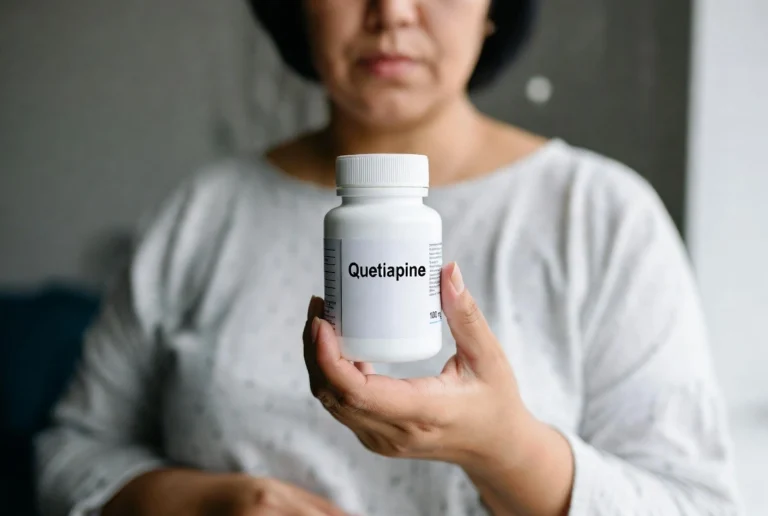
In my practice as a clinical psychologist, I often sit across from patients who are experiencing a profound “medication catch-22.” On one hand, quetiapine (widely known by the brand name Seroquel) has finally quieted the storm of their mania or provided the first restful night of sleep they’ve had in years. On the other hand, they notice the numbers on the scale steadily climbing.
The question of whether quetiapine causes weight gain is one of the most pressing concerns for patients today. It is a side effect that carries not just physical implications but psychological ones—affecting self-esteem and body image, which are already vulnerable in those navigating mood disorders.
While weight gain is a frequent biological trade-off with this medication, understanding the “why” behind the metabolic shift is the first step in reclaiming control over your health. Does Quetiapine Cause Weight Gain?
What Is Quetiapine and Why Is It Prescribed
Quetiapine is classified as a second-generation antipsychotic (SGA), or an “atypical” antipsychotic. While its name suggests it is only for psychosis, its utility is far broader. In my clinical observations, quetiapine is often a “Swiss Army knife” in the psychiatric toolbelt, prescribed for the following:
- Bipolar Disorder: To manage acute manic episodes and as a maintenance therapy for bipolar depression.
- Schizophrenia: To modulate dopamine pathways and reduce hallucinations.
- Major Depressive Disorder: As an “adjunctive” or add-on treatment when standard antidepressants aren’t enough.
- Off-label uses: Most notably for severe insomnia and acute anxiety.
The very reason quetiapine is so effective—its ability to bind to various receptors in the brain—is also why it impacts the body’s metabolic system. Because it is highly sedating, it is often chosen for patients who struggle with hyper-arousal, but that same sedation can slow down a patient’s daily activity level, creating the first layer of the weight-gain puzzle.
Does Quetiapine (Seroquel) Cause Weight Gain? The Honest Truth

Let’s address the elephant in the room immediately: yes, weight gain is one of the most widely documented and frustrating side effects of taking Quetiapine (often known by its brand name, Seroquel). For many patients, it is the number one reason they hesitate to start the medication.
However, it is crucial to understand that weight gain is not a universal certainty. It is a risk, but it is not a guarantee.
The Real Statistics Behind the Scale
When we look at the clinical data, studies suggest that approximately 20% to 50% of patients will experience what doctors call “clinically significant weight gain.” In the medical world, this is defined as an increase of 7% or more of your initial body weight.
But what does that actually look like in the real world? In my clinical practice, I have found that patients typically fall into one of three distinct categories:
- The Unaffected: Those who experience absolutely no change in their weight or appetite.
- The Modest Gainers: Those who gain a modest 5 to 10 pounds early on, but their weight quickly stabilizes.
- The Metabolic Shifters: Those who experience rapid, significant weight gain and noticeable metabolic changes that require active management.
The Typical Weight Gain Timeline
If weight gain is going to happen, it usually follows a predictable pattern. Knowing this timeline helps you and your doctor intervene early rather than waiting until it becomes a larger issue.
| Timeframe | Clinical Observation |
| First 4 Weeks | Rapid initial increase. This is often driven by a sudden, intense increase in appetite and mild water retention. |
| 3 to 6 Months | The period of most significant gain. Deeper metabolic changes (like insulin resistance) become more apparent during this window. |
| 1 Year+ | The Plateau. Weight generally tends to level off and stabilize. However, long-term monitoring of blood sugar and cholesterol remains essential. |
Separating Internet Myths from Reality
If you spend any time on online forums or social media, you will quickly find “horror stories” of patients gaining 50 or 60 pounds in a matter of months. While these experiences are completely valid and profoundly difficult for those individuals, it is incredibly important to remember that the internet highlights extreme cases. People rarely log onto a forum to write a post saying, “I started Seroquel and my weight stayed exactly the same.”
In controlled clinical environments, the average weight gain is often much more modest.
But as a practitioner, I also know that even a 10-pound gain can be deeply distressing for a patient who is already fighting a grueling battle for their mental health. The physical side effects of psychiatric medication matter. They deserve to be treated with as much care and urgency as the psychological symptoms, and you should always feel empowered to discuss these physical changes openly with your care team.
Why Does Quetiapine Cause Weight Gain?
To effectively counter weight gain, we must move beyond “eat less, move more” and look at the actual neurobiology. Quetiapine doesn’t just “add fat”; it rewires the brain’s relationship with energy and hunger.
a. Antihistamine H1 Receptor Antagonism
Quetiapine is a potent antipsychotic. While this makes it excellent for sleep, blocking the H1 receptor in the brain directly triggers an increase in appetite and a craving for high-calorie, “carb-heavy” foods. This isn’t a lack of willpower; it is a biological signal telling the brain it is starving.
b. Serotonin 5-HT2C Receptor Effects
This receptor is a major player in satiety (the feeling of being full). Quetiapine’s interaction here effectively “muffles” the signal that tells you to stop eating. Patients often describe this as a “bottomless pit” feeling where they can eat a full meal and still feel physically hungry an hour later.
c. Altered Insulin Sensitivity and Metabolism
Beyond just eating more, quetiapine can induce “metabolic sluggishness.” It can interfere with how your body processes glucose (blood sugar), leading to insulin resistance. When your cells become less responsive to insulin, your body stores fat more easily, particularly in the abdominal area.
d. Sedation and Reduced Physical Activity
We cannot ignore the role of circadian rhythms. Because quetiapine stays in the system, many patients experience “morning grogginess.” This reduction in “NEAT” (Non-Exercise Activity Thermogenesis)—the small movements we make throughout the day—can significantly lower the number of calories your body burns at rest.
A nuance I often see in practice involves the timing of the dose. Many patients take their quetiapine right before bed. Because the antihistamine effect kicks in quickly, it can trigger a “twilight hunger.”
The Clinical Nuance: I once worked with a patient, “Elena,” who was gaining weight despite a strict healthy daytime diet. We discovered that about 45 minutes after taking her Seroquel, she entered a semi-sedated state where she would mindlessly snack on cereal or bread.
Her executive function—the part of the brain that handles impulse control—was essentially “asleep” while her hunger receptors were “wide awake.” By improving her sleep hygiene and moving her dose to immediately before her head hit the pillow, we bypassed that window of mindless eating, and her weight stabilized without changing her daytime calories.
Dosage and Weight Gain: 25 mg vs. Higher Doses
A common misconception is that if you are on a “baby dose” for sleep, you are immune to weight gain. This isn’t entirely true, although the risks are certainly dose-dependent.
- Low-Dose (12.5 mg – 50 mg): Primarily hits the H1 (histamine) receptors. While the metabolic “hit” is lower, the increased appetite and evening sedation can still lead to gradual weight gain over time.
- Medium-Dose (100 mg – 300 mg): At this level, the medication begins to impact serotonin and dopamine more heavily. We see a more frequent rise in blood glucose levels and a higher percentage of patients reporting weight changes.
- High-Dose (400 mg – 800 mg): Used for schizophrenia or acute mania, these doses carry the highest risk. The cumulative effect on multiple receptor systems creates a significant challenge for weight maintenance, requiring rigorous monitoring.
Regardless of the dose, neuroplasticity allows the brain to adapt. Some patients find that their appetite levels out after 8–12 weeks, while others require active lifestyle interventions to stay at their baseline weight.
Common Side Effects Related to Weight and Metabolism
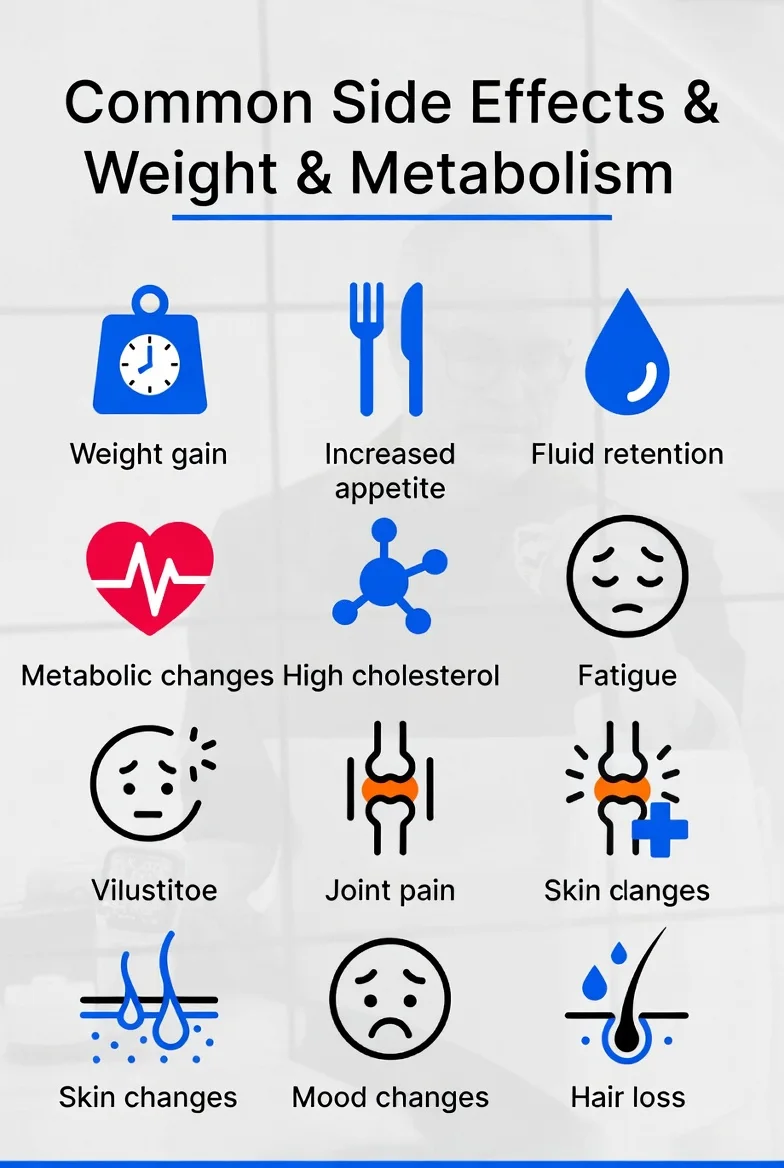
In my practice, I emphasize that weight gain rarely travels alone. It is often part of a broader “metabolic shift” that we need to monitor closely to ensure your physical health stays in sync with your mental stability.
When we talk about quetiapine weight gain, we are often also looking at a cluster of side effects that impact how your body handles energy.
Metabolic Markers to Watch
- Insulin Resistance: You may notice increased thirst or frequent urination. This happens when the medication makes it harder for your body to move sugar from your blood into your cells.
- Elevated Cholesterol and Triglycerides: Quetiapine can shift your lipid profile, which is why baseline and follow-up blood work is non-negotiable.
- Dizziness and Fatigue: Often, the lethargy that leads to weight gain is exacerbated by orthostatic hypotension (dizziness when standing). If you feel too dizzy to move, you naturally become more sedentary.
Clinical Monitoring Standard: In a professional psychiatric setting, we follow the “Rule of Three.” We check your weight, blood pressure, and waist circumference at baseline, at 3 months, and then every 6 to 12 months thereafter.
If we see a rapid increase in waist circumference, it’s a signal that your visceral fat—the fat around your organs—is increasing, which is a higher risk factor for long-term health than subcutaneous fat.
How to Prevent or Reduce Weight Gain on Quetiapine
The most important message I give my patients is that weight gain is not an inevitability. While the biological “pull” toward hunger is strong, there are several clinical and lifestyle strategies we use to counter the effects of Seroquel.
a. Mindful Nutrition and “Volume Eating.”
Because quetiapine blocks the “fullness” signal (satiety), I advise patients to focus on high-volume, low-calorie foods. Fiber is your best friend here. If your brain is telling you that you are starving, filling your stomach with leafy greens, lean proteins, and complex carbohydrates can help “trick” the receptors into signaling fullness.
b. The “Pre-Dose” Protein Strategy
To counter the “midnight snack” phenomenon mentioned earlier, I often suggest eating a high-protein snack before taking your nightly dose. Protein takes longer to digest and promotes a more stable blood sugar level, which can dampen the intense carb cravings that hit once the medication reaches peak plasma levels.
c. Physical Activity and Morning Light
To combat the reduction in circadian rhythm efficiency, getting direct sunlight within 30 minutes of waking up is essential. This helps “clear the fog” of the medication and resets your metabolism for the day. While high-intensity exercise is great, even 20 minutes of walking can improve insulin sensitivity and help counter the metabolic slowdown.
d. Medication Timing and Formulation
Sometimes, switching from Immediate Release (IR) to Extended Release (XR) can help. For some patients, the XR version provides a smoother delivery that doesn’t cause such a sharp “spike” in hunger.
Alternatives to Quetiapine for Weight Concerns
If the weight gain becomes a significant barrier to your quality of life or begins to impact your physical health (such as rising A1C levels), we have a clinical discussion about alternatives. As a psychologist, I work with the prescribing doctor to weigh the risk of a mood relapse against the risk of metabolic disease.
Lower-Weight-Gain Options
If quetiapine is being used as a mood stabilizer or antipsychotic, we might consider the following:
- Aripiprazole (Abilify): Generally considered “weight-neutral” for many.
- Lurasidone (Latuda): Often has a much lower metabolic impact, specifically for bipolar depression.
- Ziprasidone (Geodon): Another atypical that is less likely to cause significant weight gain, though it must be taken with food.
If quetiapine is being used solely for sleep, we explore non-pharmacologic options, such as Cognitive Behavioral Therapy for Insomnia (CBT-I). Research consistently shows that CBT-I is more effective than medication for long-term sleep improvement without any metabolic side effects.
Frequently Asked Questions
Will I always gain weight on quetiapine?
No. While it is a common side effect, a significant portion of patients (up to 50%) do not experience major weight gain. Proactive lifestyle management and close monitoring can make a huge difference.
Can quetiapine cause weight loss instead?
This is extremely rare. While some individuals might experience weight loss due to a reduction in stress-eating or better mood regulation, the medication’s primary biological effect is appetite-stimulating.
How long until weight gain appears?
Most metabolic shifts and appetite increases begin within the first 4 to 8 weeks of treatment. If your weight is stable after six months, you are likely in the “clear” regarding major changes.
Is weight gain permanent if I stop quetiapine?
Generally, no. Once the medication is discontinued (always under a doctor’s supervision), your metabolic rate and appetite signals typically return to their baseline. However, any weight gained will still require traditional effort to lose.
Can I take quetiapine for sleep without gaining weight?
Yes, especially at low doses (25 mg). By practicing strict sleep hygiene and avoiding post-dose snacking, many patients use low-dose quetiapine successfully without significant weight changes.
Conclusion
Navigating quetiapine and weight gain is about finding a balance between mental stability and physical vitality. You should never have to choose between your sanity and your size. By staying informed about the biological mechanisms at play and working closely with your healthcare team to monitor your metabolic markers, you can ensure that Seroquel remains a helpful tool rather than a health hurdle.
Remember, you are the expert on your own body. If you feel your metabolism is shifting in a way that feels unmanageable, bring that data to your clinician. We are here to adjust the treatment to fit your life—not the other way around.
References & Resources
- National Institute of Mental Health (NIMH): Bipolar Disorder Medications
- The American Journal of Psychiatry: Metabolic Effects of Antipsychotics
- NAMI (National Alliance on Mental Illness): Quetiapine (Seroquel) Profile
- Bipolar Lives: Managing Medication Side Effects

Related Posts





Subscribe to Our Newsletter
Get mental health tips, updates, and resources delivered to your inbox.
MORE from Author
Read More Watching someone you care about struggle with bipolar depression and anxiety can be heartbreaking. You may notice that they withdraw…
 In my practice as a clinical psychologist, I often observe that the difference between a patient who crumbles under pressure…
 We all have "up" days and "down" days. Perhaps you feel energized after a promotion or sluggish on a rainy…
 To define bipolar disorder accurately, we must look at it as a chronic mood dysregulation condition. In psychology and medicine,…
Are you looking for a Therapist?
Connect with qualified mental health professionals who understand
bipolar disorder, mood changes, and emotional challenges.
Private • Supportive • Confidential