
Premenstrual Dysphoric Disorder (PMDD): Symptoms, Causes, and Treatment Options

Medically reviewed by Laura Athey Updated Date: April 30, 2026

In my practice as a clinical psychologist, I frequently encounter individuals who feel like they are losing their grip on their identity for two weeks out of every month. They describe a “Jekyll and Hyde” existence where, despite their best efforts, they are overwhelmed by a tide of irritability, despair, and physical pain that seems to vanish the moment their period begins. This is not “bad PMS”; this is premenstrual dysphoric disorder (PMDD).
What is Premenstrual Dysphoric Disorder?
PMDD is a severe, sometimes disabling extension of premenstrual syndrome (PMS). While PMS affects the majority of menstruating individuals with mild bloating or moodiness, PMDD is a clinically recognized health condition affecting approximately 3–8% of the population.
It is characterized by intense emotional and physical symptom burdens that can disrupt careers, strain relationships, and diminish one’s quality of life.
Clinically, PMDD is recognized in the DSM-5 as a depressive disorder and in the ICD-10 (and ICD-11) as a disease of the genitourinary system and a mental health condition. In clinical practice, patients often report severe mood swings, irritability, and anxiety during the luteal phase of the menstrual cycle—these symptoms can be debilitating if left untreated.
However, once the diagnosis is established, PMDD is highly treatable through a combination of pharmacological and therapeutic interventions.
Symptoms of PMDD

Identifying premenstrual dysphoric disorder symptoms requires a careful look at the timing and the “flavor” of the distress. Unlike generalized depression or anxiety, PMDD is strictly cyclical. The symptoms emerge during the luteal phase (the time between ovulation and the start of a period) and usually resolve within a few days of menstruation onset.
Emotional and Cognitive Symptoms
The emotional burden of a PMDD flare-up is often the most distressing aspect for my patients. The most common reports include:
- Extreme Irritability: Feelings of “rage” or being “on edge” that feel out of character.
- Severe Depression: Feelings of hopelessness, worthlessness, or even suicidal ideation.
- Anxiety and Tension: A persistent sense of being “keyed up” or overwhelmed.
- Cognitive “Brain Fog”: Significant difficulty concentrating and a perceived drop in executive function, making daily work tasks feel insurmountable.
Physical Manifestations
The premenstrual dysphoric disorder physical symptoms are just as significant as the emotional ones. Many patients describe their bodies as feeling “heavy” or “inflamed.” These include:
- Joint or muscle pain.
- Significant bloating and weight gain from fluid retention.
- Breast tenderness and headaches.
- Chronic fatigue that does not resolve with rest.
Many patients describe the week before menstruation as unmanageable, with both emotional and physical symptoms affecting work and relationships. They often feel a sense of “impending doom” that they cannot logically explain until they look at their calendar.
Causes and Risk Factors
A question I am frequently asked is, “What causes premenstrual dysphoric disorder?” Many patients assume they have a “hormone imbalance.” However, clinical research suggests that most individuals with PMDD actually have normal hormone levels. The issue isn’t the amount of hormones, but how the brain responds to them.
The Serotonin-Progesterone Connection
The leading theory behind PMDD causes is a cellular hypersensitivity to the fluctuations of progesterone and estrogen. When progesterone rises and then falls during the luteal phase, it interacts with neurotransmitters in the brain, specifically serotonin.
In individuals with PMDD, this hormonal shift triggers a “drop” in serotonin activity. Since serotonin regulates mood, sleep, and pain perception, this drop leads to the hallmark symptoms of the disorder.
Genetics and Comorbidities
There is a strong genetic component; if your mother or sister struggled with severe cyclical mood shifts, your risk is higher. Furthermore, we often see a “hormonal magnification” effect with other conditions.
For example, there is a significant overlap between PMDD and ADHD. In these cases, the hormonal shift during the luteal phase can drastically impair dopamine signaling, making ADHD medications feel less effective and exacerbating emotional lability.
Clinically, patients with PMDD often have a heightened sensitivity to normal hormonal changes, which can trigger significant mood dysregulation. This is a neurobiological sensitivity, not a lack of willpower.
Diagnosis and Criteria
How is premenstrual dysphoric disorder diagnosed? This is perhaps the most critical section for anyone feeling “crazy” once a month. Because PMDD symptoms mimic other mental health conditions, a formal diagnosis follows strict criteria set forth in the premenstrual dysphoric disorder DSM-5 and ICD-10 frameworks.
The “5-Symptom” Rule
To meet the diagnostic criteria, a patient must track their symptoms and demonstrate that:
- In the majority of menstrual cycles, at least five symptoms must be present in the final week before the onset of menses.
- The symptoms must start to improve within a few days after the onset of menses.
- The symptoms must become minimal or absent in the week post-menses.
- At least one of the symptoms must be a core “mood” symptom (e.g., marked irritability, depressed mood, or anxiety).
The Necessity of Prospective Tracking
One cannot diagnose PMDD in a single sitting based on memory alone. This is because “retrospective recall” is often biased by current mood. In my practice, I require patients to use a PMDD test format involving daily symptom charts or specialized apps for at least two consecutive cycles.
The “Why” Behind the Diagnostic Rigor:
We must distinguish PMDD from premenstrual exacerbation (PME). In PME, an individual has an underlying condition (like major depressive disorder, bipolar disorder, or generalized anxiety disorder) that simply gets worse before their period. In PMDD, the symptoms are only present during the luteal phase.
The distinction is vital because the treatment for PME is to treat the underlying disorder 365 days a year, whereas PMDD treatment can sometimes be targeted specifically to the two weeks of the luteal phase.
Tracking daily symptoms across two or more cycles is essential—many patients are misdiagnosed with generalized anxiety or depression before PMDD is recognized. Without the data, we are just guessing.
A nuance that only a practicing psychologist might notice is how circadian rhythms and sleep hygiene interact with the luteal phase.
The Insight: I once worked with a patient, “Elena,” who found that her PMDD-related “rage” was nearly uncontrollable on Tuesday and Wednesday mornings. By looking at her symptom tracker, we noticed her sleep hygiene was poorest on Sunday and Monday nights due to work stress.
During the luteal phase, the body’s core temperature rises due to progesterone, which naturally fragments sleep. Elena’s lack of sleep, combined with the hormonal shift, essentially “turned off” her prefrontal cortex (the brain’s CEO), leaving her emotional amygdala in charge.
By stabilizing her sleep environment—lowering the room temperature and using a weighted blanket during those specific ten days—we were able to reduce her irritability by 40% before we even discussed medication. If the body is exhausted, the brain cannot regulate hormones.
Treatment Options

The most encouraging news is that premenstrual dysphoric disorder treatment is highly effective. We generally take a tiered approach, starting with the least invasive options and moving toward more specialized premenstrual dysphoric disorder therapies.
First-Line Pharmacological Treatment: SSRIs
Selective Serotonin Reuptake Inhibitors (SSRIs) like fluoxetine (Prozac) and sertraline (Zoloft) are the gold standard for PMDD treatment. Interestingly, while SSRIs take weeks to work for general depression, they often work within hours or days for PMDD. This is because they aren’t just treating “depression”; they are altering the brain’s neurosteroid response to progesterone.
Patients can take these in two ways:
- Continuous Dosing: Every day of the month.
- Luteal-Phase Dosing: Starting at ovulation and stopping when the period begins.
Hormonal and Integrative Approaches
For some, stopping the “hormonal roller coaster” is the key. This may involve specific oral contraceptives or, in severe cases, GnRH agonists that temporarily induce a menopausal state to give the brain a break from cycling. Additionally, Cognitive Behavioral Therapy (CBT) is invaluable.
CBT helps patients identify the “cognitive distortions” that happen during a flare-up—helping them realize that the “world isn’t ending”; it is just their luteal phase talking.
Medication Details and Management
When we discuss premenstrual dysphoric disorder medication, we are targeting the brain’s specific sensitivity to neurosteroids. Unlike traditional clinical depression, which often requires months of consistent dosing to alter brain chemistry, the “serotonergic” response in PMDD is remarkably rapid.
The Role of SSRIs in PMDD
The “Gold Standard” treatment for premenstrual dysphoric disorder involves selective serotonin reuptake inhibitors (PMDD SSRIs). In my practice, I frequently observe patients responding to low-dose SSRIs within just a few days of their luteal phase start.
- Fluoxetine (Prozac): Often the first choice due to its long half-life, which prevents “withdrawal” symptoms if a dose is missed.
- Sertraline (Zoloft): Highly effective for the physical and emotional anxiety components of the disorder.
- Paroxetine (Paxil): Used less frequently but helpful for those with severe insomnia during flare-ups.
Anxiolytics and Dosing Strategies
For some, a premenstrual dysphoric disorder anxiolytic (anti-anxiety medication) may be prescribed as an adjunct for severe panic attacks or “rage” episodes. However, the most important clinical decision is the dosing schedule.
Many of my patients prefer luteal-phase dosing (taking medication only from day 14 to day 1 of their cycle). This “intermittent” approach reduces the risk of long-term side effects like weight gain or sexual dysfunction, though continuous dosing is often necessary for those with comorbid anxiety or depression.
Self-Care and Lifestyle Strategies
While medication provides the biological foundation, premenstrual dysphoric disorder self-care is what builds long-term resilience. I often tell my patients that the luteal phase is a time of “low battery”—you cannot expect your brain to perform at 100% capacity when it is fighting a neurochemical storm.
PMDD Stress Management
The goal of managing premenstrual dysphoric disorder is to reduce the “allostatic load”—the wear and tear on your body.
- Anti-Inflammatory Nutrition: Reducing caffeine, alcohol, and high-sugar foods during the luteal phase can mitigate the “inflammation” that worsens breast tenderness and irritability.
- Strategic Exercise: High-intensity interval training (HIIT) may actually increase cortisol and worsen a PMDD flare-up. I recommend “luteal-safe” movement like yoga, swimming, or walking.
- The “Worry Window”: Using journaling to “externalize” the intrusive thoughts. If you write down the “end-of-the-world” thoughts, you can look at them again during your follicular phase (after your period starts) to see that they were hormonal, not factual.
Combining medical treatment with structured self-care improves resilience and reduces the severity of symptoms during the luteal phase. It turns the “storm” into a “rainy day.”
Special Considerations: PMDD and ADHD
A significant area of clinical interest in 2026 is the intersection of PMDD and ADHD. Studies show that women with ADHD are significantly more likely to experience PMDD.
The Dopamine-Estrogen Connection
Estrogen helps the brain produce and use dopamine—the chemical responsible for focus and executive function. When estrogen drops during the luteal phase, dopamine drops with it. For a patient with ADHD, this creates a “double deficit.” In my practice, I often see patients whose ADHD stimulants seem to “stop working” the week before their period.
In patients with ADHD, PMDD can exacerbate attention deficits and emotional lability, requiring tailored therapy and medication adjustments. Sometimes, a slightly higher dose of ADHD medication or an added SSRI during that week is the only way to maintain functional stability.
Finding Treatment and Support
If you are searching for premenstrual dysphoric disorder treatment near me, it is vital to seek an integrated team. Because PMDD sits at the intersection of endocrinology and psychiatry, you need a provider who understands both.
- The Multidisciplinary Team: Ideally, your gynecologist (to manage hormones) and your psychologist or psychiatrist (to manage the neurochemical response) should be in communication.
- Telehealth Options: In 2026, many specialized PMDD treatment centers offer virtual care, which is a boon for patients whose “brain fog” makes commuting difficult during a flare-up.
Patients often benefit from an interdisciplinary approach—gynecology, psychiatry, and therapy working together improve outcomes. You don’t have to navigate this “monthly hijacking” alone.
Frequently Asked Questions
What is the difference between PMS and PMDD?
While PMS involves mild physical and emotional changes, PMDD is a disabling condition. If your symptoms cause you to miss work, end relationships, or feel suicidal, it is likely PMDD.
Can PMDD be cured?
While we don’t have a “one-time cure,” PMDD is highly manageable. With the right combination of SSRIs, lifestyle changes, and therapy, most patients can reach a state where they are symptom-free for the majority of their lives.
Why do I feel like a “different person” during my flare-up?
This is due to the progesterone-serotonin interaction. Your brain is essentially having an allergic-like reaction to its own hormones, which temporarily changes your personality and emotional threshold.
Is PMDD considered a mental illness?
Yes, it is classified as a depressive disorder in the DSM-5. This is actually a positive step, as it ensures that insurance covers PMDD treatment options and that doctors take the condition seriously.
Conclusion
Premenstrual dysphoric disorder (PMDD) is a profound neurobiological challenge, but it does not have to define your life. By understanding the PMDD symptoms and the underlying biology of progesterone and mood, you can move from a place of shame to a place of empowered management.
- Track your cycle: Use a PMDD test chart for at least two months.
- Seek integrated care: Combine PMDD SSRIs with lifestyle interventions.
- Prioritize sleep: Protect your circadian rhythms during the luteal phase.
Early recognition and multidisciplinary treatment are the keys to reclaiming the two weeks of your life that PMDD has been stealing. You are not “crazy”; you are reacting to a physiological process that has a clear clinical solution.
References & Resources
- International Association for Premenstrual Disorders (IAPMD): iapmd.org
- American College of Obstetricians and Gynecologists (ACOG): acog.org
- National Institutes of Health (NIH) – PMDD Research: nih.gov
- Bipolar Lives – Clinical Perspectives: bipolar-lives.com

Related Posts






Subscribe to Our Newsletter
Get mental health tips, updates, and resources delivered to your inbox.
MORE from Author
Read More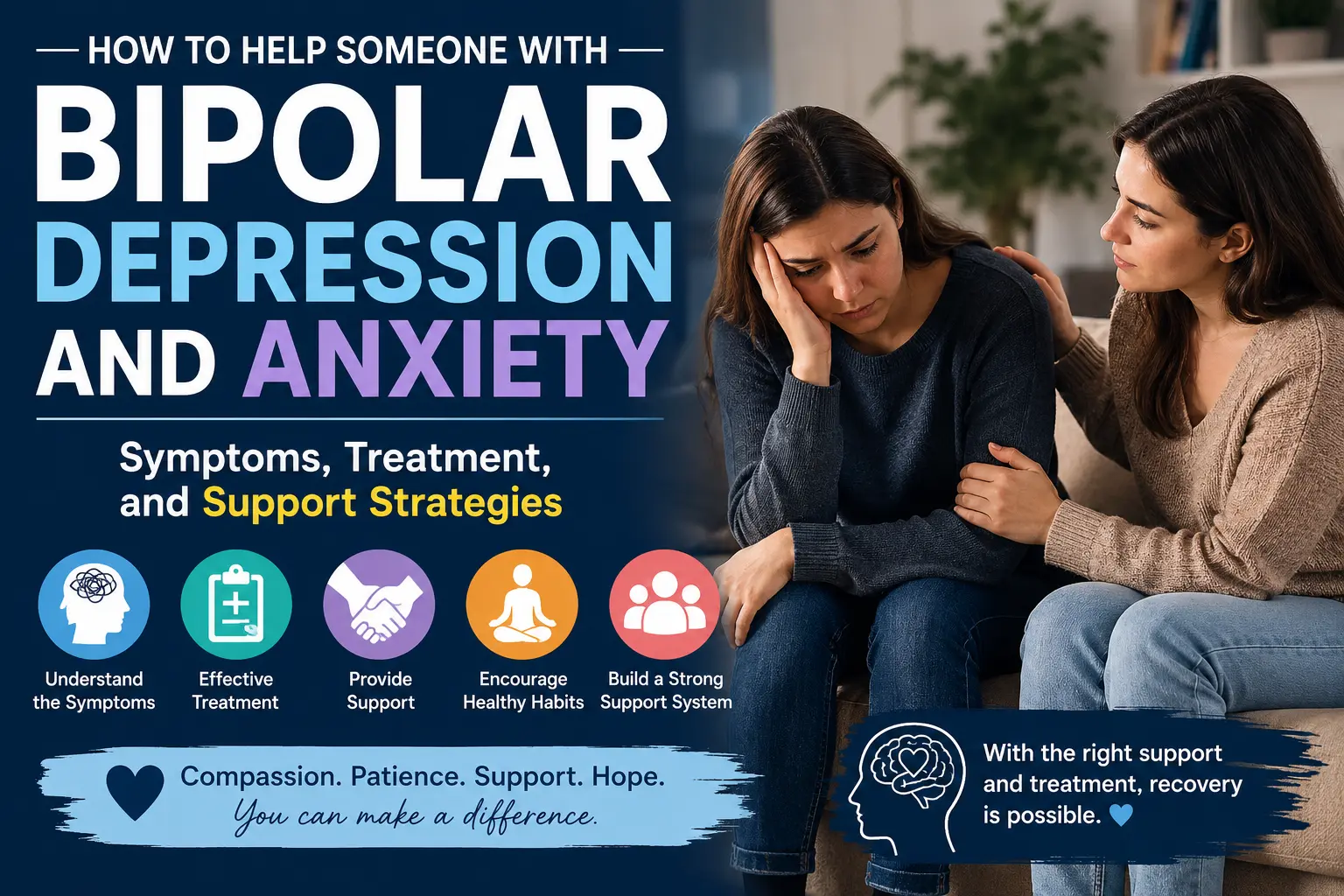 Watching someone you care about struggle with bipolar depression and anxiety can be heartbreaking. You may notice that they withdraw…
 In my practice as a clinical psychologist, I often observe that the difference between a patient who crumbles under pressure…
 We all have "up" days and "down" days. Perhaps you feel energized after a promotion or sluggish on a rainy…
 To define bipolar disorder accurately, we must look at it as a chronic mood dysregulation condition. In psychology and medicine,…
Are you looking for a Therapist?
Connect with qualified mental health professionals who understand
bipolar disorder, mood changes, and emotional challenges.
Private • Supportive • Confidential