
ADHD Burnout vs Autistic Burnout: Differences, Symptoms, and Recovery

Medically reviewed by Laura Athey Updated Date: April 5, 2026

For years, “burnout” was considered a workplace phenomenon—a result of too many hours and too little sleep. However, for those with ADHD or Autism, burnout is something much more profound. It is not just the result of working too hard; it is the result of living too hard in a world designed for neurotypical brains. This state, known as neurodivergent burnout, is a physical and mental collapse that occurs after years of “masking,” overcompensating for executive dysfunction, and managing sensory overload.
Understanding the distinction between ADHD burnout vs autistic burnout is critical because, while they overlap, the paths to recovery often differ. ADHD and autism burnout share a common theme of exhaustion, but the “flavor” of that exhaustion—whether it is driven by task paralysis and dopamine depletion (ADHD) or social camouflaging and sensory bombardment (Autism)—requires a specific therapeutic approach. Furthermore, for those who are “AuDHD” (possessing both traits), the burnout can be a complex, multi-layered crisis.
In this guide, we will break down what ADHD burnout is like, provide a clear autistic burnout definition, and explore the specific challenges of ADHD burnout in the workplace. We will also address the “24-hour rule,” common Reddit discussions regarding ADHD, autism burnout, and provide a step-by-step recovery framework.
What Is ADHD Burnout?
ADHD burnout is a state of chronic overwhelm resulting from the constant, high-octane effort required to manage a brain with executive function deficits. It is the “wall” an ADHDer hits after months or years of trying to appear organized, meet deadlines, and regulate emotions without sufficient support.
Imagine trying to hold ten spinning plates while running a marathon; ADHD burnout is what happens when the plates inevitably shatter. It is characterized by:
- Executive Dysfunction Collapse: Tasks that were once manageable (like opening mail or answering emails) now feel physically impossible.
- Chronic Overwhelm: A feeling that the world is “too much,” leading to a complete lack of motivation.
- Emotional Dysregulation: Increased irritability, frequent crying spells, or a total “emotional numbness.”
- Dopamine Bankruptcy: A state where nothing—not even special interests or hobbies—provides the usual “spark.”
What Does an ADHD Crash Out Look Like?
An ADHD crash-out is the acute phase of burnout. It is often sudden and dramatic. It may look like:
- Sudden Withdrawal: Disappearing from social circles or stopping all communication without warning.
- Task Paralysis: Sitting for hours staring at a screen or a chore, unable to move.
- Impulsive Quitting: A desperate urge to quit a job, end a relationship, or move cities just to make the “pressure” stop.
- Physical Exhaustion: Sleeping for 12+ hours and still feeling heavy-limbed.
ADHD Burnout in the Workplace
In a corporate setting, ADHD burnout in the workplace is often driven by the “Masking-Performance Cycle.” The individual works twice as hard to hide their struggles with time management, often relying on “panic-induced hyperfocus” to finish tasks at the last minute. Eventually, the adrenal system fatigues, and the individual can no longer summon the “panic” needed to perform, leading to a performance collapse and intense shame.
Burnout After ADHD Surgery (Clarification)
There is currently a high search volume for burnout after ADHD surgery. It is vital to clarify that there is no “surgery” for ADHD. This term likely refers to one of two things:
- Post-Surgical Stress: Individuals with ADHD often experience a massive executive function “dip” after undergoing unrelated physical surgeries (like orthopedic or general surgery) because the body’s recovery resources are diverted away from cognitive regulation.
- The Stimulant “Crash”: Sometimes mischaracterized as surgery recovery, this is the profound fatigue that can occur if ADHD medication is suddenly stopped or changed.
What Is Autistic Burnout?
While ADHD burnout is often about the struggle to do, autistic burnout is often about the struggle to be.
Autistic burnout definition: A state of physical and mental exhaustion, heightened sensory sensitivity, and a loss of skills, resulting from the cumulative effect of having to navigate a world that is not built for autistic people.
Unlike “typical” burnout, it is specifically tied to the toll of masking (suppressing autistic traits to fit in) and sensory overstimulation.
Autism Burnout Definition (Clinical Context)
The Autistic Self Advocacy Network (ASAN) and researchers like Dr. Dora Raymaker have identified that autistic burnout is a distinct clinical entity. It differs from depression because its core is functional capacity loss.
An autistic person in burnout doesn’t just “feel sad”; they may lose the ability to speak (non-verbal episodes), the ability to cook for themselves, or the ability to tolerate lights and sounds they previously managed.
Autistic ADHD Burnout Symptoms
When autism and ADHD coexist (AuDHD), the symptoms are a “double hit”:
- Skill Regression: Losing the ability to “socially navigate” or perform basic self-care.
- Heightened Sensory Sensitivity: Sounds that were “annoying” now feel physically painful.
- Increased Meltdowns or Shutdowns: The brain’s “circuit breaker” trips more frequently.
- Social Withdrawal: A total inability to engage in “small talk” or social camouflaging.
In my clinical experience, the biggest difference between ADHD burnout vs autistic burnout lies in the nature of the “recovery urge.” The person with ADHD burnout often wants to be busy and productive, but finds their “engine” is broken.
The person in autistic burnout, however, often feels a soul-deep need for stasis—a total cessation of sensory and social input. When treating neurodivergent burnout ADHD types, we focus on dopamine restoration. When treating autistic burnout, we focus on “sensory safety” and unmasking. Identifying which one you are experiencing is the first step toward a recovery plan that actually works.
ADHD Burnout vs Autistic Burnout
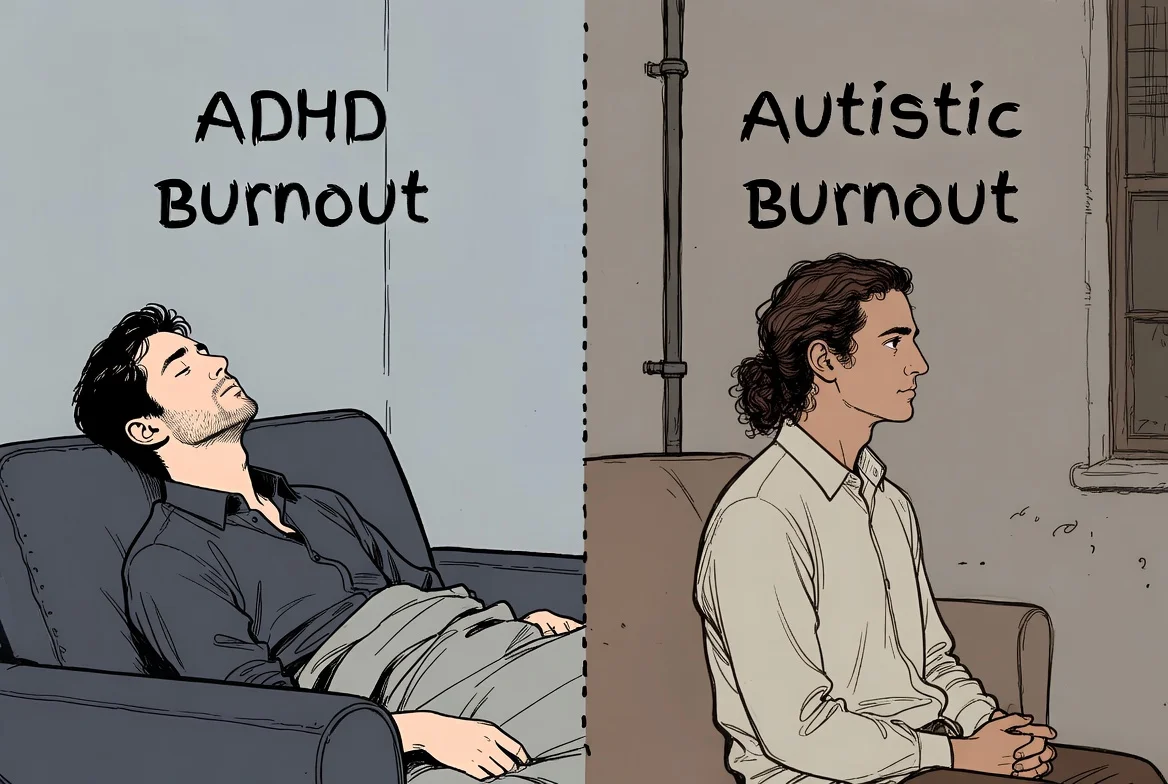
To help distinguish between these two states, we can look at the triggers and the “flavor” of the collapse.
| Feature | ADHD Burnout | Autistic Burnout |
| Primary Trigger | Chronic executive function failure and “boring” task load. | Prolonged social masking and sensory overload. |
| The “Feeling” | “I have a million things to do, but I can’t move.” | “The lights are too loud and I can’t be a person anymore.” |
| Recovery Focus | Dopamine, novelty, and removing shame. | Sensory rest, isolation, and unmasking. |
| Social Impact | Irritability and emotional outbursts. | Shutdown, mutism, and total withdrawal. |
| Skill Loss | Temporary loss of organization/focus. | Long-term loss of adaptive living skills. |
Common ADHD burnout vs autistic burnout reddit discussions highlight a recurring theme: ADHDers feel “guilty” for being lazy, while Autistic individuals feel “extinguished” as if their very identity has been rubbed raw.
What Is AuDHD Burnout?
For individuals who are both Autistic and have ADHD (often referred to as AuDHD), burnout is not a simple addition of two conditions; it is a complex, often contradictory internal conflict. In AuDHD burnout, the ADHD side of the brain may be screaming for novelty and stimulation to fix the “dopamine bankruptcy,” while the Autistic side is demanding total isolation and sensory silence to recover from overload.
The AuDHD Paradox
This internal tug-of-war makes ADHD and autism burnout particularly difficult to manage. A person with ADHD in burnout might feel:
- Restless but Paralyzed: A desperate need to “do something” to feel alive, but a complete inability to process the sensory input required to do it.
- Intense Masking Exhaustion: The ADHD “social butterfly” mask and the Autistic “socially appropriate” mask collapse simultaneously, leaving the individual feeling exposed and raw.
- Complex Recovery Patterns: Recovery often requires a delicate balance of “low-demand” novelty (like a new hyperfocus that requires little physical effort) and strict sensory boundaries.
The Bipolar Connection: Mood Stability and Burnout
When we discuss neurodivergent burnout, ADHD, and Autistic profiles, we must also consider the “mood factor.” There is a high rate of comorbidity between neurodivergence and Bipolar Disorder, which complicates the burnout picture.
Burnout as a Trigger for Mood Episodes
For someone with Bipolar Disorder, an ADHD crash-out or autistic shutdown can act as a physiological trigger. The extreme stress of burnout can push a stable individual into a depressive episode, or, conversely, the desperate search for dopamine during ADHD burnout can trigger a hypomanic “flight into health.”
The “Bipolar Burnout” Overlap
It is often difficult to tell where autistic burnout symptoms end, and Bipolar depression begins.
- The Key Difference: Bipolar depression is primarily a mood-based “low,” characterized by hopelessness and sadness. Neurodivergent burnout is a capacity-based “low,” characterized by a desire to do things but a complete lack of the cognitive or sensory “hardware” to perform them.
- Cyclical Nature: While Bipolar episodes are often cyclical and mood-driven, neurodivergent burnout is usually demand-driven. It is a direct result of the “cost of living” exceeding the “available energy.”
Neurodivergent Burnout vs. Depression
One of the most dangerous clinical errors is misdiagnosing neurodivergent burnout vs depression. Because they both present with fatigue, withdrawal, and “brain fog,” they are often treated with the same tools—usually SSRIs and “behavioral activation” (getting out more).
Why the Distinction Matters
In clinical depression, behavioral activation (forcing yourself to shower, go for a walk, or see a friend) can be life-saving. However, in autistic burnout or ADHD burnout, behavioral activation can be damaging. If a person is in burnout because they have no “gas in the tank,” forcing them to “drive” more will lead to a deeper, more permanent collapse.
| Feature | Clinical Depression | Neurodivergent Burnout |
| Motivation | “I don’t want to do anything; nothing matters.” | “I want to do things, but my brain/body won’t let me.” |
| Sensory Status | Usually neutral or dulled. | Heightened; lights and sounds feel like physical pain. |
| Social Aspect | Feelings of worthlessness or guilt. | Feelings of overstimulation and “masking fatigue.” |
| Treatment | Therapy, exercise, and medication. | Rest, sensory reduction, and removing demands. |
Neurodivergent Burnout vs. Neurotypical Burnout
Even compared to neurotypical (NT) peers, the neurodivergent burnout experience is distinct. An NT person usually burns out from work. A neurodivergent person burns out from existing.
- The Cost of Masking: An NT person doesn’t have to consciously monitor their facial expressions, tone of voice, or “fidgeting” to avoid being judged. For the neurodivergent person, this “background software” runs 24/7, consuming massive amounts of energy.
- Identity Fatigue: Neurotypical burnout is often about “what I do.” Neurodivergent burnout is often about “who I have to pretend to be.”
- Chronic Invalidation: Because the “struggles” of a neurodivergent person (like the energy it takes to make a phone call or do laundry) are often invisible to others, they are frequently told they are “just lazy,” adding a layer of moral shame to the physical exhaustion.
Am I Autistic or Is It Just My ADHD?
A common question in the ADHD autism burnout reddit community is: “Am I actually Autistic, or is my ADHD just getting worse?” Burnout often acts as a “diagnostic clarifier.” When an ADHDer is “functioning” well, they may be able to mask their autistic traits. However, when burnout hits, the masks fall off.
Signs It Might Be Autism (Not Just ADHD):
- Sensory Sensitivities: If your burnout includes a sudden, intense inability to handle certain textures, sounds, or smells, this is a hallmark of the Autistic profile.
- Social Confusion: If “people” suddenly feel like a puzzle you can no longer solve, rather than just a distraction from your tasks.
- The Need for Sameness: If you find yourself needing to eat the same meal every day or follow a rigid routine to feel safe, while your ADHD usually craves novelty.
Encouraging Professional Evaluation
While Reddit insights are valuable for community support, identifying ADHD vs Autistic burnout for the purpose of medical documentation or workplace accommodations requires a professional evaluation. Organizations like the CDC and National Institute of Mental Health provide resources for finding adult-competent diagnosticians who understand that these traits can overlap.
What Is the 24-Hour Rule for ADHD?
In the depths of neurodivergent burnout, ADHD, the brain becomes highly reactive. Small frustrations can feel like catastrophic failures, often leading to what the community calls an “ADHD crash out.” This is where the 24-hour rule becomes a life-saving cognitive tool.
The 24-Hour Reset Strategy
The 24-hour rule for ADHD is an impulse-management strategy designed to protect a burnt-out brain from making permanent decisions based on temporary “flooding.” When you are in burnout, your prefrontal cortex—the part of the brain responsible for logic and future planning—is essentially offline.
The Rule: You are not allowed to quit your job, end a relationship, send a confrontational email, or make a major purchase for 24 hours after a “triggering” event.
- The Cooling-Off Period: This time allows the nervous system to return to a “baseline” state.
- The Burnout Application: During burnout, the urge to “burn it all down” just to get relief is intense. The 24-hour rule acts as a safety barrier, ensuring that your burnout doesn’t turn into a total life collapse.
ADHD and Autism Burnout Recovery

Neurodivergent burnout recovery is not about “self-care” in the sense of bubble baths and scented candles. It is about radical demand reduction and nervous system regulation.
Neurodivergent Burnout Recovery Framework
If you are currently in the middle of a collapse, follow this clinical hierarchy of needs:
The “Zero Demand” Phase (Days 1–14)
The goal here is to stop the bleeding. Remove every non-essential demand from your life.
- Sensory Deprivation: Dim the lights, use noise-canceling headphones, and wear soft clothing.
- Lower the Bar: If you only have the energy to eat cereal and sleep, that is a successful day.
- Stop Masking: Give yourself permission to stim (fidget, rock, repeat sounds) as much as needed.
The Restoration Phase (Weeks 2–8)
Once the “acute” panic subsides, focus on biological restoration.
- Sleep Hygiene: Neurodivergent brains often struggle with circadian rhythms; prioritize rest without the pressure of a strict alarm.
- Dopamine “Micro-Dosing”: Engage in low-stakes special interests. Watch a comfort show for the 100th time or sort a collection. Do not try to learn something new yet.
The Re-Entry Phase (Month 2+)
Slowly reintroduce demands, but do so with new boundaries. This is the stage where you decide which parts of your “old life” were actually toxic to your neurotype.
Workplace Recovery Strategies
ADHD burnout in the workplace is often the hardest to navigate because of financial necessity. However, staying in the same work pattern that caused the burnout will only lead to a cycle of “re-burnout.”
Disclosure and Accommodations
You do not always have to disclose your diagnosis to receive help. Under the ADA (in the US) or similar laws globally, you can ask for “reasonable accommodations” based on symptoms.
- Flexible Scheduling: Asking for a later start time to accommodate ADHD sleep patterns.
- Body Doubling: Working in a shared digital space to help with task initiation.
- Written Instructions: Reducing the “working memory” load of verbal meetings.
- Sensory Management: Asking for a desk in a quiet corner or the ability to wear headphones.
Energy Budgeting (The Spoon Theory)
In ADHD, autism, and burnout recovery, you must learn to budget your energy like money. If you spend all your “spoons” (energy units) on a two-hour morning meeting, you will have nothing left for the rest of the day. Recovery involves learning to say “no” to low-value energy drains to save resources for high-value tasks.
Frequently Asked Questions
What is ADHD burnout like?
ADHD burnout feels like a complete “power failure” of the brain’s executive functions. It is characterized by task paralysis, intense irritability, and a feeling of being “done” with even the simplest responsibilities.
What does an ADHD crash-out look like?
An ADHD crash-out often involves sudden social withdrawal, impulsive urges to quit commitments, and a physical state of exhaustion where the person may sleep for days but never feel rested.
What is the autistic burnout definition?
Autistic burnout is a state of exhaustion and functional loss caused by years of masking and sensory overload. It results in a reduced ability to manage daily life and heightened sensitivity to the environment.
What is AuDHD burnout?
AuDHD burnout occurs in individuals who are both Autistic and ADHD. It is a “double burnout” where the person experiences both sensory exhaustion (Autism) and dopamine-driven executive collapse (ADHD).
Recovery is highly individual. Minor burnout may resolve in a few weeks of “zero demand,” while chronic, years-long burnout can take 6 months to 2 years of significant lifestyle changes to fully heal.
Conclusion
The ultimate goal of understanding ADHD burnout vs autistic burnout is not just to “recover” so you can return to the life that broke you. It is to use the burnout as a map. It shows you exactly where your boundaries were crossed, where your mask was too tight, and where your sensory needs were ignored.
By applying the neurodivergent burnout recovery steps and respecting the 24-hour rule, you aren’t just healing; you are rebuilding. You are moving toward a version of yourself that values sustainability over performance and authenticity over “fitting in.”
Authoritative Reference
- Raymaker, D. M., et al. (2020).
- The Autistic Self Advocacy Network (ASAN).
- National Institute of Mental Health (NIMH).
- The Gottman Institute.
- Centers for Disease Control and Prevention (CDC).

Related Posts






Subscribe to Our Newsletter
Get mental health tips, updates, and resources delivered to your inbox.
MORE from Author
Read More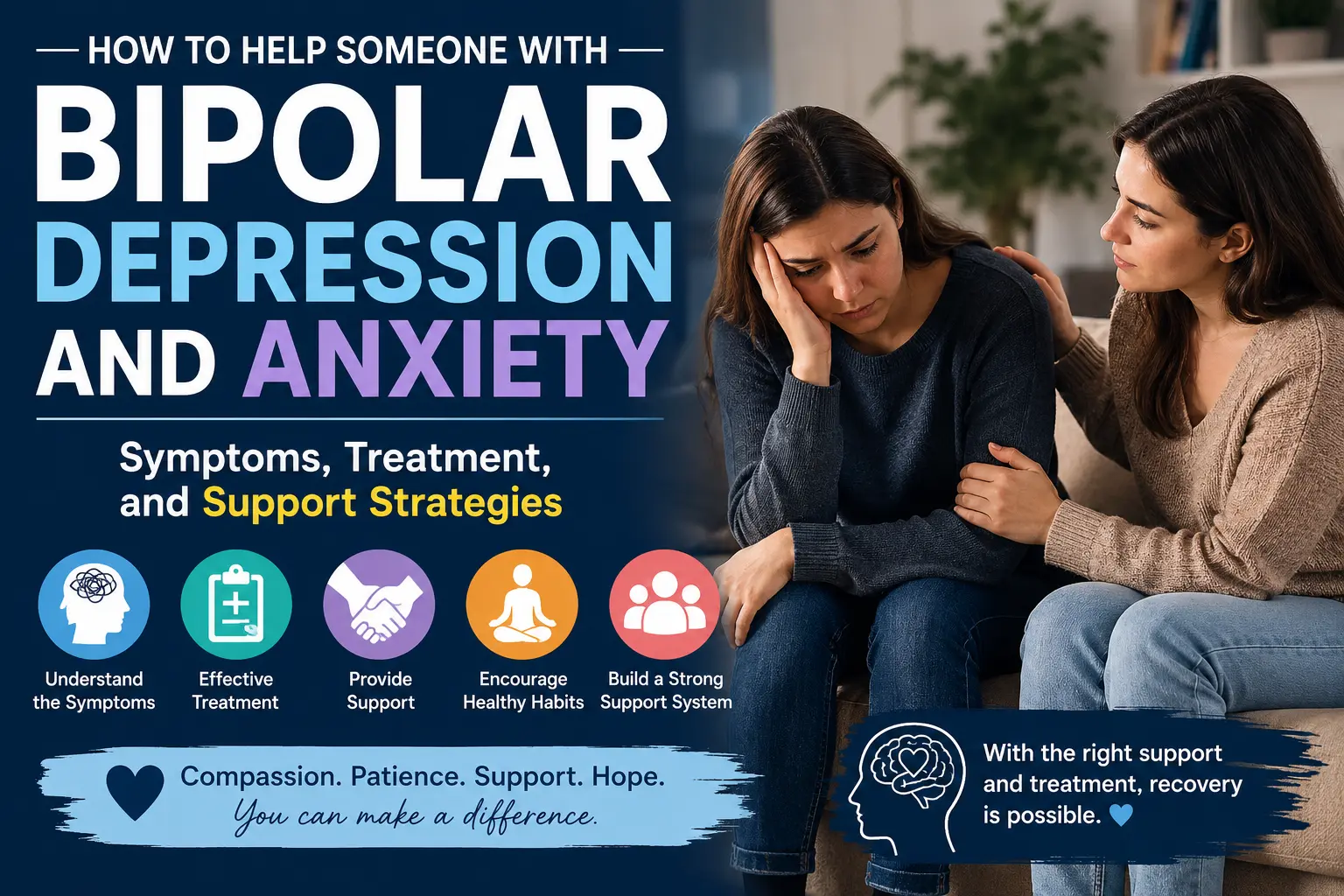 Watching someone you care about struggle with bipolar depression and anxiety can be heartbreaking. You may notice that they withdraw…
 In my practice as a clinical psychologist, I often observe that the difference between a patient who crumbles under pressure…
 We all have "up" days and "down" days. Perhaps you feel energized after a promotion or sluggish on a rainy…
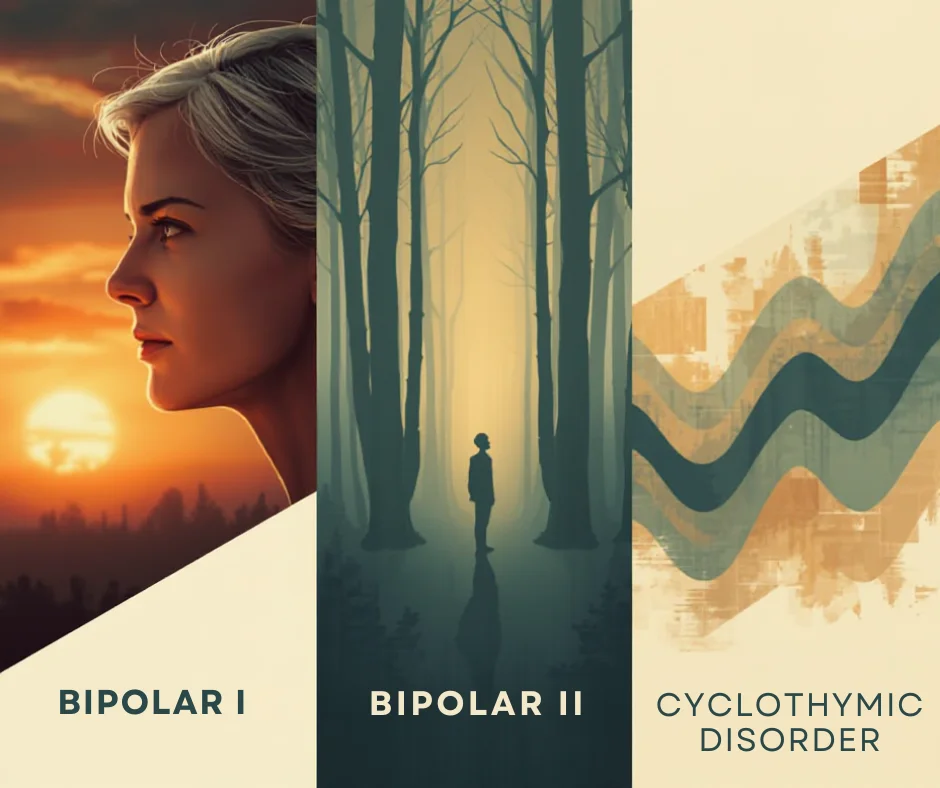 To define bipolar disorder accurately, we must look at it as a chronic mood dysregulation condition. In psychology and medicine,…
Are you looking for a Therapist?
Connect with qualified mental health professionals who understand
bipolar disorder, mood changes, and emotional challenges.
Private • Supportive • Confidential