
How to Deal With Borderline Personality Disorder (BPD): A Guide to Support and Survival
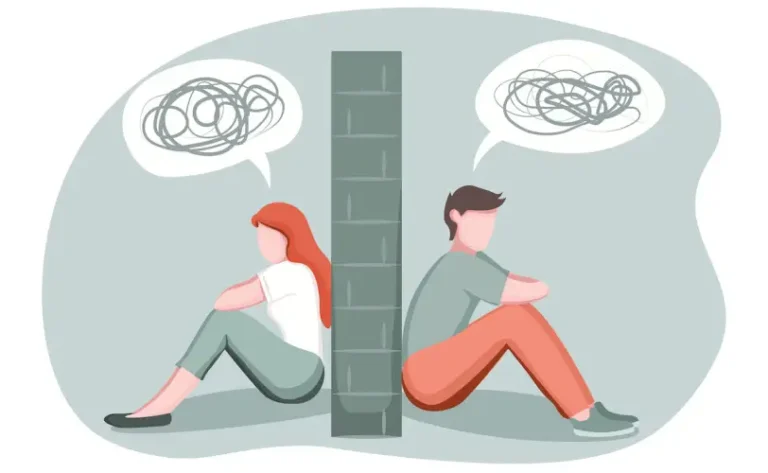
Loving or living with someone who has Borderline Personality Disorder (BPD) often feels like navigating a beautiful landscape that is prone to sudden, catastrophic weather shifts. One moment, you are the most important, cherished person in their world; the next, you may be the target of intense rage or cold withdrawal. If you feel exhausted, confused, or guilty, it is important to hear this: you are not failing.
Knowing how to deal with borderline personality disorder requires a delicate balance of deep empathy and ironclad boundaries. This condition is characterized by a “thin emotional skin,” where the slightest perceived slight can trigger an agonizing fear of abandonment. For the person with BPD, the world is a place of emotional extremes. For you, the caregiver or partner, the challenge is learning how to deal with someone with borderline personality disorder without losing your own sense of self. This guide is designed to provide you with the psychological tools to stabilize your environment, protect your mental health, and foster a more predictable relationship.
Understanding Borderline Personality Disorder First
Before you can master borderline personality disorder, how to deal with strategies, you must understand the “why” behind the behaviors. At its core, BPD is a disorder of the emotional regulation system. While a person without BPD might feel a “2” on an emotional scale during a disagreement, a person with BPD may immediately jump to a “10.”
Emotional Dysregulation and the Fear of Abandonment
Most high-conflict behaviors in BPD are driven by a desperate, often unconscious fear of being left alone. When you are late for dinner or don’t answer a text, the person with BPD doesn’t just feel annoyed; they may feel a visceral sense of annihilation. Why do people with BPD hurt others? Usually, it is a defensive reflex. By “pushing” you away or attacking first, they are attempting to protect themselves from the perceived pain of you leaving them. Their reactions feel deeply personal, but they are often a projection of their internal chaos rather than a true reflection of your actions.
Core Principles for Dealing With Someone Who Has BPD
Success in how to deal with someone who has borderline personality disorder is built on a foundation of “consistency over intensity.” The more predictable you are, the safer the person with BPD feels.
- Validate Feelings, Not Harmful Behavior: You can acknowledge that their pain is real without agreeing with their accusations. For example: “I can see you are feeling really hurt right now, but I will not stay in the room while I am being yelled at.”
- Predictability Over Intensity: Avoid the “reassurance spiral.” While it is tempting to spend hours proving you love them, this often only reinforces the crisis. Calm, consistent, and brief affirmations are more effective.
- Boundaries Are Not Abandonment: One of the hardest lessons in learning how to deal with a person with borderline personality disorder is that saying “no” is actually a form of love. Boundaries provide the structure that their internal world lacks.
How to Deal With Borderline Personality Disorder Symptoms
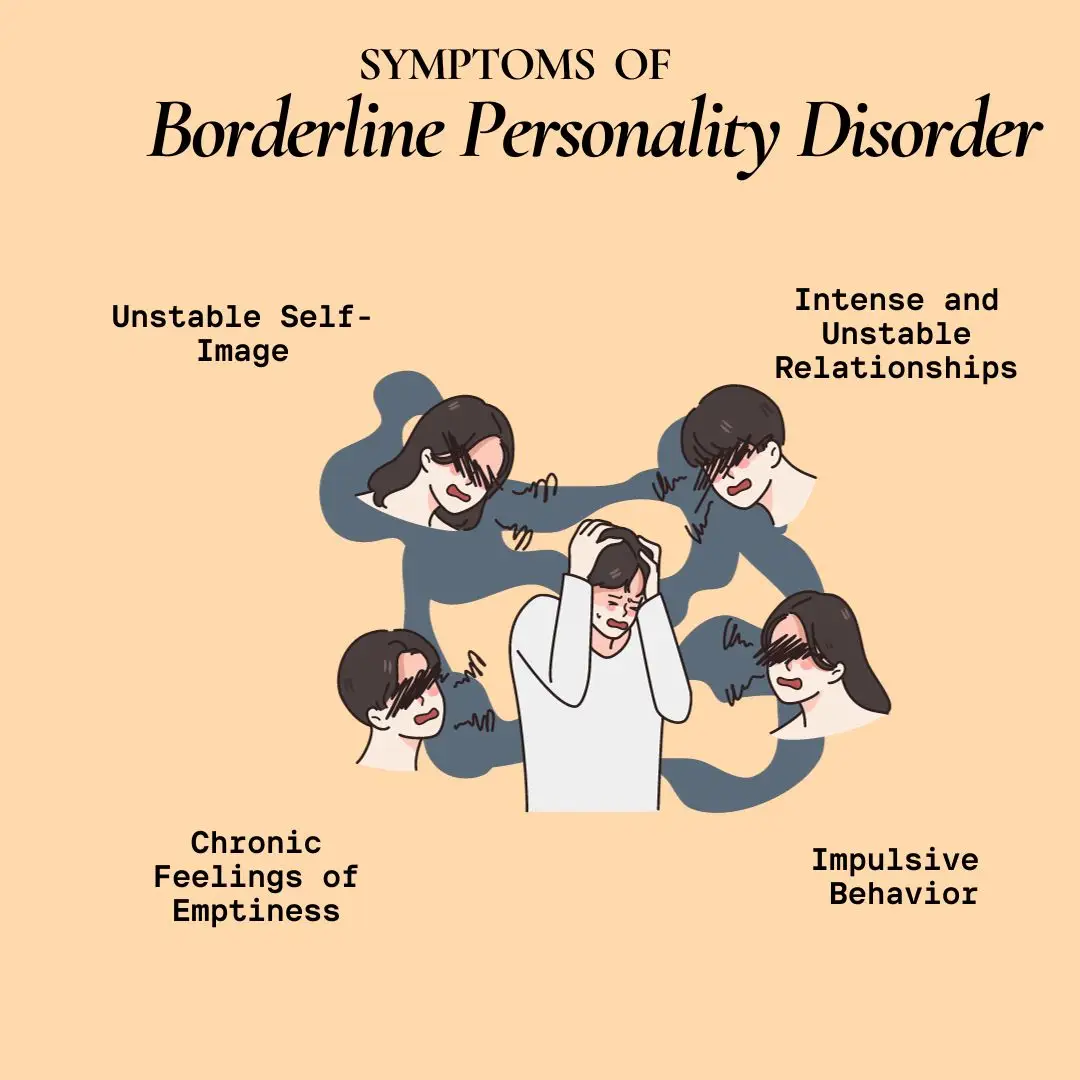
To effectively manage the relationship, you must learn how to deal with borderline personality disorder symptoms individually. Each symptom requires a different response.
- Splitting: This is the “all-good or all-bad” thinking. When you are “split black” (seen as the villain), do not argue. State your truth calmly and wait for the emotional wave to pass.
- Impulsivity: If they engage in reckless spending or substance use, do not “save” them from the natural consequences. Enabling behaviors prevents them from seeing the need for treatment.
- Emotional Withdrawal: When they “shut down,” give them space but let them know exactly when you will check back in. This prevents the withdrawal from turning into a fear of abandonment.
Utilizing borderline personality disorder coping skills as a caregiver involves recognizing these patterns early so you can choose your response rather than reacting in the heat of the moment.
How to Calm Down During a BPD Episode
When a crisis hits, your primary goal is de-escalation. How to calm down during a BPD episode? You must become the “emotional anchor.”
De-escalation Techniques
- Lower Your Volume: As they get louder, you should get quieter. This forces them to focus more on listening and less on shouting.
- The Power of Physicality: If safe, offer a heavy blanket or a cold glass of water. Sensory inputs can sometimes pull a person out of an emotional “flood” faster than words can.
- Disengage Safely: If the situation becomes abusive or circular, state: “I love you, but I am going to the other room for 20 minutes so we can both cool down. I will be back at 7:00 PM.” Giving a specific return time is the “antidote” to their abandonment fear.
What Not to Say to Someone With Borderline Personality Disorder
In the heat of an argument, certain phrases act like gasoline on a fire. Knowing what not to say to someone with borderline personality disorder is half the battle.
- “You’re overreacting”: Even if it’s true, saying it is dismissive. Their nervous system is telling them the house is on fire; telling them it’s just a candle will only make them scream louder to be heard.
- “This is why people leave you”: This is the ultimate “nuclear” statement. It hits their deepest wound and destroys the trust required for recovery.
- “Just be logical”: During emotional flooding, the prefrontal cortex (the logic center) is literally offline. Logic will fail until the emotional “wave” has subsided.
How to Talk to Someone With Borderline Personality Disorder
Communication is your most powerful tool. How should you talk to someone with borderline personality disorder? Use the “SET” method: Support, Empathy, and Truth.
- Support: State your personal concern (“I care about you and our relationship”).
- Empathy: Acknowledge their feeling (“I can see how much this is hurting you”).
- Truth: State the boundary or the reality of the situation (“However, I cannot miss work today to stay home with you”).
This framework prevents you from becoming defensive while ensuring your own needs are still being communicated clearly.
How to Deal With BPD in Romantic Relationships
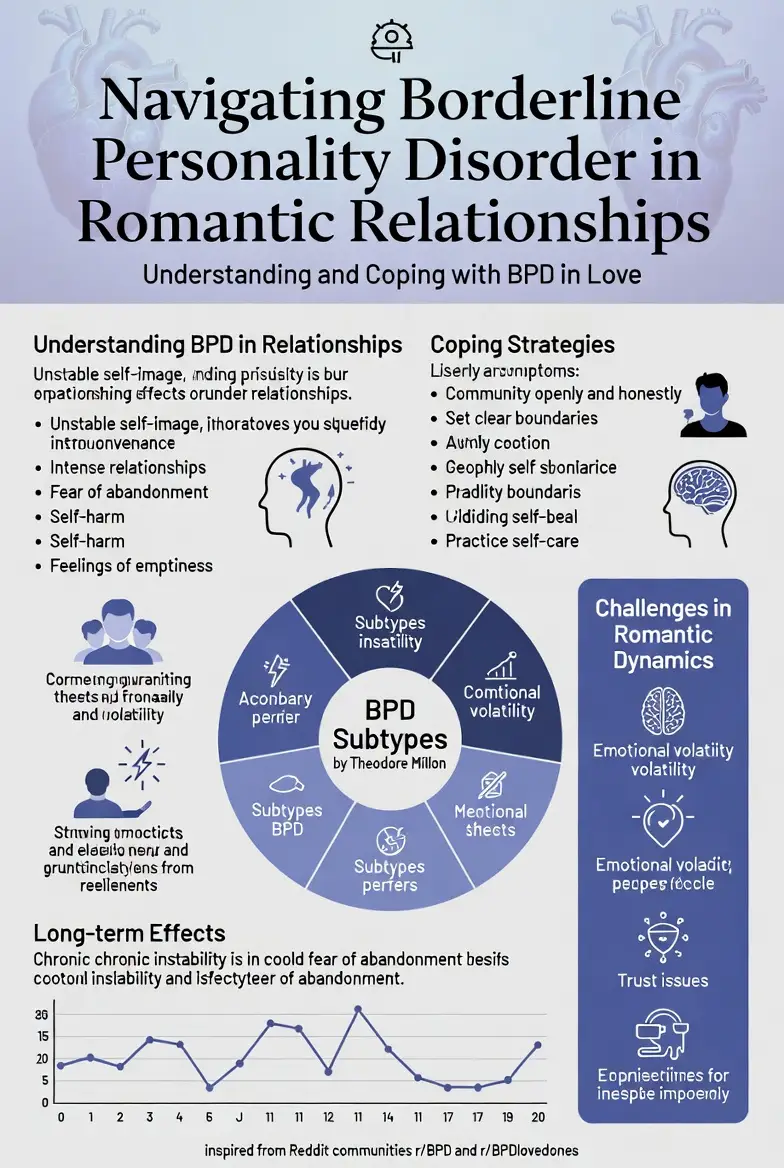
The romantic arena is where BPD is often most visible and most painful. How to deal with borderline personality disorder in relationships requires moving away from a “fixer” mindset and toward a “partner” mindset. Because intimate bonds trigger the most intense fears of loss, you will likely experience the “push-pull” dynamic firsthand.
The Reassurance Cycle
A common trap in how to deal with Borderline Personality Disorder in a relationship is the endless reassurance cycle. Your partner may ask, “Do you love me?” or “Are you going to leave?” fifty times a day. If you provide a 20-minute explanation each time, you are inadvertently teaching their brain that anxiety results in a “reward” of high-intensity attention. Instead, provide brief, consistent validation: “I love you, I’m here, and I’m going to finish the dishes now.”
How to Deal With a Girlfriend With Borderline Personality Disorder
When learning how to deal with a borderline personality disorder girlfriend, the focus should be on “emotional containment.” Women with BPD often experience society’s pressure to be “stable” or “nurturing,” making their internal chaos feel even more shameful.
- Model Emotional Regulation: If she is spiraling, remain calm. Your stability acts as a mirror. If you get angry back, the “emotional fire” simply grows.
- Encourage Outside Interests: Dependency is a major risk factor. Encourage her to have hobbies and friendships that do not involve you. This reduces the “all-or-nothing” pressure on your relationship.
How to Deal With a Boyfriend or Husband With BPD
The presentation of BPD can differ due to gender socialization. If you are seeking how to deal with ba orderline personality disorder boyfriend or how to deal with a man with borderline personality disorder, you may notice that his distress manifests more as irritability or “explosive” anger rather than tears.
- Safety Considerations: Because men are socialized to externalize anger, ensure that “time-outs” are a standard part of your communication. If he begins to pace or raise his voice, the conversation must end immediately for the safety of both parties.
- Addressing the Stigma: Many men feel that a BPD diagnosis is “unmasculine.” Frame treatment as “mental toughness” or “emotional mastery” rather than “healing” to help bridge the gap toward professional help.
How to Deal With a Friend With Borderline Personality Disorder
Friendships with BPD can be intensely loyal but often suffer from “emotional dumping.” Knowing how to deal with a friend with borderline personality disorder involves setting clear social boundaries.
- Avoid “Crisis-Only” Friendships: If your friend only calls when they are in a life-or-death drama, you will quickly experience compassion fatigue. Start setting limits: “I can talk for 15 minutes, but then I have to go to dinner.”
- Identify Guilt-Based Loyalty: Do not stay in a friendship solely because you are afraid they will hurt themselves if you leave. You are a friend, not a suicide prevention hotline. Encourage professional support for clinical crises.
How to Deal With a Parent With Borderline Personality Disorder
Growing up with a BPD parent often leads to “parentification,” where the child becomes the emotional caretaker. How to deal with a mother with borderline personality disorder or a father involves “re-parenting” yourself as an adult.
- Release the Guilt: You were never responsible for your parents’ moods as a child, and you aren’t now.
- Low Contact vs. No Contact: You do not have to endure abuse to be a “good” daughter or son. If your parent is unwilling to respect boundaries, limiting contact to structured, brief interactions (like a 20-minute Sunday call) can preserve your peace.
How to Deal With a Daughter With Borderline Personality Disorder
Watching your child suffer is heartbreaking. How to deal with a borderline personality disorder daughter involves shifting from “enabler” to “supporter.”
- Stop the “Rescue” Mission: If she gets into financial or social trouble due to BPD impulsivity, don’t immediately pay the bill or fix the problem. She must feel the “weight” of the disorder to remain motivated for treatment like DBT.
- Model Healthy Boundaries: Show her what it looks like to say “no” calmly. It is the most valuable skill she can learn from you.
How to Help Someone With Borderline Personality Disorder
If you are asking, “How can I help someone with BPD?“, the best answer is to facilitate professional treatment. You cannot “love” someone out of a personality disorder.
- Suggest DBT (Dialectical Behavior Therapy): This is the gold standard. It is a skills-based therapy that teaches them how to “braid” their own emotional safety net.
- Create a Crisis Plan: When they are calm, sit down and write a “Safety Plan.” What should you do if they feel suicidal? Who do you call? Having this in writing removes the guesswork during an episode.
- Avoid Savior Burnout: You are only helpful if you are healthy. If you are skipping your own doctor appointments or losing sleep, you are no longer a stable anchor for them.
What Happens If Borderline Personality Disorder Is Left Untreated
It is important to understand the stakes. What happens if borderline personality disorder remains untreated? Over time, the “burnout” in their social circle leads to profound emotional isolation.
Untreated BPD often leads to a “fragmented” life: multiple job losses, legal issues from impulsivity, and high rates of physical health problems due to chronic stress. However, there is immense hope. BPD has one of the highest recovery rates of all personality disorders if the person commits to long-term therapy.
How to Deal With Someone With BPD at Work
Professional environments demand a level of emotional neutrality that can be difficult for someone with BPD to maintain. Knowing how to deal with someone with Borderline Personality Disorder at work requires a strict adherence to professional decorum and clear documentation.
- Maintain Professional Distance: While being friendly is natural, avoid becoming the “primary emotional support” for a coworker with BPD. High-intensity personal sharing in the office often leads to “triangulation,” where the person with BPD may unintentionally pit colleagues against one another.
- Document Everything: If you are a manager, ensure all feedback is given in writing and follows a predictable schedule. Surprise “performance chats” can trigger an abandonment or rejection crisis.
- Involve HR Early: If emotional outbursts or “splitting” begin to affect team productivity, do not try to handle it alone. Professional boundaries are protected by labor laws and company policy for a reason.
Coping When You’re Emotionally Exhausted
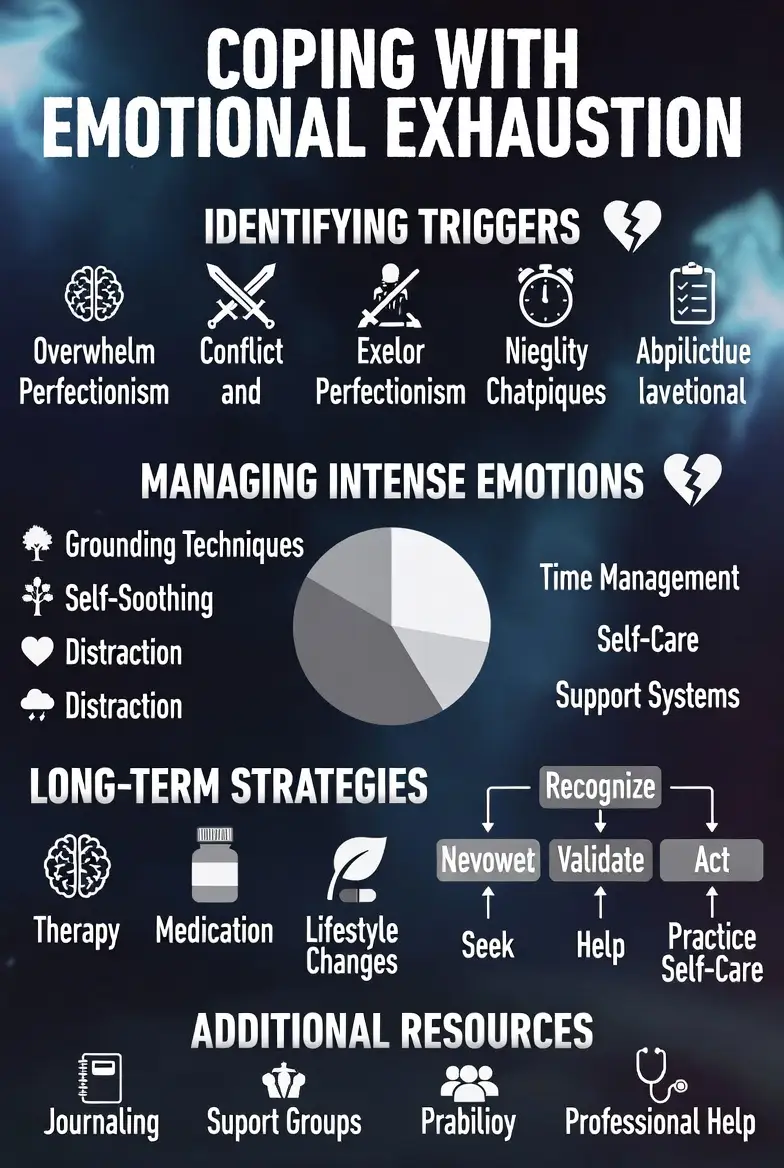
Compassion fatigue is the most common “side effect” of dealing with people with borderline personality disorder. If you find yourself feeling numb, resentful, or constantly anxious, you are experiencing emotional burnout.
When Stepping Back Is Healthy
Detaching is not the same as abandoning. You can love someone and still decide that you cannot be their primary caregiver right now. If your own mental health is deteriorating, it is okay to suggest a period of “low contact” or to insist that the relationship is contingent on them seeking professional treatment. Remember: You are not a rehabilitation center for a person who refuses to help themselves.
How to Deal With Borderline Personality Disorder: Reddit vs. Reality
If you search for how to deal with Borderline Personality Disorder Reddit, you will encounter two extremes: “BPD loved ones” forums that describe the disorder in monstrous terms, and “BPD support” forums that may minimize the impact on caregivers.
Balanced Clinical Reality
The reality lies in the middle. Reddit narratives often focus on the “toxic” peak of an untreated crisis. However, clinical data show that BPD is a spectrum. Many people with BPD are high-achieving, deeply compassionate individuals who are simply in immense pain. Avoid “doom-scrolling” through extreme stories, as they can bias your view of your loved one’s potential for recovery.
Books & Resources on Dealing With BPD
If you are looking for a deep dive, the right way to deal with Borderline Personality Disorder can be life-changing.
- Stop Walking on Eggshells by Paul Mason & Randi Kreger: The definitive guide for partners and family members on setting boundaries.
- Loving Someone with Borderline Personality Disorder by Shari Manning: Focused on using DBT validation techniques in your daily communication.
- I Hate You—Don’t Leave Me by Jerold Kreisman: An essential look at the “push-pull” psychology of the disorder.
Can You Overcome Borderline Personality Disorder?
One of the most frequent questions from families is, “Can you overcome borderline personality disorder?” The answer is a resounding yes.
Unlike many other personality disorders, BPD has an excellent “remission” rate. Studies show that after 10 years of treatment, up to 80% of individuals no longer meet the diagnostic criteria. They may always be “emotionally sensitive,” but they can learn to manage that sensitivity so it no longer destroys their lives or yours.
Frequently Asked Questions
How to deal with someone who has borderline personality disorder?
The best approach is to remain calm, validate their feelings without agreeing with their distorted perceptions, and maintain consistent boundaries that protect your own mental well-being.
Why do people with BPD hurt others?
It is almost always a “pre-emptive strike” driven by a fear of being hurt first. Their anger is a defense mechanism intended to mask a deep sense of vulnerability and fear of abandonment.
Can relationships survive BPD?
Yes, but they rarely survive untreated BPD. Success requires the person with BPD to be in therapy (like DBT) and the partner to have their own support system and firm boundaries.
When should you leave for your own safety?
If there is physical violence, extreme financial exploitation, or if the person with BPD refuses to acknowledge their behavior or seek treatment despite repeated cycles of harm, leaving may be the only way to preserve your own life.
Conclusion
Learning how to deal with someone with borderline personality disorder is a journey of radical patience. It requires you to see the wounded child inside the shouting adult, while simultaneously refusing to be that adult’s punching bag.
Whether you are learning how to deal with a borderline personality disorder family member or a romantic partner, remember that the goal is not to “save” them, but to create a stable environment where they can save themselves. By holding your boundaries and insisting on professional treatment, you provide the highest form of love: the kind that demands growth and respects the humanity of both people.
Authoritative References
1. National Education Alliance for Borderline Personality Disorder (NEA.BPD)
2. McLean Hospital –A Guide to BPD for Families
3. National Institute of Mental Health (NIMH) – BPD Information and Support
4. The Linehan Institute – Behavioral Tech
5. American Psychiatric Association (APA) –Understanding Personality Disorders

Related Posts




Subscribe to Our Newsletter
Get mental health tips, updates, and resources delivered to your inbox.
MORE from Author
Read More In my practice as a clinical psychologist, I often observe that the difference between a patient who crumbles under pressure…
- We all have "up" days and "down" days. Perhaps you feel energized after a promotion or sluggish on a rainy…


 To define bipolar disorder accurately, we must look at it as a chronic mood dysregulation condition. In psychology and medicine,…
 To answer whether bipolar fits the bill, we first have to define what a neurodivergent person actually is. The term…

Are you looking for a Therapist?
Connect with qualified mental health professionals who understand
bipolar disorder, mood changes, and emotional challenges.
Private • Supportive • Confidential