
Is Bipolar Disorder a Personality Disorder? Bipolar vs BPD Explained Clearly

The intersection of mental health and identity often leads to a fundamental question for those seeking clarity on their symptoms: Is bipolar a personality disorder? This question is among the most searched topics in the mental health space, frequently appearing in forums as people ask, “Is bipolar considered a personality disorder because of how much it changes my behavior?”
The confusion is understandable. Both bipolar disorder and certain personality disorders, such as Borderline Personality Disorder (BPD), involve intense emotional shifts, impulsivity, and strained relationships. However, from a clinical standpoint, the answer is a definitive “no.” In the world of psychiatry, these conditions live in entirely different neighborhoods of the Diagnostic and Statistical Manual of Mental Disorders (DSM-5).
Misunderstanding what a bipolar personality disorder—a term that doesn’t actually exist in medicine—can lead to improper treatment and increased stigma. One is a biological condition of mood regulation, while the other relates to deep-seated patterns of relating to the world. To understand the distinction, we must look at how the brain processes emotion versus how a person’s identity is structured.
Is Bipolar a Mood Disorder or a Personality Disorder?
To clear up the most immediate confusion: Is bipolar a mood disorder or a personality disorder? Bipolar disorder is classified as a mood disorder.
In clinical psychology, a mood disorder (or affective disorder) is characterized by a primary disturbance in an individual’s internal emotional state. Conversely, a personality disorder involves pervasive, inflexible patterns of thinking and behaving that deviate significantly from cultural expectations.
Therefore, when asking if bipolar disorder is a mood or personality disorder, the distinction lies in the “episodes.” Bipolar disorder is defined by distinct periods of mania or depression that represent a departure from a person’s “baseline” self. A personality disorder is usually considered the person’s “baseline” way of functioning.
What Is Bipolar Disorder? (Clinical Overview)
Bipolar disorder is a chronic brain disorder that causes unusual shifts in mood, energy, and activity levels. It is fundamentally a biological “glitch” in the brain’s mood-regulation circuitry.
Bipolar I vs. Bipolar II
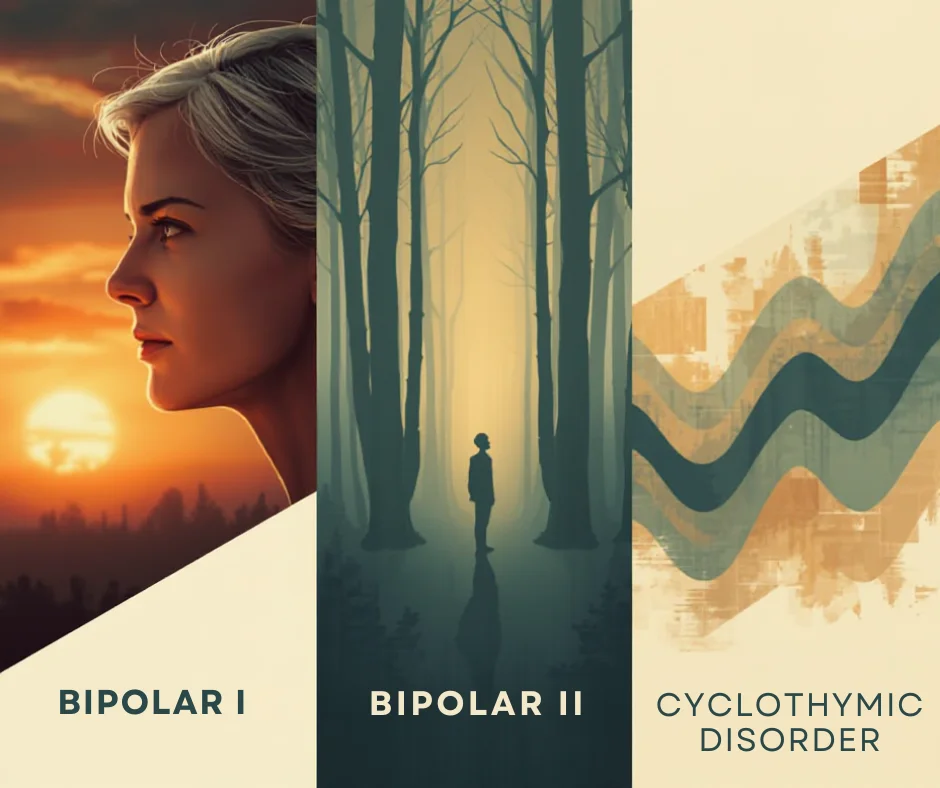
- Bipolar I Disorder: Defined by manic episodes that last at least seven days or are so severe that the person needs immediate hospital care. Depressive episodes occur as well, typically lasting at least two weeks.
- Bipolar II Disorder: Defined by a pattern of depressive episodes and hypomanic episodes, but not the full-blown manic episodes described above. It is a common misconception to ask if bipolar II is bipolar 2 a personality disorder simply because the mood shifts can be more frequent; it remains strictly a mood disorder.
Psychosis vs. Personality
Many wonder if bipolar a psychotic disorder? While bipolar disorder is not a psychotic disorder (like schizophrenia), it can have “psychotic features.” During a severe manic or depressive episode, a person may experience hallucinations or delusions. This is a symptom of the mood severity, not a permanent change in personality structure.
What Is a Personality Disorder?
To understand why bipolar disorder doesn’t fit this category, we must define what a personality disorder actually is. These are conditions where an individual’s “personality”—their characteristic way of thinking, feeling, and behaving—causes significant distress or impairment.
Personality disorders are divided into three “clusters” based on similar characteristics:
- Cluster A (Odd/Eccentric): Includes Paranoid, Schizoid, and Schizotypal personality disorders.
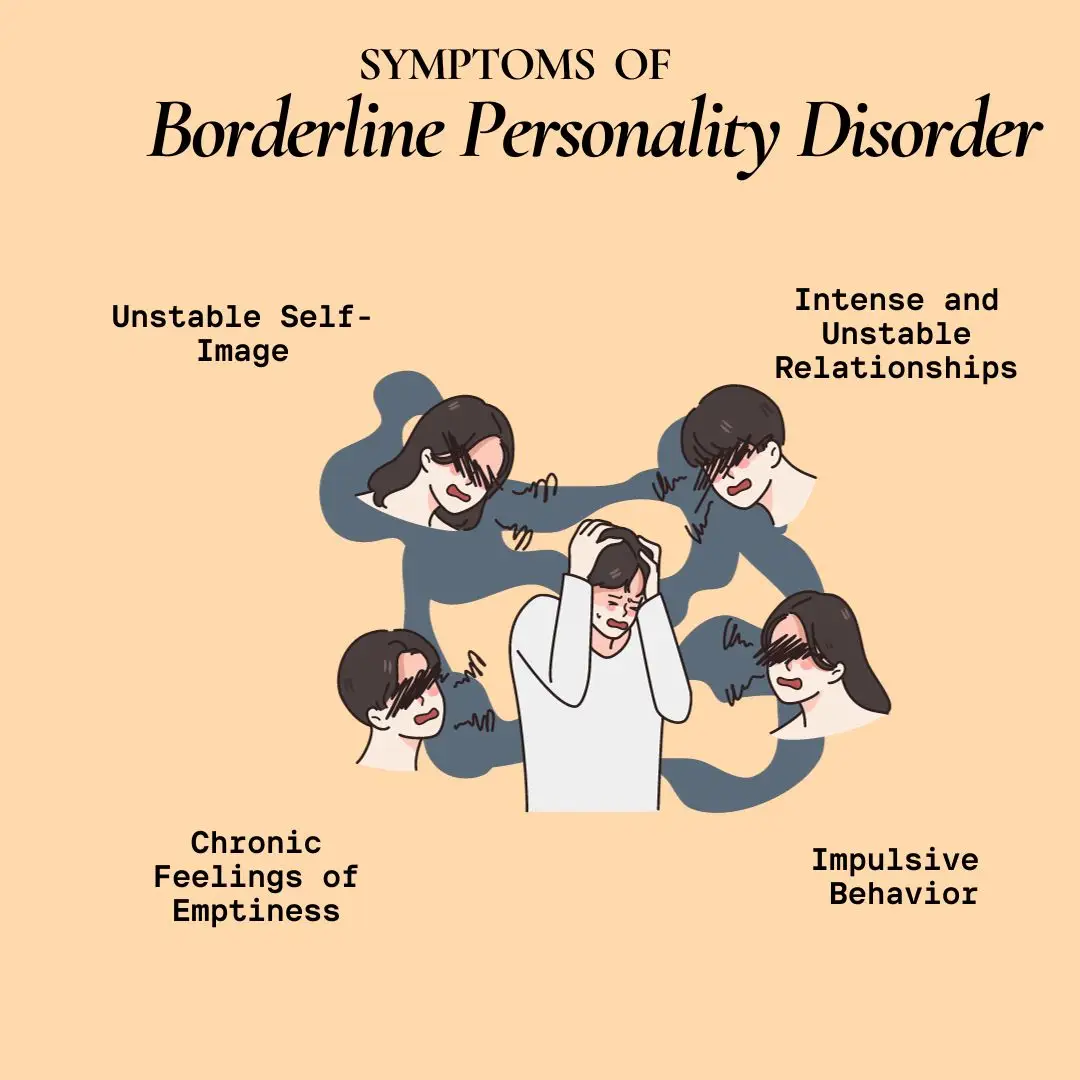
- Cluster B (Dramatic/Erratic): Includes Antisocial, Borderline, Histrionic, and Narcissistic personality disorders. This is where most confusion occurs.
- Cluster C (Anxious/Fearful): Includes Avoidant, Dependent, and Obsessive-Compulsive personality disorders.
When people ask what the top 3 personality disorders in terms of diagnosis are, Borderline (BPD), Narcissistic (NPD), and Antisocial (ASPD) are frequently cited. Unlike bipolar disorder, these patterns are “ego-syntonic,” meaning the person often perceives their behavior as normal, even if it causes problems, whereas a bipolar person often feels “hijacked” by their mood.
Why Bipolar Is Not a Personality Disorder
There are three primary clinical reasons why bipolar disorder is bipolar not a personality disorder. Understanding these helps dismantle the stigma that bipolar is a “character flaw.”
1. Episodic vs. Pervasive
Bipolar disorder is episodic. A person has a “baseline” personality, and then they enter a manic or depressive “episode” where their behavior changes. Once the episode is treated, they generally return to their baseline self. Personality disorders are pervasive; the traits are present across almost all situations and have usually been stable since adolescence.
2. The “Cluster B” Confusion
People often ask if bipolar a cluster B personality disorder. While bipolar disorder shares the “dramatic and erratic” energy of Cluster B disorders (like BPD), it lacks the core identity disturbance. In BPD, the instability is often triggered by interpersonal relationships (fear of abandonment). In bipolar disorder, the instability is often biological (triggered by sleep deprivation, stress, or seasonal changes).
3. Treatment Response
The biological nature of bipolar means it responds remarkably well to mood stabilizers like Lithium. Personality disorders generally do not respond to medication in the same way because you cannot “medicate” a personality trait. Instead, personality disorders require intensive psychotherapy, like Dialectical Behavior Therapy (DBT), to “relearn” coping mechanisms.
Is Bipolar a Psychotic Disorder or Related to Schizophrenia?
Another area of confusion is the relationship between mood, personality, and psychosis. Some ask if schizophrenia is schizophrenia a personality disorder. No, schizophrenia is a psychotic disorder characterized by a “split” from reality.
Bipolar disorder sits in the middle ground. While it is a mood disorder, the potential for psychosis during mania leads some to categorize it as a bipolar psychotic disorder. It is more accurate to say it is a “mood disorder with psychotic potential.”
There is also a condition called Schizoaffective Disorder, which is essentially a hybrid of bipolar disorder and schizophrenia. This is a distinct diagnosis and further illustrates that bipolar disorder is rooted in brain chemistry and perception, not personality formation.
Bipolar Disorder vs Borderline Personality Disorder (Core Comparison)
The most frequent diagnostic confusion is between borderline personality disorder and bipolar disorder. They are often mistaken for one another because both involve “mood swings.” However, the mechanics of those swings are very different.
Mood Changes vs. Emotional Reactivity
In borderline personality disorder and bipolar disorder, the triggers differ. A person with BPD has “emotional hyper-reactivity.” If a friend cancels a lunch date, they may spiral into suicidal despair or intense rage within minutes because it triggers a fear of abandonment. In Bipolar II, a person might become depressed for weeks regardless of their social life because their brain’s “thermostat” has malfunctioned.
Duration of Mood Shifts
- BPD: Moods can shift several times in a single day. The “episodes” are usually hours long.
- Bipolar: Even “rapid cycling” bipolar episodes usually last days or weeks. A “manic” episode that only lasts two hours is likely not bipolar mania.
Identity and Relationship Patterns
A hallmark of borderline personality disorder vs bipolar 1 is the sense of self. People with BPD often report feeling “empty” or not knowing who they are. In Bipolar 1, the person usually has a very strong (though sometimes overinflated) sense of self during mania.
Bipolar vs BPD: Side-by-Side Comparison Chart
To help differentiate bipolar and BPD, refer to the following clinical comparison:
| Feature | Bipolar Disorder (BPAD) | Borderline Personality Disorder (BPD) |
| Category | Mood Disorder | Personality Disorder |
| Primary Cause | Genetics, Neurochemistry, Biological | Trauma, Attachment, Environment |
| Mood Duration | Days, weeks, or months | Minutes to hours |
| Sleep Needs | Decreased need for sleep (Mania) | Generally normal (though disrupted by stress) |
| Triggers | Circadian shifts, stress, and drugs | Interpersonal conflict, abandonment fear |
| Main Treatment | Medication (Lithium/Antipsychotics) | Therapy (DBT/CBT) |
| Identity | Stable baseline identity | Disturbed or “chameleon” identity |
Which Is Worse: Bipolar or Borderline Personality Disorder?
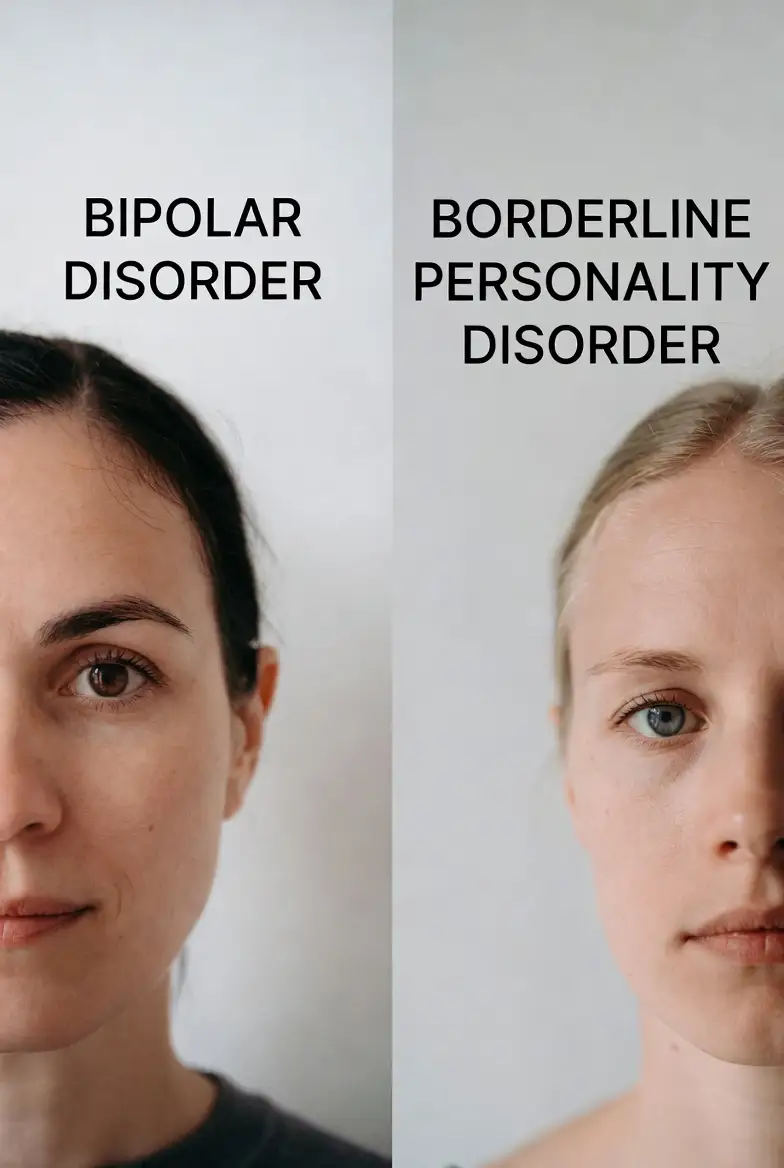
When patients or family members ask which is worse, bipolar or BPD, they are usually searching for a way to quantify the level of struggle they are facing. However, mental health professionals avoid creating a “hierarchy of suffering.” Both conditions present profound challenges, but the type of burden differs.
Bipolar disorder is often characterized by “peak” crises. A single manic episode can lead to significant financial loss, legal issues, or physical danger. The risk of bipolar 1 dangerous is primarily centered on these acute periods where a person loses touch with reality.
Borderline Personality Disorder is often characterized by “chronic” distress. Because the symptoms involve a person’s core identity and how they relate to others, the suffering is often constant. People with BPD experience a high rate of self-harm and suicidal ideation, often driven by the intense, “skinless” emotional pain they feel in daily interactions.
Ultimately, the “worst” condition is whichever one is currently untreated. With proper care, people with either diagnosis can achieve a high quality of life.
Can You Have Both Bipolar Disorder and BPD?
The answer is yes. In fact, it is relatively common. Research suggests that around 20% of people with Bipolar II and 10% of people with Bipolar I also meet the criteria for Borderline Personality Disorder.
When you have BPD and bipolar disorder simultaneously, it is called “comorbidity.” This creates a complex diagnostic picture:
- “Mood on Mood”: The biological mood swings of bipolar disorder are layered on top of the emotional reactivity of BPD.
- Treatment Complexity: Medication may stabilize the “highs and lows,” but the person may still struggle with relationship instability and self-image, which requires intensive therapy.
- Diagnostic Overshadowing: Sometimes one condition is so prominent that the other goes undiagnosed for years.
Bipolar vs BPD vs Schizophrenia
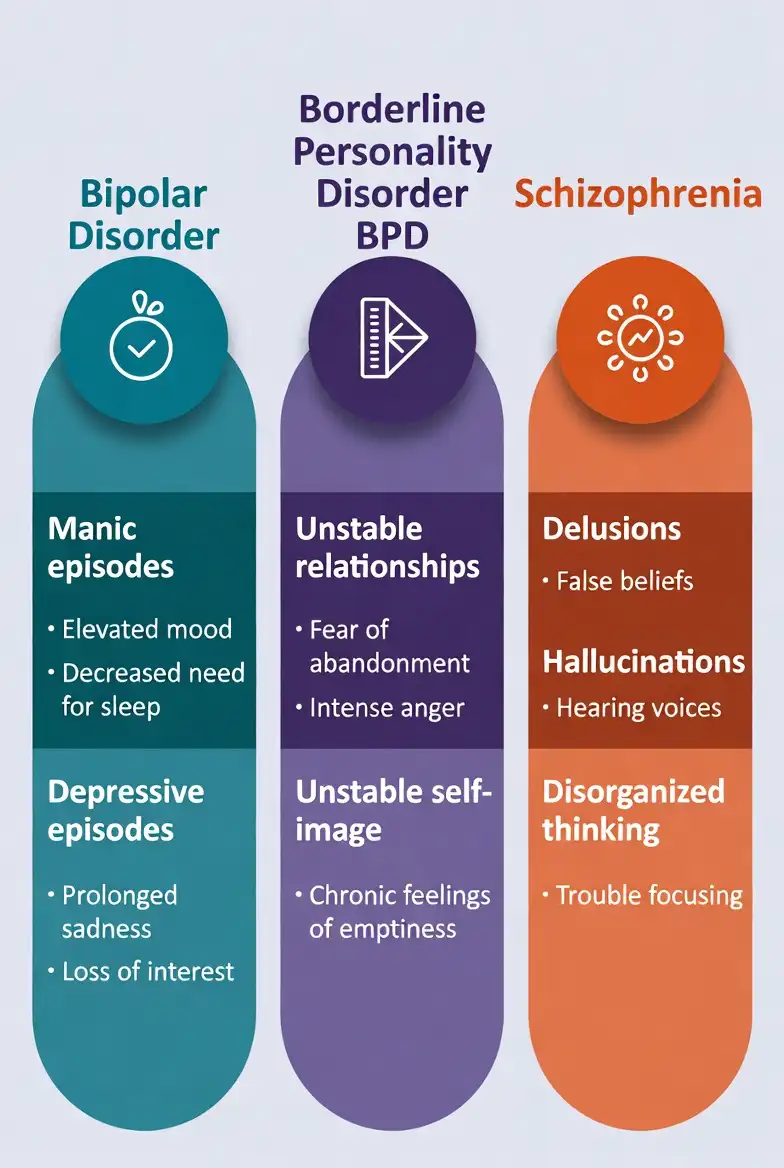
To fully understand the landscape, we must look at borderline personality disorder vs bipolar vs schizophrenia. These three are the “major” diagnoses that are most often confused by the public.
- Bipolar (Mood): The problem is with the “volume” of emotions. It gets turned up too high (mania) or too low (depression).
- BPD (Personality): The problem is with the “attachment” and “identity.” The person’s emotional skin is too thin, making every social interaction feel potentially life-threatening.
- Schizophrenia (Psychotic): The problem is with the “perception” of reality. The brain creates sights, sounds, or beliefs that are not there, regardless of the person’s mood or personality.
“Bipolar Personality Traits”: Why This Phrase Is Misleading
You may occasionally see a list of bipolar personality traits online, or people asking what personality type is bipolar? These phrases are clinically inaccurate and contribute to stigma.
There is no “bipolar personality.” People with bipolar disorder are as diverse as the general population; they can be introverted, extroverted, agreeable, or difficult. What people often mistake for “personality traits” are actually residual symptoms or “prodromal” signs of an episode. For example:
- Impulsivity is a symptom of mania, not a personality trait.
- Creativity is often associated with the bipolar temperament, but it is not a diagnostic requirement.
- Irritability can be a sign of a “mixed episode,” not a “mean personality.”
Labeling these as “personality traits” suggests they are unchangeable, which can be incredibly discouraging for someone trying to manage their health.
Does Bipolar Disorder Share Symptoms With Personality Disorders?
Yes. This is why the question does bipolar disorder has the same symptoms as a personality disorder is so common. The overlap is significant, particularly in the following areas:
- Impulsivity: Both a manic person and someone with BPD may spend money recklessly or engage in risky sexual encounters.
- Emotional Intensity: Both conditions involve feeling emotions more deeply than the average person.
- Relationship Strain: The chaos of a manic episode and the fear of abandonment in BPD can both lead to “burnt bridges” and broken marriages.
The difference remains in the source. In bipolar disorder, these symptoms vanish or significantly lessen when the mood is stabilized with medication. In a personality disorder, these symptoms require years of therapeutic work to modify.
Bipolar 1 Safety & Severity Questions
When discussing severity, many ask is bipolar 1 dangerous? It is important to handle this with nuance.
Untreated Bipolar 1 is “dangerous” in the sense that mania impairs judgment so severely that the person cannot keep themselves safe. They might drive 100 mph, spend their children’s college fund, or stop sleeping entirely, which leads to physical health emergencies.
However, with modern treatment, Bipolar 1 is highly manageable. The “danger” is a symptom of the illness, not an inherent part of the person’s character.
“Do I Have BPD or Bipolar?” (Self-Screening Guidance)
If you are looking for a do I have BPD or bipolar quiz, remember that an online algorithm cannot replace a clinical interview. However, you can ask yourself these “differentiating questions”:
- How long do my mood shifts last? (If it’s hours, think BPD. If it’s weeks, think Bipolar.)
- Do my moods change because of how people treat me? (If yes, think BPD. If they change for no reason or because of sleep shifts, think Bipolar.)
- Do I feel like I have a stable “core” of who I am? (If you feel like a “chameleon” depending on who you are with, think BPD.)
- Does medication work for me? (If Lithium or mood stabilizers helped significantly, it strongly suggests a Bipolar diagnosis.)
What Not to Say to Someone With Bipolar Disorder
Because people often confuse the disorder with a “moody personality,” they often say things that are deeply hurtful. Knowing what not to say to someone with bipolar disorder is key to being a supportive ally.
- “Did you take your meds today?” (Used as a weapon when someone is rightfully angry.)
- “You’re being so bipolar right now.” (Using a medical diagnosis as an adjective for “unreliable.”)
- “I wish I had a little mania so I could get my house cleaned.” (Dismissing the life-destroying nature of a manic crisis.)
- “It’s just your personality; you’ve always been dramatic.” (This is the most damaging, as it denies the biological reality of their struggle.)
Frequently Asked Questions
The overlap between mood and personality can be confusing for patients, families, and even some clinicians. Here are the most direct answers to the questions people ask most often regarding these diagnoses.
Is bipolar disorder a personality disorder?
No. Bipolar disorder is a mood disorder (also known as an affective disorder). It is a condition of the brain’s “thermostat” or biological energy regulation. Personality disorders are distinct conditions that involve long-standing, pervasive patterns of how a person thinks, relates to others, and perceives themselves.
Is bipolar disorder considered a mental illness?
Yes. Both bipolar disorder and personality disorders are classified as mental health conditions or mental illnesses. However, they are treated differently in clinical settings. Bipolar is seen as a biological condition that occurs in episodes, whereas a personality disorder is seen as a developmental pattern of behavior.
Can bipolar disorder be mistaken for borderline personality disorder (BPD)?
Yes, very easily. Both involve emotional instability and impulsivity. However, the “cycles” are the giveaway:
- Bipolar: Moods stay high or low for days or weeks at a time, often without a specific reason.
- BPD: Moods can shift in minutes or hours, usually triggered by a social interaction or fear of rejection.
Can a person have both bipolar disorder and a personality disorder?
Yes. This is known as comorbidity. It is not uncommon for someone to have the biological “cycling” of bipolar disorder while also having the persistent relationship and identity struggles associated with a personality disorder like BPD or Narcissistic Personality Disorder (NPD). When both exist, a combination of medication and intensive therapy is required.
Is bipolar a psychotic disorder?
No, but it can have psychotic features. During a severe manic or depressive episode, a person may experience a “break” from reality (hallucinations or delusions). However, once the mood is stabilized, the psychosis usually disappears. This is different from a primary psychotic disorder like schizophrenia, where psychosis can exist even when the mood is stable.
Why is bipolar not in Cluster B?
Cluster B refers specifically to “Dramatic, Emotional, or Erratic” personality disorders (Borderline, Narcissistic, Antisocial, and Histrionic). Because bipolar disorder is a mood disorder, it does not fit into the personality clusters, even though it can cause “dramatic” behavior during a manic episode.
Conclusion
The most important takeaway in the bipolar personality disorder debate is one of identity. If you have bipolar disorder, the illness is something you have, not something you are.
By correctly identifying bipolar as a mood disorder, we move the conversation from “judging a person’s character” to “treating a medical condition.” This shift in perspective is empowering. It allows for a treatment plan that includes medication to balance the biology and therapy to manage the impact of the episodes. Bipolar is a challenge, but it is not a definition of your soul.
Authoritative References
- National Institute of Mental Health (NIMH): Bipolar Disorder vs. Personality Disorders
- American Psychiatric Association (APA): What are Personality Disorders?
- Mayo Clinic: Bipolar Disorder Symptoms and Causes
- National Alliance on Mental Illness (NAMI): Borderline Personality Disorder vs. Bipolar
- Cleveland Clinic: Mood Disorders vs. Personality Disorders
Related Posts



Subscribe to Our Newsletter
Get mental health tips, updates, and resources delivered to your inbox.
MORE from Author
Read More In my practice as a clinical psychologist, I often observe that the difference between a patient who crumbles under pressure…
- We all have "up" days and "down" days. Perhaps you feel energized after a promotion or sluggish on a rainy…


 To define bipolar disorder accurately, we must look at it as a chronic mood dysregulation condition. In psychology and medicine,…
 To answer whether bipolar fits the bill, we first have to define what a neurodivergent person actually is. The term…
Are you looking for a Therapist?
Connect with qualified mental health professionals who understand
bipolar disorder, mood changes, and emotional challenges.
Private • Supportive • Confidential