
Sensory Triggers: Definition, Examples, Autism & How to Manage Sensory Overload

To understand sensory triggers, we have to look at how the brain filters the world. Every second, your body is bombarded with millions of data points. For most people, a biological “gatekeeper” in the brain—primarily the thalamus—filters out the hum of the air conditioner or the feeling of socks against skin.
Sensory triggers are environmental or internal stimuli that overwhelm a person’s ability to process sensory input, leading to acute stress, shutdown, or emotional reactivity. Unlike simple “dislike,” a trigger causes a neurological overload that the person cannot simply “ignore.”
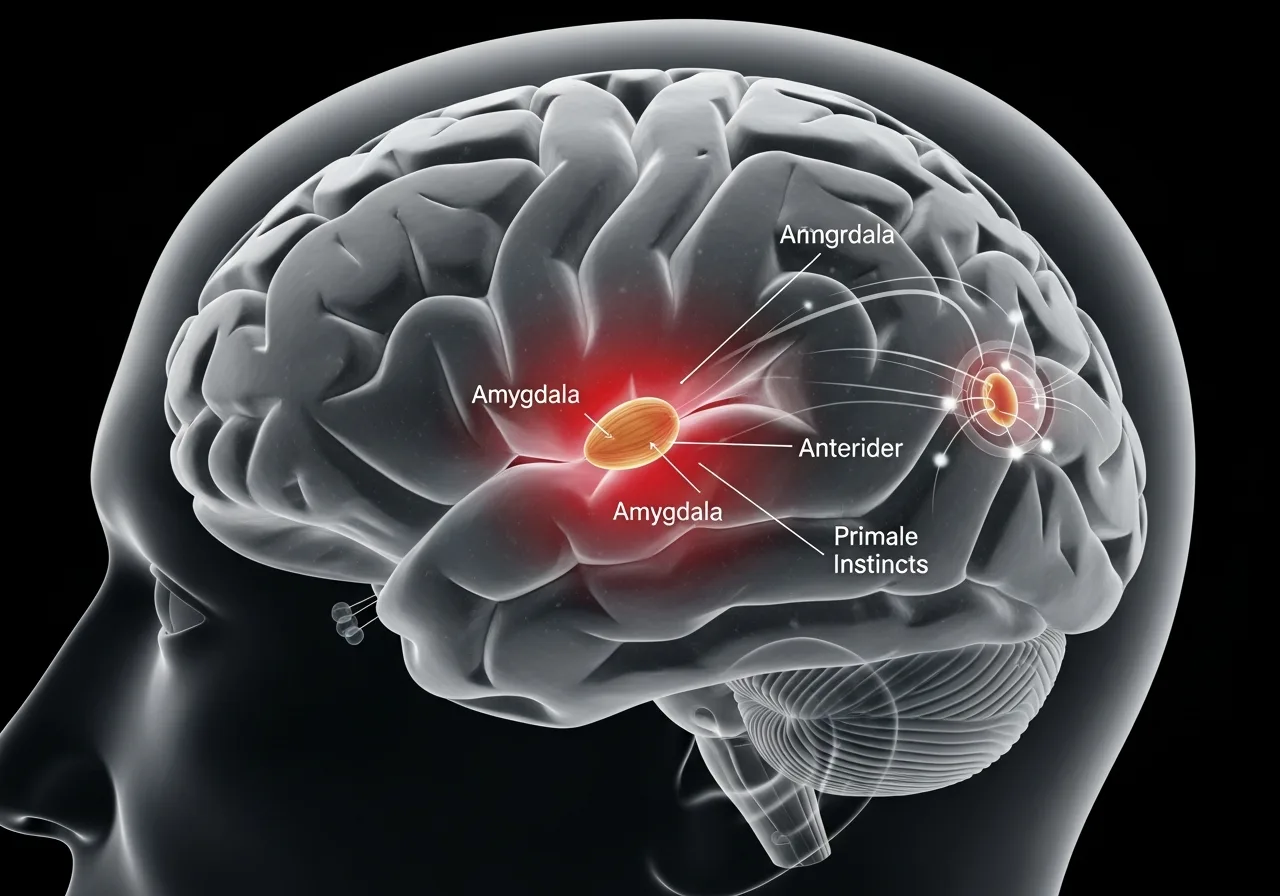
When someone has sensory sensitivities, this gating mechanism is less efficient. The amygdala, the brain’s alarm system, misinterprets this influx of data as a threat. This is the difference between finding a room “a bit loud” and feeling a physical need to flee the building.
What Are the 5 Senses Triggers?
Sensory triggers are as unique as a fingerprint, but they generally fall into the categories of our primary senses. In my experience, most people have one “primary” sensitive sense, but many experience a “stacking effect” where multiple small triggers lead to a total meltdown.
Visual Triggers
The visual system is often the most taxed in our modern world.
- Fluorescent Lighting: The invisible “flicker” of these lights is a major trigger for those with ADHD and Autism.
- Visual Clutter: A messy desk or a room with too many patterns can cause “visual noise” that makes focusing impossible.
- Bright Sunlight: Glare off cars or water can cause physical pain or immediate fatigue.
Auditory Triggers
Sound triggers are often the most distressing because they are difficult to “block” without tools.
- Misophonia: This is a specific trigger for “human” sounds like chewing, pen-clicking, or heavy breathing.
- Background Hum: The buzz of a refrigerator or an electric fan that others don’t notice can be agonizing.
- Sudden Impact: Sirens, balloons popping, or a dog barking can trigger an immediate “fight or flight” response.
Tactile (Touch) Triggers
Tactile defensiveness is a common term for when the sense of touch is hyper-reactive.
- Clothing Construction: Tags, seams in socks, or “itchy” wool are classic tactile triggers.
- Light Touch: Paradoxically, a light, unexpected graze on the arm is often more triggering than a firm, steady hug.
- Sticky Textures: Handling glue, certain foods, or even sweat can cause a skin-crawling sensation.
Olfactory & Taste Triggers
Smell and taste are directly linked to the emotional centers of the brain.
- Chemical Scents: Perfumes, cleaning products, or “new car smell” can trigger migraines or nausea.
- Food Textures: For many, the “slime” of an oyster or the “mush” of overcooked vegetables is a sensory dealbreaker, regardless of the taste.
Common Sensory Triggers & Reactions
| Sense | Trigger Example | Typical Reaction |
| Sound | Hand dryers / Sirens | Covering ears, panic, irritability |
| Touch | Clothing tags / Light touch | Agitation, “skin crawling,” anger |
| Sight | Fluorescent lights / Strobe | Headaches, dizziness, shutdown |
| Smell | Heavy perfume / Exhaust | Nausea, “brain fog,” avoidance |
What Does Sensory Overload Feel Like?

Describing sensory overload to someone who doesn’t experience it can be difficult. I often tell my patients to imagine they are trying to solve a complex math problem while three different radios are playing different stations, a strobe light is flashing, and someone is poking them in the ribs.
Common signs of sensory overload include:
- Racing Heart: Your body enters a state of physiological arousal.
- Irritability: Snapping at loved ones because “everything is too much.”
- The “Shutdown”: Becoming non-verbal, staring into space, or feeling “numb” (dissociation).
- Physical Pain: Certain sounds or lights can actually feel like a physical stab or burn.
Meltdown vs. Shutdown
It’s important to distinguish between the two. A meltdown is an outward explosion—crying, screaming, or even aggression—as the nervous system tries to “vent” the pressure.
A shutdown is an inward implosion, where the brain “turns off the lights” to protect itself. Both are involuntary responses to sensory triggers.
What Triggers Sensory Overload?
While a single loud noise can be a trigger, sensory overload is often cumulative. I call this the “Sensory Bucket” theory.
Every sensory input adds a drop of water to your bucket. A little background noise? A few drops. An itchy sweater? A few more. By 3:00 PM, your bucket is nearly full. If a colleague then asks you a question in a loud voice, the bucket overflows.
Factors that fill your bucket faster include:
- Sleep Deprivation: A tired brain has fewer resources to filter input.
- Stress & Anxiety: High baseline cortisol makes the amygdala more reactive.
- Hormonal Shifts: Many women find their sensory triggers are much worse during certain points in their menstrual cycle.
Sensory Triggers in Autism
For those on the autism spectrum, sensory processing differences are not just a side effect—they are a core diagnostic feature.
Autistic individuals often experience hyper-reactivity (over-sensing) or hypo-reactivity (under-sensing). Someone might be hypersensitive to the sound of a vacuum but hyposensitive to pain, meaning they might not notice a significant bruise or cut.
Signs of Autism-Related Sensory Issues
- Social Burnout: The effort of “filtering” social cues and background noise in a crowd leads to extreme exhaustion.
- Stimming: Repetitive movements (like rocking or hand-flapping) are often a way to “regulate” the system when triggers are present.
- Rigidity: Insisting on the same “safe” foods or clothes to avoid the risk of a new sensory trigger.
Sensory Triggers in ADHD
In ADHD, the issue is often attentional filtering. The brain struggles to decide which stimulus is important. If you have ADHD, the sound of a coworker typing is given the same “priority” as the meeting you are supposed to be leading.
ADHD sensory triggers often lead to:
- Sensory Boredom: Seeking out high-intensity input (loud music, spicy food) to “wake up” the brain.
- Workplace Overstimulation: Open-office plans are often a nightmare of sensory triggers for the ADHD brain.
- Emotional Impulsivity: A sensory trigger can cause an immediate, “oversized” emotional reaction because the brain’s “brakes” are less effective.
Sensory Triggers in PTSD & Trauma

In PTSD, sensory triggers are often linked to a specific memory. A certain cologne might trigger a flashback of an attacker; a backfiring car might trigger a memory of a combat zone.
The difference here is hypervigilance. The brain is actively scanning the environment for sensory triggers that signal danger. This creates a state of chronic nervous system exhaustion that is distinct from the neurodevelopmental patterns seen in Autism or ADHD.
Sensory Triggers Checklist (Self-Reflection Tool)
Identifying your triggers is the first step toward management. Use this four-step process to map your sensory profile.
Step 1: Notice the Environment
When you start to feel “off,” look around. Is it bright? Is there a low-frequency hum? Are your clothes tight?
Step 2: Identify Physical Sensations
Are your shoulders up to your ears? Is your jaw clenched? Is your stomach fluttering? These are early warning signs that a trigger is active.
Step 3: Track Emotional Reactions
Do you feel sudden anger? A need to cry? A “brain fog” that makes it hard to form sentences?
Step 4: Record Recovery Time
How long does it take you to feel “normal” after leaving the environment? If it takes hours, that environment is a high-level trigger.
Sensory Needs Examples
Managing triggers isn’t just about avoidance; it’s about providing the “right” kind of input to balance the nervous system.
- Proprioceptive Input: Using a weighted blanket or doing “wall pushes” provides deep pressure that calms the nervous system.
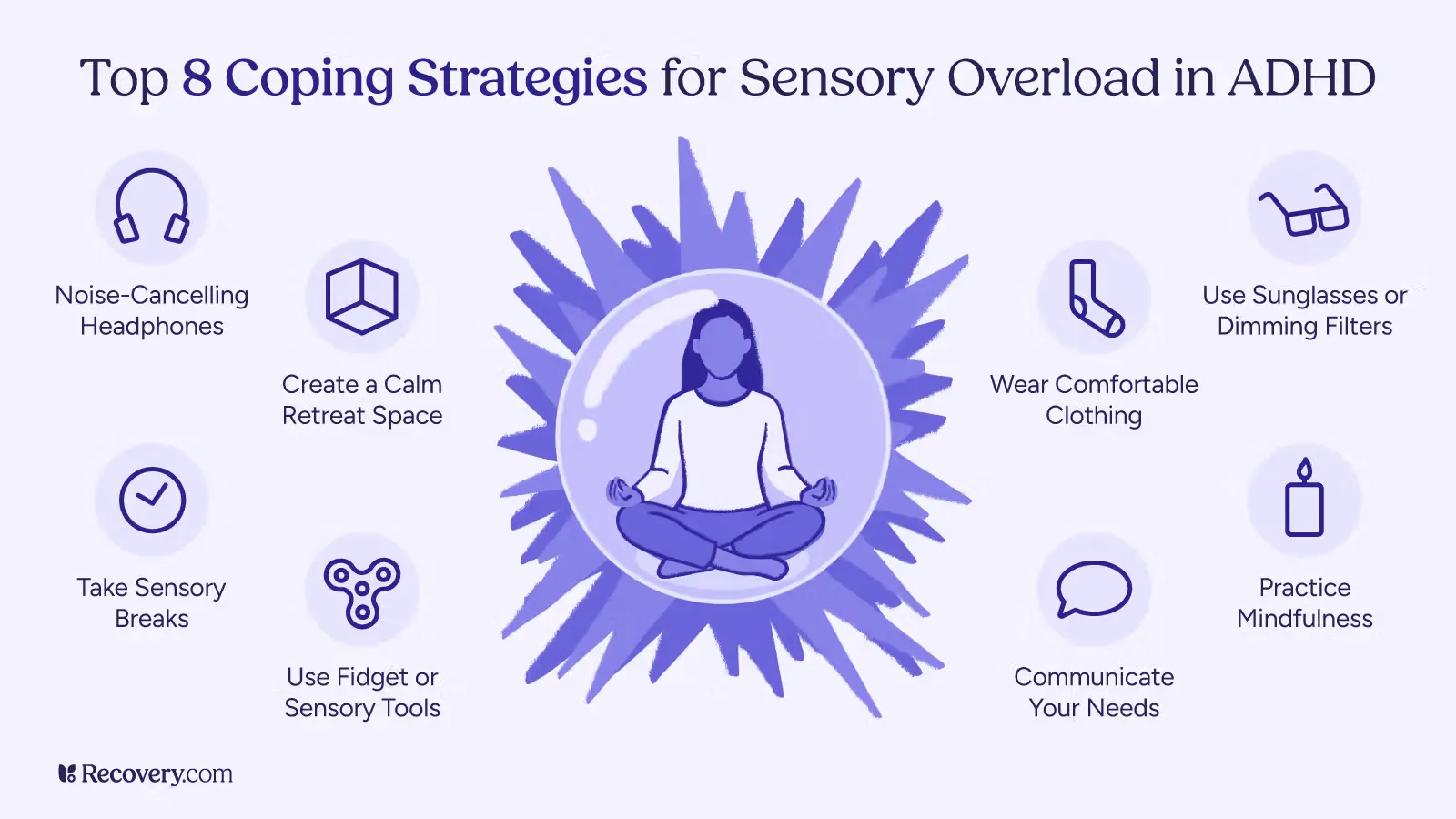
- Noise Regulation: Using noise-canceling headphones or specialized earplugs (like Loops) that filter out “harsh” frequencies while allowing conversation.
- Visual Breaks: Using a “dark room” or wearing tinted glasses indoors to reduce visual load.
Sensory Coping Skills (Evidence-Informed)
In my clinical practice, I use a three-pronged approach to managing sensory overload.
1. Reduce Input (The Shield)
- Control your space: Dim the lights, use “safe” unscented products, and remove tags from your clothes immediately.
- Scheduled “Sensory Breaks”: Take 5 minutes every hour to sit in a quiet, dark space before you feel overwhelmed.
2. Regulate Input (The Anchor)
- Deep Breathing: 4-7-8 breathing helps “reset” the vagus nerve, signaling to the brain that you are safe despite the noise.
- Grounding: The “5-4-3-2-1” technique (finding 5 things you see, 4 you can touch, etc.) pulls your focus away from the overwhelming trigger.
3. Sensory Integration Therapy
This is a specialized form of Occupational Therapy (OT). For adults, OT can help “retrain” the nervous system to handle input more effectively. While the evidence is strongest for children, more and more adults are finding relief through sensory diets designed by professionals.
Frequently Asked Questions
What are sensory triggers?
They are specific sights, sounds, smells, or textures that cause a person’s nervous system to feel overwhelmed or “attacked,” often leading to stress or shutdown.
What are examples of sensory triggers?
Common examples include flickering fluorescent lights, the sound of someone chewing, scratchy clothing tags, strong perfume, or crowded shopping malls.
What does sensory overload feel like?
It often feels like a “panic attack” or intense irritability. Physically, you may feel dizzy, nauseous, or have a racing heart. Mentally, you may feel “foggy” or unable to speak.
Can adults have sensory triggers?
Yes. While often diagnosed in childhood, many adults live with sensory sensitivities their entire lives, often misdiagnosing the resulting stress as “general anxiety.”
How do I identify my personal sensory triggers?
Keep a “sensory diary” for one week. Note when you feel irritable or exhausted and look for patterns in the environment (e.g., “I always feel worse after being in the breakroom with the loud microwave”).
Conclusion: You Are Not “Too Sensitive”
If you take one thing away from this guide, let it be this: Your sensory triggers are real. They are not a sign of weakness, and you are not being “difficult.” Your brain is simply processing the world with a high level of intensity.
By identifying your triggers and advocating for your sensory needs, you can stop living in a state of constant “alarm.” Whether it’s wearing headphones at the store or asking to dim the lights in a meeting, you have the right to a world that doesn’t feel like an assault on your senses.
References & High-Quality Sources
Related Posts




Subscribe to Our Newsletter
Get mental health tips, updates, and resources delivered to your inbox.
MORE from Author
Read More In my practice as a clinical psychologist, I often observe that the difference between a patient who crumbles under pressure…
- We all have "up" days and "down" days. Perhaps you feel energized after a promotion or sluggish on a rainy…


 To define bipolar disorder accurately, we must look at it as a chronic mood dysregulation condition. In psychology and medicine,…
 To answer whether bipolar fits the bill, we first have to define what a neurodivergent person actually is. The term…

Are you looking for a Therapist?
Connect with qualified mental health professionals who understand
bipolar disorder, mood changes, and emotional challenges.
Private • Supportive • Confidential