
Sensory Soothing: Techniques, Activities, and Tools for Autism, ADHD, and Adults
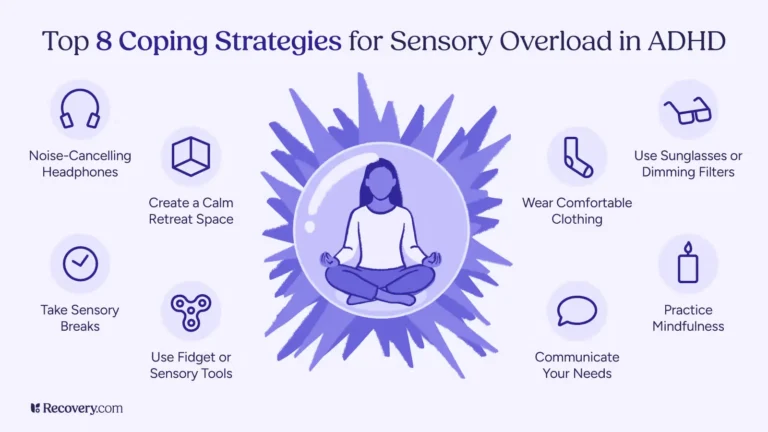
Have you ever walked into a grocery store and felt immediately assaulted by the hum of the refrigerator units, the flickering fluorescent lights, or the chaotic visual clutter of the aisles? For many, this is just background noise. But for neurodivergent individuals—and frankly, for anyone living with high anxiety—this input can feel like a physical attack.
In my clinical practice, I often describe this sensation to families as “living with the volume turned up to eleven.” The world is brighter, louder, and more abrasive. This constant barrage puts the nervous system into a chronic state of defense. This is where sensory soothing becomes more than just “relaxation”—it becomes a necessary medical intervention.
I recall a session with a patient named Mark, a software engineer with adult ADHD. He described his workday frustration not as anger, but as a “vibrating skin” sensation that made him want to crawl under his desk. We realized his “mood swings” were actually sensory meltdowns. By implementing specific sensory calming techniques, Mark didn’t just feel better; he reclaimed his ability to function. This guide explores the neuroscience of regulation and offers practical tools for every age group.
What Is Sensory Soothing?
To understand how to help yourself or a child, we must first answer: What is sensory soothing? At its core, sensory soothing (also called sensory modulation or regulation) is the active process of calming the nervous system by providing it with organizing input.
It is the antidote to dysregulation. When a person is dysregulated, their sensory systems are misfiring—either detecting danger where there is none or failing to filter out irrelevant background noise. Sensory soothing acts as a filter. It helps the brain switch gears from the sympathetic nervous system (fight, flight, freeze) to the parasympathetic nervous system (rest and digest).
It is important to distinguish between “calming” and “stimulating.” While some sensory calming techniques involve reducing input (dimming lights, silence), others involve adding input (deep pressure, rhythmic rocking) to organize the brain. For example, a child spinning in circles might look chaotic, but that vestibular input is actually helping them center their body in space.
Why Sensory Regulation Matters
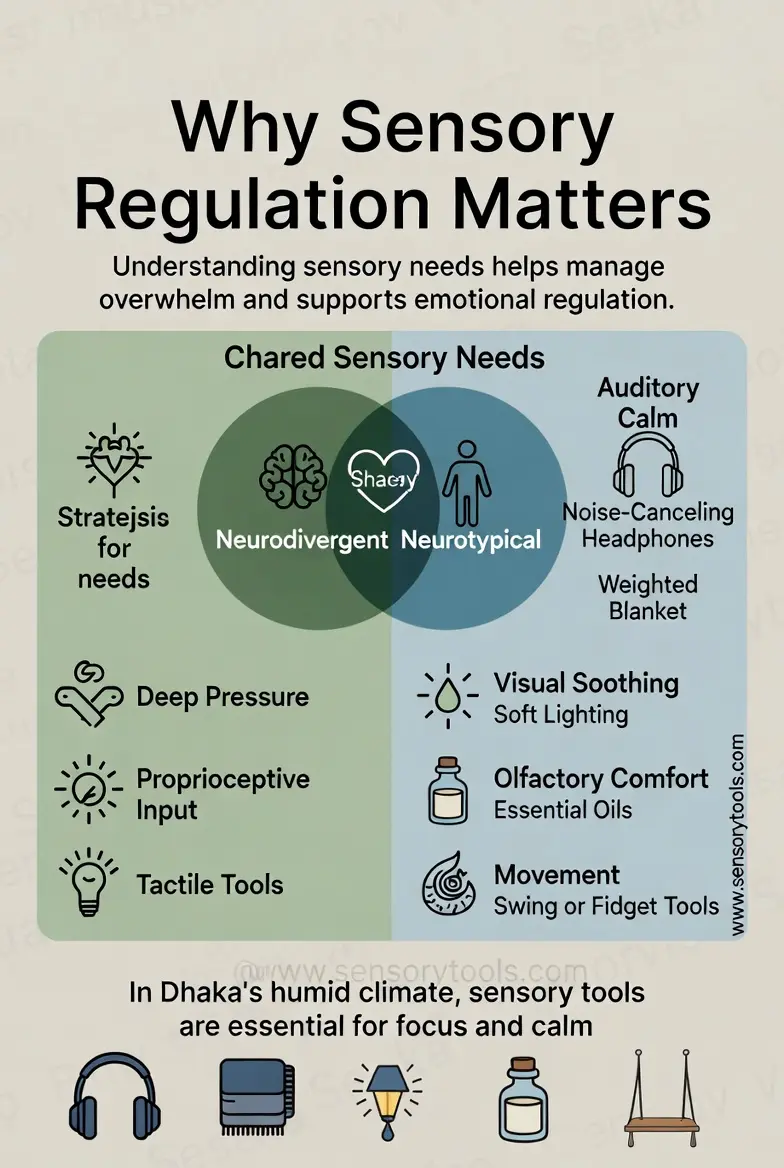
Why do simple things like a weighted blanket or a quiet song have such a profound effect? The answer lies in our biology.
The Fight-or-Flight Response
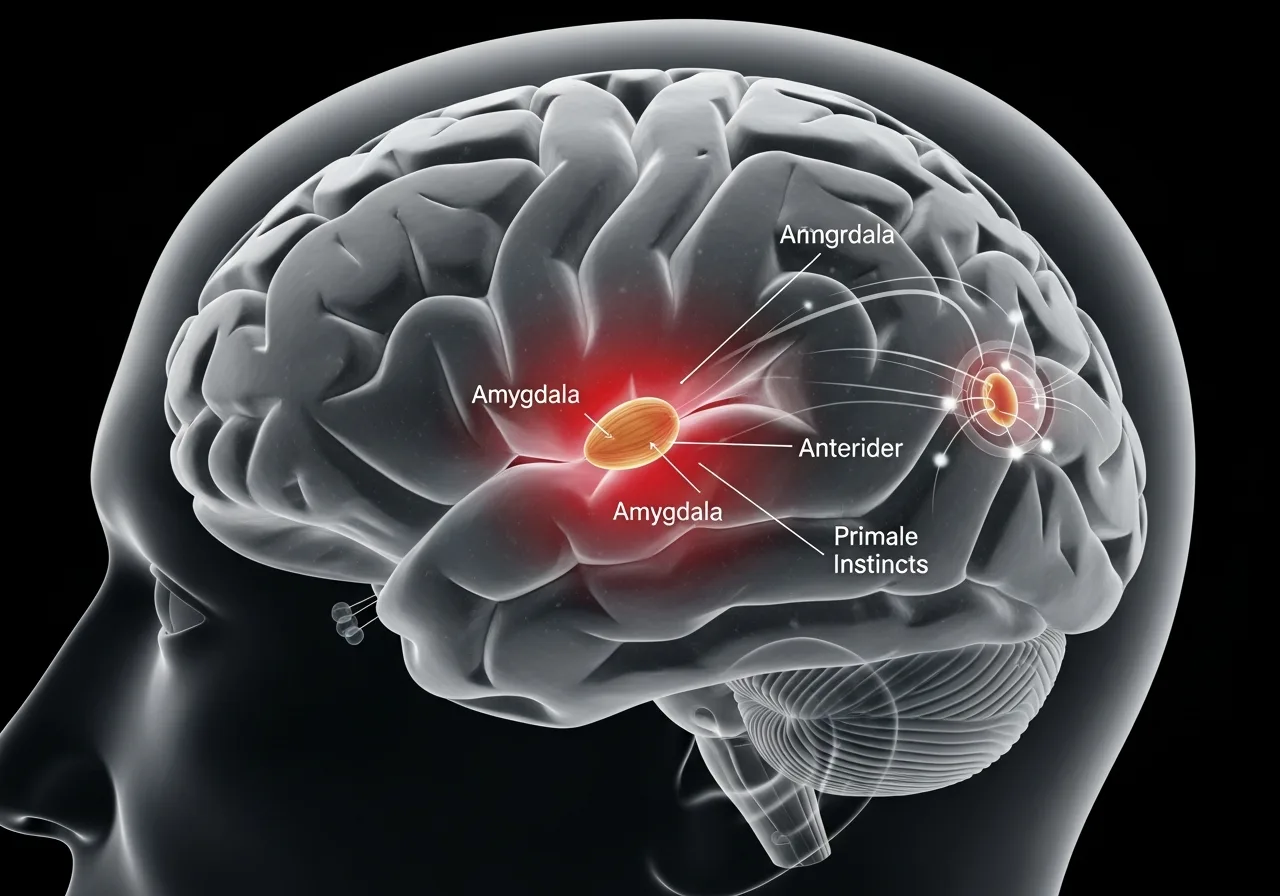
When the brain perceives sensory overload, the amygdala (the brain’s alarm bell) fires. It floods the body with cortisol and adrenaline. In neurodivergent brains, this alarm bell can be incredibly sensitive. Sensory soothing techniques stimulate the vagus nerve, which tells the heart rate to slow down and the muscles to relax.
Autism and Sensory Processing
For Autistic individuals, sensory processing differences are a core diagnostic feature. The brain may be hyper-sensitive (avoiding input) or hypo-sensitive (seeking input). Soothing activities bridge the gap, helping to lower the threshold of overwhelm so learning and connection can happen.
Does Sensory Seeking Mean ADHD?
A frequent question I hear from parents is, “Does sensory seeking mean ADHD?” The answer is nuanced. While high energy and a need for movement are hallmarks of ADHD, sensory seeking itself—like crashing into sofas, chewing on pencils, or needing loud music to focus—is a sign that the brain is under-stimulated.
In ADHD, the brain is often starving for dopamine and norepinephrine. Intense sensory input wakes up the prefrontal cortex, allowing the person to focus. Therefore, while sensory seeking is not exclusively ADHD (it is also common in Autism and SPD), it is a very strong indicator of a neurodivergent nervous system regulating itself.
Sensory Soothing Techniques
You do not always need expensive equipment to regulate. In fact, some of the most effective sensory soothing techniques rely solely on your own body. These are essentially “portable” strategies that I teach my adult patients to use in boardrooms and children to use in classrooms.
Deep Pressure and Proprioception
Proprioception is our sense of body awareness. Engaging large muscle groups sends strong “calming” signals to the brain.
- The Self-Hug: Wrap your arms tightly around your ribcage and squeeze for a count of ten. This mimics the feeling of a weighted vest.
- Hand Presses: Press your palms together at chest level as hard as you can. This isometric exercise releases tension in the shoulders and neck.
- Wall Push-Ups: Standing against a wall and pushing away engages the heavy muscles of the arms, providing sensory coping skills for adults that are subtle enough for the workplace.
Rhythmic Breathing and Grounding
Rhythmic input is inherently soothing because it mimics the heartbeat we heard in the womb.
- Box Breathing: Inhale for 4 counts, hold for 4, exhale for 4, hold for 4.
- 5-4-3-2-1 Grounding: This is one of the classic sensory calming techniques. Acknowledge 5 things you see, 4 you feel, 3 you hear, 2 you smell, and 1 you taste. This pulls the brain out of a sensory spiral and back into the present moment.
Sensory Soothing Activities by Age Group
What works for a toddler will rarely work for a teenager or an adult. Here is a breakdown of age-appropriate strategies.
For Autism (Children and Teens)
For Autistic children, visual and auditory regulation is often key.
- Visual Therapy: Many Autistic individuals find “visual stimming” deeply regulating. Autism sensory soothing visual therapy involves watching slow, repetitive movements. This is why lava lamps or sensory soothing visual therapy videos of flowing sand or mixing paint are so popular.
- Bubble Tubes: An autism calming sensory bubble tube is a staple in sensory rooms. The combination of color-changing lights, the rhythmic movement of bubbles, and the soft vibration of the motor provides multi-sensory regulation.
- Auditory Regulation: Sound can be a trigger or a cure. In classrooms, autism calming sensory music for the classroom—typically slow-tempo, instrumental tracks—can reduce aggression and anxiety. At home, many parents utilize 4k autism calming sensory relaxing music videos on YouTube, combining high-definition nature scenes with binaural beats to help a child decompress after school.
- What are sensory calming activities for autism? Beyond the above, activities like “heavy work” (carrying groceries, pushing a laundry basket) and tactile play (water beads, kinetic sand) are essential.
For ADHD (Focus on Movement)
The ADHD brain often needs movement to find stillness.
- What are soothing activities for ADHD? Unlike the “quiet corner” approach, soothing for ADHD often looks active. Obstacle courses, jumping on a trampoline, or “animal walks” (walking like a bear or crab) provide the intense proprioceptive input needed to settle the body.
- Fidget Tools: These aren’t toys; they are tools. A silent spinner or a textured stress ball allows the hands to be busy so the brain can listen.
Sensory Soothing for Adults
Adults often mask their sensory needs, leading to burnout. Sensory soothing for adults focuses on building a “sensory lifestyle.”
- Sensory Coping Skills for Adults: This includes creating a “low-sensory” zone in your home with blackout curtains and noise-canceling headphones.
- Workplace Adaptation: Using a standing desk (for vestibular input) or chewing gum (oral motor regulation) can help maintain focus.
- Sensory Self Soothing for Adults: Many of my patients find relief in “weighted” activities, such as using a heavy duvet or engaging in resistance training at the gym, which acts as a powerful nervous system reset.
Sensory Soothing in the Classroom & Occupational Therapy
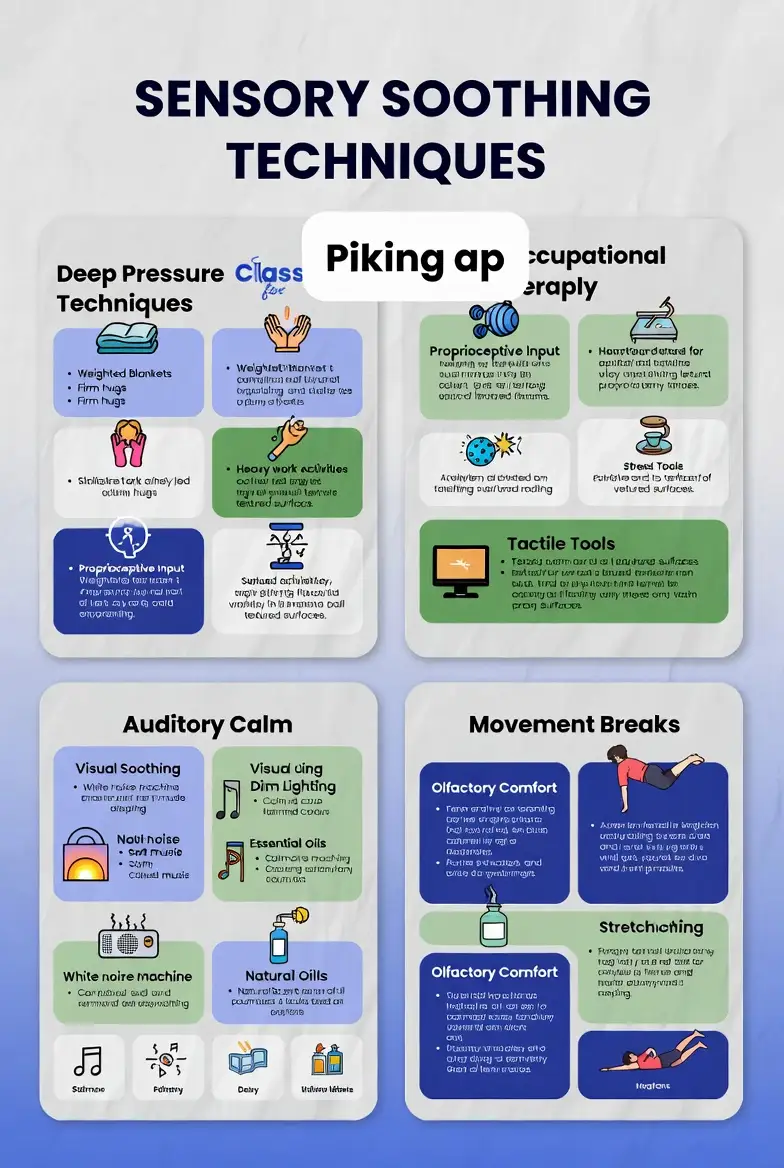
The classroom is often the most challenging environment for neurodivergent students. Fluorescent lights buzz, chairs scrape against floors, and visual clutter covers the walls.
In my collaboration with Occupational Therapists (OTs), we often design “sensory diets”—scheduled activities to keep a student’s nervous system in the optimal zone for learning.
Calming Sensory Activities for the Classroom
Teachers can integrate calming sensory activities into the classroom without disrupting the lesson plan.
- Heavy Work Transitions: Before sitting down for a test, have students do “chair push-ups” (lifting their body weight with their arms) or carry a stack of heavy books to the library. This proprioceptive input organizes the brain.
- The “Quiet Corner”: This isn’t a time-out; it’s a “time-in.” A designated space with bean bags, noise-canceling headphones, and dim lighting allows a student to self-regulate before a meltdown occurs.
- Visual Anchors: Reducing visual noise on walls and using visual schedules helps reduce cognitive load, acting as a form of environmental soothing.
Calming Sensory Activities: Occupational Therapy
In a clinical setting, calming sensory activitiesand occupational therapy are more intensive. An OT might use a “steamroller” machine (which squeezes the child like a hug) or a suspended swing for linear vestibular input. These therapies are designed to rewire the brain’s ability to process sensation over time, rather than just offering a temporary fix.
Sensory Soothing Devices & Tools
Parents often ask me, “What should I buy?” While no gadget replaces therapy, the right tools can be life-savers. Here is a breakdown of the 6 sensory soothing devices I frequently recommend, categorized by need.
| Device | How It Helps | Best For | Safety Notes |
| Sensory Soothing Water Pad | Provides tactile and visual feedback without the mess of real water. | Tummy time (infants) & high-anxiety seeking behaviors. | Ensure the material is puncture-proof if the user bites. |
| Bubble Tube | Autism calming sensory bubble tube lamps provide visual tracking and gentle vibration. | Visual stimming & bedroom wind-down routines. | Secure to the wall to prevent tipping over. |
| Weighted Blanket | Deep pressure stimulation increases serotonin and melatonin. | Sensory soothing for adults & insomnia relief. | Should be ~10% of body weight. Not for infants. |
| Sensory Soothing Car Seat | Vibrating pads or textured covers for travel anxiety. | Children who struggle with transitions or car sickness. | Ensure it does not interfere with safety harnesses. |
| Chewelry (Chew Necklaces) | Oral motor input reduces jaw tension and stress. | Sensory calming toys for ADHD & oral fixations. | Wash daily; replace immediately if damaged. |
| Noise-Canceling Headphones | Reduces auditory overwhelm (active noise canceling). | Public spaces, classrooms, and travel. | Don’t use 24/7; the brain can become more sensitive to sound if deprived for too long. |
How to Build a Sensory Self-Soothing Kit
One of the most practical assignments I give my patients is to build a sensory self-soothing box. Having a physical kit ready before a crisis hits is essential because executive function (decision-making) shuts down during a meltdown.
Step-by-Step Guide
- The Container: Choose a durable box or bag. For adults, a discreet zipper pouch works well for a self-soothing kit for anxiety.
- Identify Triggers: Does noise set you off? Pack earplugs. Does light hurt? Pack sunglasses.
- Select Tools by Category:
- Tactile: Fidget spinners, diverse textures (velvet, sandpaper), or sensory self-soothing kit ideas like therapeutic putty.
- Olfactory: A small vial of lavender oil or a coffee bean sachet. Smell bypasses the logic center of the brain and goes straight to emotion regulation.
- Visual: Photos of a safe place, a “glitter jar,” or color cards.
- Proprioceptive: A resistance band for pulling/stretching.
- Test and Adjust: A sensory soothing kit is living. If a tool doesn’t work during a panic attack, swap it out.
When Sensory Soothing Isn’t Enough
While sensory coping skills for adults and children are powerful, they are not a cure-all. If sensory dysregulation is leading to self-injury (head-banging, biting), severe aggression, or the inability to leave the house, it is time to seek professional help.
Consult an Occupational Therapist for a full sensory profile evaluation. A psychologist can also help distinguish between sensory overload and panic disorder. Often, co-occurring conditions like anxiety or OCD can amplify sensory issues, requiring a multi-faceted treatment approach.
Frequently Asked Questions
What is sensory soothing?
It is the use of specific sensory inputs (weight, rhythm, warmth) to calm the nervous system and reduce stress responses in neurodivergent or anxious individuals.
What are soothing activities for ADHD?
Effective activities include heavy work (pushing/pulling), jumping on a trampoline, using fidget tools, and rhythmic movement like swinging or rocking.
Does sensory seeking mean ADHD?
Not necessarily. While many people with ADHD are sensory seekers (craving stimulation to focus), sensory seeking is also common in Autism and Sensory Processing Disorder.
What are sensory calming activities for autism?
These include visual therapy (bubble tubes), deep pressure (weighted blankets), low-frequency music, and creating low-stimulation environments (dim lights).
How do adults self-soothe sensory overload?
Adults can use deep breathing, progressive muscle relaxation, noise-canceling headphones, scheduled “quiet time,” and proprioceptive exercise like yoga or lifting weights.
What devices help sensory regulation?
Top devices include weighted blankets, sensory swings, noise-canceling headphones, bubble tubes, and vibrating massage tools.
Conclusion
In a world that never stops buzzing, learning the art of sensory soothing is not a luxury—it is an act of radical self-care and essential medical maintenance. Whether you are a parent setting up an autism calming sensory bubble tube in a bedroom or an adult discreetly using sensory coping skills during a stressful meeting, the goal is the same: to tell your nervous system that it is safe.
From the deep pressure of a weighted blanket to the rhythmic visuals of sensory soothing visual therapy, these tools bridge the gap between a chaotic world and a regulated mind. Remember, sensory needs are not “behavioral problems” to be fixed; they are biological signals to be honored. By building a personalized toolkit—whether that’s a sensory self-soothing box or a playlist of sensory soothing music—you empower yourself and your loved ones to navigate the world with confidence and calm.
References
- Understood.org — Sensory Processing Issues Explained
- ADDitude Magazine — ADHD and Sensory Overload
- American Occupational Therapy Association (AOTA) — Sensory Integration
- STAR Institute — Sensory Processing Disorder Research
- Autism Speaks — Sensory Issues and Strategies
Related Posts





Subscribe to Our Newsletter
Get mental health tips, updates, and resources delivered to your inbox.
MORE from Author
Read More In my practice as a clinical psychologist, I often observe that the difference between a patient who crumbles under pressure…
- We all have "up" days and "down" days. Perhaps you feel energized after a promotion or sluggish on a rainy…


 To define bipolar disorder accurately, we must look at it as a chronic mood dysregulation condition. In psychology and medicine,…
 To answer whether bipolar fits the bill, we first have to define what a neurodivergent person actually is. The term…


Are you looking for a Therapist?
Connect with qualified mental health professionals who understand
bipolar disorder, mood changes, and emotional challenges.
Private • Supportive • Confidential