
What Is the Amygdala? Functions, Role in Emotions, and What Happens When It’s Damaged

Medically reviewed by Laura Athey Updated Date: April 15, 2026
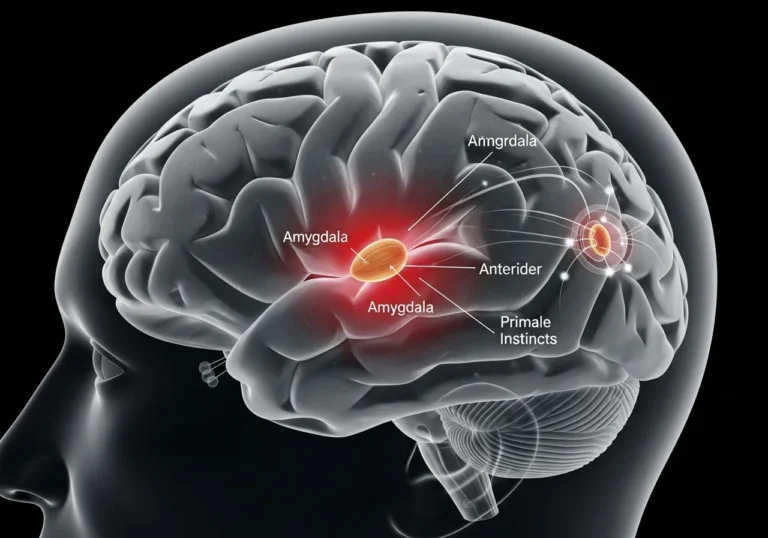
In my practice as a clinical psychologist specializing in mood and trauma disorders, I often describe the amygdala as the “smoke detector” of the human brain. It is a small, almond-shaped cluster of nuclei located deep within the temporal lobe.
and it serves as the command center for our most primal survival instincts. Whether you are slamming on your brakes to avoid a collision or feeling your heart race before a public speaking engagement, you are experiencing the lightning-fast processing power of the amygdala.
Understanding what is the amygdala is is foundational to understanding human psychology. It is responsible for detecting threats, processing intense emotions like fear and anger, and “tagging” memories with emotional significance so we can learn from past dangers.
However, in our modern world—where the “threat” is more likely to be an aggressive email than a physical predator—this ancient structure can sometimes become overactive. When the amygdala malfunctions or becomes hyper-sensitized through trauma, it can lead to chronic anxiety, PTSD, and emotional dysregulation.
By learning how this structure works, we can begin to utilize the brain’s inherent neuroplasticity to calm our stress responses and regain control over our emotional lives.
What Is the Amygdala in the Brain?
If you were to look at a cross-section of the human brain, you would find the amygdala tucked away in the medial temporal lobe, sitting just in front of the hippocampus.
It is a core component of the limbic system, which is the evolutionary “old” part of our brain dedicated to emotions, motivation, and memory.
While we often speak of “the” amygdala, we actually have two—one in each hemisphere of the brain. Its location is strategic.
It sits near the brainstem to facilitate immediate physical reactions and is closely connected to the prefrontal cortex, which is responsible for executive function and rational thought. This proximity creates a constant tug-of-war between our “feeling” brain and our “thinking” brain.
Amygdala Pronunciation and Meaning
For those encountering the term in a clinical or academic setting, the amygdala pronunciation is uh-MIG-duh-luh. The name is derived from the Greek word amygdalē, meaning “almond,” a nod to its distinctive shape and size. Despite its small stature, its influence over our behavior is gargantuan.
What Does the Amygdala Do?
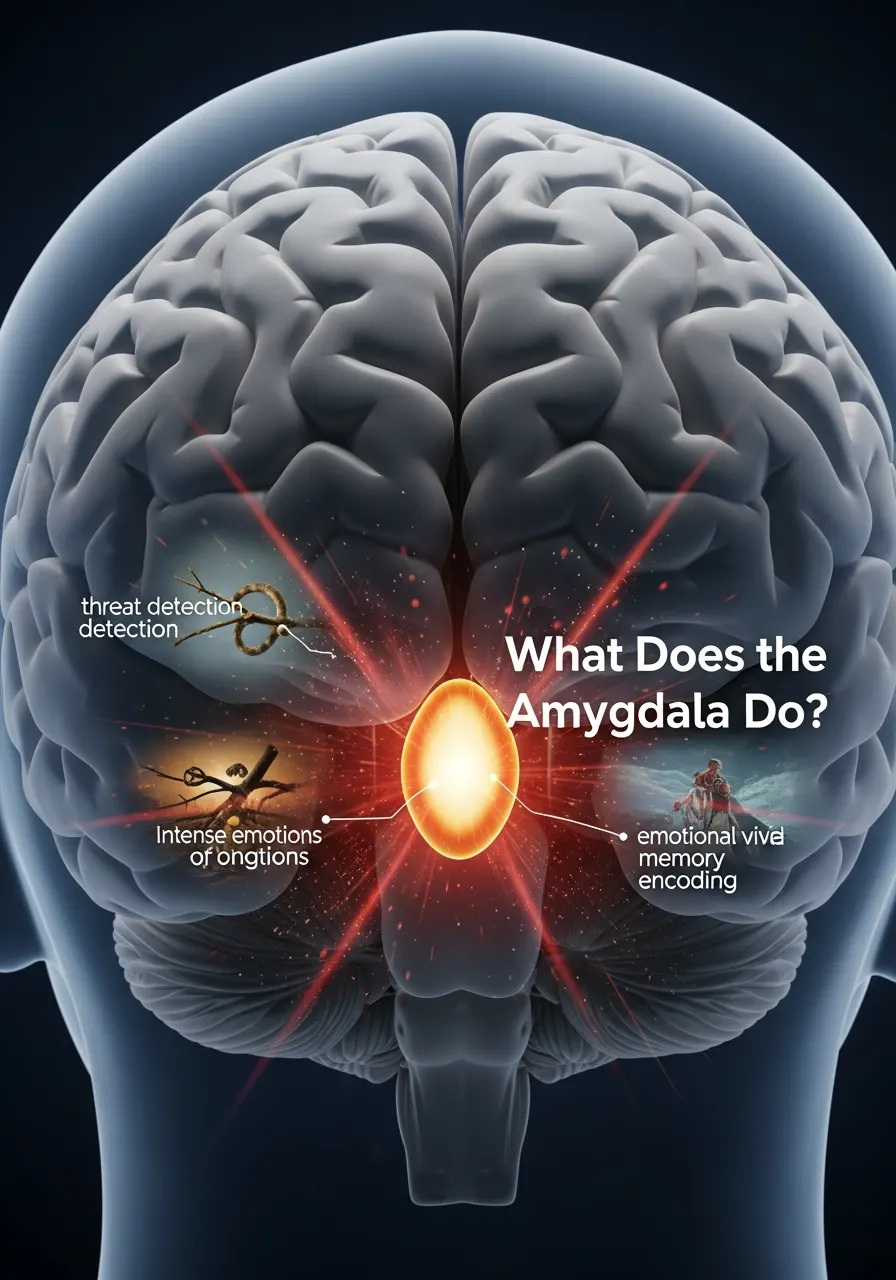
This section represents the core of our understanding of this structure. When patients ask me what is the function of the amygdala is, I explain that its primary job is “salience detection”—determining what in our environment is important enough to pay attention to.
a. The Fear Response and Threat Detection
The amygdala is the brain’s premier alarm system. It constantly scans incoming sensory data (sights, sounds, smells) for anything that might signal danger.
Because survival depends on speed, the amygdala can trigger a “fight-or-flight” response in milliseconds, often before the rational part of your brain even realizes what is happening. This is why you jump when you see a stick that looks like a snake; your amygdala prioritized speed over accuracy to keep you safe.
b. Processing Intense Emotions
While the amygdala and emotions are inextricably linked, it is most famous for managing fear and anger. It processes the “intensity” of an emotion. When you feel a surge of rage or a paralyzing wave of terror, the amygdala is signaling the hypothalamus to flood your body with adrenaline and cortisol.
It essentially prepares the body for action, increasing heart rate and diverting blood flow to the muscles.
c. Emotional Memory Encoding
The role of the amygdala in memory is specialized. While the hippocampus stores the “what, where, and when” of a memory, the amygdala adds the “how I felt.” This is why you might forget what you ate for lunch three weeks ago, but vividly remember the details of a car accident from ten years ago
. The amygdala “tags” emotional events with high priority, ensuring they are seared into your long-term memory so you can avoid similar threats in the future.
d. Social Signal Interpretation
Beyond survival, the amygdala helps us navigate social landscapes. It is responsible for reading facial expressions—particularly signs of untrustworthiness or aggression in others.
In my practice, I often observe that individuals with an overactive amygdala may “misread” neutral faces as being angry or judgmental, a common feature in social anxiety disorder.
How the Amygdala Works
To understand how the amygdala works, we can look at the “Low Road” vs. “High Road” of emotional processing.
- Sensory Input: You hear a sudden, loud bang behind you.
- The Low Road (Fast): The sound goes straight to the thalamus and then directly to the amygdala. Within a fraction of a second, your body tenses, your heart rate spikes, and you whirl around. This is survival mode.
- The High Road (Slow): The sound also travels to the sensory cortex and the prefrontal cortex. These “thinking” areas analyze the sound and realize it was just a car backfiring.
- The feedback loop: The prefrontal cortex sends a signal back to the amygdala saying, “False alarm, stand down.”
In a healthy brain, the “High Road” eventually calms the “Low Road.” However, in cases of chronic stress or trauma, the ” becomes weakened, leaving the amygdala to run the show unchecked.
What Is an Amygdala Hijack?
The term amygdala hijack was coined by psychologist Daniel Goleman to describe those moments when our emotional response is completely disproportionate to the actual threat.
During a hijack, the amygdala perceives a threat—perhaps a critical comment from a spouse or a driver cutting you off—and it effectively “shuts down” the prefrontal cortex.
This is why people often say things they regret when they are angry; the part of the brain responsible for impulse control and long-term thinking has been taken offline.
Common examples of an amygdala hijack include:
- Road rage
- Screaming during a minor argument
- A sudden panic attack in a safe environment
A nuance I frequently share with my patients is the profound impact of sleep hygiene on amygdala regulation. When we are sleep-deprived, the functional connectivity between the prefrontal cortex (the “brakes”) and the amygdala (the “gas”) is severely weakened.
Without adequate REM sleep, the amygdala becomes up to 60% more reactive to negative stimuli. I have seen countless cases where a patient’s “uncontrollable anger” or “crippling anxiety” was significantly mitigated simply by stabilizing their circadian rhythms. If you don’t sleep, you are essentially living in a state of permanent amygdala hijack.
The Amygdala and Memory: The Interaction with the Hippocampus
The relationship between the amygdala and the hippocampus is one of the most important partnerships in the brain.
- The hippocampus acts as the librarian, indexing facts and cold data.
- The Amygdala: Acts as the highlighter, marking the most important parts in bright red.
When these two work in harmony, we have a healthy sense of our history. However, in trauma, this system can malfunction. During a traumatic event, the amygdala is so overstimulated that it can interfere with the hippocampus’s ability to create a cohesive narrative.
This results in “fragmented” memories—where a person might remember the smell of smoke or the sound of glass breaking (the amygdala’s emotional tags) but cannot remember the sequence of events (the hippocampus’s job).
Clinical Anecdote: The Case of “Sarah”
I once worked with a patient, “Sarah,” who suffered from severe PTSD following a workplace accident. Whenever she smelled a specific type of industrial cleaner, she would fall into a state of total panic, though she couldn’t initially explain why. This is a classic example of amygdala-driven emotional memory.
In our sessions, we utilized Exposure Therapy and grounding techniques to build Sarah’s executive function. We worked on helping her prefrontal cortex “talk back” to her amygdala. By slowly exposing her to the scent in a safe environment while practicing deep breathing, we were able to utilize neuroplasticity to “re-tag” that sensory memory.
Eventually, her brain learned that the smell did not equal immediate danger, and her amygdala stopped triggering the “smoke alarm” every time she walked into a cleaned room.
What Happens If the Amygdala Is Damaged?
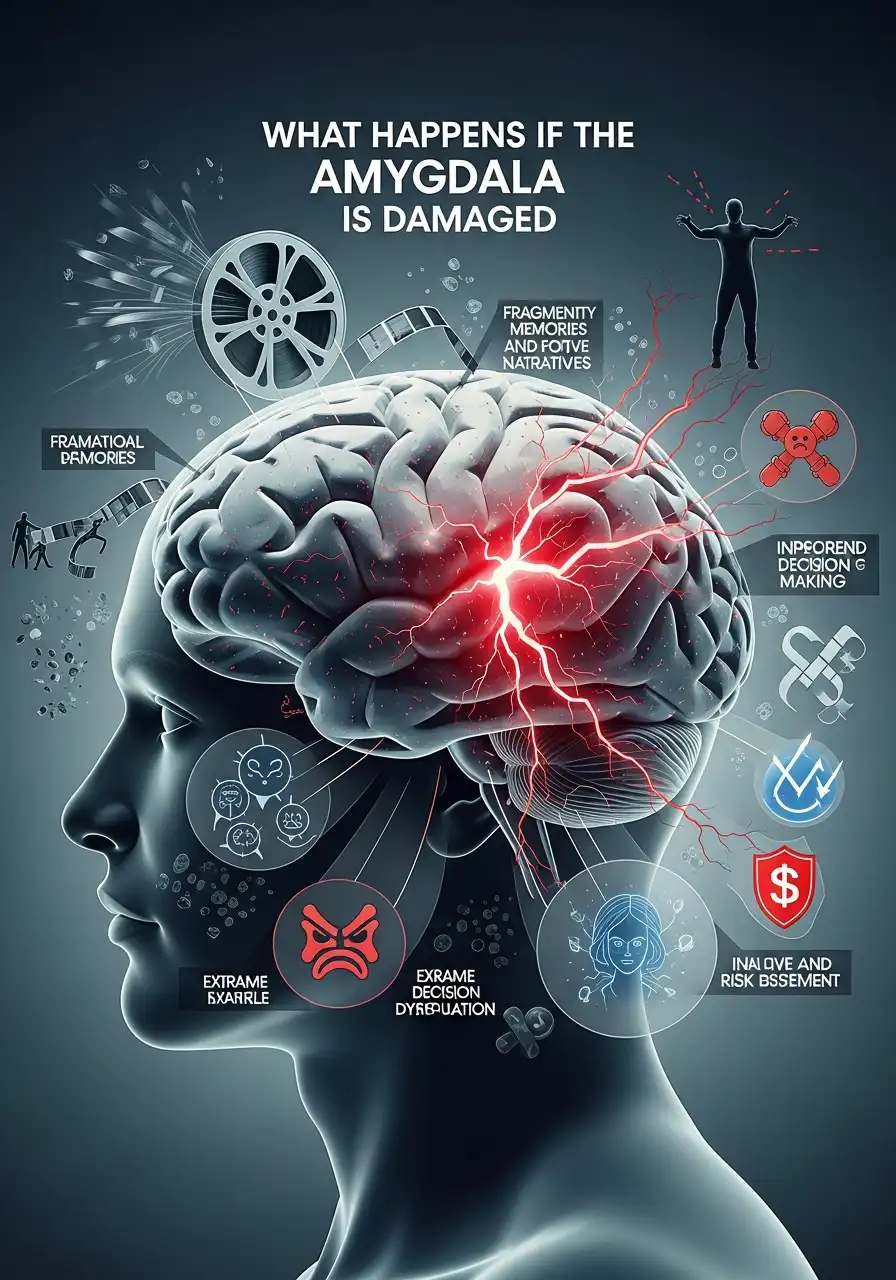
When the “smoke detector” of the brain is physically compromised, the results are both fascinating and clinically profound. What happens if the amygdala is damaged depends largely on whether the damage is unilateral (one side) or bilateral (both sides).
In rare medical cases, such as Urbach-Wiethe disease or localized lesions from stroke or surgery, patients may experience a condition known as Klüver-Bucy syndrome. This is characterized by:
- Placidity: An extreme reduction in fear or aggression. A person may walk into a dangerous situation—such as a burning building or a confrontation with a predator—without feeling the physiological “alarm” that ensures survival.
- Hyperorality: A tendency to examine all objects by mouth.
- Hypersexuality: An inappropriate increase in sexual behavior.
- Visual Agnosia: An inability to recognize the emotional significance of objects or faces.
If the amygdala is damaged, what happens to a person’s social life is equally significant. They may lose the ability to detect subtle social cues, such as a friend’s “warning glance” or the “tightness” in a stranger’s voice.
This is because the amygdala is responsible for the rapid, non-conscious appraisal of social threats. Without it, the world becomes a flatter, less emotionally nuanced place.
Amygdala Disorders and Mental Health Conditions
In my practice, I rarely see physical damage to the amygdala; instead, I see amygdala dysfunction—where the structure is physically intact but functionally “stuck” in a high-alert state. Several amygdala disorders and conditions are directly linked to this hyperactivity.
- Anxiety Disorders: In Generalized Anxiety Disorder (GAD), the amygdala is often hypersensitive, scanning for threats that don’t exist and overstimulating the body’s stress response.
- PTSD (Post-Traumatic Stress Disorder): This is perhaps the most well-known example of amygdala dysfunction. Trauma can “hard-wire” the amygdala to stay in survival mode, leading to flashbacks and hyper-vigilance.
- Depression: While we often think of depression as “sadness,” it is also a state of high emotional stress. An overactive amygdala can contribute to the “rumination loops,” where a patient cannot stop focusing on negative memories.
- Panic Disorder: A panic attack is essentially a massive, spontaneous amygdala discharge that triggers a full-body “fight-or-flight” response in the absence of any external danger.
Frequently Asked Questions
Emotional Regulation and the Amygdala
What two emotions are affected by the amygdala? While it processes many nuances, the amygdala is most famous for managing fear and anger. These are our “survival” emotions that require the fastest physical response.
Role in Memory
What is the role of the amygdala in memory? It acts as an “emotional highlighter.” It works with the hippocampus to ensure that events with high emotional significance are remembered more vividly and for longer periods.
Amygdala Hijack
What is an amygdala hijack? This occurs when the amygdala perceives a threat and “takes over” the brain, bypassing the rational prefrontal cortex. This results in an immediate, often impulsive emotional reaction.
Location and Structure
What part of the brain is the amygdala in? It is located in the temporal lobe, deep within the brain’s medial portion. It is a key part of the limbic system.
Calming Techniques
How do you calm down the amygdala? Techniques like deep breathing, mindfulness, and cognitive reappraisal (reframing your thoughts) are the most effective ways to lower amygdala activity.
Conclusion
The amygdala is a testament to our evolutionary history—a powerful, ancient sentinel that has kept our species alive for millennia. While its “all-or-nothing” approach to danger can be a source of distress in our modern, low-physical-threat world, it is not an enemy to be silenced.
Instead, our goal is integration. By understanding how the amygdala works and utilizing tools to strengthen our executive function, we can move from being “hijacked” by our emotions to living in harmony with them.
Your brain’s alarm system is just trying to protect you; with the right techniques, you can teach it that it is finally safe to stand down.
Authoritative References
- National Institute of Mental Health (NIMH)
- National Institutes of Health (NIH) – Brain Basics
- Harvard Medical School – Amygdala and Anxiety
- American Psychological Association (APA)

Related Posts






Subscribe to Our Newsletter
Get mental health tips, updates, and resources delivered to your inbox.
MORE from Author
Read More Watching someone you care about struggle with bipolar depression and anxiety can be heartbreaking. You may notice that they withdraw…
 In my practice as a clinical psychologist, I often observe that the difference between a patient who crumbles under pressure…
 We all have "up" days and "down" days. Perhaps you feel energized after a promotion or sluggish on a rainy…
 To define bipolar disorder accurately, we must look at it as a chronic mood dysregulation condition. In psychology and medicine,…
Are you looking for a Therapist?
Connect with qualified mental health professionals who understand
bipolar disorder, mood changes, and emotional challenges.
Private • Supportive • Confidential