
What Causes Anhedonia? Brain Science, Root Causes, and How to Fix It

In my practice as a clinical psychologist, I often see patients who describe a very specific, haunting sensation—or rather, a lack of sensation. They don’t necessarily tell me they feel “sad” or “tearful.” Instead, they say things like What Causes Anhedonia, “I know I should be happy that I got the promotion, but I feel nothing,” or “I look at my children, and while I know I love them, the warmth just isn’t there.”
This profound emotional flattening is known as anhedonia. Because it feels so total and so biological, it often leads to a specific kind of panic: the fear that the brain is permanently broken. If you are reading this because you feel like the “color” has been drained from your life, I want to start with a direct answer: Anhedonia is most commonly caused by a disruption in the brain’s reward system, and in the vast majority of cases, it is a reversible symptom of an underlying condition—not a permanent state.
Whether triggered by depression, chronic stress, or even certain medications, anhedonia is the brain’s way of going into a “power-saving mode.” My goal as a clinician is to help you understand the why behind this shutdown so we can begin the process of turning the lights back on.
What Is Anhedonia? Definition, Meaning & Symptoms
At its simplest, anhedonia is the inability to feel pleasure from activities that were once enjoyable. However, in the clinical world, we view it as a complex deficit in how the brain processes rewards. It isn’t just one feeling; it is a breakdown in the “anticipation, motivation, and enjoyment” cycle.
The Two Primary Types
To better understand what is happening, we categorize anhedonia into two main types:
- Anticipatory Anhedonia (The “Wanting” Problem): You lose the drive to do things. You don’t look forward to your favorite meal or a planned vacation. This is a failure of the brain’s “go” signal.
- Consummatory Anhedonia (The “Liking” Problem): You physically engage in the activity—you eat the meal, you go to the concert—but you don’t feel the “high” or the satisfaction. It feels like eating cardboard or listening to static.
Specialized Forms of Anhedonia
Beyond the general loss of interest, there are specialized forms that target specific brain circuits:
- Social Anhedonia: A lack of pleasure from interpersonal connections. You find socializing exhausting rather than rewarding.
- Sexual Anhedonia: The physical sensations of intimacy remain, but the emotional “payoff” or pleasure is missing.
- Musical Anhedonia: A rare but distinct neurological state where music, which used to move you, now sounds like mere noise.
In my practice, I often use a simple “anhedonia test” during intake: If you were given a million dollars or your favorite meal right now, would your internal “needle” move at all? If the answer is a flat “no,” we are looking at a hedonic deficit.
What Causes Anhedonia in the Brain?
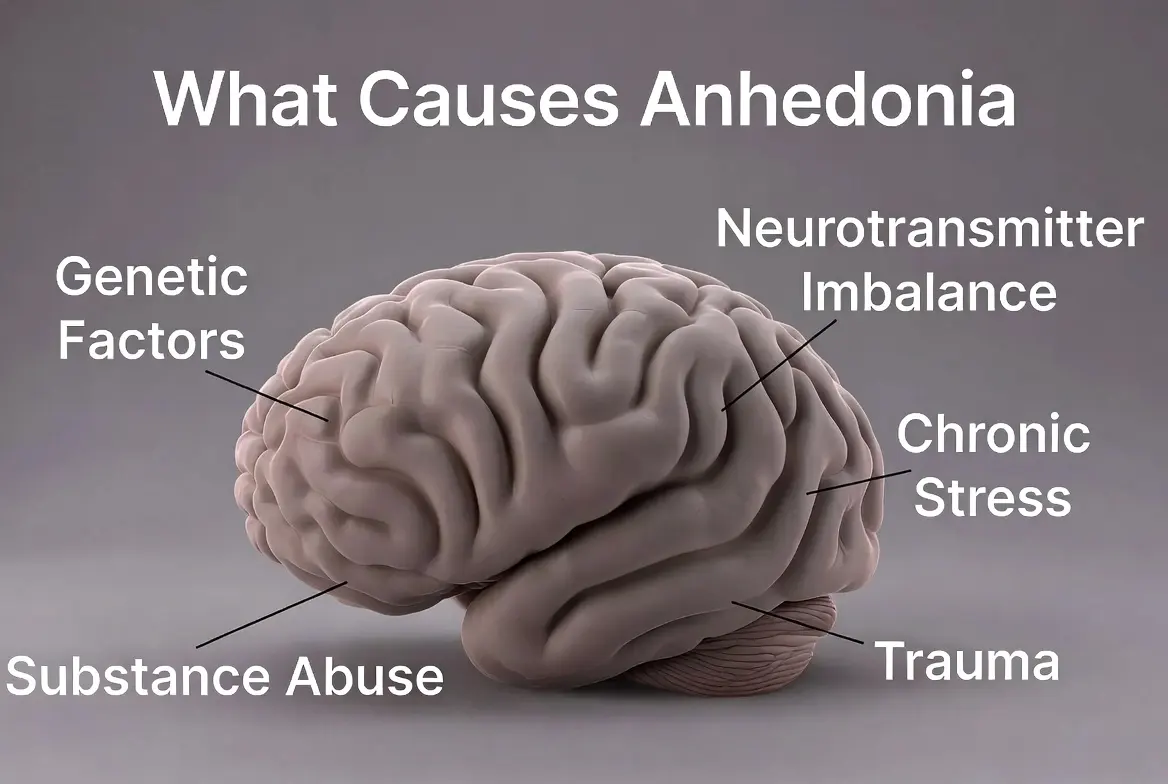
When we discuss the “root cause” of anhedonia, we have to look at the hardware. Anhedonia is not a failure of will; it is a neurobiological event. As a psychologist, I find that when patients understand the Neurobiology of their numbness, the shame begins to dissolve.
The Dopamine Reward Circuit
The “main character” in the story of anhedonia is dopamine. Contrary to popular belief, dopamine isn’t just about “pleasure”; it is about motivation and reward prediction.
In a healthy brain, the ventral striatum (the brain’s reward center) works in tandem with the prefrontal cortex (the seat of Executive Function). When you think about something good, your brain releases dopamine, which creates the “urge” to pursue that reward. In anhedonia, this circuit is dampened.
It’s as if the “battery” that powers your motivation is no longer holding a charge. The prefrontal cortex may logically know something is “good,” but it can no longer trigger the emotional “spark” in the striatum.
The Impact of Chronic Stress and Cortisol
Why does this circuit break down? One of the primary culprits is chronic stress. When you are under prolonged pressure, your body is flooded with cortisol. While cortisol is helpful in a “fight or flight” moment, chronic exposure is toxic to the reward system.
Excess cortisol can actually cause a “thinning” of the responsiveness in the reward centers. From an evolutionary perspective, this makes sense: if you are in a high-danger environment (chronic stress), your brain de-prioritizes “frivolous” pleasure (like enjoying a sunset) to focus entirely on survival. Anhedonia, in this context, is a biological “safety switch” that has stayed on for too long.
The Inflammation Hypothesis
One of the most exciting areas of current research is Neuroinflammation. We now know that the immune system and the brain are deeply connected. When the body is inflamed—whether due to poor diet, chronic illness, or even post-viral syndromes—the brain produces cytokines, which tell the brain to initiate “sickness behavior.”
Sickness behavior looks exactly like anhedonia: you want to stay in bed, you lose your appetite, and you lose interest in the world. This is the brain’s way of forcing you to conserve energy to heal. However, in cases of depression or chronic stress, the brain gets “stuck” in this inflammatory state, even when there is no active infection to fight.
In my practice, I have observed a critical link that only becomes apparent through long-term clinical observation: the “Circadian Gatekeeper.” I often find that patients with severe anhedonia have significantly disrupted Circadian Rhythms.
If a patient is trying to “fix” their anhedonia but is staying up until 3:00 AM scrolling through a phone (blue light) and sleeping until noon, their dopamine receptors cannot recalibrate. Light exposure in the morning is a biological precursor to dopamine production. I have seen cases where “stubborn” anhedonia only began to shift once we enforced a strict sleep-wake schedule. You cannot “think” your way out of a dopamine deficit if your biological clock is telling your brain it’s perpetually midnight.
The Main Causes of Anhedonia: A Structured Analysis
While the brain mechanisms are similar across cases, the “triggers” vary. Understanding the specific cause in your life is the key to choosing the right treatment.
Major Depressive Disorder (MDD)
Anhedonia is a hallmark symptom of depression. However, it is distinct from “sadness.” In fact, many patients find the anhedonia much harder to bear than the sadness. In depression, the brain’s ability to “sustain” a positive emotion is compromised. You might feel a fleeting second of joy, but it evaporates instantly.
Trauma and PTSD
Trauma often leads to a state of emotional numbing. This is a protective mechanism. If the “volume” of your pain is too loud to survive, the brain turns the volume knob down on all emotions—including the good ones. You cannot selectively numb pain; when you turn down the “bad,” the “good” goes with it.
Hormonal Shifts and Women’s Health
I frequently see anhedonia emerge in women during periods of intense hormonal flux. Estrogen plays a significant role in modulating dopamine sensitivity.
- Postpartum: The massive drop in hormones after birth can “crash” the reward system.
- Perimenopause/Menopause: As estrogen fluctuates and declines, many women report a “flatness” or loss of joy that they’ve never experienced before.
Summary of Causes and Triggers
| Cause Category | Primary Mechanism | Common Signs |
| Mood Disorders | Reward circuit “shutdown.” | Persistent “gray” mood, loss of interest. |
| Chronic Stress | Cortisol-induced blunting | Feeling “burned out,” unable to relax. |
| Trauma | Protective emotional numbing | Feeling “disconnected” from self and others. |
| Biological | Inflammation or Hormonal shifts | Sudden onset, often linked to physical changes. |
What Drug Causes Anhedonia?
It is a painful irony that some of the medications meant to help mental health can actually contribute to anhedonia. This is one of the most common reasons patients seek my help for “emotional blunting.”
SSRI-Induced Emotional Blunting
Selective Serotonin Reuptake Inhibitors (SSRIs) are excellent at raising the “floor” of depression—they stop the deep lows. However, for some people, they also lower the “ceiling” of joy. Because serotonin and dopamine exist in a delicate balance, increasing serotonin can sometimes “dampen” dopamine activity in the reward centers.
Patients often describe this as feeling “fine, but flat.” They aren’t depressed, but they aren’t happy either. In these cases, we often discuss “medication augmentation” or switching to a different class of drugs that target dopamine more directly.
Substance Use and “Dopamine Debt”
When someone uses substances that flood the brain with artificial dopamine (like stimulants or even excessive alcohol), the brain tries to protect itself by “down-regulating”—it removes dopamine receptors. When the substance is removed, the brain is left in a state of “dopamine debt.” Nothing in normal life (a sunset, a conversation) provides enough dopamine to reach the now-diminished receptors. This is why anhedonia is the primary challenge in early addiction recovery.
Can Vitamin Deficiency Cause Anhedonia?
Yes. The brain requires specific cofactors to build neurotransmitters.
- B12 and Folate: Crucial for the synthesis of dopamine and serotonin.
- Vitamin D: Acts more like a hormone in the brain and is linked to mood regulation.
- Iron: Iron deficiency (anemia) is a major cause of fatigue and anhedonia, especially in women, as iron is required for dopamine production.
What Causes Sexual & Ejaculatory Anhedonia?
In my practice, few symptoms cause as much private distress and relationship strain as sexual anhedonia. This is the specific inability to experience the “pleasure” of intimacy, even when physical function—like arousal or the ability to reach orgasm—remains intact.
The causes are often a combination of biological and psychological factors:
- Dopamine Suppression: Since dopamine is the primary driver of the “reward” of sex, anything that lowers dopamine (such as high stress, certain antipsychotics, or SSRIs) can lead to a “muted” sexual experience.
- Ejaculatory Anhedonia: Also known as “pleasureless ejaculation,” this is often a physiological disruption where the physical contractions occur, but the brain’s reward center fails to register the accompanying “high.” This can be linked to pelvic nerve issues, prostate health, or low testosterone.
- The “Spectatoring” Effect: From a psychological perspective, patients with anxiety often “spectator”—they watch themselves perform rather than being in their bodies. This mental distance severs the connection between the physical act and the emotional reward.
I remind my patients that because sex is a high-level coordination of the nervous system, it is often the first thing to “go flat” when the brain is overwhelmed, but also one of the most rewarding things to “re-learn” during recovery.
Is Anhedonia a Mental Illness—Or a Symptom?
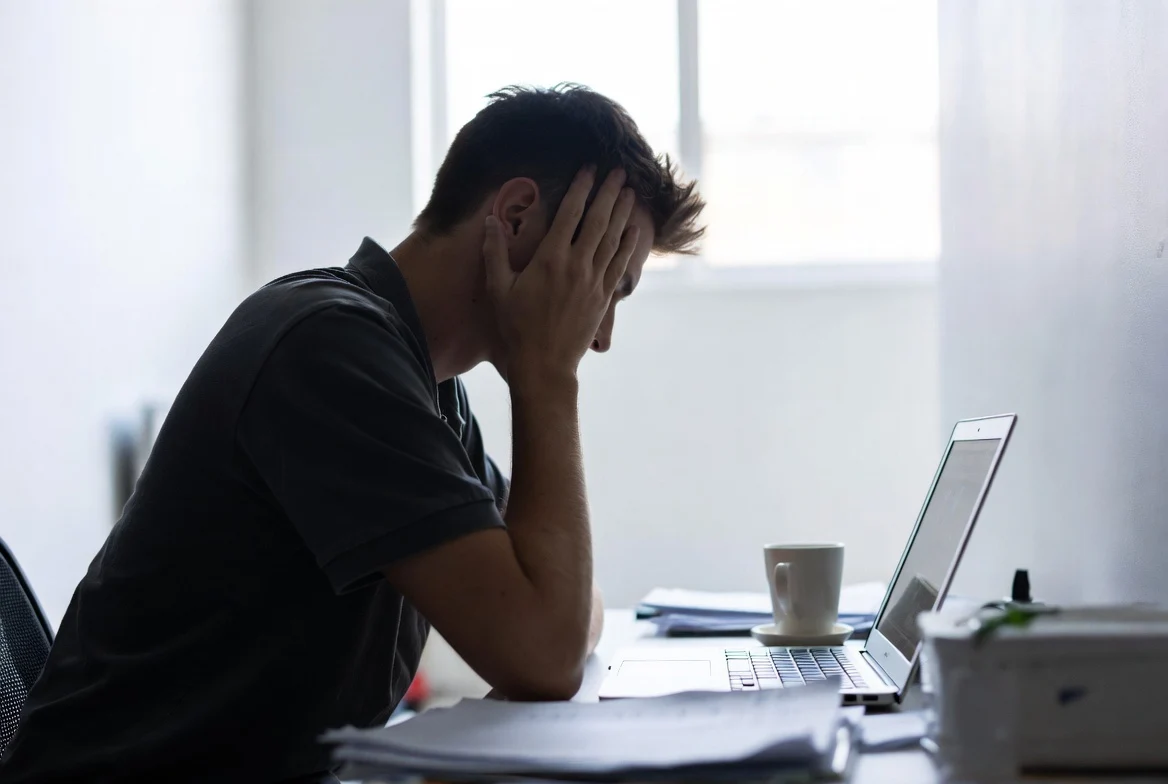
I want to offer a point of clarity that often relieves my patients: Anhedonia is not a mental illness in itself. It is a symptom, much like a fever is a symptom of an infection.
Is it dangerous? Not in a physical, “contagious” sense. However, it is clinically significant because it is a high-risk factor for the worsening of depression. When nothing brings you joy, the motivation to stay healthy, maintain relationships, or even stay alive can begin to erode. This is why we treat anhedonia with such clinical urgency.
It is also vital to ask: Is anhedonia permanent? For the vast majority of people, the answer is a resounding no. Because of Neuroplasticity, your brain is constantly reshuffling its connections. Once the underlying cause—be it inflammation, a medication side effect, or a depressive episode—is managed, the “pleasure hardware” can and does come back online.
How Do You Fix Anhedonia? Evidence-Based Treatment
If anhedonia is a state where the brain has “forgotten” how to feel pleasure, treatment is the process of re-teaching it. We use a multi-pronged approach to “jumpstart” the reward system.
a. Behavioral Activation (BA)
This is the single most effective psychological tool we have. In Cognitive Behavioral Therapy (CBT), we use Behavioral Activation to break the cycle of “waiting to feel like it.”
- The Why: Anhedonia tells you, “Don’t go for that walk; it won’t feel good anyway.” BA ignores that voice. We schedule “micro-activities”—small, 5-minute tasks.
- The Goal: We aren’t looking for a “10/10” joy response. We are looking for a “1/10.” By physically doing the thing, we provide the brain with the sensory data it needs to start firing dopamine again. Action precedes emotion.
b. Medication Adjustments
If you are experiencing “blunting” from an antidepressant, you don’t have to suffer in silence.
- Dopaminergic Strategies: Adding or switching to medications like Bupropion (Wellbutrin) can target the dopamine system specifically.
- New Frontiers: For “treatment-resistant” cases, Ketamine therapy (administered in a clinical setting) has shown a remarkable ability to “reset” the glutamate system and rapidly lift anhedonia.
c. Exercise and Dopamine Repair
Exercise is often dismissed as “cliché” advice, but from a neurobiological standpoint, it is a powerful medicine. Intense physical movement increases the expression of dopamine receptors. It literally gives dopamine more “doors” to enter your brain.
d. Neuromodulation (TMS)
Transcranial Magnetic Stimulation (TMS) uses magnetic pulses to stimulate the prefrontal cortex. It is like “physical therapy” for the brain’s executive reward center, helping it regain its ability to regulate mood and pleasure.
Frequently Asked Questions
What is the root cause of anhedonia?
The root cause is a dysfunction in the brain’s reward circuitry, specifically a “blunting” of the dopamine response in the ventral striatum. This is usually triggered by depression, trauma, or chronic stress.
Can vitamin deficiency cause anhedonia?
Yes. Deficiencies in Vitamin D, B12, Iron, and Folate can impair the brain’s ability to produce the neurotransmitters necessary for feeling pleasure.
Is anhedonia permanent?
No. Thanks to Neuroplasticity, the brain can heal and re-sensitize itself to pleasure once the underlying cause (like inflammation or depression) is treated.
What is the best treatment for anhedonia?
A combination of Behavioral Activation, stabilizing Circadian Rhythms, and potentially medications that target dopamine (like Bupropion) or novel treatments like TMS.
What drug causes anhedonia?
Certain SSRIs can cause “emotional blunting.” Additionally, the long-term use of alcohol or stimulants can lead to a “dopamine crash” that results in temporary anhedonia.
Conclusion
Living with anhedonia can feel like being an observer in your own life—watching the world move in vibrant colors while you remain trapped in grayscale. As we have explored, this “emotional flatlining” is not a sign of a broken character or a permanent neurological deficit. Instead, it is a sophisticated, albeit painful, biological response to an overwhelmed reward system.
The most important takeaway is that your brain is not “broken”; it is in a state of deep, protective hibernation. By addressing the biological “why”—whether that involves stabilizing your Circadian Rhythms, adjusting medications, or utilizing Behavioral Activation—you can begin the process of waking those circuits up.
Recovery rarely happens all at once. It returns in “flickers”—a moment of genuine laughter, a song that finally feels like it has a soul again, or a split second of looking forward to a meal. These flickers are evidence that your brain is successfully rewiring itself through
Authoritative References:
Related Posts




Subscribe to Our Newsletter
Get mental health tips, updates, and resources delivered to your inbox.
MORE from Author
Read More In my practice as a clinical psychologist, I often observe that the difference between a patient who crumbles under pressure…
- We all have "up" days and "down" days. Perhaps you feel energized after a promotion or sluggish on a rainy…


 To define bipolar disorder accurately, we must look at it as a chronic mood dysregulation condition. In psychology and medicine,…
 To answer whether bipolar fits the bill, we first have to define what a neurodivergent person actually is. The term…

Are you looking for a Therapist?
Connect with qualified mental health professionals who understand
bipolar disorder, mood changes, and emotional challenges.
Private • Supportive • Confidential