
Bipolar Type 2: Symptoms, Tests, Treatment & Outlook

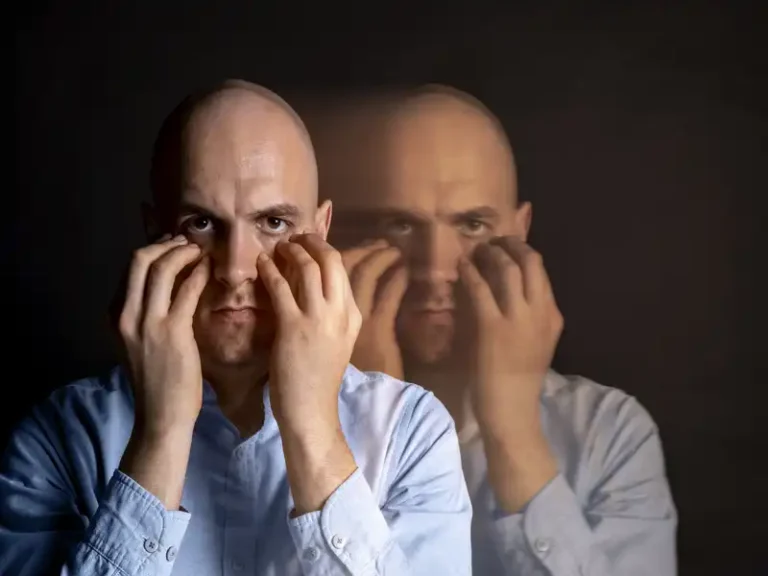
Bipolar type 2 is a lifelong mood disorder defined by at least one episode of hypomania, a milder but real “high”, and at least one episode of major depression. It is not a “mild” form of bipolar disorder. Most people with bipolar 2 spend far more time depressed than elevated. The highs often feel good enough that nobody reports them, so many people are treated for ordinary depression for years before the correct diagnosis.
This guide explains what bipolar type 2 looks like day to day, how doctors diagnose it, how it differs from bipolar 1 and from major depression, and which treatments have the strongest evidence. It also answers the questions people search for most: what a person with bipolar 2 is like, how it affects relationships, whether it is serious, and whether people with bipolar disorder live normal lives.
Key takeaways
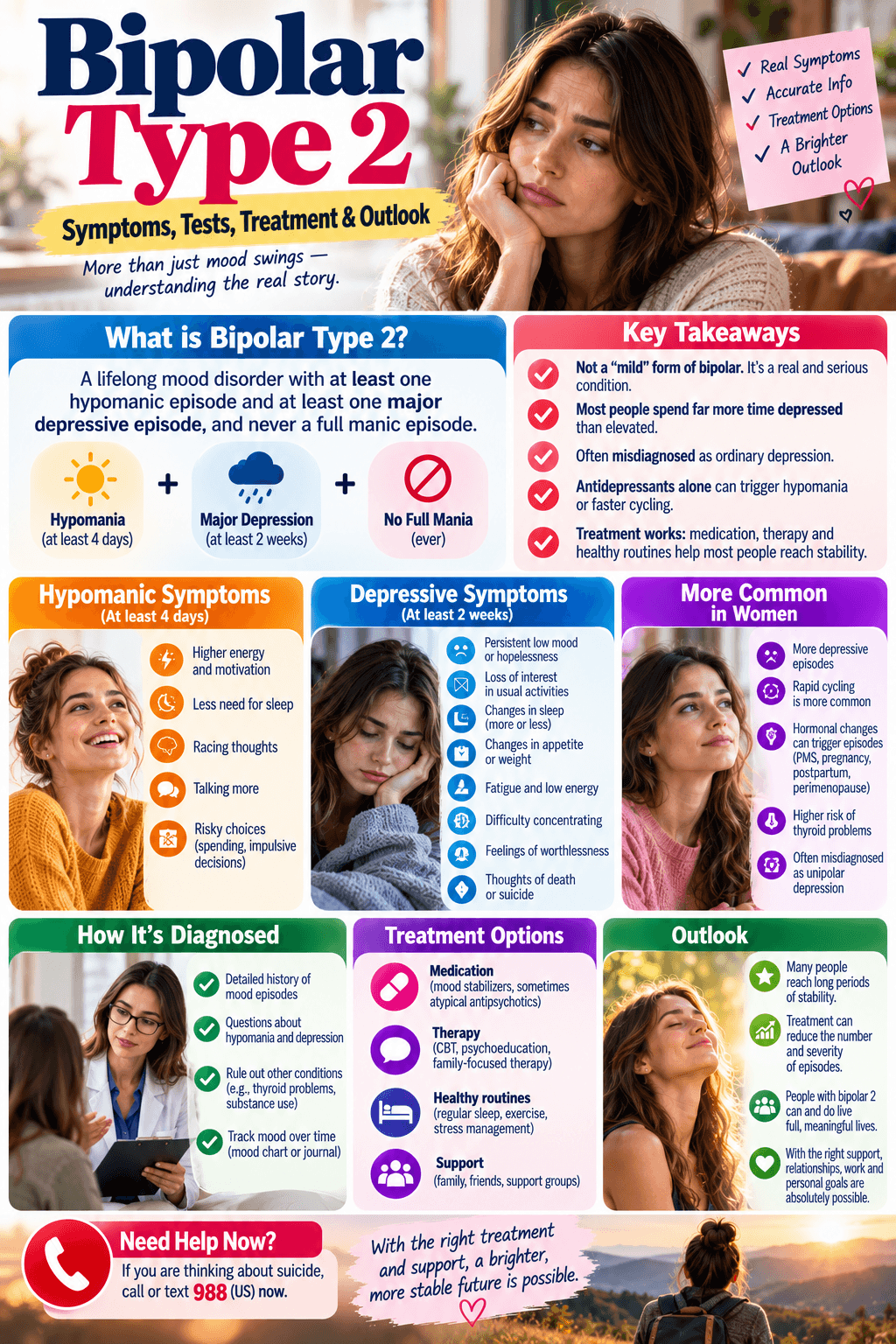
- Bipolar type 2 = at least one hypomanic episode (4+ days) plus at least one major depressive episode (2+ weeks), and never a full manic episode.
- Depression dominates: in a landmark 13-year study, people with bipolar II had depressive symptoms in about half of all weeks and hypomanic symptoms in only about 1%.
- It is often misdiagnosed as unipolar depression. Antidepressants alone can trigger hypomania or faster cycling.
- Treatment works: mood-stabilizing medication, structured therapy and a steady sleep routine help most people reach long periods of stability.
- If you are thinking about suicide, call or text 988 (US) now.
What Is Bipolar Type 2 Disorder?
Bipolar type 2 (also written bipolar II or bipolar 2 disorder) is one of the types of bipolar disorder recognized in the DSM-5-TR. A person has bipolar 2 when they have had:
- at least one hypomanic episode: a distinct period of raised or irritable mood and increased energy lasting at least four consecutive days, and
- at least one major depressive episode: two weeks or longer of low mood or loss of interest, plus other symptoms of depression, and
- never a full manic episode. One manic episode, at any point in life, changes the diagnosis to bipolar 1 disorder.
Hypomania is noticeable to others but does not cause severe impairment, does not need a hospital stay and, by definition, never includes psychosis. The depressive side is a different story. It can be as severe as any major depressive disorder, and it is usually what brings people to treatment.
Bipolar type 2 is sometimes called “soft bipolar”. The label is misleading. The term “bipolar spectrum” is more accurate: bipolar 2 sits between cyclothymic disorder (milder ups and downs that never reach full episodes) and bipolar 1 (full mania).
How common is bipolar 2 disorder?
The World Mental Health Survey, which studied more than 61,000 adults in 11 countries, found a lifetime prevalence of about 0.4% for bipolar II, 0.6% for bipolar I and 1.4% for subthreshold bipolar disorder. Rates in the United States were the highest of any country surveyed. Because hypomania is so often missed, many researchers believe bipolar 2 is under-counted. See more numbers in our bipolar disorder statistics guide.
Bipolar Type 2 Symptoms
Bipolar 2 symptoms swing between two very different states, often with stretches of normal mood in between. Some people also have mixed features, where depression and hypomanic energy appear at the same time. That combination can feel agitated and unbearable.
Hypomanic symptoms of bipolar 2
During hypomania, mood is unusually elevated, expansive or irritable, with more energy than usual. At least three of the following are present (four if the mood is only irritable), most of the day, nearly every day, for at least four days:
- Inflated self-esteem or grandiose ideas
- Decreased need for sleep (feeling rested after three or four hours)
- Talking more, or feeling pressure to keep talking
- Racing thoughts or a “flight of ideas”
- Distractibility
- A surge in goal-directed activity (work, projects, social plans) or physical restlessness
- Risky choices: spending sprees, impulsive business decisions, sexual indiscretions
Not sure whether a good week is hypomania? Our guide to the signs of hypomania vs normal happiness walks through the differences.
Depressive symptoms of bipolar 2
A major depressive episode lasts at least two weeks and includes low mood or loss of interest, plus symptoms such as:
- Persistent sadness, emptiness or hopelessness
- Loss of pleasure in things you usually enjoy (anhedonia)
- Sleeping much more or much less than usual
- Changes in appetite or weight
- Slowed movement or speech, or restlessness
- Fatigue and heavy limbs
- Feelings of worthlessness or excessive guilt
- Trouble thinking, concentrating or deciding
- Thoughts of death or suicide
Bipolar depression often has “atypical” features: oversleeping, heavy limbs and increased appetite. Read more in what is bipolar depression and what bipolar depression feels like.
Bipolar type 2 symptoms in women
Bipolar 2 is diagnosed more often in women, and the pattern can differ:
- More depressive episodes and more time depressed, which raises the risk of being misdiagnosed with unipolar depression
- Rapid cycling (four or more episodes in a year) is more common
- Hormonal transitions such as the premenstrual phase, pregnancy, the postpartum period and perimenopause can trigger episodes. See premenstrual exacerbation.
- Thyroid problems, which can mimic or worsen mood episodes, are more common. See thyroid and bipolar disorder.
Our full guide covers bipolar disorder symptoms in females.
Bipolar type 2 symptoms in men
Men with bipolar 2 are more likely to show hypomania as irritability, anger or risk-taking rather than euphoria. Depression in men can also look like irritability, overwork, alcohol or drug use, or withdrawal rather than visible sadness. Many men never connect these patterns to a mood disorder. See what bipolar anger feels like.
Can bipolar type 2 include psychotic features?
Yes, but only during depression. Psychosis (delusions or hallucinations) can occur in a severe major depressive episode in bipolar 2; the diagnosis is then “bipolar II disorder, current episode depressed, with psychotic features.” Psychosis cannot occur during hypomania. If it does, the episode is classified as mania and the diagnosis becomes bipolar 1. Any psychotic symptom is a reason to contact a doctor the same day. Learn more about bipolar psychosis and the difference between hallucinations and delusions.
What Is a Person With Bipolar 2 Like?
There is no single “bipolar 2 personality”. Bipolar 2 is an illness that comes in episodes, not a character type. Between episodes, many people are simply themselves: thoughtful, funny, capable. During episodes, family and friends often notice a pattern like this:
- In hypomania, the person seems unusually confident, chatty and productive. They start projects, sleep little and may seem charming or “on fire”, until irritability, overspending or overcommitment shows up.
- In depression, the same person withdraws, struggles to get out of bed, cancels plans and may feel worthless. Weeks or months can pass this way.
- Between episodes, many people feel well, although some have lingering low mood, anxiety or trouble concentrating.
People with bipolar 2 often describe “emotional whiplash” and a fear of not knowing which version of themselves will show up next week. Understanding how a person with bipolar thinks during each phase helps loved ones respond with less frustration.
Bipolar 2 vs Bipolar 1: Key Differences
The difference between bipolar 2 and bipolar 1 is the height of the “high”. Bipolar 1 requires at least one full manic episode; bipolar 2 involves hypomania only, plus major depression. One is not simply “worse” than the other. Bipolar 1 brings more acute crises, while bipolar 2 often brings longer and more frequent depression. Read our deeper comparison: is bipolar 1 or bipolar 2 worse?
| Feature | Bipolar 1 | Bipolar 2 |
|---|---|---|
| Required “high” | At least one manic episode | At least one hypomanic episode, never mania |
| Minimum length of the high | 7 days (any length if hospitalized) | 4 consecutive days |
| Impairment during the high | Marked; often needs hospital care | Noticeable change, but no marked impairment |
| Psychosis | Can occur in mania or depression | Only during depression, never in hypomania |
| Major depression | Common, but not required for diagnosis | Required |
| Time spent ill | Mostly depressive symptoms | Depressive symptoms about half of all weeks |
| ICD-10-CM code | F31.x (by episode type) | F31.81 |
Bipolar 2 vs Major Depressive Disorder
Bipolar 2 and major depressive disorder (unipolar depression) can look identical during a depressive episode. The only reliable difference is a history of hypomania, so a good assessment always asks about past “up” periods. Clues that depression may be part of bipolar 2 include:
- A family history of bipolar disorder
- Depression that started early (teens or early 20s)
- Many separate depressive episodes
- Oversleeping, heavy limbs and increased appetite during depression
- Postpartum depression or psychotic depression
- Becoming agitated, “wired” or unable to sleep on an antidepressant (see manic switch)
- Antidepressants that stop working or seem to make mood less stable
This matters because the treatments differ. In a survey of people with bipolar disorder by the Depression and Bipolar Support Alliance, 69% had first been misdiagnosed, most often with unipolar depression, and more than a third waited ten years or longer for the correct diagnosis. If this sounds familiar, our article do I have bipolar depression? can help you prepare for a conversation with your doctor.
Bipolar 2 DSM-5 Criteria and Diagnosis
There is no blood test or brain scan for bipolar type 2. Diagnosis rests on a careful clinical interview, a timeline of past episodes and, ideally, input from someone who knows you well. The DSM-5-TR criteria are summarized below. Our bipolar 2 criteria article covers them line by line.
- At least one hypomanic episode and at least one major depressive episode, now or in the past
- No manic episode, ever
- The episodes are not better explained by schizoaffective disorder, schizophrenia or another psychotic disorder
- The depression, or the unpredictability caused by frequent shifts between depression and hypomania, causes significant distress or impairment
Clinicians also rule out conditions that can mimic or overlap with bipolar 2:
- Thyroid disease
- Substance or medication effects (see substance-induced mood disorder)
- ADHD
- Anxiety disorders
- Borderline personality disorder
Many people have more than one of these at once; see bipolar and anxiety.
Once diagnosed, a specifier is added to describe the current picture, for example “with anxious distress”, “with mixed features”, “with rapid cycling”, “with seasonal pattern”, “with peripartum onset” or “with psychotic features” (depression only).
Bipolar type 2 ICD-10 code
In the US ICD-10-CM, bipolar II disorder is coded F31.81. In the WHO’s ICD-11 it is 6A61. See our guide to bipolar disorder and ICD-10 codes.
Is there a bipolar 2 test?
Screening questionnaires can flag the possibility of bipolar 2, but they cannot diagnose it:
- Mood Disorder Questionnaire (MDQ): good at picking up bipolar 1, less sensitive to bipolar 2
- Hypomania Checklist (HCL-32): designed to catch milder hypomania, so it is often more useful for bipolar 2
- Bipolar Spectrum Diagnostic Scale (BSDS): a short story-style screen for the wider bipolar spectrum
Try our free bipolar test or bipolar depression test, then take your results to a psychiatrist or psychologist. A positive screen means “get evaluated”, not “you have bipolar 2”.
What Causes Bipolar Type 2?
Bipolar 2 is not caused by weakness or bad choices. It develops from a mix of inherited vulnerability and life experience acting on brain systems that regulate mood, energy and sleep. Read more in what causes bipolar disorder in the brain.
- Genetics. Bipolar disorder is among the most heritable mental health conditions. Twin studies estimate heritability at roughly 60–85%. It is polygenic: hundreds of common gene variants each add a small amount of risk. Having a parent or sibling with bipolar disorder raises your risk, but most relatives never develop it.
- Brain circuits. Imaging studies show differences in circuits linking emotional centers (such as the amygdala) with the prefrontal cortex, which helps regulate emotion. The chemical messengers involved include dopamine, serotonin, norepinephrine and glutamate. No single “chemical imbalance” explains bipolar 2.
- Body clock. People with bipolar disorder have a sensitive circadian system. Lost sleep, jet lag, shift work and seasonal light changes are well-known triggers. See bipolar and sleep.
- Stress and life events. Major stress, trauma, grief or big life changes can trigger a first episode in someone who is already vulnerable, and later episodes too. See can stress cause bipolar symptoms?
- Substances and medications. Alcohol, cannabis, stimulants, steroids and antidepressants taken without a mood stabilizer can provoke episodes.
Knowing your personal triggers is one of the most protective things you can do. Start with our bipolar episode triggers list and the early warning signs of a bipolar episode.
Bipolar Type 2 Treatment
Bipolar type 2 is very treatable. Effective care usually combines medication that treats and prevents depression without triggering hypomania, structured psychotherapy, and daily habits that protect sleep and routine. Treatment is planned for the long term, because the aim is to prevent the next episode, not just end the current one.
Bipolar 2 medications
Medication choices should always be made with a prescriber who knows your full history. The options with the strongest evidence for bipolar 2 are:
| Medication | How it is used in bipolar 2 | Notes |
|---|---|---|
| Quetiapine (Seroquel) | FDA-approved for bipolar depression; recommended first-line for bipolar II depression in the CANMAT/ISBD 2018 guidelines | Sedation and weight gain are common; metabolic monitoring is needed |
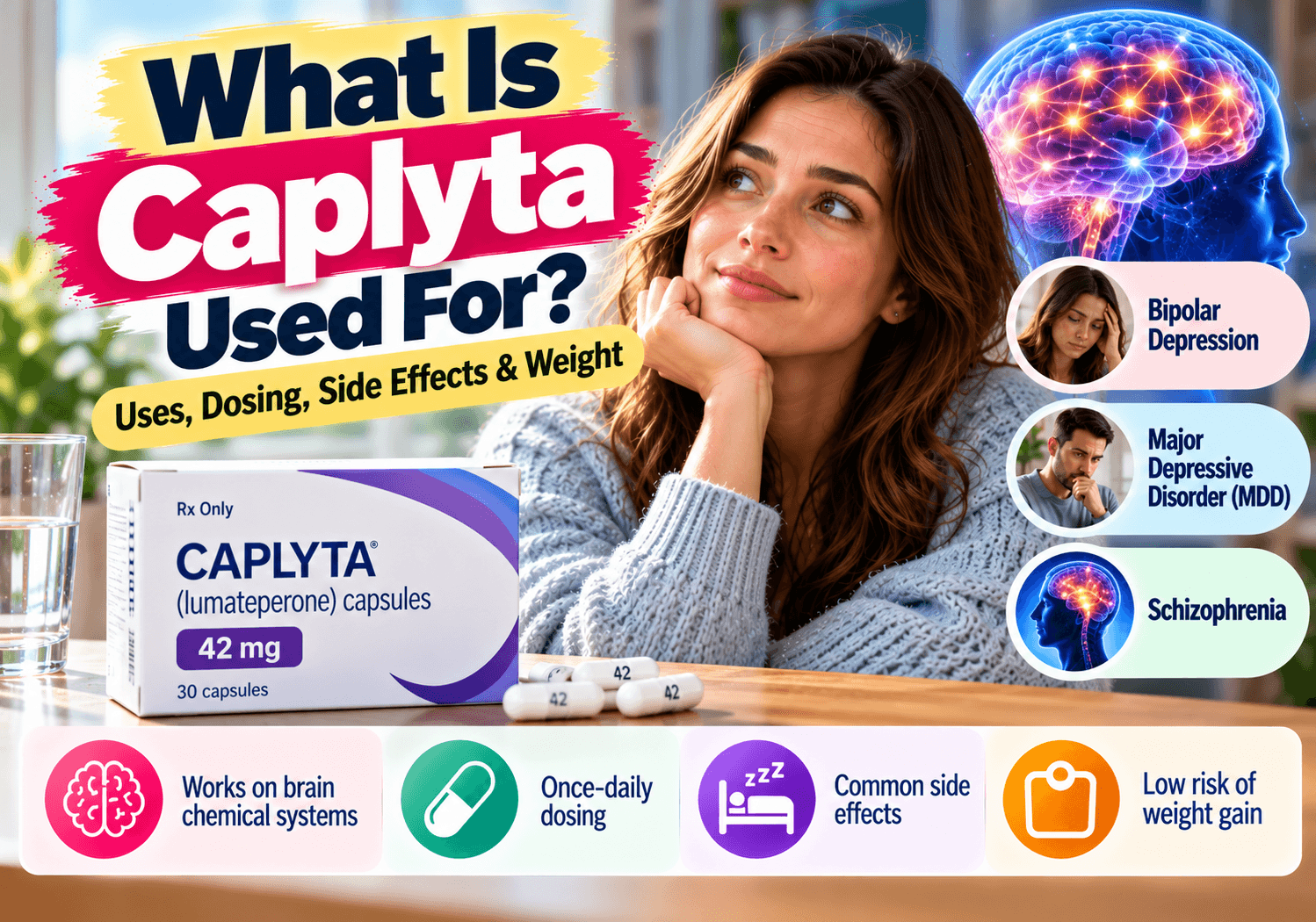
| Lumateperone (Caplyta) | FDA-approved in December 2021 for depressive episodes in bipolar I and bipolar II | Generally lower metabolic impact; see is Caplyta a mood stabilizer? |
| Lamotrigine (Lamictal) | Widely used to prevent depressive relapse (off-label in bipolar 2) | Must be increased slowly to reduce the risk of a serious rash; see lamotrigine side effects |
| Lithium | Mood stabilizer with evidence for preventing episodes and reducing suicide risk | Needs regular blood tests; know the lithium toxicity symptoms |
| Antidepressants | Sometimes used in bipolar 2 depression, ideally with a mood stabilizer and close monitoring | Can trigger hypomania, mixed states or rapid cycling in some people |
Valproate (Depakote) and other antipsychotics are used more for preventing highs than for bipolar 2 depression. Valproate is generally avoided in women who could become pregnant. For a wider overview, see bipolar disorder medications, mood stabilizers vs antipsychotics and the best medication for bipolar depression and anxiety. Never stop or change a medication without talking to your prescriber; stopping suddenly is a common cause of relapse.
Therapy for bipolar type 2
Psychotherapy alongside medication improves recovery from bipolar depression and lowers relapse risk. The approaches with the best evidence are:
- Psychoeducation: learning your illness, triggers and early warning signs, often in a group
- Cognitive behavioral therapy (CBT): changing the thought and behavior patterns that deepen depression and fuel risky hypomanic choices
- Interpersonal and social rhythm therapy (IPSRT): stabilizing daily routines (wake time, meals, activity, bedtime) to steady the body clock
- Family-focused therapy: helping partners and families communicate, solve problems and spot warning signs together
Learn which approach fits you in the best therapy for bipolar disorder and do I need therapy for bipolar disorder?
Daily habits that protect stability
- Protect sleep. Keep fixed wake and bed times, even on weekends. A shrinking need for sleep is often the first sign of hypomania. See bipolar insomnia.
- Track your mood. A daily bipolar mood chart or a mood tracking app shows patterns weeks before an episode.
- Limit alcohol and avoid recreational drugs, which destabilize mood and interfere with medication.
- Write a wellness and crisis plan with your care team and family. Use our bipolar wellness plan template.
- Move, eat regularly and stay connected. Exercise, regular meals and a few reliable people all support mood. See the bipolar diet guide.
How Does Bipolar 2 Affect Relationships?
Bipolar 2 can strain relationships in both directions, mostly when it is untreated:
- During hypomania, a partner may seem distant, irritable, overcommitted or impulsive. Spending, flirting or big unilateral decisions can damage trust.
- During depression, withdrawal, low libido, irritability and an inability to do everyday tasks can leave a partner feeling lonely or rejected.
- Over time, unpredictability can make both people feel they are “walking on eggshells”.
Many couples manage bipolar 2 well. The habits that help most are learning about the illness together, agreeing on early warning signs and what each person will do when they appear, joint safeguards for money during highs, and couples or family therapy. Our guides on why bipolar relationships fail and how to prevent it and trust in bipolar relationships go further.
Is Bipolar 2 a Serious Condition?
Yes. Bipolar type 2 is a serious, lifelong mental health condition, even though its highs are milder than in bipolar 1:
- Depression is chronic. In a 13-year study, people with bipolar II had symptoms in about 54% of weeks, nearly all of them depressive.
- Suicide risk is high. Studies find rates of suicide attempts in bipolar II similar to those in bipolar I. Risk is highest during depression and mixed states.
- Function can suffer. Work, study and relationships are often disrupted. Severe cases may qualify for disability support (see the FAQ below).
- Other conditions are common. Anxiety disorders, substance use and ADHD often occur alongside bipolar 2.
Untreated, episodes tend to keep returning, and for some people they become more frequent. With consistent treatment, most people have long stretches of stability. Read does bipolar get worse with age? and how long does bipolar depression last?
If you are in crisis: call or text 988 (Suicide & Crisis Lifeline, US), or go to the nearest emergency department. Outside the US, contact your local emergency number.
Do People With Bipolar 2 Live Normal Lives?
Yes, many do. People with bipolar type 2 hold demanding jobs, raise families, study, create and lead full lives. A “normal life” with bipolar 2 usually includes a few non-negotiables:
- Taking medication consistently, even when well
- Protecting sleep and routine
- Knowing your early warning signs
- Having a plan for bad weeks
Some people point to the energy and creativity of hypomania as an advantage. Psychologist John Gartner’s book The Hypomanic Edge is one example. It is true that many accomplished people live with bipolar spectrum conditions. But the productivity of a hypomanic week rarely outweighs the months of depression that can follow. Treatment aims to keep you yourself while giving you more stable weeks.
Bipolar 2 cannot currently be cured, but it can be managed very well; see can bipolar disorder be cured? Many people find the diagnosis a relief: it explains years of confusing ups and downs and finally points to treatment that fits.
When to See a Doctor About Bipolar Type 2
Talk to a doctor, psychiatrist or psychologist if:
- you have had periods of unusually high energy and little need for sleep, followed by low moods
- your depression keeps coming back or hasn’t responded to antidepressants
- an antidepressant made you feel wired, agitated or unable to sleep
- a close family member has bipolar disorder
Bring a list of past “up” and “down” periods and, if possible, someone who knows you well. Seek urgent help for any thoughts of suicide, psychotic symptoms, or behavior that puts you or others at risk.
Frequently Asked Questions About Bipolar Type 2
What is the main difference between bipolar 1 and bipolar 2?
Bipolar 1 requires at least one full manic episode, which may involve psychosis or hospitalization. Bipolar 2 involves hypomania only (milder, at least four days, no psychosis) plus at least one major depressive episode.
Can bipolar 2 turn into bipolar 1?
Yes. A minority of people first diagnosed with bipolar 2 later have a full manic episode, and the diagnosis is then changed to bipolar 1. This is one reason to keep treatment and monitoring going even when you feel well.
Is bipolar 2 genetic?
Genes play a large role. Bipolar disorder runs in families, and having a first-degree relative with it raises your risk. But it is polygenic and influenced by environment, so many people with a family history never develop it.
How long does a bipolar 2 episode last?
Hypomanic episodes last at least four days and often a week or two. Depressive episodes last at least two weeks and commonly several months without treatment. See how long do bipolar episodes last?
Can you have bipolar 2 without depression?
No. A major depressive episode is required for the diagnosis. Someone with hypomania but no major depression may have cyclothymia or another specified bipolar disorder instead.
How do I know if I’m hypomanic or just in a good mood?
A good mood still feels like you. Hypomania feels like a sped-up version of you: needing much less sleep without feeling tired, talking faster, starting many projects and taking risks that are out of character, for four days or longer. Other people usually notice the change.
Is bipolar 2 a disability?
It can be. Bipolar disorder is covered under the Americans with Disabilities Act, and severe, well-documented cases can qualify for Social Security disability benefits. See our bipolar disability guide.
The Bottom Line on Bipolar Type 2
Bipolar type 2 is a real, serious and treatable mood disorder. Its short, deceptively pleasant highs and long, heavy lows mean it is often missed for years. If your depression has never fully made sense, ask your clinician about hypomania. The right diagnosis opens the door to medication, therapy and daily habits that help many people with bipolar 2 build steady, meaningful lives.
References
- American Psychiatric Association. Diagnostic and Statistical Manual of Mental Disorders, 5th ed., Text Revision (DSM-5-TR). 2022.
- National Institute of Mental Health. Bipolar Disorder.
- Judd LL, et al. A prospective investigation of the natural history of the long-term weekly symptomatic status of bipolar II disorder. Arch Gen Psychiatry. 2003;60(3):261–269.
- Merikangas KR, et al. Prevalence and correlates of bipolar spectrum disorder in the World Mental Health Survey Initiative. Arch Gen Psychiatry. 2011;68(3):241–251. Summary: NIMH.
- Hirschfeld RMA, Lewis L, Vornik LA. Perceptions and impact of bipolar disorder: how far have we really come? J Clin Psychiatry. 2003;64(2):161–174.
- Yatham LN, et al. Canadian Network for Mood and Anxiety Treatments (CANMAT) and International Society for Bipolar Disorders (ISBD) 2018 guidelines for the management of patients with bipolar disorder. Bipolar Disord. 2018;20(2):97–170.
- Novick DM, Swartz HA, Frank E. Suicide attempts in bipolar I and bipolar II disorder: a review and meta-analysis of the evidence. Bipolar Disord. 2010;12(1):1–9.
- Healio. FDA approves Caplyta for depressive episodes in bipolar I, II disorders. December 2021.
- Miklowitz DJ, et al. Psychosocial treatments for bipolar depression: a 1-year randomized trial from the Systematic Treatment Enhancement Program (STEP-BD). Arch Gen Psychiatry. 2007;64(4):419–426.
Related Posts



Subscribe to Our Newsletter
Get mental health tips, updates, and resources delivered to your inbox.
MORE from Author
Read More ADHD and depression often occur together, and each makes the other harder to live with. Adults with ADHD are almost…
 We all have "up" days and "down" days. Perhaps you feel energized after a promotion or sluggish on a rainy…
 To define bipolar disorder accurately, we must look at it as a chronic mood dysregulation condition. In psychology and medicine,…
Are you looking for a Therapist?
Connect with qualified mental health professionals who understand
bipolar disorder, mood changes, and emotional challenges.
Private • Supportive • Confidential