
Rupture and Repair: The Psychology of Conflict and Connection in Relationships & Therapy

Medically reviewed by Laura Athey Updated Date: April 5, 2026

In the landscape of human connection, conflict is often viewed as a sign of failure. We are conditioned to believe that a “good” relationship—whether with a partner, a parent, or a therapist—should be seamless and harmonious. However, psychological research, particularly in attachment theory and the work of The Gottman Institute, suggests the opposite. The strength of a bond is not determined by the absence of conflict, but by the presence of repair.
But what is rupture and repair, exactly? In simple language, a rupture is a break in the emotional connection. It is a moment of misattunement, a misunderstood word, or a deep betrayal. Repair is the intentional act of acknowledging that break and working to bridge the gap.
Throughout this guide, we will delve into rupture and repair meaning across various contexts. We will explore the “Good Enough Mother” concept of Donald Winnicott, the profound “Still-Face” findings of Ed Tronick, and the practical “Repair Attempt” strategies of John Gottman. While the term “rupture and repair” can also refer to the medical procedure for an Achilles tendon rupture and repair, our focus today is on the psychological and emotional architecture of the human heart.
What Is Rupture and Repair?
To master the art of connection, we must first understand the rupture and repair definition through both a simple and a clinical lens.
Rupture and Repair Definition (Simple + Clinical)
In rupture and repair psychology, we define these terms as the “breathing” of a relationship.
- Rupture: A state of emotional disconnection. Clinically, it is a failure of empathy or a lack of “attunement.” It occurs when one person’s needs or signals are missed, ignored, or dismissed by the other. This can range from a minor “micro-rupture” (like looking at a phone while a partner is speaking) to a major “macro-rupture” (like an infidelity or a traumatic argument).
- Repair: The process of reconnection. It is not merely an apology; it is an active effort to regulate emotions, acknowledge the impact of the disconnection, and re-establish a sense of safety.
Rupture and repair theory suggests that these moments are actually necessary for growth. Without the cycle of losing and finding each other, a relationship remains “brittle.” It is the repair that builds the “muscle” of emotional resilience.
What Is Rupture and Repair in Psychotherapy?
In a clinical setting, therapeutic rupture and repair are considered one of the most powerful tools for healing. Rupture and repair in therapy occur when a client feels misunderstood, judged, or let down by their therapist.
Far from being a sign that therapy is failing, a therapeutic rupture is often the “real work.” When a therapist acknowledges their mistake and works to understand the client’s hurt, it provides a “corrective emotional experience.” It proves to the client that a relationship can survive a conflict—something many people never learned in childhood.
Rupture and Repair in Attachment Theory
Our ability to handle conflict as adults is almost entirely rooted in the rupture and repair attachment theory dynamics we experienced as infants.
Rupture and Repair Attachment Theory Explained
Attachment is not a static state of “constant love.” It is a dynamic process of being “in sync” and “out of sync.” Infants rely on their caregivers to mirror their emotions. When a caregiver misses a signal—perhaps the baby is hungry, but the parent tries to play—a rupture occurs.
Ed Tronick and the Still-Face Experiment
One of the most famous studies in ed tronick rupture and repair is the Still-Face Experiment. In this study, a mother engages playfully with her infant and then suddenly adopts a blank, “still” face, refusing to respond to the baby’s signals.
The infant quickly becomes distressed, attempting to regain the mother’s attention before eventually withdrawing in despair. The “repair” happens when the mother returns to her expressive, warm self. Tronick found that healthy mothers are actually out of sync with their babies about 70% of the time. The secret to secure attachment isn’t being 100% attuned; it’s the speed and reliability of the rupture and repair cycle.
Rupture and Repair Winnicott Perspective
The renowned pediatrician and psychoanalyst Donald Winnicott introduced the concept of the “Good Enough Mother.” He argued that a parent who is “perfect” actually harms the child because the child never learns to tolerate the frustrations of the real world.
According to rupture and repair Winnicott’s theory, the caregiver must provide “optimal disillusionment.” By failing occasionally (rupture) and then providing comfort (repair), the parent helps the child develop a “true self” that can handle life’s inevitable disconnections.
In my clinical work with both individuals and couples, I find that the fear of “breaking” the relationship is often the biggest barrier to intimacy. Many people grew up in homes where a rupture was followed by “the silent treatment” or explosive rage, but never by repair.
If you are terrified of conflict, you aren’t afraid of the argument itself—you are afraid that there is no bridge back to safety. Learning that repair is possible is often the single most transformative moment in a person’s psychological journey. It turns a relationship from a “fragile glass” into “flexible steel.”
The Rupture and Repair Cycle: Why Resilience Matters

The rupture and repair cycle is a three-part rhythm: Attunement → Rupture → Repair.
- Attunement: The “baseline” state where both parties feel seen, heard, and safe.
- Rupture: The interruption. A disagreement, a forgotten promise, or a harsh tone of voice breaks the “we-ness.”
- Repair: The effort to return to attunement. This involves “emotional accountability”—the ability to say, “I see that I hurt you, and I want to fix it.”
Why Repair Matters More Than Perfection
In the rupture and repair circle of security, the goal is not to eliminate ruptures. In fact, research shows that children with “perfect” parents who never show frustration often grow up to be highly anxious adults because they never learned how to navigate a social rupture.
Repair builds relational resilience. Every time you successfully repair, you add a “deposit” into what John Gottman calls the “Emotional Bank Account.” You learn that the relationship is strong enough to hold your big feelings, your mistakes, and your humanity.
Rupture and Repair in Romantic Relationships
In adult intimacy, the rupture and repair cycle is the primary predictor of relationship longevity. While many couples believe that “not fighting” is the goal, clinicians know that a lack of conflict often indicates emotional withdrawal or “stonewalling.” The health of a rupture and repair relationship is found in how quickly and effectively the couple moves from disconnection back to safety.
Rupture and Repair in Relationships Explained
A rupture in a romantic context often feels like a “betrayal of the we.” It can be as small as a “bids for connection” being ignored—such as one partner pointing out a bird outside and the other not looking up—or as significant as an escalated argument where hurtful words are exchanged.
In rupture and repair relationships, the rupture creates a spike in the sympathetic nervous system (fight or flight). Without repair, the partners remain in this “flooded” state, leading to resentment and emotional distance.
Gottman’s Research on Rupture and Repair
Dr. John Gottman and Dr. Julie Gottman have spent over 40 years studying what separates “The Masters” of relationships from “The Disasters.” Their findings on Gottman rupture and repair revolutionized how we view conflict.
The Concept of “Repair Attempts”
According to rupture and repair Gottman research, a “repair attempt” is any statement or action—silly or serious—that aims to diffuse negativity and prevent an argument from spiraling out of control. It is the “steering wheel” that keeps the car on the road during a storm.
Examples of Gottman Repair Attempts:
- Using Humor: Making a self-deprecating joke to break the tension.
- The Physical Touch: Reaching out to hold a partner’s hand during a disagreement.
- Acknowledging the “We”: Saying, “I know we’re both tired, but let’s try to hear each other.”
- The “I” Statement: Saying, “I’m feeling flooded right now, can we take a break?”
Gottman’s research found that the success of a repair attempt depends more on the quality of the friendship before the fight than on the elegance of the apology itself. If the “Emotional Bank Account” is full, the partner is more likely to accept the repair.
Repairing Relationships After Rupture

When a significant rupture occurs, an apology is often not enough. Repairing relationship ruptures requires a structured approach to emotional accountability.
Physiological Regulation
You cannot repair while you are “flooded.” If your heart rate is above 100 beats per minute, the thinking part of your brain (prefrontal cortex) has effectively shut down. The first step in repairing relationships after rupture is taking a 20-minute break to breathe and calm the nervous system.
The “Aftermath of a Fight” Protocol
Borrowed from Gottman’s work, this involves five steps:
- Feelings: Share how you felt without blaming your partner.
- Realities: Describe your “subjective reality.” (Understand that there are two truths in every conflict.
- Triggers: Identify if the fight touched on an old “raw spot” or childhood wound.
- Responsibility: Acknowledge your part in the mess. Even if you are only 5% responsible, own that 5%.
- Constructive Plans: Discuss one thing each person can do differently next time.
Rupture and Repair in Friendship
While much is written about parents and partners, rupture and repair in friendship is an overlooked but vital part of adult mental health. Because friendships lack the “contractual” nature of marriage or the biological tie of family, they are often more susceptible to “permanent rupture.”
How Friendship Repair Differs
In a friendship, a rupture often manifests as “drifting” or “ghosting.” Because there is often less daily interaction, a misunderstanding can fester for months.
- The Passive Rupture: Forgetting a birthday or not reaching out during a friend’s crisis.
- The Active Rupture: A disagreement over values or a perceived slight in a social setting.
Repairing a friendship requires one person to be the “brave one” who initiates the conversation. Unlike romantic partners who go to bed in the same house, friends must intentionally move toward each other to bridge the distance.
A simple text saying, “I’ve felt a bit of distance between us lately, and I miss our connection. Can we talk?” is often the most effective repair tool in a platonic context.
Rupture and Repair in Parenting
In the context of rupture and repair in parenting, the burden of repair always lies with the adult. Children do not have the neurological development to initiate a complex emotional repair; they rely on the parent to lead the way back to safety.
Modeling Emotional Regulation
When a parent loses their temper (rupture), it is a frightening experience for a child’s developing brain. However, the act of coming back later and saying, “I’m sorry I yelled. I was feeling frustrated, but it wasn’t your fault, and I love you,” is a masterclass in emotional intelligence.
This process teaches the child:
- That big feelings are manageable.
- Those “bad moments” don’t mean they are a “bad person.”
- That relationships are “repairable.”
Children who experience consistent rupture and repair in parenting grow up with high “relational efficacy”—the belief that they can navigate social difficulties without the world ending.
Rupture and Repair in Therapy: The Corrective Experience
In many ways, rupture and repair in psychotherapy is the ultimate practice ground for real-world relationships. A therapeutic rupture—whether it is a therapist being late, a perceived judgmental comment, or a failure to remember a key detail—can feel devastating to a client. However, clinical research suggests that these moments are often where the most significant healing occurs.
Why Rupture Is Not Therapy Failure
For many clients, their history is full of ruptures that were never repaired. They may have grown up in homes where an argument meant days of silence or where expressing hurt resulted in further punishment.
When a therapeutic rupture and repair occur, the therapist models a new way of being. By saying, “I hear that my comment hurt you, and I am so glad you told me. Let’s look at what happened between us,” the therapist provides a “corrective emotional experience.”
Practical Guide: How to Repair After Rupture
If you are currently experiencing a disconnect in your life, follow this step-by-step framework for repairing relationship ruptures.
1. Pause and Regulate
You cannot repair while your body is in “threat mode.” If you feel heat in your face or a racing heart, tell the other person: “I want to fix this, but I’m feeling overwhelmed. I need 20 minutes to calm down so I can really listen to you.”
2. Acknowledge the Impact
Do not start with “intent.” Don’t say, “I didn’t mean to hurt you.” Instead, acknowledge the “impact.” Say, “I can see that what I said made you feel dismissed.” 3. Validate Feelings Validation does not mean you agree with their logic; it means you understand their experience. “It makes sense that you feel frustrated because you were counting on me.”
4. Take Responsibility
In rupture and repair in relationships, there is rarely a 100% “villain.” Find your part. “I take responsibility for using a harsh tone when I was stressed.”
5. Reconnect Intentionally
Once the repair is made, do something to re-establish the bond. This could be a hug, a shared meal, or a simple “Thank you for working through this with me.” This “closes the loop” on the rupture and repair cycle.
The Bipolar Connection: Rupture and Repair During Mood Cycling
For individuals living with Bipolar Disorder, the rupture and repair cycle is both more frequent and more fragile. Mood episodes—whether manic, hypomanic, or depressive—naturally create significant ruptures in relationships.
Ruptures Driven by Mood
During a manic or hypomanic episode, a person may experience impulsivity, irritability, or grandiosity, leading to ruptures with partners or coworkers.
Conversely, during a depressive episode, the “rupture” is often one of withdrawal and silence. The partner may feel abandoned or shut out, creating a deep sense of misattunement.
The Challenge of Repair
The primary difficulty in Bipolar relationships is that the “person” who caused the rupture (in a state of mania) may feel like a different person than the one attempting the repair (in a state of stability).
- The “Bipolar Shame” Loop: Often, the shame following an episode is so great that the individual avoids repair altogether, allowing ruptures to become permanent.
- The Protective Factor: Learning the “language of repair” is vital. When a person can say, “That behavior was a symptom of my illness, but I take responsibility for the impact it had on you,” it allows the relationship to move from “blame” to “collaborative management.”
Navigating Rupture and Repair in Mood Disorders
In the context of Bipolar Disorder, the rupture and repair cycle takes on a heightened level of importance. The inherent instability of mood cycles—swinging from the high-energy impulsivity of mania to the social withdrawal of depression—creates frequent, natural ruptures in even the most stable relationships.
During manic phases, an individual may engage in behaviors that cause deep hurt or confusion, leading to a significant “misattunement” with their partner. Conversely, the “shutdown” of a depressive episode can feel like a sudden emotional abandonment. For those living with Bipolar Disorder, the “repair” is often hindered by intense shame following an episode.
However, clinical research suggests that a robust rupture and repair therapy framework can act as a stabilizing force. When both the individual and their support system view a rupture as a symptom of the illness rather than a character flaw, the repair process becomes a collaborative effort. By acknowledging the impact of the mood-driven disconnect and intentionally moving back toward safety, couples can build a “relational anchor” that survives the turbulence of the disorder.
Frequently Asked Questions
What is rupture and repair?
It is a psychological cycle where a break in emotional connection (rupture) is followed by an intentional effort to reconnect and resolve the conflict (repair).
What is rupture and repair in psychotherapy?
It is a moment of misunderstanding between the therapist and the client. Successfully repairing this rupture is considered a primary driver of therapeutic growth and trust.
What is rupture and repair attachment theory?
It is the process by which caregivers and infants move from misattunement back to sync. Consistent repair creates “Secure Attachment.”
Why is rupture and repair important?
Because conflict is inevitable. The ability to repair ensures that relationships grow more resilient over time rather than brittle and distant.
Conclusion
We often think of a “rupture” as the end of a story, but in the world of psychology, it is simply the beginning of a deeper chapter. Whether you are navigating the rupture and repair in parenting, the complexities of a therapeutic rupture, or the turbulent waters of a Bipolar relationship, the goal is always the same: reconnection.
A relationship that has been broken and repaired is not “damaged goods.” Like the Japanese art of Kintsugi—where broken pottery is repaired with gold—the relationship becomes more beautiful and resilient because of its history.
Authoritative References
1. The Gottman Institute (Relational Research)
2. American Psychological Association (APA)
3. Ed Tronick & The Still-Face Experiment (Attachment)
4. Donald Winnicott (The Good Enough Mother)
5. National Institute of Health (NIH)

Related Posts






Subscribe to Our Newsletter
Get mental health tips, updates, and resources delivered to your inbox.
MORE from Author
Read More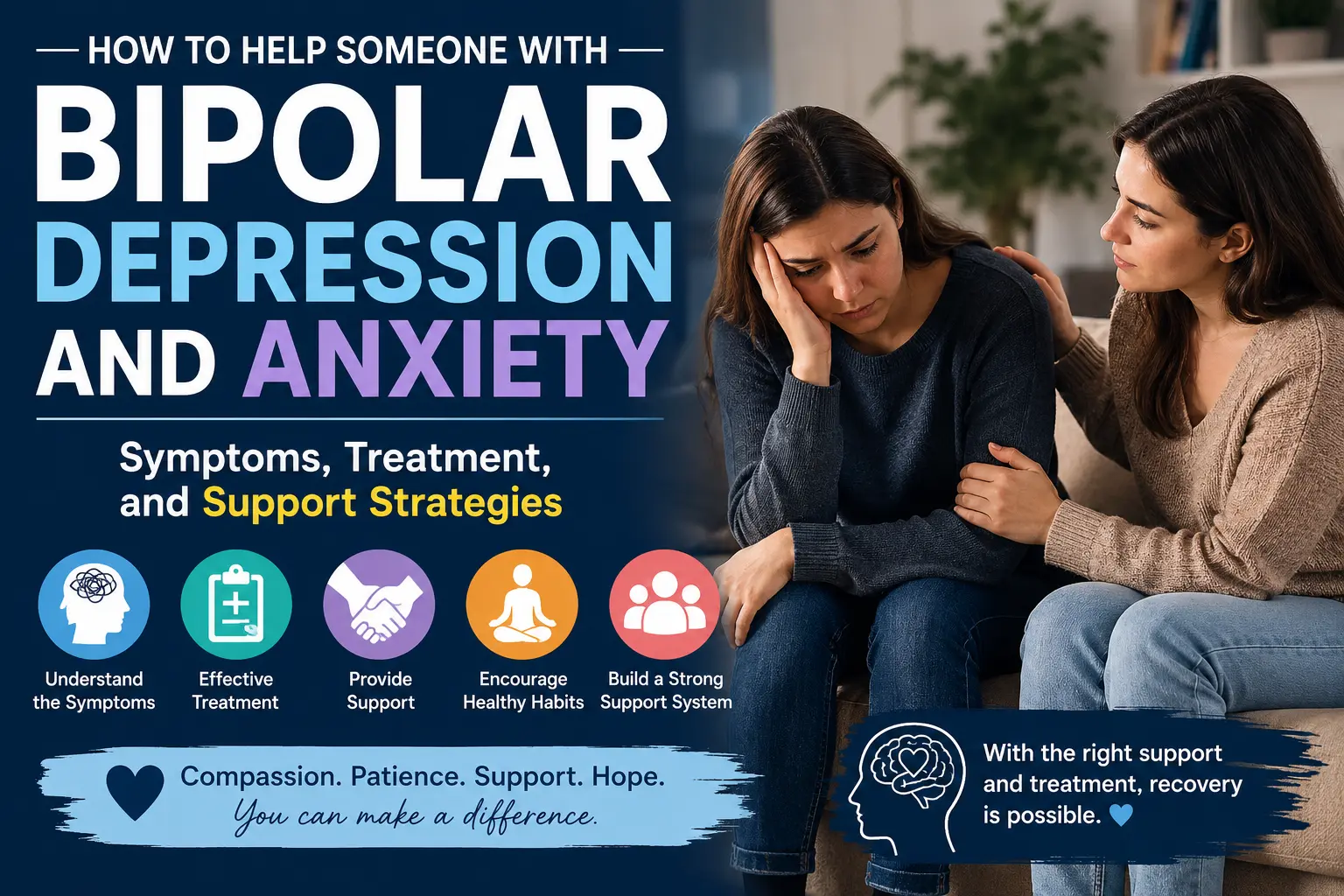 Watching someone you care about struggle with bipolar depression and anxiety can be heartbreaking. You may notice that they withdraw…
 In my practice as a clinical psychologist, I often observe that the difference between a patient who crumbles under pressure…
 We all have "up" days and "down" days. Perhaps you feel energized after a promotion or sluggish on a rainy…
 To define bipolar disorder accurately, we must look at it as a chronic mood dysregulation condition. In psychology and medicine,…
Are you looking for a Therapist?
Connect with qualified mental health professionals who understand
bipolar disorder, mood changes, and emotional challenges.
Private • Supportive • Confidential