
Sympathetic vs Parasympathetic: Key Differences, Chart, Functions, and How to Remember

Medically reviewed by Laura Athey Updated Date: April 14, 2026
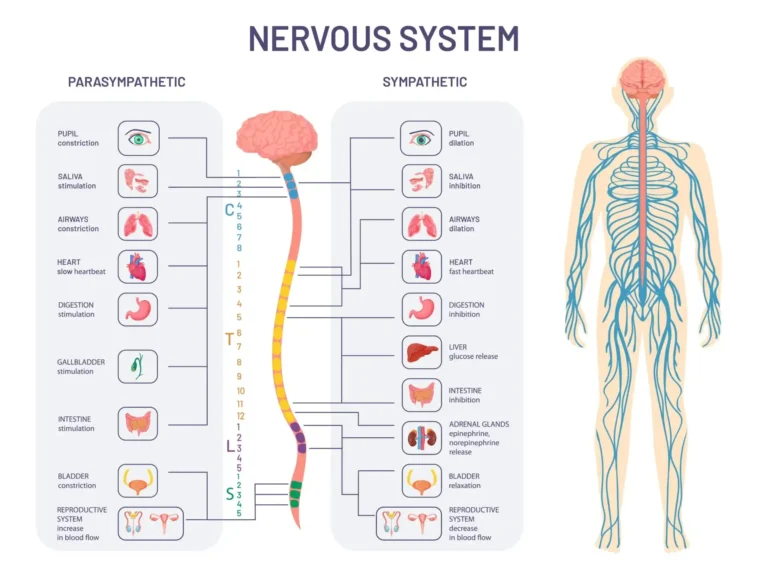
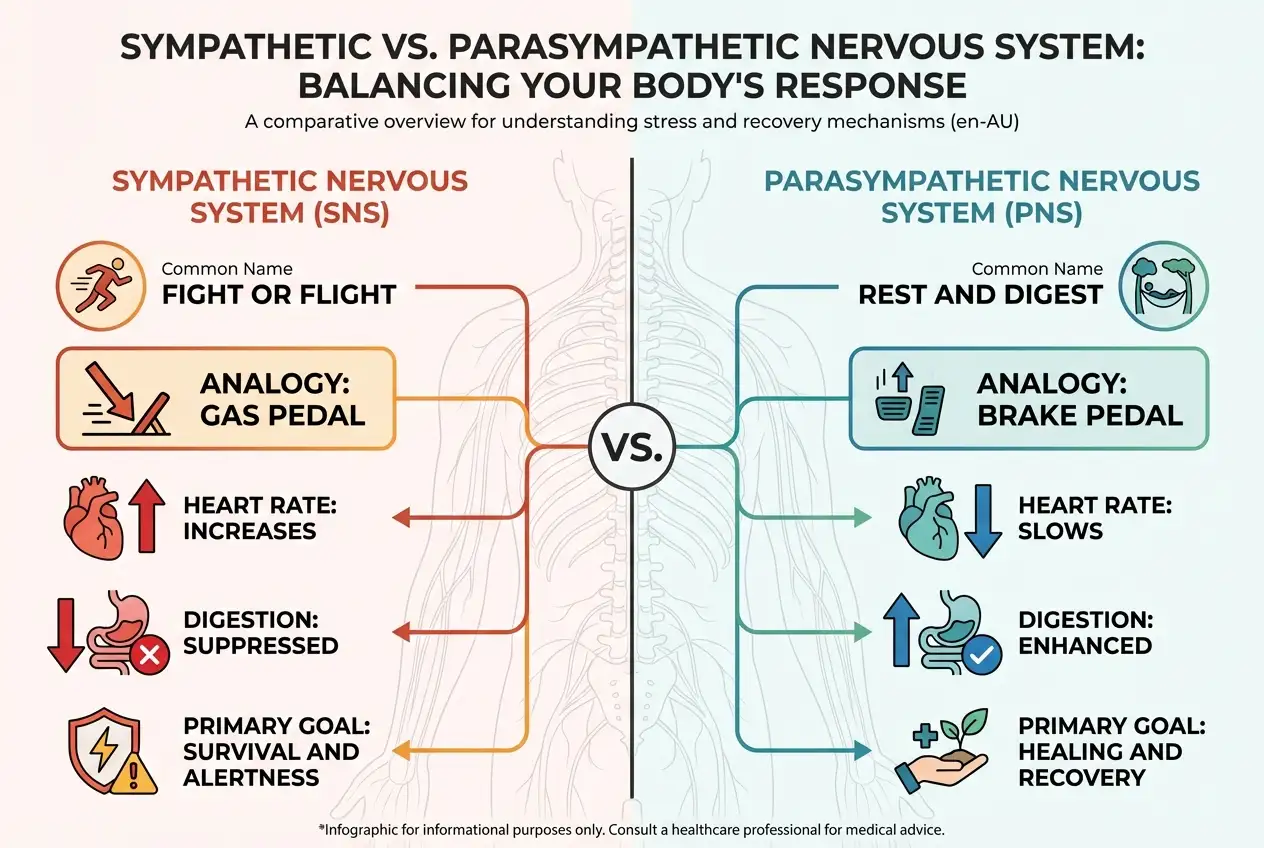
Ever felt your heart race before a big presentation? Perhaps you noticed your breath slowing down while relaxing on the couch. These shifts happen because of your sympathetic vs parasympathetic nervous systems. They act like the gas and brake pedals of your body. While one gears you up for action, the other helps you wind down.
Understanding how they work is vital for managing stress and physical health. Most people wonder which one is “in charge” during daily life. In truth, they work together in a delicate dance to keep you balanced. This guide breaks down the science, functions, and easy memory tricks to master this topic.
What Is Sympathetic vs Parasympathetic?
To understand what is sympathetic vs parasympathetic, we must first look at the Autonomic Nervous System (ANS). The ANS controls functions you don’t think about. For instance, it manages your heartbeat, digestion, and breathing. It operates entirely on its own.
Many students ask, “Is sympathetic vs parasympathetic voluntary?” The answer is a firm no. Both systems are involuntary. You cannot consciously tell your gallbladder to contract. However, your brain triggers these systems based on your environment.
The sympathetic and parasympathetic systems, explained simply is a matter of energy. The sympathetic system spends energy to protect you.
Conversely, the parasympathetic system conserves energy to repair you. This “nervous system sympathetic vs parasympathetic” relationship ensures survival. One prepares you for a sprint, while the other prepares you for a nap.
What is the difference between the sympathetic and parasympathetic responses?
The sympathetic response is an immediate physiological shift to handle perceived threats (stress). The parasympathetic response is a slower shift toward metabolic maintenance and relaxation (recovery).
- Sympathetic Nervous System: Activates the “fight or flight” response during stress.
- Parasympathetic Nervous System: Promotes “rest and digest” during recovery.
- Both systems are involuntary and part of the Autonomic Nervous System (ANS).
- Sympathetic increases heart rate and dilates pupils; parasympathetic does the opposite.
- Neurotransmitters: Sympathetic uses Norepinephrine; Parasympathetic uses Acetylcholine.
Sympathetic vs Parasympathetic Chart
Visualizing the difference between sympathetic and parasympathetic helps solidify the concepts. The following sympathetic vs parasympathetic chart compares how each system affects key organs.
| Function | Sympathetic Response | Parasympathetic Response |
| Heart Rate | Increases (Tachycardia) | Decreases (Bradycardia) |
| Pupils | Dilate (Mydriasis) | Constrict (Miosis) |
| Digestion | Inhibits/Slows down | Stimulates/Speeds up |
| Bronchi (Lungs) | Dilate (more oxygen) | Constrict (normal breathing) |
| Bladder | Relaxes (prevents urination) | Contracts (promotes urination) |
| Salivation | Inhibits (dry mouth) | Stimulates |
Sympathetic vs Parasympathetic Functions
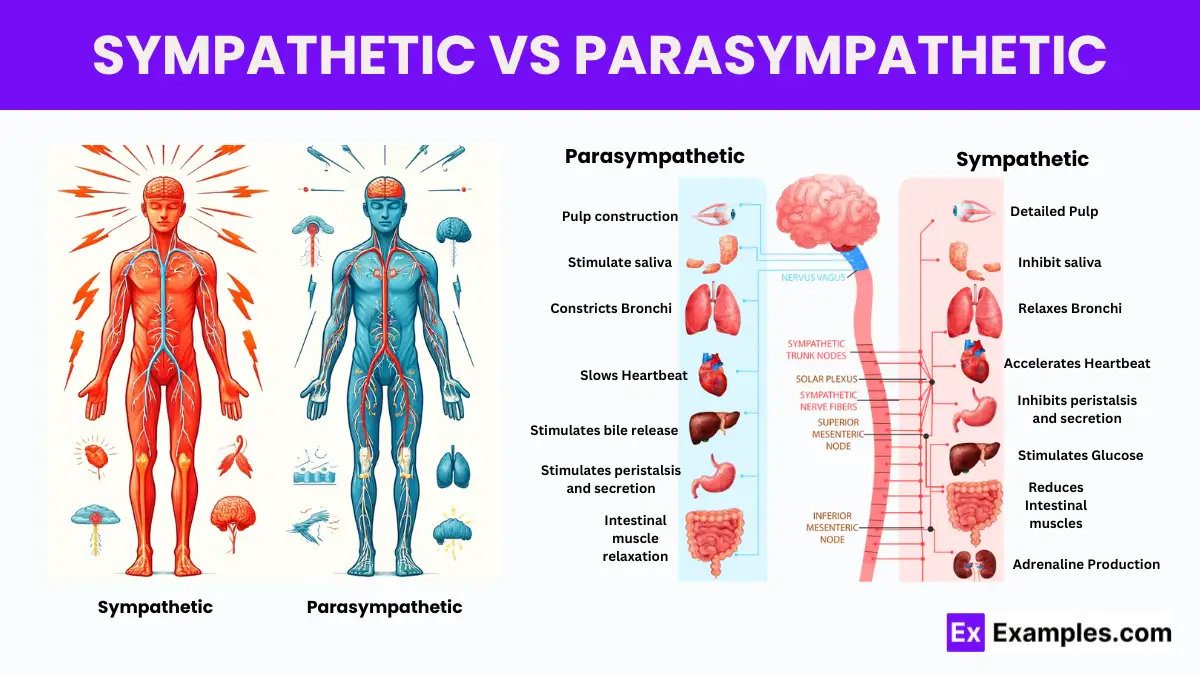
The sympathetic vs parasympathetic functions are essential for homeostasis. This is the body’s way of staying balanced. Let’s look at the specific sympathetic vs parasympathetic response in detail.
5 Sympathetic Responses
When you face a “threat,” the sympathetic system kicks in. This is often called sympathetic vs parasympathetic stimulation.
- Increased Heart Rate: Your heart pumps faster to send blood to your muscles.
- Elevated Blood Pressure: Vessels constrict to move blood quickly.
- Pupil Dilation: This allows more light in, so you can see danger better.
- Bronchodilation: Your airways open up to maximize oxygen intake.
- Reduced Digestion: Energy is diverted away from the stomach to the limbs.
5 Parasympathetic Responses
After the threat passes, the parasympathetic system takes over. This is the “rest and digest” phase.
- Slower Heart Rate: Your pulse returns to a resting state.
- Increased Digestion: The body begins processing nutrients again.
- Salivation: Your mouth produces saliva to help with food breakdown.
- Pupil Constriction: Vision returns to a normal, focused state.
- Bladder Contraction: The body signals that it is safe to eliminate waste.
Sympathetic vs Parasympathetic Fight or Flight
The sympathetic vs parasympathetic fight or flight mechanism is an evolutionary marvel. When your brain perceives a stressor, the hypothalamus sends a signal. This triggers the adrenal glands. They release a surge of adrenaline and cortisol.
This acute stress physiology is powerful. It allows you to run faster or fight harder. However, staying in this state too long is harmful. Once the “fight” is over, the parasympathetic vs sympathetic system balance must shift.
The parasympathetic rebound helps lower cortisol levels. If this shift doesn’t happen, you may feel “wired but tired.” This is common in chronic stress or anxiety. During my clinical work with mood disorders, I often see patients stuck in sympathetic overdrive. For someone with Bipolar Disorder, this imbalance can even trigger manic or depressive episodes.
Sympathetic vs Parasympathetic Neurotransmitters and Receptors
Chemical messengers drive the sympathetic vs parasympathetic neurotransmitter actions. These chemicals tell your organs how to react.
The Role of Acetylcholine and Norepinephrine
In the sympathetic vs parasympathetic receptors world, two chemicals rule.
- Acetylcholine (ACh): This is the primary messenger for the parasympathetic system. It binds to muscarinic receptors to slow the heart and jumpstart digestion.
- Norepinephrine (NE): This is the “stress” chemical for the sympathetic system. It binds to adrenergic receptors (Alpha and Beta).
| System | Preganglionic NT | Postganglionic NT | Main Receptors |
| Sympathetic | ACh | Norepinephrine | Alpha & Beta |
| Parasympathetic | ACh | ACh | Muscarinic |
Both systems use ACh at the start. However, they differ significantly at the end of the nerve path. This is a common exam question for nursing and med students!
Sympathetic vs Parasympathetic Neurons, Ganglia, and Innervation
The physical structure of these nerves is quite different. Sympathetic vs parasympathetic neurons have different origins in the spine.
Anatomy and Location
- Sympathetic Origin: This is called the thoracolumbar division. The nerves emerge from the middle of the spinal cord (T1 to L2).
- Parasympathetic Origin: This is the craniosacral division. Nerves come from the brainstem (cranial nerves) and the base of the spine (S2 to S4).
The sympathetic vs parasympathetic ganglia are also unique. Sympathetic ganglia sit close to the spine in a “chain.” This allows for a fast, body-wide reaction. Parasympathetic ganglia sit very close to or inside the target organ. This allows for more specific, localized control.
In terms of sympathetic vs parasympathetic pre- and postganglionic fibers:
- Sympathetic: Short preganglionic, long postganglionic.
- Parasympathetic: Long preganglionic, short postganglionic.
Sympathetic vs Parasympathetic vs Somatic
It is easy to get confused between the sympathetic vs parasympathetic and somatic systems.
- Somatic Nervous System: This is voluntary. You use it to wave your hand or walk. It controls skeletal muscles.
- Autonomic Nervous System: This is involuntary. It includes both the sympathetic and parasympathetic branches.
Understanding this helps in a clinical setting. If a patient has a muscle twitch, it might be somatic. If their heart is racing, it’s autonomic.
How to Remember Sympathetic vs Parasympathetic
If you are struggling with how to remember sympathetic vs parasympathetic, use these mnemonics.
- SNS = Stress: The Sympathetic Nervous System starts with “S” for Stress.
- Para = Parachute: The Parasympathetic system slows you down like a parachute.
- SLUDD: This stands for the parasympathetic actions: Salivation, Lacrimation (tears), Urination, Digestion, and Defecation.
- The “D” Words: Parasympathetic is for Digestion, De-stressing, and Diuresis (peeing).
Many find the “parachute” trick most helpful. It conveys the idea of a gentle, controlled descent back to a calm state.
How Does Holding Your Breath Affect Heart Rate?
A common question is: How Does Holding Your Breath Affect Heart Rate? When you hold your breath, you often trigger the Vagus nerve. This is the “superhighway” of the parasympathetic system.
Initially, your heart rate might slightly rise. However, a prolonged hold or a “bearing down” motion triggers the dive reflex. This causes a rapid drop in heart rate. It is a powerful example of parasympathetic activation. Doctors sometimes use this (the Valsalva maneuver) to stop certain heart arrhythmias. It shows how we can use physical actions to “hack” our involuntary nervous system.
Why This Matters for Mental Health
In my practice, I often talk about “vagal tone.” This refers to how well your parasympathetic system can calm you down. People with high vagal tone recover quickly from stress.
Conversely, chronic sympathetic activation leads to trouble. It is linked to anxiety and mood dysregulation. In Bipolar I and Bipolar II, the body’s internal “gas pedal” can get stuck.
Managing the sympathetic vs parasympathetic balance is a skill. Techniques like deep breathing and cold exposure help. These methods strengthen the parasympathetic “brake.” This leads to better emotional resilience and physical health over time.
Frequently Asked Questions
What is sympathetic vs parasympathetic?
The sympathetic vs parasympathetic systems are the two primary branches of your Autonomic Nervous System (ANS). They act as a balancing act for your internal organs. While the sympathetic branch prepares your body for action or “fight or flight,” the parasympathetic branch focuses on “rest and digest.” Together, they maintain homeostasis, ensuring your body reacts correctly to both stress and relaxation.
Which is voluntary?
Neither system is voluntary. Both the sympathetic and parasympathetic nervous systems are involuntary, meaning they function without your conscious thought. While you can choose to move your arm (somatic nervous system), you cannot consciously command your stomach to digest or your pupils to dilate. However, you can influence them indirectly through techniques like deep breathing or cold water immersion.
What are 5 sympathetic responses?
When the sympathetic nervous system takes over during a stress event, it triggers several immediate physical changes:
- Increased Heart Rate: To pump oxygen-rich blood to your muscles.
- Pupil Dilation: To let in more light and improve distance vision.
- Bronchodilation: Opening the airways in the lungs for better oxygen intake.
- Inhibited Digestion: Diverting energy away from the gut to the limbs.
- Glucose Release: The liver releases sugar into the bloodstream for quick energy.
What are 5 parasympathetic responses?
Once a threat has passed, the parasympathetic system initiates recovery through these responses:
- Decreased Heart Rate: Returning the pulse to a calm, resting rhythm.
- Pupil Constriction: Reducing light intake and allowing for near-focus vision.
- Stimulated Digestion: Increasing blood flow to the GI tract to process nutrients.
- Increased Salivation: Activating enzymes in the mouth to begin food breakdown.
- Bladder Contraction: Signaling the body that it is safe to eliminate waste.
What is the difference between the sympathetic and parasympathetic responses?
The fundamental difference lies in their goal. The sympathetic response is catabolic; it breaks down energy stores to fuel a rapid physical reaction to stress. The parasympathetic response is anabolic; it conserves and restores energy, focusing on long-term health, growth, and cellular repair. One is a high-energy “expender,” while the other is a “conservator.”
How to remember the difference?
The easiest way to remember is through simple letter associations. Think “S” for Sympathetic, Stress, and Speeding up. Think “P” for Parasympathetic, Parachute, and Peace. A parachute slows you down for a safe landing, just as the parasympathetic system brings your body back down to a calm state after a stressful event.
How Does Holding Your Breath Affect Heart Rate?
Holding your breath affects your heart rate by interacting with the vagus nerve and the thoracic pressure in your chest. Initially, a brief hold can cause a slight rise in heart rate. However, a sustained hold or “bearing down” triggers the dive reflex and baroreceptors. This sends a strong parasympathetic signal to the heart’s sinoatrial (SA) node, causing the heart rate to slow down significantly to conserve oxygen.
Conclusion
Mastering the sympathetic vs parasympathetic systems helps you understand your body’s stress response. One side prepares you for challenges, while the other ensures you recover. Both are essential for your survival and long-term well-being. By using mnemonics like “SNS for Stress,” you can easily recall these differences. Whether you are a student or someone focused on wellness, knowing these functions is a superpower. Balancing your “fight or flight” with “rest and digest” is the key to a healthy life.
References:
1. National Institutes of Health (NIH) / StatPearls
3. Centers for Disease Control and Prevention (CDC)
4. World Health Organization (WHO)

Related Posts




Subscribe to Our Newsletter
Get mental health tips, updates, and resources delivered to your inbox.
MORE from Author
Read More Watching someone you care about struggle with bipolar depression and anxiety can be heartbreaking. You may notice that they withdraw…
 In my practice as a clinical psychologist, I often observe that the difference between a patient who crumbles under pressure…
 We all have "up" days and "down" days. Perhaps you feel energized after a promotion or sluggish on a rainy…
 To define bipolar disorder accurately, we must look at it as a chronic mood dysregulation condition. In psychology and medicine,…
Are you looking for a Therapist?
Connect with qualified mental health professionals who understand
bipolar disorder, mood changes, and emotional challenges.
Private • Supportive • Confidential