
What Is Distress Tolerance? DBT Skills, Examples, Worksheets, and Why It Matters

Medically reviewed by Laura Athey Updated Date: February 22, 2026

In my clinical practice, I often sit with individuals who feel like they are emotionally skinless—where every disappointment burns like a third-degree burn. They often ask, “Why can everyone else handle this, but I fall apart?”
The answer usually lies in distress tolerance. It isn’t that others don’t feel pain; it is that they have developed the specific muscle to carry it without collapsing. Whether you are navigating Borderline Personality Disorder (BPD), anxiety, or just a season of overwhelming stress, understanding what distress tolerance is is the first step toward regaining control.
This guide will break down the definition, the specific DBT skills I teach my patients, and how to move from surviving to thriving.
What Is Distress Tolerance?
To understand what distress tolerance is, we must first distinguish between “pain” and “suffering.” Pain is a biological or emotional signal that something is wrong. Suffering is what happens when we refuse to accept that pain or try to escape it through destructive means.
Distress tolerance meaning: In psychology, it is defined as the perceived capacity to withstand negative emotional and/or physical states. It is the ability to stay present with uncomfortable emotions—like anxiety, sadness, or frustration—without immediately reacting to remove them.
What is the definition of mental distress? Mental distress is a state of emotional suffering associated with stressors and demands that are difficult to cope with in daily life. Unlike physical danger (a tiger chasing you), mental distress (a breakup or a missed deadline) is not immediately life-threatening, though it feels that way to the dysregulated brain.
Clinical Insight: I often tell my patients, “Distress tolerance is not about liking the pain. It is about not making the pain worse.” It is the difference between feeling angry at a partner (pain) and throwing a plate at the wall (suffering/consequence).
What Is Distress Tolerance in DBT?
What is distress tolerance in DBT? Dialectical Behavior Therapy (DBT), developed by Dr. Marsha Linehan, is the gold standard for treating conditions involving high emotional dysregulation.
In the DBT framework, skills are divided into four modules:
A. Mindfulness,
B. Emotion Regulation
C. Interpersonal Effectiveness
D. Distress Tolerance.
What is the DBT focus? While Emotion Regulation focuses on changing emotions, Distress Tolerance focuses on accepting them when they cannot be changed immediately. It is specifically designed for “crisis survival.”
The Two Pillars of DBT Distress Tolerance:
- Crisis Survival Skills: Short-term techniques to stop the bleeding. These are for when you are at a “10 out of 10” emotional intensity and just need to get through the next hour without self-harm or lashing out.
- Reality Acceptance Skills: Long-term strategies to accept life as it is, without judgment or fighting reality (e.g., accepting a chronic illness or a divorce).
Why Is Distress Tolerance Important?
Why is distress tolerance important for mental health? Without this skill, emotions dictate behavior. A person with low distress tolerance is often held hostage by their feelings.
Prevents Impulsive Decisions: When distress hits, the “fight or flight” brain takes over. Tolerance skills buy you time for your prefrontal cortex (logic) to come back online so you don’t quit your job or send that angry text.
Reduces Self-Harm Risk: Many maladaptive behaviors—cutting, binge eating, substance use—are actually misguided attempts to regulate distress. By replacing these with healthy tolerance skills (like holding ice), we reduce the need for self-destruction.
Improves Emotional Resilience: Over time, surviving small waves of distress proves to your brain that you are capable. This builds confidence.
What Are Distress Tolerance Skills?
When patients ask, “What are distress tolerance skills?” I introduce them to the DBT acronyms. These are specific, actionable steps. We group them into four main categories.
1. Crisis Survival Skills (The “STOP” & “TIPP” Methods)
These are the emergency brakes.
- STOP Skill:
- Stop: Do not move. Do not react. Freeze.
- Take a step back: Physically or mentally detach from the situation.
- Observe: Notice what is happening inside and outside of you.
- Proceed mindfully: Act with awareness, not impulse.
- TIPP Skill: Designed to physically alter your body chemistry to reduce arousal.
- Temperature: Splash ice-cold water on your face to trigger the Mammalian Dive Reflex, slowing the heart rate.
- Intense Exercise: 20 minutes of sprinting or jumping jacks to burn off cortisol.
- Paced Breathing: Slowing the exhale (breathing out longer than in) to activate the parasympathetic nervous system.
- Paired Muscle Relaxation: Tensing and releasing muscle groups.
2. Distraction Skills (ACCEPTS)
Distraction isn’t avoidance; it’s a strategic pause.
- Activities (Go for a walk).
- Contributing (Help someone else).
- Comparisons (Compare yourself to a time you felt worse).
- Emotions (Watch a funny movie to generate a different emotion).
- Pushing away (Mentally box the problem for an hour).
- Thoughts (Count backwards from 100 by 7s).
- Sensations (Hold an ice cube).
3. Self-Soothing Skills
Using the five senses to ground yourself in the present moment.
- Vision: Look at nature or art.
- Hearing: Listen to calming music or white noise.
- Smell: Use lavender oil or brew coffee.
- Taste: Mindfully eat a piece of chocolate.
- Touch: Wrap up in a weighted blanket or pet a dog.
4. Radical Acceptance
This is the hardest but most powerful skill. It involves accepting reality completely—mind, body, and spirit—without throwing a tantrum. It is the realization that “This is what is happening right now, and fighting it only creates more suffering.”
Distress Tolerance Techniques Explained

Let’s look at distress tolerance examples in real life. How do these technical skills translate to a Tuesday afternoon crisis?
The Breakup Urge
- The Trigger: You see your ex post a photo with someone new. You feel a surge of rage and the urge to send a nasty text.
- The Technique: Urge Surfing. Instead of fighting the urge or acting on it, you visualize the urge as a wave. You watch it rise, peak, and eventually crash. You acknowledge, “I am having the urge to text,” and wait 20 minutes. Usually, the wave subsides.
The Panic Attack
- The Trigger: You are overwhelmed at work and feel your chest tightening.
- The Technique: TIPP (Temperature). You go to the restroom and run cold water over your wrists or splash your face. The physiological shock forces your heart rate to drop, pulling you out of the panic spiral.
The Depressive Spiral
- The Trigger: You are stuck in bed, ruminating on past failures.
- The Technique: Sensory Grounding (5-4-3-2-1). You force your brain to identify 5 things you see, 4 you feel, 3 you hear, 2 you smell, and 1 you taste. This pulls mental energy away from the internal loop and back to the external reality.
Low vs High Distress Tolerance
Understanding where you fall on the spectrum helps tailor treatment.
What Does Low Distress Tolerance Mean?
Low distress tolerance is characterized by an inability to handle negative emotions. It is often described as having “thin skin.”
- Signs:
- Frequent emotional outbursts (yelling, crying) over minor inconveniences.
- Avoidance of any situation that might cause anxiety (skipping school, quitting jobs).
- Impulsive spending or eating to numb feelings.
- Reassurance seeking (constantly asking “Are you mad at me?”).
- What causes distress intolerance?
- Biological Sensitivity: Some people are born with a more sensitive nervous system.
- Invalidating Environments: Growing up in a home where emotions were punished or ignored (“Stop crying or I’ll give you something to cry about”).
- Trauma: PTSD rewires the brain to perceive distress as a life-threat.
What Is High Distress Tolerance?
A person with high distress tolerance isn’t unfeeling. They feel the same anger or sadness, but they have a wider “window of tolerance.”
- Signs:
- Can pause before reacting.
- Able to self-soothe without external validation.
- Views distress as temporary rather than permanent.
- Can continue functioning (parenting, working) despite feeling sad or anxious.
Distress Tolerance in Children & Teens
What is distress tolerance in kids? Just like adults, children experience overwhelming emotions, but their prefrontal cortex (the “brakes” of the brain) is still developing. A child with low distress tolerance isn’t just “being difficult”—they lack the neural hardware to regulate.
- Tantrums vs. Skill Deficits: A tantrum is often a strategic attempt to get a toy. A distress meltdown is an inability to cope with “no.” We treat the latter by building skills, not just punishment.
- Age-Appropriate Skills:
- Toddlers: Deep pressure (tight hugs), sensory bottles (glitter jars).
- School-Age: “Blow out the candles” breathing (paced breathing), squeezing a stress ball.
- Teens: TIPP skills (cold water splash), intense exercise (sprinting), or creating a “crisis playlist” of calming music.
- Parent Modeling: The most powerful way to teach distress tolerance is to model it. Saying, “I am feeling frustrated right now, so I am going to take three deep breaths,” teaches a child that distress is manageable.
How to Improve Distress Tolerance
How do you build distress tolerance? It is like building a muscle. You start with small weights (minor annoyances) before lifting heavy ones (major crises).
Step-by-Step Improvement Plan
- Identify Your Triggers: Keep a log. Do you snap when you are hungry? Tired? Rejected? Knowing your “vulnerability factors” prevents surprise attacks.
- Practice Skills When Calm: You cannot learn to swim in a tsunami. Practice deep breathing or TIPP skills when you are feeling fine, so muscle memory takes over during a crisis.
- Create a Crisis Plan: Write down exactly what you will do when you hit a “10/10” distress level. Example: 1. Splash face with cold water. 2. Call sister. 3. Watch The Office.
- Track Emotional Intensity: Rate your distress from 0-10 before and after using a skill. Did holding an ice cube take you from a 9 to a 6? That is success.
- Build Radical Acceptance: Start accepting small things (traffic, weather) to train your brain for big things (grief, loss).
Distress Tolerance Scale (DTS)
The Distress Tolerance Scale (DTS) is a self-report measure developed by Simons and Gaher (2005) to assess an individual’s ability to withstand emotional distress.
What it measures:
- Tolerance: “I can’t handle feeling this way.” (Belief in one’s inability to cope).
- Appraisal: “My feelings are unacceptable.” (Judgment of the emotion).
- Absorption: “I am so overwhelmed I can’t function.” (Being consumed by the emotion).
- Regulation: “I’ll do anything to stop this feeling.” (Urgency to escape).
It is primarily a research and clinical tool, not a diagnostic test. A high score indicates low distress tolerance. It helps therapists track if skills training is actually working over time.
Distress Intolerance and Mental Health Conditions

Low distress tolerance is a transdiagnostic factor—meaning it shows up across many different mental health conditions.
- Borderline Personality Disorder (BPD): The hallmark of BPD is extreme emotional instability. Distress tolerance is the primary focus of Stage 1 DBT treatment for BPD.
- Anxiety Disorders: People with panic disorder often have “anxiety sensitivity” (fear of fear). They interpret a racing heart as a heart attack, escalating distress.
- Substance Use Disorders: Addiction is often a “distress intolerance disorder.” Alcohol or drugs are used as the quickest way to escape unbearable feelings.
- Depression: The inability to tolerate sadness or numbness can lead to behavioral shutdown (staying in bed for weeks).
Common Myths About Distress Tolerance
- Myth 1: “It means suppressing emotions.”
- Reality: It is the opposite. It means feeling the emotion fully without acting on it. Suppression pushes it down; tolerance rides the wave.
- Myth 2: “You should tolerate toxic situations.”
- Reality: Distress tolerance is for surviving unavoidable pain or crises. If you are in an abusive relationship, the goal is Change (problem-solving), not just Tolerance.
- Myth 3: “Strong people don’t feel distress.”
- Reality: Everyone feels distress. Strong people (or regulated people) just have better tools to manage it.
- Myth 4: “Distraction is just avoiding the problem.”
- Reality: Distraction is a valid short-term strategy to prevent a crisis from getting worse. It buys you time to problem-solve later when you are calm.
Frequently Asked Questions
What is distress tolerance?
Distress tolerance is the psychological ability to withstand negative emotional states (like anxiety, anger, or sadness) without engaging in impulsive or harmful behaviors to escape them.
What is distress tolerance in DBT?
In Dialectical Behavior Therapy (DBT), distress tolerance is one of four core modules. It teaches specific skills (like TIPP and Radical Acceptance) to help individuals survive crises and accept reality without making the situation worse.
What are distress tolerance skills?
Key skills include the STOP skill (Stop, Take a step back, Observe, Proceed), TIPP (Temperature, Intense exercise, Paced breathing, Paired muscle relaxation), Self-Soothing (using five senses), and Distraction (ACCEPTS).
What does low distress tolerance mean?
It means having a low threshold for emotional pain. Individuals with low distress tolerance often feel overwhelmed by minor stressors and may resort to avoidance, outbursts, or substance use to cope.
What causes distress intolerance?
Causes include biological sensitivity (a highly reactive nervous system), early childhood trauma, invalidating environments (where emotions were punished), or a lack of modeled coping skills.
What is the Distress Tolerance Scale?
The Distress Tolerance Scale (DTS) is a 15-item self-report questionnaire used by clinicians to measure a person’s perceived ability to tolerate emotional distress, focusing on tolerance, appraisal, absorption, and regulation.
Where can I find distress tolerance worksheets?
Reputable sources include Therapist Aid, DBT Self Help, and psychology resource libraries. These offer free PDFs for skills like Radical Acceptance and the STOP skill.
How do I build distress tolerance?
Start by practicing small acts of discomfort (like holding an ice cube or waiting 5 minutes before checking your phone). Learn DBT skills like “Paced Breathing” and practice them daily when you are calm, so they are ready when a crisis hits.
Conclusion
Distress tolerance is not about gritting your teeth and suffering in silence. It is about reclaiming your power. It is the ability to stand in the middle of an emotional storm and say, “This hurts, but it will not break me, and it will not dictate my actions.”
By learning these skills—whether through DBT, therapy, or self-guided practice—you move from being a victim of your emotions to being the master of your responses. Remember, the goal isn’t a life without pain; it’s a life where pain doesn’t stop you from living.
References:
- Linehan Institute – What is DBT?
- Behavioral Tech – DBT Resources
- Therapist Aid – Distress Tolerance Worksheets
- National Institute of Mental Health (NIMH) – Borderline Personality Disorder
- DBT Self-Help – Skills List

Related Posts




Subscribe to Our Newsletter
Get mental health tips, updates, and resources delivered to your inbox.
MORE from Author
Read More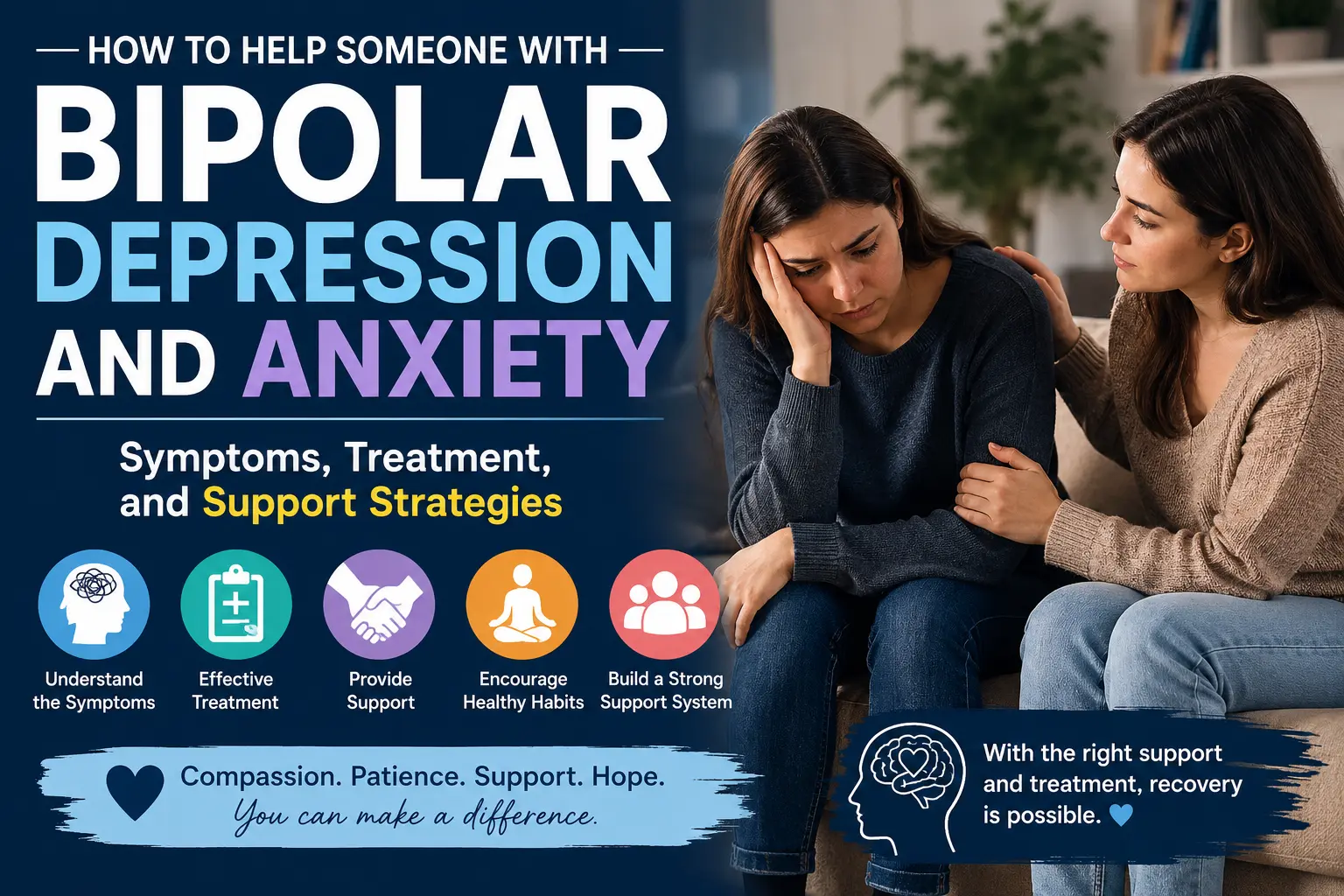 Watching someone you care about struggle with bipolar depression and anxiety can be heartbreaking. You may notice that they withdraw…
 In my practice as a clinical psychologist, I often observe that the difference between a patient who crumbles under pressure…
 We all have "up" days and "down" days. Perhaps you feel energized after a promotion or sluggish on a rainy…
 To define bipolar disorder accurately, we must look at it as a chronic mood dysregulation condition. In psychology and medicine,…
Are you looking for a Therapist?
Connect with qualified mental health professionals who understand
bipolar disorder, mood changes, and emotional challenges.
Private • Supportive • Confidential