
How to Get Out of Fight or Flight (Fast, Safely, and Long-Term)

Medically reviewed by Laura Athey Updated Date: April 3, 2026

Feeling like your heart is hammering against your ribs for no reason? Or perhaps you feel a constant, buzzing sense of dread that makes it impossible to sit still? If so, your body is likely trapped in a survival loop. Learning how to get out of fight or flight is not just about relaxation; it is about biological safety.
In my clinical work, I often see patients who believe they are “just anxious” when, in reality, their physiology is convinced they are being hunted. I recently interviewed a patient, Mark, who had spent three years in what he called “permanent fight or flight.” He couldn’t digest food properly, his sleep was non-existent, and he was constantly irritable with his children. He told me, “I feel like I’m vibrating at a frequency the rest of the world can’t hear.”
For Mark, and for many of you reading this, the goal isn’t just to “calm down”—it’s to learn how to get your body out of fight or flight by communicating directly with the nervous system. This guide will provide the immediate emergency tools you need right now and the long-term strategies to ensure you stay regulated.
What Is the Fight or Flight Response?
To understand how to get out of fight or flight mode, we must respect why it exists. The “fight or flight” response is the activation of the sympathetic nervous system. It is an evolutionary masterpiece designed to keep you alive.
When your brain perceives a threat, the hypothalamus signals the adrenal glands to release a flood of hormones, primarily adrenaline and cortisol. This results in:
- Increased heart rate to pump blood to your muscles.
- Shallow, rapid breathing to increase oxygen.
- Shutdown of non-essential systems, such as digestion and immune function.
The Problem of Chronic Activation
In the modern world, our “predators” are often invisible: a demanding boss, a mounting pile of debt, or a traumatic memory. When the stressor never goes away, you may experience a prolonged fight or flight response.
While some people fear they are in a state of permanent fight or flight, the nervous system is plastic. You are not stuck forever, but an overactive fight or flight response does require a structured intervention to “reset” the baseline.
Signs You’re Stuck in Fight or Flight
How do you know if you are just stressed or if your nervous system is stuck in fight or flight? Look for these stuck in fight or flight mode symptoms:
- Hypervigilance: Constantly scanning the room or checking your phone, unable to relax even in a safe environment.
- Physical Tension: Chronic pain in the jaw, neck, or shoulders.
- Digestive Issues: IBS, nausea, or a “tight knot” in the stomach (because digestion has been deprioritized).
- Emotional Reactivity: Snapping at loved ones or feeling “on edge” over minor inconveniences.
- Shallow Breathing: Breathing primarily into the upper chest rather than the belly.
If you find yourself asking, “Why am I constantly in fight-or-flight?“, it is often because your body has lost the ability to transition into the “rest and digest” (parasympathetic) state.
How to Get Out of Fight or Flight Immediately

If you are in the middle of a “flare-up” and need to know how to get out of fight or flight immediately, use these physiology-first tools. You cannot “think” your way out of a survival response; you must “act” your way out.
The Long Exhale (The Vagus Nerve Hack)
Your inhale is linked to the sympathetic (gas pedal) system, and your exhale is linked to the parasympathetic (brake) system. To stop the response, your exhale must be longer than your inhale.
- Instruction: Inhale for 4 seconds, then exhale slowly through pursed lips (like you are blowing through a straw) for 8 seconds. Repeat 5 times.
The 3-3-3 Rule for Calming
What is the 3-3-3 rule for calming? It is a grounding technique that forces your brain to shift from internal panic to external reality.
- Look: Name 3 things you see (e.g., a blue pen, a window, a chair).
- Listen: Name 3 sounds you hear (e.g., traffic, a clock ticking, your own breath).
- Move: Move 3 parts of your body (e.g., wiggle your toes, rotate your ankles, shrug your shoulders).
Cold Water or Temperature Reset
Splashing ice-cold water on your face or holding an ice cube in your hand triggers the “Mammalian Dive Reflex,” which instantly slows the heart rate. This is one of the most effective ways of getting out of fight or flight fast.
Muscle Tension and Release
Squeeze your fists and shrug your shoulders as hard as you can for 5 seconds, then drop them suddenly. This “discharges” the pent-up energy that fight-or-flight creates.
How to Calm a Fight-or-Flight Response
Once the immediate peak of panic has passed, you need to know how to calm a fight-or-flight response so it doesn’t return ten minutes later.
Fight or flight calming techniques include:
- Bilateral Stimulation: Cross your arms and tap your shoulders alternately (The Butterfly Hug). This engages both hemispheres of the brain and signals safety.
- Vocalization: Humming or singing vibrates the vocal cords, which are connected to the vagus nerve. This is a powerful way to stop a fight or a flight response at the source.
- Reassurance Statements: Speak to your body. “I am safe right now. This is just a sensation. It will pass.”
How to Get Your Body Out of Fight or Flight
To truly understand how to get your body out of fight or flight, we have to look at somatic (body-based) exercises. The body stores the “charge” of stress, and it needs a way to let it go.
Somatic Exercises to Get Out of Fight or Flight Mode
- The “Shake”: Animals in the wild shake their bodies after escaping a predator to release adrenaline. Stand up and literally shake your arms, legs, and torso for 60 seconds.
- Vagal Toning: Gently massage the area behind your earlobes where the vagus nerve passes. This encourages the body to enter a state of calm.
- Progressive Muscle Relaxation: Work from your toes to your forehead, tensing and releasing each muscle group.
When you focus on how to get the body out of fight or flight, you are addressing the “engine” of the anxiety rather than just the “exhaust” (the thoughts).
How to Get Out of Chronic Fight or Flight
While emergency tools are great for a panic attack, how to get out of chronic fight or flight requires a different strategy. Chronic activation means your “baseline” has shifted.
The Multi-Layered Approach
- Therapy: Somatic Experiencing or EMDR is highly effective for people whose nervous systems are “stuck.” Unlike traditional talk therapy, these focus on the physical sensations of the overactive fight or flight response.
- Lifestyle Hygiene: You cannot regulate a nervous system that is fueled by 6 cups of coffee and 4 hours of sleep. Reducing caffeine and prioritizing a consistent sleep-wake cycle are non-negotiable for getting out of constant fight or flight.
- Vagus Nerve Exercises: Daily “toning” of the vagus nerve through cold showers, chanting, or deep diaphragmatic breathing helps move you out of the prolonged fight or flight response.
How to Get Out of Fight or Flight Anxiety

How to get out of fight or flight anxiety involves breaking the loop between the brain and the body. In anxiety, the brain thinks a scary thought, the body releases adrenaline, the brain senses the adrenaline, and thinks, “See! I told you we were in danger!”, which triggers more thoughts.
To break this:
- Cognitive Reframing: Label the feeling as “energy” rather than “anxiety.”
- Exposure: If you are in fight or flight mode, anxiety because of a specific situation (like public speaking), avoiding it reinforces the fear. Gradually facing it—while staying regulated—retrains the brain.
How to Get Out of Fight or Flight After Trauma or PTSD
For those with trauma, the body is reacting to a “ghost” from the past. Learning how to get out of fight or flight ptsd is about building “felt safety” in the present moment.
In my practice, I find that people who search for how to get out of fight or flight after trauma need to focus on “Orienting.”
- Orienting Exercise: Look around the room and find 5 blue objects. Then find 5 textures. This tells your amygdala: “I am in my living room in 2026, not back in the traumatic event.”
- Safety Anchors: Keep an object with you (a stone, a piece of fabric) that represents safety. Touch it when you feel the “buzz” of hyperarousal starting.
How to Get a Child Out of Fight or Flight Mode
Children do not have a fully developed prefrontal cortex, meaning they cannot “reason” their way out of a meltdown. When a child is in survival mode, they may scream, hit, or shut down (freeze).
How to get a child out of fight or flight mode:
- Co-regulation: You must stay calm. If you get angry, you become a “threat” to their nervous system, which keeps them in fight-or-flight.
- Low and Slow: Speak in a low, quiet voice. Move slowly.
- Sensory Input: Offer a heavy blanket, a crunchy snack (proprioceptive input), or a warm drink.
How to Get Out of Fight or Flight in a Relationship
We often experience our most intense triggers with our partners. This is known as “Attachment Activation.”
If you are looking for how to get out of fight or flight mode in a relationship, you need a “Time-Out Protocol.”
- The Rule: When one person feels the “flood” of fight-or-flight, they say, “I need a 20-minute break.”
- The Requirement: You must use those 20 minutes to regulate your body (walk, breathe, listen to music), not to ruminate on why your partner is wrong. You cannot resolve a conflict when your brain is in survival mode.
Managing Your Fight or Flight Response Long-Term
If you want to know how I can manage my ‘fight or flight’ response, you must view it as daily hygiene, much like brushing your teeth.
- Daily Movement: Regular exercise fight or flight response is vital. It burns off the “background” cortisol that accumulates during the day.
- Mindfulness: Even 5 minutes of meditation a day helps you notice the “spark” of activation before it becomes a “wildfire.”
- Social Connection: We are social mammals. Safe, supportive social contact (co-regulation) is the fastest way to signal safety to the brain.
Reddit Advice vs. Evidence-Based Advice
Many people search for how to get out of fight or flight mode on Reddit. While the shared lived experience on Reddit can be validating, be wary of “quick fixes” or unverified supplements.
- The Reddit Strength: Knowing you aren’t alone and finding unique “glimmers” (the opposite of triggers).
- The Medical Reality: Recovery from chronic stress is a physiological process involving the HPA axis. There are no shortcuts that replace sleep, therapy, and regulation.
Frequently Asked Questions
How do you stop a fight or flight response quickly?
The fastest way is through a “temperature reset” (ice-cold water on the face) or a “breathing reset” (exhale twice as long as inhale).
Why am I constantly in fight-or-flight?
This is often due to chronic stress, unresolved trauma, or an anxiety disorder. Your brain has become “hyper-sensitized” to threats and has forgotten how to switch into the parasympathetic “safe” mode.
How do you break out of fight or flight mode?
Breaking out requires a “bottom-up” approach. Start with the body (breathing, movement, cold water) before trying to address the “top-down” (thoughts, therapy).
What are the symptoms of being stuck in fight or flight?
Common symptoms include chronic fatigue, digestive issues, irritability, shallow breathing, hypervigilance, and a racing heart even when resting.
Conclusion
Learning how to get out of fight or flight is a journey of reclaiming your body. It is important to remember that your nervous system is not “broken”—it is trying to protect you. It’s just using an outdated map.
By using the emergency tools for how to get out of fight or flight immediately and committing to long-term nervous system hygiene, you can teach your body that the war is over. You can move from a state of “survival” to a state of “thriving.”
References
- Polyvagal Institute: Understanding the Vagus Nerve
- Somatic Experiencing International: How Somatic Therapy Works
- Harvard Health: Understanding the Stress Response
- Mayo Clinic: Chronic Stress and Your Health

Related Posts






Subscribe to Our Newsletter
Get mental health tips, updates, and resources delivered to your inbox.
MORE from Author
Read More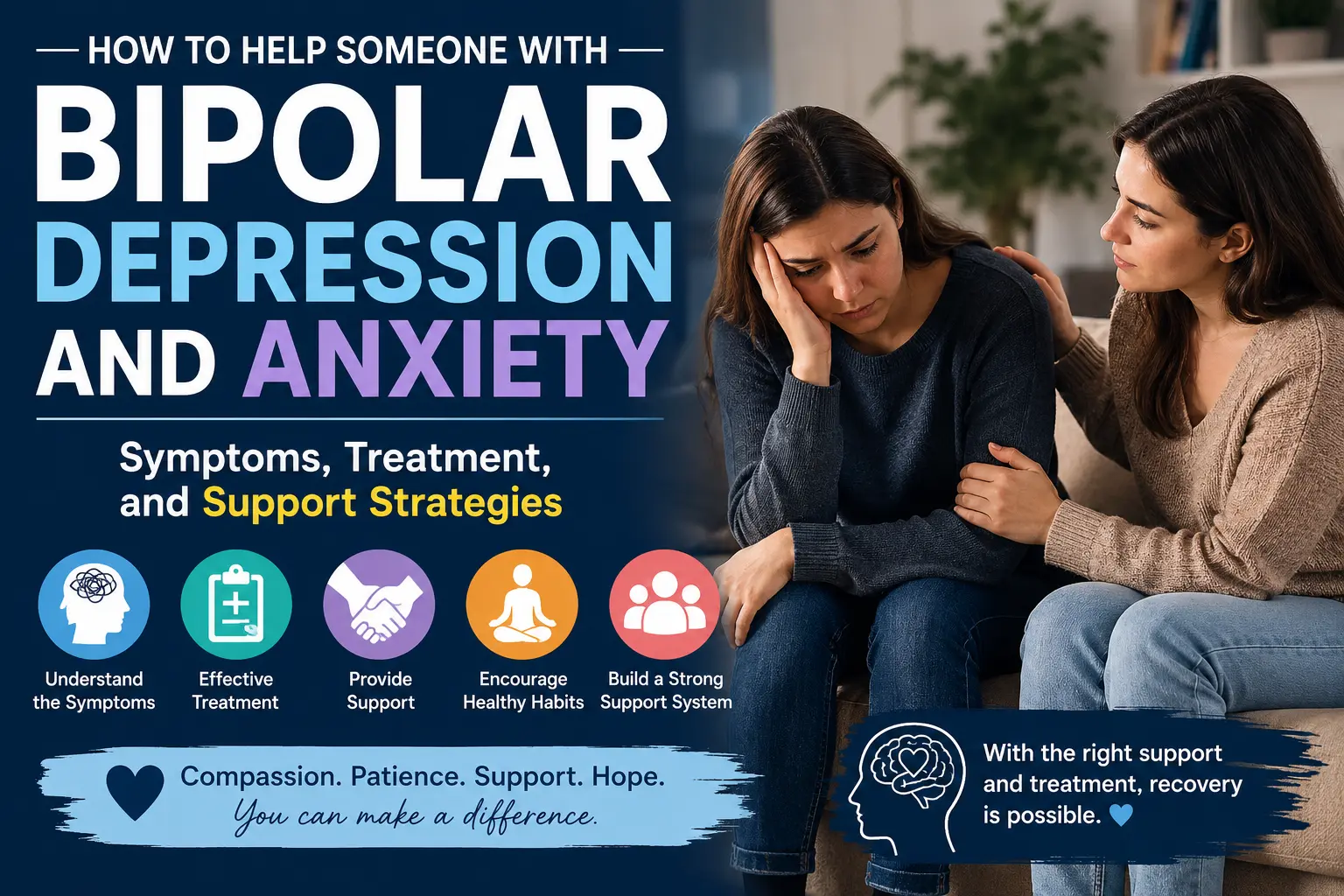 Watching someone you care about struggle with bipolar depression and anxiety can be heartbreaking. You may notice that they withdraw…
 In my practice as a clinical psychologist, I often observe that the difference between a patient who crumbles under pressure…
 We all have "up" days and "down" days. Perhaps you feel energized after a promotion or sluggish on a rainy…
 To define bipolar disorder accurately, we must look at it as a chronic mood dysregulation condition. In psychology and medicine,…
Are you looking for a Therapist?
Connect with qualified mental health professionals who understand
bipolar disorder, mood changes, and emotional challenges.
Private • Supportive • Confidential