
Emotional Dysregulation in Children: Signs, Causes, and Effective Treatments

Medically reviewed by Laura Athey Updated Date: March 4, 2026

It is a scene I see frequently in my practice: a parent sits in my office, visibly exhausted, describing a child who seems to go from “zero to sixty” in a matter of seconds. They describe uncontrollable tantrums over seemingly minor setbacks—a broken crayon, a change in the dinner menu, or a transition from playtime to homework. These parents aren’t dealing with simple “naughtiness”; they are witnessing emotional dysregulation in children.
For these families, the world can feel like a minefield. Many come to me asking, “What is emotional dysregulation in children?” and “Why can’t my child just calm down?” In my clinical experience, especially working with neurodivergent populations and those navigating complex mood disorders, I have found that identifying these symptoms early is transformative.
It shifts the narrative from “this is a bad kid” to “this is a kid whose internal thermostat is broken.” Whether it is linked to ADHD, autism, or environmental stressors, understanding the “why” behind these emotional storms is the first step toward reclaiming peace for the child and the family.
What is Emotional Dysregulation in Children?
In clinical terms, emotional regulation is the ability to monitor, evaluate, and modify emotional reactions to accomplish a goal. Emotional dysregulation in children is the breakdown of this process. It is not just the presence of intense feelings; it is the inability to “down-regulate” those feelings once they have started.
We often see this manifest as a labile mood—an emotional state that is highly unstable and changes rapidly. One moment, the child is joyful; the next, they are in a state of despair or rage. For a child with extreme emotional dysregulation, the “recovery time” after an outburst is significantly longer than that of their peers.
While a neurotypical child might settle down five minutes after being told “no,” a dysregulated child may remain in a state of high physiological arousal for an hour or more.
Impact on the Developing Child
This is not a “phase” that should be ignored. When a child is frequently disregulated, it impacts their entire developmental trajectory:
- Learning: A brain in “fight or flight” mode cannot access the executive function. needed to learn math or reading.
- Social Relationships: Peers often pull away from children who have unpredictable, explosive outbursts.
- Family Dynamics: Parents often find themselves “walking on eggshells,” which leads to secondary stress and burnout within the home.
Signs and Symptoms of Emotional Dysregulation in Children
Identifying signs of emotional dysregulation in children requires looking beyond the behavior to the physiological state of the child. It’s about the intensity, frequency, and duration of their reactions.
Behavioral and Emotional Indicators
- Frustration Intolerance: Crying or screaming at the first sign of difficulty with a task.
- Sudden Anger: Explosive outbursts that seem disproportionate to the trigger.
- Mood Swings: Rapid shifts between emotional extremes.
- Difficulty in Transitions: Extreme distress when moving from one activity to another.
The ADHD Connection
In ADHD, emotional dysregulation in children, the symptoms are often tied to impulsivity. Because the ADHD brain struggles with “top-down” inhibition, the child cannot stop the first wave of emotion from reaching the surface.
They feel things “louder” than others. In my practice, I often hear teachers describe these children as “disruptive,” but when we look closer, we see a child who is simply overwhelmed by their own internal intensity.
A nuance I often point out to parents is that dysregulation is rarely purely psychological. I once worked with a child, “Ethan,” who had severe afternoon meltdowns. Through our sessions, we realized Ethan had poor circadian rhythms—he wasn’t entering deep sleep at night.
By the time 3:00 PM rolled around, his executive function “battery” was dead. Because he was exhausted, his brain lost the ability to filter sensory input. What looked like a “behavioral tantrum” was actually a biological system crash. Improving his sleep hygiene was more effective than any “time-out” could ever be.
Causes of Emotional Dysregulation in Children

When we ask, “What causes emotional dysregulation in children?” we have to look at the intersection of nature and nurture. It is a complex interplay of the brain’s “wiring” and the environment the child is growing up in.
a. Neurodevelopmental Factors (The Biology)
This is the most common cause I see. Conditions like ADHD and Autism Spectrum Disorder (ASD) involve differences in the brain’s frontal lobes—the area responsible for “braking” emotional impulses.
- The Amygdala: In dysregulated children, the amygdala (the brain’s alarm) is often hyperreactive.
- Neurotransmitters: Differences in dopamine and serotonin levels make it harder for the brain to maintain a stable “baseline.”
- Executive Function Deficits: If a child cannot plan or organize their thoughts, they become easily overwhelmed, leading to a “meltdown.”
b. Psychological and Environmental Factors
The environment plays a massive role in how a child learns to manage feelings.
- Trauma and Stress: Children who have experienced “ACEs” (Adverse Childhood Experiences) often have a nervous system stuck in “high alert.”
- Inconsistent Parenting: If a child doesn’t know what to expect, their anxiety rises, making them more prone to dysregulation.
- Social Pressures: School environments that are too loud or socially complex can drain a child’s “regulation tank” before they even get home.
Diagnosis and Assessment
If you are concerned, a formal diagnosis of emotional dysregulation in children is essential. You shouldn’t have to guess. In my practice, an evaluation is a holistic process that looks at the child’s history, biology, and environment.
What to Expect During an Evaluation
- Clinical Interviews: I speak with the parents to understand the “patterns” of the outbursts.
- Standardized Questionnaires: We use tools like the BASC-3 or Conners-4 to compare the child’s behavior to age-matched peers.
- Observation: Sometimes, seeing the child in a play-based setting or classroom reveals triggers that are missed at home.
- ADHD Screening: Since adhd and emotional dysregulation in children are so highly correlated, we almost always screen for executive function deficits.
The goal is to differentiate between “typical” childhood development and a neurobiological need for support. We are looking for the prevalence of emotional dysregulation in children that impairs their ability to function in at least two settings (usually home and school).
Treatment and Management

This is the most critical part of the conversation. How to treat emotional dysregulation in children is not about “fixing” the child but about giving them the tools and environment they need to thrive. I believe in a “multi-modal” approach that combines therapy, parent training, and sometimes medication.
a. Behavioral and Therapeutic Interventions
Cognitive-Behavioral Therapy (CBT) is the gold standard for older children. It teaches them to catch their “red thoughts” before they turn into “red actions.” For younger children, we focus on:
- Play Therapy: Using play to process big feelings in a safe way.
- Parent-Child Interaction Therapy (PCIT): I work with parents and their child to teach co-regulation.
- Emotion Labeling: We use emotional regulation worksheets for kids to help them move feelings from the “emotional” brain to the “verbal” brain.
b. Medication for Emotional Dysregulation in Children
When symptoms are severe, medication for emotional dysregulation in children can be a life-changing “floor.” It doesn’t solve the problem, but it provides the stability needed for therapy to work.
- Stimulants: For children with ADHD, stimulants often improve the “top-down” control of the brain, leading to fewer impulsive outbursts.
- Non-Stimulants (Atomoxetine/Viloxazine): These can be excellent for children who have high levels of anxiety alongside their dysregulation.
- Monitoring: Medications must be carefully titrated. I always tell parents that meds should make their child feel more like themselves, not like a “zombie.”
c. Parent and Educator Training
You are the “prefrontal cortex” for your child until their own is fully developed.
- Co-Regulation: This is the most powerful tool. When your child is “hot,” you must stay “cool.” Your calm nervous system helps “pull” theirs back to baseline.
- Routines: A predictable world is a safe world. Consistent routines reduce the “surprises” that trigger meltdowns.
Emotional Regulation Skills for Kids
In my practice, I don’t just talk about feelings with children; we build a physical and mental toolkit. Teaching emotional regulation for kids is akin to teaching a new language. You have to start with the alphabet before you can write a poem. For children with ADHD or autism, these skills must be explicitly taught, as their brains may not pick them up through observation alone.
Essential “In-the-Moment” Techniques
We focus on moving the child from “bottom-brain” (survival mode) to “top-brain” (logical mode).
- The “Turtle” Technique: This is a classic for younger children. When they feel a “surge” of anger, they imagine retreating into a shell to take three deep breaths before responding.
- The 5-4-3-2-1 Grounding Method: For older children, this engages the senses to break an emotional loop. They must name 5 things they see, 4 they can touch, 3 they hear, 2 they smell, and 1 they can taste.
- Proprioceptive Input: Sometimes, a dysregulated child needs a “heavy” physical sensation to ground their nervous system. A “bear hug” or pushing against a wall can provide the sensory feedback their brain needs to find its center.
Using Emotional Regulation Worksheets for Kids
I often provide families with emotional regulation worksheets for kids that act as a “weather report.” We ask the child, “What is your internal weather today?” Is it sunny, or is there a storm brewing?”
By externalizing the emotion as “the weather,” we reduce the shame. The child learns that while they cannot stop the rain, they can choose to put on a raincoat (use a coping skill).
Coping Strategies and Daily Management
Learning how to fix emotional dysregulation in children is less about a one-time “fix” and more about daily maintenance. Consistency is the primary “medication” for a dysregulated nervous system.
How to Calm a Dysregulated Child
When a child is in the middle of a meltdown, logic is useless. Their “logical brain” is effectively offline.
- Reduce Stimulation: Dim the lights, turn off the TV, and lower your voice.
- The “Wait and See” Approach: Sometimes, the best thing you can do is sit quietly nearby. This signals safety without demanding a verbal response that the child isn’t capable of giving yet.
- The “Low-Demand” Zone: During recovery, avoid asking “Why did you do that?” Instead, focus on physical comfort. The “debrief” should happen much later—often the next day—when they are fully regulated.
Establishing Protective Routines
A child’s environment can either be a trigger or a stabilizer.
- Visual Schedules: For neurodivergent children, knowing what is coming next reduces “transition anxiety.”
- The “Calm Down Corner”: Create a dedicated space in the house filled with “fidgets,” weighted blankets, and soft lighting. This shouldn’t be a place of punishment (like a time-out) but a place of “resetting.”
Frequently Asked Questions
What is the difference between typical mood swings and emotional dysregulation?
Typical mood swings are proportional to the event and short-lived. A child might be upset for five minutes about a toy being taken away. Extreme emotional dysregulation in children involves reactions that are “oversized”—screaming, aggression, or inconsolable crying—that can last for 30 to 60 minutes.
Can emotional dysregulation in children improve with age?
Yes, but with a caveat. While the prefrontal cortex naturally matures into the mid-20s, children with ADHD or trauma often require targeted skill-building to bridge the gap. Left untreated, these patterns can harden into personality difficulties in adulthood.
How is ADHD related to emotional dysregulation?
Emotional dysregulation in children with ADHD is caused by the brain’s difficulty with “executive inhibition.” It’s not that the child wants to be angry; it’s that their brain’s “brakes” aren’t strong enough to stop the impulse before it becomes an action.
Are there long-term effects if left untreated?
Children who do not learn to regulate often struggle with low self-esteem, peer rejection, and academic underachievement. However, with intervention, the brain’s neuroplasticity allows children to build incredibly resilient coping mechanisms.
Can emotional regulation worksheets really help?
Yes, because they provide a visual and cognitive framework. They help move the “storm” from the child’s body onto the paper, allowing them to look at their emotions with curiosity rather than fear.
Conclusion
I want to leave you with the concept of “The Window of Tolerance.” Every child has a window where they can handle stress. For children with emotional dysregulation, that window is often very narrow. Our job as parents, clinicians, and educators is not just to keep them in the window but to gradually help them expand it.
Be patient with your child, but also be patient with yourself. Regulation is a team sport. When you stay calm, you are literally sharing your nervous system with your child. It is the hardest work you will ever do, but it is also the most rewarding.
References & Resources
- The Child Mind Institute – Emotional Dysregulation
- CHADD – ADHD and Emotional Regulation in Children
- NIMH – Disruptive Mood Dysregulation Disorder (DMDD)
- Understood.org – Understanding Your Child’s Challenges

Related Posts






Subscribe to Our Newsletter
Get mental health tips, updates, and resources delivered to your inbox.
MORE from Author
Read More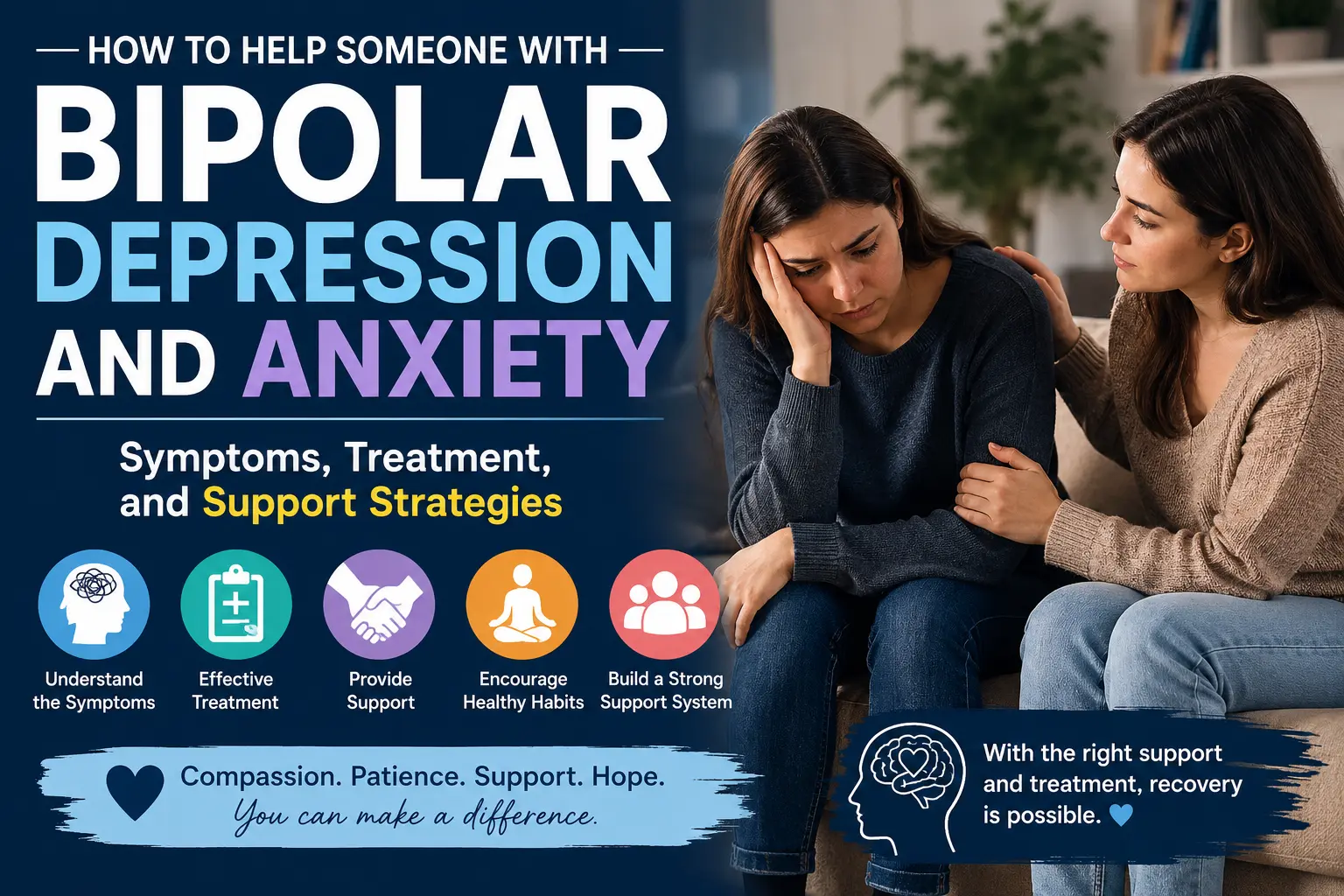 Watching someone you care about struggle with bipolar depression and anxiety can be heartbreaking. You may notice that they withdraw…
 In my practice as a clinical psychologist, I often observe that the difference between a patient who crumbles under pressure…
 We all have "up" days and "down" days. Perhaps you feel energized after a promotion or sluggish on a rainy…
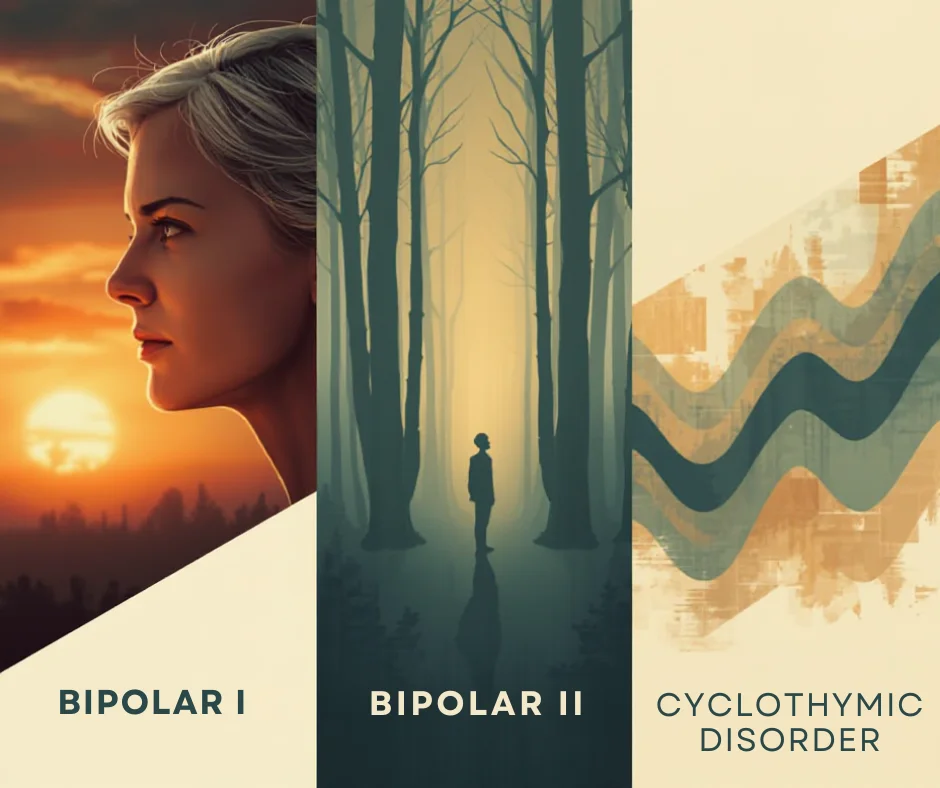 To define bipolar disorder accurately, we must look at it as a chronic mood dysregulation condition. In psychology and medicine,…
Are you looking for a Therapist?
Connect with qualified mental health professionals who understand
bipolar disorder, mood changes, and emotional challenges.
Private • Supportive • Confidential