
Dorsal Vagal Shutdown Treatment: Symptoms, Trauma Response & Evidence-Based

Medically reviewed by Laura Athey Updated Date: March 25, 2026

You feel a heavy, leaden sensation in your limbs. The world around you seems to lose its color, sounding distant, as if you were underwater. You aren’t necessarily panicking—in fact, you feel almost nothing at all. When people ask what’s wrong, the only honest answer is, “I’m just… gone.”
In my practice, I often observe that patients mistake this state for a lack of willpower or a sudden onset of “laziness.” However, what they are actually experiencing is a Dorsal Vagal Shutdown Treatment.
Understanding the dorsal vagal response to trauma is a pivotal moment in therapy. It marks the transition from self-blame to biological curiosity. This state is the body’s ultimate “emergency brake,” a primitive survival mechanism that takes over when the brain decides that fighting or fleeing is no longer an option. Whether you are a trauma survivor, an adult navigating dorsal vagal shutdown ADHD cycles, or someone experiencing chronic burnout, recognizing this physiological “collapse” is the first step toward recovery.
In the following sections, we will explore the mechanics of the nervous system, the clinical signs of shutdown, and the evidence-based pathways for dorsal vagal shutdown recovery. My goal is to help you move from a state of “disappearing” back into a state of “being.”
What Is Dorsal Vagal Shutdown?
To understand dorsal vagal shutdown, we must look beyond the simplified “fight or flight” model of the nervous system. While the sympathetic nervous system governs mobilization, the parasympathetic nervous system is more complex than just “rest and digest.”
According to Polyvagal Theory, developed by Dr. Stephen Porges, the parasympathetic system is divided into two distinct branches: the ventral vagal (social engagement/safety) and the dorsal vagal (immobilization/shutdown).
The dorsal vagal shutdown freeze response is an evolutionarily ancient circuit. In the animal kingdom, it is seen when a prey animal “plays dead.” By drastically lowering the metabolic rate, the organism conserves energy and, crucially, becomes less “interesting” to a predator.
In humans, this occurs when the brain perceives an overwhelming threat that cannot be escaped. It is important to note that while this framework is widely used in trauma-informed care, it is a psychological theory and not a formal diagnosis found in the DSM-5. Organizations like the Mayo Clinic may instead classify these experiences under acute stress reactions or dissociative disorders.
When we enter a dorsal vagal survival state, our “top-down” executive function—the logical part of the brain—is effectively bypassed. The subcortical brain takes the wheel, prioritizing survival over consciousness. This is not a choice; it is a biological imperative.
What Does Dorsal Vagal Shutdown Feel Like?

In my practice, I frequently observe that the most distressing part of a dorsal vagal shutdown is the sense of dissociation. I recall a patient, “Maya,” a high-achieving lawyer who came to me because she was suddenly unable to get off her kitchen floor for hours at a time.
She wasn’t crying; she was simply “offline.” She described it as feeling like a “ghost in her own house.” For Maya, and for many others, the experience is less of a “bang” and more of a “fade.”
The Biology of the “Why”
Why does the brain choose this particular form of suffering? The answer lies in metabolic conservation. When the body perceives that a threat is insurmountable, the unmyelinated dorsal motor nucleus of the vagus nerve (cranial nerve X) sends signals to slow down the heart rate and restrict blood flow to the extremities.
This isn’t just a “feeling”—it is a total physiological redistribution.
- Hypoarousal and Endogenous Opioids: As the body enters shutdown, the brain releases endorphins and enkephalins—our natural painkillers. This causes the “numb” or “dampened” feeling. It is the body’s way of preparing for potential physical injury, effectively “anesthetizing” the person against pain.
- Cognitive Inhibition: To save energy, the brain shuts down “non-essential” functions. This is why brain fog is a primary dorsal vagal shutdown symptom. Your brain is literally refusing to spend the glucose required for complex problem-solving because it is in a “low-power mode.”
Signs and Symptoms: The Clinical Picture
Identifying what dorsal vagal shutdown feels like requires looking at three distinct domains: emotional, physical, and cognitive.
| Domain | Signs and Symptoms | Biological “Why” |
| Physical | Low heart rate, cold skin, shallow breathing, leaden limbs. | Redistribution of blood to vital organs; metabolic slowdown. |
| Emotional | Flat affect, hopelessness, feeling “dead inside,” shame. | Disconnection from the social engagement system (Ventral Vagal). |
| Cognitive | Dissociation, inability to initiate tasks, distorted time. | Reduction of blood flow to the prefrontal cortex. |
The Experience of Disappearing
It doesn’t feel dramatic; it feels like disappearing. You may find yourself staring at a wall for an hour, unable to remember what you were doing. You may feel a profound sense of distress that you can’t quite put into words because your “speech centers” (Broca’s area) often go quiet during hypoarousal. In this state, the body is essentially waiting for the “storm” to pass.
A nuance I often explain to my patients is the difference between Ventral Vagal rest and Dorsal Vagal shutdown. Many patients in shutdown “oversleep,” sometimes for 10 or 12 hours, yet wake up feeling even more exhausted. This is because circadian rhythms are disrupted by the “emergency” nature of the shutdown.
Unlike restorative sleep, which is governed by a sense of safety, dorsal shutdown is a high-cost metabolic state of conservation. It is like a computer that is “frozen”—it’s not off, but it’s certainly not working, and the fan is still running at maximum speed. To recover, we don’t need more “sleep”; we need a return to physiological safety.
How Long Can Dorsal Vagal Shutdown Last?
The duration of a dorsal vagal shutdown recovery period varies significantly depending on the trigger.
- Acute Episodes: These are brief “collapses” that may last minutes to hours. They often follow a high-stress event, like a confrontation or a sensory-overload episode common in dorsal vagal shutdown ADHD cycles.
- Chronic Hypoarousal: For those with complex trauma (C-PTSD), the shutdown state can become a semi-permanent baseline. This can last for months or even years. In these cases, the person functions in a “gray zone”—they go to work and fulfill obligations, but they are emotionally flat and socially withdrawn.
It is vital to understand that the longer a system stays in shutdown, the more “grooved” that neural pathway becomes. Through neuroplasticity, the brain becomes efficient at collapsing. Recovery, therefore, is not about “snapping out of it” but about slowly convincing the nervous system that the environment is once again safe for mobilization.
Is Dorsal Vagal Shutdown Dangerous?
When patients ask, “Is dorsal vagal shutdown dangerous?” the answer is nuanced. In the immediate sense, it is not life-threatening. Unlike a heart attack or a stroke, it is a functional state, not a structural failure. However, the secondary effects can be significant:
- Social Isolation: Prolonged withdrawal can destroy support networks.
- Metabolic Impact: Chronic low arousal can affect digestion and immune function over time.
- Safety Risks: Because of the dissociation, an individual may not react quickly to real-world dangers (like a car horn or a stove left on).
If you experience fainting (syncope), significant changes in heart rhythm, or thoughts of self-harm, you should seek immediate medical care to rule out underlying cardiac or neurological issues.
Dorsal Vagal Shutdown and ADHD
In my practice, I frequently encounter adults who present with what they call “ADHD paralysis,” only to realize upon closer clinical inspection that they are actually in a state of dorsal vagal shutdown. While ADHD is fundamentally a disorder of executive function, the chronic strain of navigating a neurotypical world often pushes the ADHD nervous system into a state of total collapse.
The “ADHD-Shutdown” cycle usually begins with sensory or cognitive overwhelm. Because the ADHD brain has a “leaky” filter—meaning it struggles to prioritize which stimuli to ignore—the system becomes flooded. When the effort to organize, focus, and “mask” symptoms exceeds the available metabolic resources, the brain interprets this exhaustion as a threat to the organism.
To prevent further depletion, the nervous system pulls the metaphorical plug. This is dorsal vagal shutdown ADHD in action. It is not a lack of motivation; it is a protective “low-power mode.”
In this state, the dopamine-seeking pathways of the ADHD brain go quiet, leaving the individual feeling leaden and unable to initiate even the most pleasurable tasks. Recognizing that “I am not lazy; I am shut down” is often the most transformative realization an ADHD patient can have.
Evidence-Based Treatment for Dorsal Vagal Shutdown

When we discuss dorsal vagal shutdown treatment, we are not looking for a “cure” for a disease, but rather a way to gently expand the nervous system’s capacity for safety. In my experience, the most common mistake people make is trying to “jump” from the bottom of the ladder (shutdown) straight to the top (safety/ventral vagal).
Biologically, the body almost always has to pass through a bit of sympathetic activation (movement/energy) to get out of the dorsal state. If you try to force a “zen” state when you are collapsed, you may inadvertently deepen the shutdown. Instead, we use a tiered approach to dorsal vagal shutdown recovery.
Immediate Somatic Regulation
The goal of immediate treatment is to send a clear, non-verbal signal to the brainstem that the environment is safe. We use “bottom-up” interventions because, in a state of shutdown, the logical brain is not fully online.
- Vocal Toning and Humming: I often teach my patients the “Voo” breath. By making a low, vibrating sound on a long exhale, you physically vibrate the organs and the vagus nerve itself. This creates a gentle “internal massage” that signals safety to the brain’s survival centers.
- Thermal Resets: While there is much talk online about how to reset the vagus nerve in the neck through ice packs, the reality is simpler. A splash of cold water on the face or holding a warm cup of tea provides a sharp sensory anchor. This helps break the “fog” of dorsal vagal shutdown dissociation by bringing awareness back to the skin’s surface.
- Orienting: This is a cornerstone of dorsal vagal shutdown treatment. I ask patients to slowly scan the room and name five objects that are stationary. This simple act of “looking and seeing” confirms to the primitive brain that there are no predators in the immediate vicinity.
Safe Social Co-Regulation
Humans are biological mirrors. One of the most potent dorsal vagal shutdown exercises is simply being in the presence of a regulated person. In therapy, I use my own calm breathing and steady voice to “invite” the patient’s nervous system back into connection. At home, this can be achieved through:
- Pet Connection: The non-judgmental presence of a dog or cat can provide the “safe touch” needed to lift the shutdown without the pressure of social conversation.
- Weighted Pressure: Using a weighted blanket provides “proprioceptive input,” which tells the brain where the body ends, and the world begins, reducing the “floating” feeling of dissociation.
Building Neuroplasticity Through Therapy
For long-term healing, we must address the “why” behind the collapse.
- Somatic Experiencing (SE): This helps patients track physical sensations and slowly release “trapped” survival energy.
- EMDR: If the shutdown is a dorsal vagal response to trauma, EMDR helps reprocess the memories so the brain stops treating the present as a “dangerous past.”
| Strategy | Mechanism | Best Used For |
| Humming/Vibrating | Vagal nerve stimulation | Moving from Numbness → Presence |
| Cold Water Splash | Mammalian Dive Reflex | Breaking acute dissociation |
| Bilateral Tapping | Hemispheric integration | Regulating intense “leaden” feelings |
| Co-Regulation | Mirror neuron activation | Long-term nervous system “thawing.” |
Can the Vagus Nerve Repair Itself?
There is a significant amount of anxiety regarding whether the “vagus nerve is damaged.” I want to be very clear: True vagus nerve damage is a rare medical condition (often resulting from surgery or severe physical injury) that presents with symptoms like difficulty swallowing, voice loss, or chronic fainting.
What most people are experiencing is functional dysregulation, not structural damage. The question shouldn’t be “Can it repair itself?” but rather “Can it be retrained?” The answer is a resounding yes. Through neuroplasticity, the brain can learn to rely less on the shutdown response and more on the social engagement system.
How to Activate the Vagus Nerve Naturally
You do not need expensive “vagus nerve stimulators” to heal.
- Nutrition: There is growing evidence that the “gut-brain axis” influences vagal tone. Foods high in omega-3 fatty acids and fermented foods (probiotics) support a healthy gut microbiome, which in turn sends “calm” signals up the vagus nerve to the brain.
- Movement: Gentle, rhythmic movement like Tai Chi or slow walking helps integrate the body’s sensory systems, preventing the “stagnation” that often precedes a shutdown.
Freeze vs. Shutdown
In my practice, I find that patients often use these terms interchangeably, but they represent very different biological “gears.”
| Feature | The Freeze Response | Dorsal Vagal Shutdown |
| Energy Level | High (Vibrating/Tense) | Low (Limp/Collapse) d) |
| Heart Rate | Usually elevated (mixed state) | Significantly lowered |
| Internal Experience | “Wired but tired.” | “Empty/Numb” |
| Behavior | Hyper-vigilance, held breath | Social withdrawal, “playing dead.” |
| Nervous System | Sympathetic + Dorsal Vagal | Pure Dorsal Vagal |
Long-Term Recovery Strategy
Recovery from chronic dorsal vagal shutdown is not about “fixing” a broken part of yourself. It is about rebuilding a sense of internal and external safety. I often use a clinical anecdote of a patient named “Leo.” Leo had lived in a semi-permanent state of shutdown for five years following a period of intense medical trauma. He felt he was “beyond repair.”
We didn’t start with his trauma. We started with his circadian rhythms.
Many clinicians dive straight into “trauma work,” but I’ve found that a dysregulated body cannot process trauma. Leo was living in a constant state of “jet lag” because his sleep-wake cycle was non-existent.
When the body doesn’t know when it will be fed or when it will sleep, it stays in a state of high alert—or, in Leo’s case, a protective shutdown. By stabilizing his sleep and light exposure, we gave his nervous system the “biological safety” it needed to finally allow the dorsal vagal shutdown recovery to begin. Only then could we start the “top-down” therapy.
True recovery involves:
- Acknowledging the Protection: Thanking your body for shutting down to save you when things were too hard.
- Incremental Exposure: Gently reintroducing social connection and physical movement in “micro-doses.”
- Trauma-Informed Therapy: Working with a provider who understands that “silence” in a session isn’t resistance—it’s a physiological state.
Frequently Asked Questions
What are the symptoms of dorsal vagal shutdown?
Symptoms include extreme fatigue, emotional numbness, dissociation, low blood pressure, brain fog, and a feeling of being “physically paralyzed” or unable to move despite wanting to.
How long can dorsal vagal shutdown last?
It can last from a few minutes (acute) to several years (chronic). Long-term shutdown is often a symptom of complex trauma or prolonged burnout.
Is dorsal vagal shutdown dangerous?
It is not a medical emergency in itself, but it can significantly impair your quality of life, relationships, and ability to work. If it is accompanied by fainting, consult a doctor to rule out cardiac issues.
How do you treat dorsal vagal shutdown?
Treatment involves “bottom-up” somatic strategies like humming, grounding, and gentle movement, combined with “top-down” trauma therapies like EMDR or Somatic Experiencing.
Can the vagus nerve heal itself?
Yes. The nervous system is plastic. By consistently creating environments of safety and using regulation exercises, you can retrain your vagus nerve to stay in the “social engagement” zone.
How do you activate the vagus nerve naturally?
Through deep, slow breathing (long exhales), cold water exposure, singing, gargling, and maintaining a healthy gut microbiome through diet.
Conclusion
In my years of clinical practice, I have found that the most profound shift in a patient’s recovery doesn’t happen when they “fix” their symptoms but when they stop fighting their own biology. If you have spent months or even years in a state of dorsal vagal shutdown, your body isn’t your enemy. It is a weary protector that has been holding the “emergency brake” because it believed the road ahead was too dangerous to travel.
Healing from this state of collapse is not an act of willpower; it is an act of negotiation. We don’t “force” the nervous system to come back online. Instead, we use dorsal vagal shutdown exercises, stabilized circadian rhythms, and safe social co-regulation to whisper to the brainstem that the war is over.
Whether you are navigating dorsal vagal shutdown, ADHD burnout, or the heavy fog of trauma-induced dissociation, the path back to the “ventral vagal” world of color and connection is built one microscopic step at a time.
Remember that neuroplasticity is on your side. Your nervous system is designed to be flexible, and even the most “stuck” states can eventually thaw in the presence of genuine, physiological safety. You deserve to move through the world as more than a “ghost”—you deserve to inhabit your life fully.
References & Further Reading
- Polyvagal Institute – Dr. Stephen Porges
- National Institute of Mental Health – PTSD and Dissociation
- Somatic Experiencing International – Peter Levine
- Mayo Clinic – Understanding Vasovagal Syncope

Related Posts






Subscribe to Our Newsletter
Get mental health tips, updates, and resources delivered to your inbox.
MORE from Author
Read More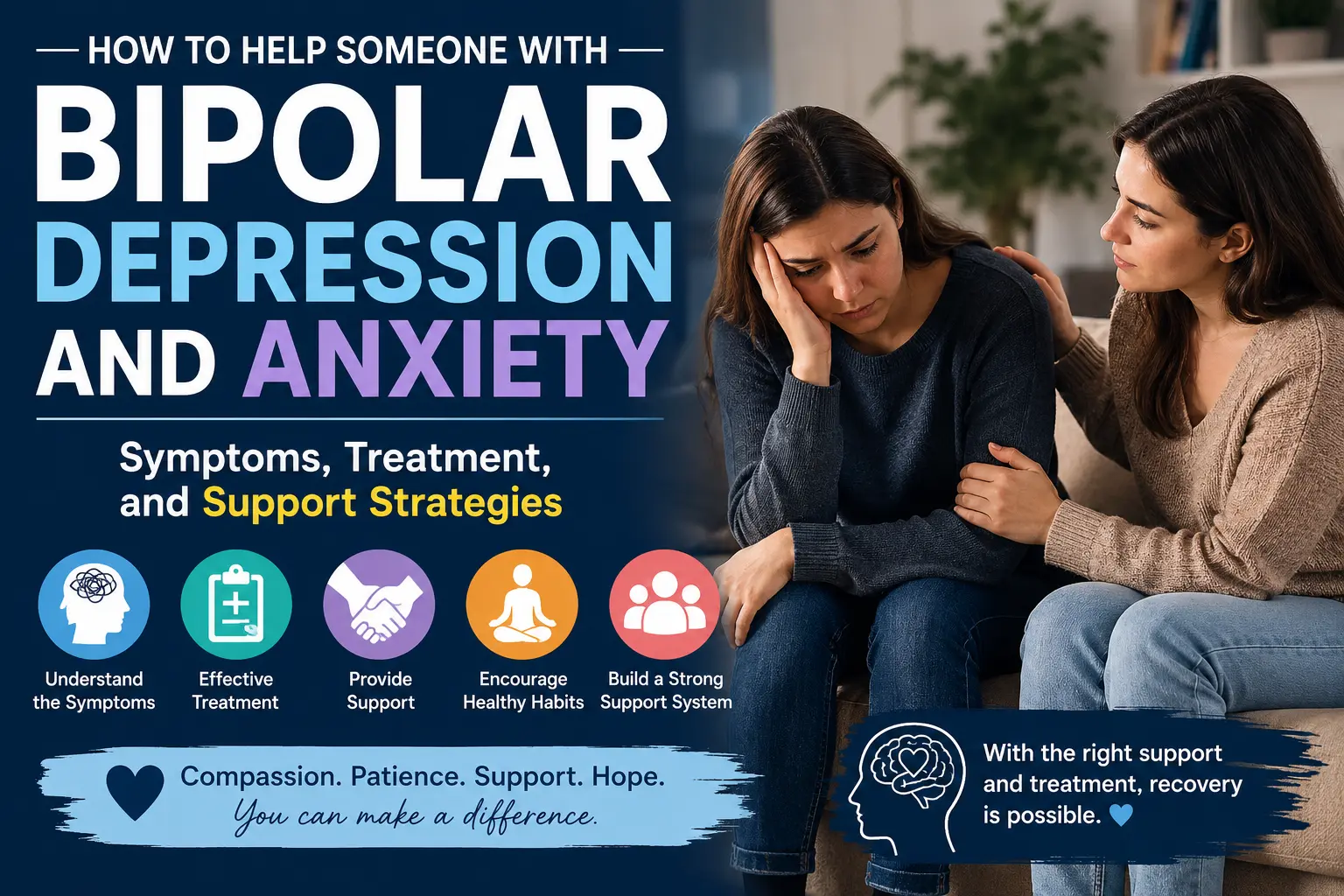 Watching someone you care about struggle with bipolar depression and anxiety can be heartbreaking. You may notice that they withdraw…
 In my practice as a clinical psychologist, I often observe that the difference between a patient who crumbles under pressure…
 We all have "up" days and "down" days. Perhaps you feel energized after a promotion or sluggish on a rainy…
 To define bipolar disorder accurately, we must look at it as a chronic mood dysregulation condition. In psychology and medicine,…
Are you looking for a Therapist?
Connect with qualified mental health professionals who understand
bipolar disorder, mood changes, and emotional challenges.
Private • Supportive • Confidential