
Why Do I Get Angry So Fast And Regret It? Causes, ADHD Rage, and How to Stop Constant Anger

Medically reviewed by Laura Athey Updated Date: May 5, 2026

In my practice as a clinical psychologist, one of the most painful admissions a patient can make is, “Dr. Athey-Lloyd, I don’t know why, but I am just so angry all the time.”
They often describe feeling like a pressure cooker, constantly on the verge of exploding, and terrified of the damage their chronic irritability is causing to their relationships and their own well-being.
Living with constant anger is physically exhausting and emotionally isolating. I want to reassure you right away: this chronic anger is rarely a sign that you have a “bad personality.”
In clinical psychology, we understand anger as a “secondary emotion”—a protective shield deployed by your nervous system to mask deeper, more vulnerable feelings like fear, profound stress, or unresolved pain.
When your emotional bandwidth is entirely depleted, your brain defaults to anger as a survival mechanism.
In this comprehensive guide, we will unpack the neurobiology of chronic anger, explore the hidden triggers (including the often-misunderstood link to ADHD), and provide science-based, actionable strategies to help you safely defuse the pressure and regain your emotional peace.
Why Do I Get Angry So Fast And Regret It?
When patients ask me why they are so angry all the time, I ask them to look at anger not as a disease, but as a symptom. In clinical terms, chronic anger is rarely a primary emotion. A primary emotion is your initial, instinctual reaction to an event—like feeling hurt when someone insults you, or feeling terrified when you lose your job.
Anger is a secondary emotion. It is a reactive, high-energy state that your brain uses to cover up those primary, vulnerable emotions. It is much easier and feels much more powerful to be furiously angry at a partner than it is to admit, “I feel profoundly unloved and terrified you are going to leave me.”
Many people describe this constant anger not as cinematic rage, but as a low-level, vibrating irritability that never fully dissipates. This constant state of agitation means your nervous system is stuck in sympathetic dominance (fight-or-flight mode).
Your brain perceives your environment as inherently threatening, requiring constant, aggressive defense.
Why Do I Get Angry Really Quickly?

Getting angry really quickly indicates a severely compromised frustration tolerance. Core causes include chronic stress overload, which physically alters the brain’s architecture.
When you are chronically stressed, the amygdala (the brain’s threat detector) becomes hyper-active, while the prefrontal cortex (responsible for impulse control) becomes under-active.
Therefore, you react entirely on instinct. There is no logical “buffer zone” between the trigger and your explosive reaction.
The Sleep-Anger Connection In my clinical practice, I frequently see a direct correlation between chronic anger and poor sleep hygiene. When a patient’s circadian rhythms are disrupted, their prefrontal cortex cannot properly inhibit the amygdala’s fear/anger responses.
Without adequate restorative sleep, you are biologically primed to have a hair-trigger temper. True emotional regulation is neurologically impossible if you are chronically sleep-deprived.
Why Do I Feel Sudden Anger for No Reason?
Patients frequently report feeling sudden anger for “no reason.” Clinically, however, there is always a reason—it just might not be immediately obvious to your conscious mind.
Sudden anger is usually triggered by unnoticed, accumulating micro-stressors. These hidden triggers often include physical vulnerabilities like mild dehydration, a blood sugar crash (hangry), or underlying sleep debt.
It can also be a subconscious emotional trigger; a specific smell, tone of voice, or environment might briefly activate an unresolved emotional memory, causing your body to flood with adrenaline seemingly out of nowhere.
Why Do I Get So Angry Over Little Things?
Getting intensely angry over small things is a classic sign of emotional overload. Imagine your capacity to handle stress as a bucket of water.
If you are dealing with chronic anxiety, financial strain, or relationship issues, your bucket is already filled to the very brim.
When a minor inconvenience occurs—like dropping your keys—it adds that final drop, causing a massive emotional spill. You are not reacting to the keys; you are reacting to the sheer weight of a full bucket.
Why Do I Get Angry When I Hold My Feelings Back?
Emotional suppression is one of the most guaranteed ways to create chronic anger. When you hold your feelings back, you do not eliminate those emotions; you simply trap them inside your body.
Unexpressed emotions create intense physiological pressure. The sadness, fear, or frustration you suppress eventually ferments and converts into chronic irritability.
Anger essentially becomes a dysfunctional release valve. Your body uses an explosive outburst of anger to finally discharge the intense emotional pressure you have been forcibly holding down.
Why Am I Always Angry and Irritated for No Reason?
If you feel constantly irritated and cannot identify a specific psychological trigger, we must look at biological and contextual factors.
Chronic stress causes continuous cortisol circulation, which creates physical tension and agitation. Severe emotional burnout from caregiving or demanding careers completely depletes your emotional reserves.
Additionally, we must consider hormonal imbalances. For women, severe PMS or perimenopause can drastically alter serotonin levels, while for men, fluctuating testosterone can manifest as sudden, unexplainable irritability.
ADHD Rage: What Does It Look Like?
Attention-Deficit Hyperactivity Disorder (ADHD) is rarely discussed in the context of anger, but the connection is profound. What we colloquially call “ADHD rage” stems directly from the neurological core of the disorder: executive dysfunction.
The ADHD brain struggles immensely with emotional regulation and impulse control. Symptoms of ADHD rage include sudden, incredibly intense emotional outbursts that escalate rapidly from zero to one hundred.
Because an individual with ADHD has difficulty shifting attention, they can become intensely fixated on a perceived slight or frustration, unable to logically “let it go.”
Furthermore, the ADHD brain is chronically under-stimulated in terms of dopamine. Anger is a highly stimulating emotion; sometimes, the brain unconsciously picks fights or generates rage as a maladaptive way to get a quick dopamine hit and wake itself up.
Understanding this biological mechanism is crucial for removing the intense shame that often accompanies these outbursts.
I recall working with a patient, “Mark,” a 32-year-old who came to therapy because his explosive anger was threatening his marriage. He described “blacking out” with rage over minor inconveniences, like misplaced car keys. Traditional anger management techniques weren’t working.
Upon deeper evaluation, we discovered Mark had undiagnosed ADHD. His brain lacked the executive function to hit the “brakes” when frustrated.
Once we treated his underlying ADHD—combining targeted medication to support his dopamine levels with Cognitive Behavioral Therapy (CBT) to build a “pause protocol”—his explosive rage episodes almost entirely disappeared.
Why Do I Get So Angry as a Teenager?
Teenage anger is incredibly common and biologically driven. The adolescent brain is undergoing massive restructuring.
The amygdala (emotional center) is fully active, but the prefrontal cortex (logical control center) will not finish developing until the mid-20s.
Combine this neurological imbalance with surging hormones and the intense social pressures of adolescence, and teenagers are essentially driving a sports car with no brakes.
Why Do I Get So Angry Easily and Cry?
The cycle of intense anger followed immediately by crying is a textbook example of an emotional overload cycle.
Anger requires massive amounts of physical energy and adrenaline to sustain. Once the immediate conflict passes, the body experiences a severe adrenaline crash.
As the aggressive protective shield drops, the underlying, primary emotions—vulnerability, deep sadness, or sheer exhaustion—rush to the surface, and crying acts as the biological mechanism to physically reset the nervous system.
How Anger Works Biologically
Biologically, anger is a sophisticated survival mechanism. It begins with an amygdala activation when your brain perceives a threat (physical or emotional).
The amygdala instantly signals the adrenal glands to release a massive surge of adrenaline and noradrenaline.
This initiates the fight-or-flight response: your heart rate spikes, blood pressure rises, and blood is diverted away from your digestive system and into your muscles, physically preparing you to fight.
What Are the 4 Stages of Anger?
Understanding the stages of anger helps you identify where you can intervene.
- Trigger: An event, thought, or physical sensation that initiates the response.
- Escalation: Your body physically prepares for conflict (heart racing, jaw clenching).
- Explosion: The outward expression of anger (yelling, acting aggressively).
- Recovery: The adrenaline crash, often accompanied by guilt, exhaustion, or crying.
Anger Issues Test: Do You Have Emotional Dysregulation?
While not a formal diagnosis, ask yourself these self-check questions to gauge your emotional dysregulation:
- Do you react to minor inconveniences much faster than you can think?
- Do small, daily stressors trigger intensely disproportionate physical reactions?
- Do you frequently feel profound guilt or regret after an anger episode?
- Has your anger caused tangible damage to your relationships or career?
How to Stop Being Angry Constantly
Stopping constant anger requires a multi-pronged approach that addresses both the mind and the body.
First, you must master the intentional pause. You cannot stop the initial trigger, but you can control the response. Force a 10-second delay before speaking when triggered.
Second, identify the primary emotion. Ask yourself, “What am I actually afraid of or hurt by right now?” Finally, you must actively regulate your baseline stress. If your baseline is high, you will always be reactive.
How to Get Rid of Anger (Long-Term Control)
Long-term anger management requires rewiring your brain’s default pathways.
Therapies like Cognitive Behavioral Therapy (CBT) help you identify and challenge the distorted thoughts that fuel rage. Dialectical Behavior Therapy (DBT) is exceptional for building distress tolerance skills.
Consistent mindfulness practice physically thickens the prefrontal cortex, enhancing your natural impulse control. Furthermore, aggressive sleep improvement is non-negotiable for lasting emotional stability.
How to Stop Feeling Angry in the Moment
In the exact moment of an anger spike, you must bypass logic and calm the physical body.
Deep diaphragmatic breathing activates the vagus nerve, signaling safety to the brain.
Use the 5-4-3-2-1 grounding method to force your brain into the present moment, or engage in intense, brief physical movement (like 20 jumping jacks) to physically metabolize and burn off the excess adrenaline.
When Anger Becomes a Mental Health Concern

Anger crosses the line into a clinical concern when it causes functional impairment. Red flags include daily, unmanageable irritability, physical aggression, property damage, or anger that is destroying your closest relationships.
Chronic anger is often a mask for underlying conditions that require professional treatment, such as generalized anxiety disorder, undiagnosed ADHD, severe depression, or borderline personality disorder.
Frequently Asked Questions
Causes of Chronic Anger?
You are constantly angry because your nervous system is stuck in fight-or-flight mode due to chronic stress, unresolved trauma, or emotional burnout.
Sudden Anger Explained?
Sudden anger is never truly for “no reason”; it is usually the result of unnoticed physical stressors (like hunger or fatigue) or a subconscious trigger activating a past emotional memory.
ADHD Rage Defined?
ADHD rage involves sudden, intense emotional outbursts caused by the ADHD brain’s severe difficulty with executive function and emotional regulation.
Crying After Anger?
Crying after an anger outburst is your body’s natural biological response to an adrenaline crash, releasing the underlying vulnerability that the anger was masking.
Stopping Constant Anger?
To stop being angry all the time, you must regulate your daily stress baseline, practice the intentional pause between trigger and reaction, and identify the deeper emotional pain fueling the irritability.
Conclusion
Living with constant anger is an incredibly heavy burden, one that damages both your physical health and your deepest relationships. However, recognizing that your anger is a protective shield—a secondary emotion masking deeper distress or neurological overwhelm—is the most empowering step you can take.
As a clinical psychologist, I assure you that your brain is capable of profound change. By understanding your unique triggers, addressing underlying factors like ADHD or chronic stress, and consistently practicing evidence-based regulation skills, you can rewrite your emotional responses.
You do not have to live at the mercy of your temper; with patience and the right support, you can absolutely reclaim your peace.
Authoritative References
- American Psychological Association (APA)—Emotion regulation and mental health: current evidence and beyond
- National Institute of Mental Health (NIMH)—The Importance of Emotional Regulation in Mental Health
- American Psychiatric Association (APA)—Neuroplasticity and Emotional Regulation
- National Center for Biotechnology Information (NCBI)—Emotional dysregulation in children with attention-deficit/hyperactivity disorder
- National Center for Biotechnology Information (NCBI)—Evidence of emotion dysregulation as a core symptom of adult ADHD: A systematic review

Related Posts






Subscribe to Our Newsletter
Get mental health tips, updates, and resources delivered to your inbox.
MORE from Author
Read More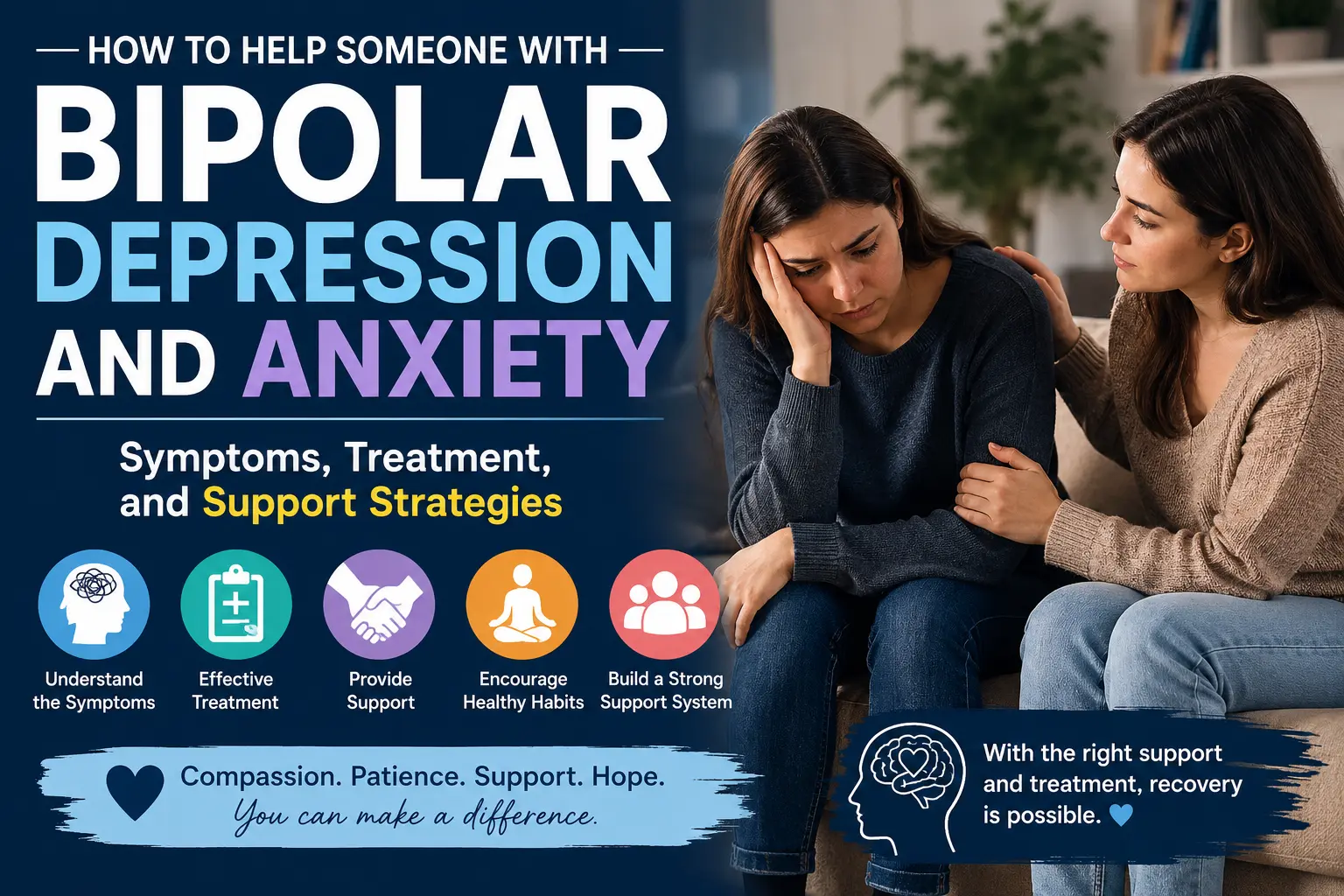 Watching someone you care about struggle with bipolar depression and anxiety can be heartbreaking. You may notice that they withdraw…
 In my practice as a clinical psychologist, I often observe that the difference between a patient who crumbles under pressure…
 We all have "up" days and "down" days. Perhaps you feel energized after a promotion or sluggish on a rainy…
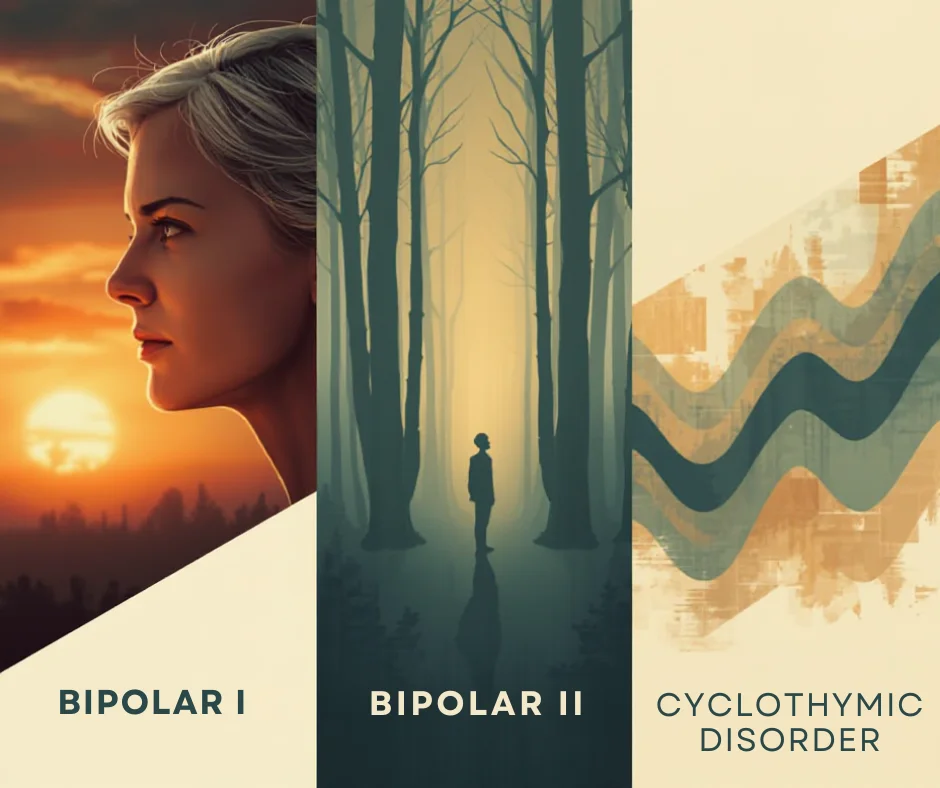 To define bipolar disorder accurately, we must look at it as a chronic mood dysregulation condition. In psychology and medicine,…
Are you looking for a Therapist?
Connect with qualified mental health professionals who understand
bipolar disorder, mood changes, and emotional challenges.
Private • Supportive • Confidential