
ADHD Burnout Recovery: The Complete Clinical Guide to Reclaiming Your Energy

Medically reviewed by Laura Athey Updated Date: March 31, 2026
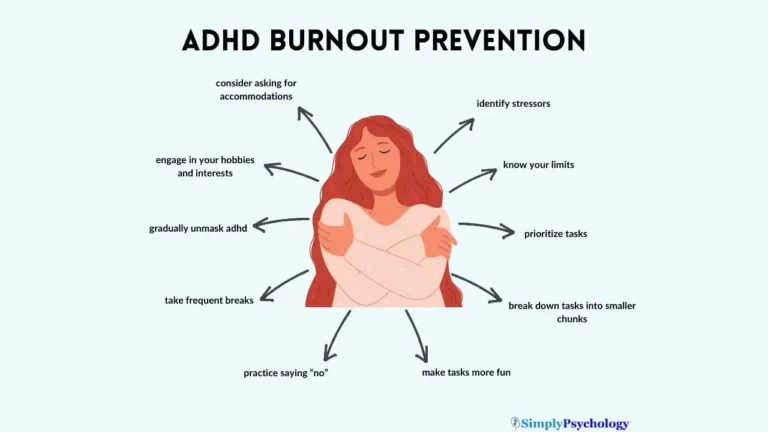
The systemic exhaustion is unique to ADHD. As a psychologist, I view ADHD Burnout Recoverynot as a lack of willpower, but as a “functional collapse” of the executive system. It occurs when the mental cost of masking, over-functioning, and managing dopamine deficiencies exceeds the brain’s biological capacity to recover.
This guide moves beyond generic advice, focusing on nervous system regulation and “low-demand” living. We explore the ADHD burnout cycle, from the initial over-compensation to the eventual shutdown, providing a clinical roadmap for recovery.
By integrating relational psychodynamic insights with practical tools like body doubling and dopamine deposits, we help patients move from a state of “survival mode” to a sustainable, regulated baseline. This is the definitive path for reclaiming energy without the weight of neurodivergent shame.
As a Psy.D. specializing in relational psychodynamic therapy, I recognize ADHD Burnout not as a lack of discipline, but as a profound “functional collapse” of the nervous system. In my practice at Reflection Psychological Services, I often see high-achievers who have spent years “masking” and over-functioning, only to hit a wall that no amount of caffeine or willpower can scale. This Guide serves as a clinical roadmap to bridge the gap between neurobiology and self-compassion.
ADHD Burnout Is Real—and Recoverable
In my Manhattan practice, I often meet high-achieving adults who arrive at my door feeling like a computer that has permanently frozen. They aren’t just tired; they are functionally paralyzed. They ask, “Can ADHD cause burnout?” with a mix of desperation and shame. The answer is a definitive yes.
ADHD burnout is a state of cognitive and physical depletion resulting from the chronic, exhausting effort of navigating a neurotypical world with a neurodivergent brain. It is the cost of “masking,” over-functioning, and constantly compensating for executive function deficits.
If you are currently in the thick of it, I want you to hear this clearly: someone can recover from ADHD burnout. Recovery is not about becoming “more productive”; it is about nervous system regulation and building a life that respects your biological capacity. This guide will walk you through the ADHD burnout recovery process, from identifying the early warning signs to building a sustainable, burnout-proof future.
What Is ADHD Burnout?
To begin the journey of ADHD burnout recovery, we must first define what we are fighting. While standard occupational burnout is usually tied to workplace stress, ADHD burnout is systemic. It permeates every corner of life—from managing a household to maintaining relationships.
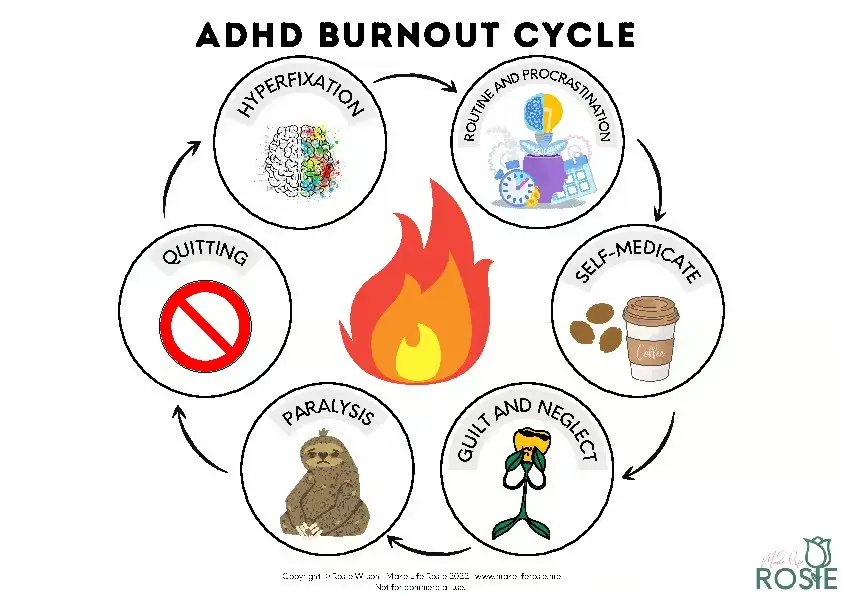
The ADHD burnout cycle often begins with a period of “hyper-focus” or overcompensation. You try to keep up with the demands of life by running your brain at 110% capacity. Eventually, the dopamine reserves run dry, and the prefrontal cortex—the part of the brain responsible for planning, focus, and emotional control—essentially goes “offline.”
ADHD Burnout vs. Normal Burnout
The primary difference lies in the source. Normal burnout is typically the result of external workload. ADHD burnout is the result of the internal effort required to function. A neurotypical person might get burned out from working 80 hours a week; a person with ADHD can get burned out from the sheer mental load of trying to remember their keys, finish a laundry cycle, and filter out background noise while working a standard 40-hour week. It is a state of chronic executive function exhaustion.
ADHD Burnout vs. Normal Burnout vs. Autistic Burnout
Understanding the nuances between different types of burnout is essential for accurate intervention. In my clinical experience, misidentifying the type of burnout often leads to recovery strategies that don’t work.
| Feature | Normal Burnout | ADHD Burnout | Autistic Burnout |
| Primary Cause | Occupational stress/Workload | Chronic executive function strain | Sensory overload & social masking |
| Key Symptom | Cynicism & detachment | Task paralysis & “brain fog” | Loss of skills & sensory hypersensitivity |
| Recovery Focus | Work-life balance/Vacation | System regulation & load reduction | Sensory withdrawal & unmasking |
| Duration | Improves with time off | Requires structural identity shifts | Often requires long-term sensory rest |
ADHD burnout vs. autistic burnout is a common point of confusion, especially for those who are “AuDHD” (both Autistic and ADHD). While ADHD burnout focuses on the exhaustion of trying to “start” and “organize,” autistic burnout is more about the exhaustion of “performing” social norms and processing sensory input. Both require a move toward neuro-affirming care, but the recovery environment may differ—ADHD recovery needs gentle structure, while autistic recovery often needs deep sensory isolation.
Stages of ADHD Burnout
Burnout doesn’t happen overnight. It follows a predictable ADHD burnout cycle. Recognizing which stage you are in can help you determine the level of intervention required.
- Overcompensation & Masking: You are working twice as hard as everyone else to look “normal.” You are using caffeine, stress, and last-minute adrenaline to meet deadlines.
- Chronic Overwhelm: The “hacks” stop working. You feel irritable, and small tasks like opening mail feel insurmountable.
- Emotional Shutdown: You become numb. You may withdraw from friends and hobbies. This is often misdiagnosed as clinical depression, but it is actually a protective biological response.
- Functional Collapse: You can no longer maintain the “mask.” You might miss significant work deadlines or struggle with basic self-care (showering, eating).
- Recovery & Rebuilding: This is where ADHD burnout recovery begins. It involves a “hard reset” of expectations and a slow return to functioning through a neuro-affirming lens.
ADHD Burnout Symptoms
In adults, and particularly in women, symptoms can be subtle because we are so adept at hiding our struggles.
Common ADHD Burnout Symptoms
- Brain Fog: A feeling that your thoughts are moving through molasses.
- Task Paralysis: Staring at a to-do list for hours, unable to choose where to start.
- Emotional Numbness: A lack of joy or interest, even in things you usually hyper-focus on.
- Increased Rejection Sensitivity: Feeling deeply wounded by minor feedback or perceived slights.
ADHD Burnout Symptoms in Women
Burnout symptoms in women with ADHD are frequently colored by societal expectations. Women are often socialized to be the “household managers,” leading to an invisible labor overload.
- Perfectionism as a Shield: Using perfectionism to hide ADHD symptoms until the pressure becomes unbearable.
- People-Pleasing: Saying “yes” to every request because of the fear of being seen as “lazy” or “incompetent.”
- The Late Diagnosis Impact: Many women are diagnosed because they hit a wall of burnout in their 30s or 40s when the demands of career and family finally outpace their ability to cope.
How Long Does ADHD Burnout Last?
The most common question I hear is, “How long does ADHD burnout last?” The answer is that it depends on how long you were running on empty.
An ADHD burnout recovery timeline is rarely a straight line.
- Short-term Burnout: If you caught it early, a “reset” might take 2–4 weeks of significantly reduced demand.
- Chronic Burnout: If you have been over-functioning for years, ADHD burnout recovery time can take 6 months to a year.
Recovery is non-linear. You will have days where you feel “back to normal,” followed by days of total exhaustion. This is not a relapse; it is your nervous system learning to calibrate. Factors that speed up recovery include high-quality sleep, medication reassessment, and—most importantly—the removal of self-imposed shame.
Do You Need a Recovery Day for ADHD?
In my clinical practice, I often advocate for the “Proactive Pause.” Many of my clients feel a crushing sense of guilt when they aren’t being productive, leading them to search for the validity of needing a recovery day for adhd.
There is a vital difference between “rest” and “recovery.” Rest is what you do when you are tired; recovery is what you do when your nervous system is overtaxed. A recovery day is not a luxury; it is a clinical necessity to prevent functional collapse.
Signs Your Brain Needs a Recovery Day
- Sensory Overload: Sounds that usually don’t bother you (like a humming fridge) suddenly feel painful.
- Increased Clumsiness: Physical manifestations of cognitive fatigue, like dropping things or walking into corners.
- Irritability: A “short fuse” that is uncharacteristic of your baseline.
A guilt-free recovery day involves “low-demand” activities. This means no “to-do” lists, minimal sensory input, and permission to engage in “low-stakes” hyper-focus, like gaming or crafting, which can actually help dopamine replenishment.
ADHD Burnout Recovery: What Actually Helps
When we look at adhd burnout recovery strategies, we have to move beyond “time management.” Burnout is a biological state of depletion, so our adhd burnout recovery tips must focus on three core pillars:
- Nervous System Regulation: Shifting from a state of “High Alert” (Sympathetic nervous system) to “Rest and Digest” (Parasympathetic).
- Executive Function Support: Removing the mental “friction” of daily life. If a task requires five steps, we find a way to make it one step.
- Identity & Expectation Reset: This is the psychodynamic work. We must address the belief that your worth is tied to your productivity.
Recovery isn’t about getting back to the “old you”—the one who burned out. It is about creating a “New Baseline” that is sustainable.
How to Recover From ADHD Burnout
If you are wondering how to recover from ADHD burnout, follow this structured adhd burnout recovery plan used in my therapeutic sessions.
Step 1: Stop Over-functioning Immediately
The first step is “The Great Subtraction.” You cannot heal in the environment that made you sick. Cancel non-essential appointments, order takeout, and delegate chores. You must lower the demand until it meets your current, diminished capacity.
Step 2: Reduce Cognitive Load
The ADHD brain in burnout cannot handle “open loops.” Use external tools—whiteboards, voice memos, or a “body double”—to hold information so your brain doesn’t have to.
Step 3: Rebuild Routines Gently
Recovery routines should not look like “Productivity Hacks.” They should look like “Safety Hacks.” Focus on the “Big Three”: consistent sleep, hydration, and eating protein. Do not worry about “organizing your life” yet; worry about keeping your body running.
Step 4: Address Shame & Self-Blame
As a relational therapist, I see shame as the greatest obstacle to recovery. Shame is “heavy”; it takes up executive function. Using Internal Family Systems (IFS), we work to soothe the “Inner Critic” that calls you lazy, helping it understand that you are actually injured.
Step 5: Prevent Relapse
Once you start feeling better, the impulse is to “make up for lost time.” This is a trap. Relapse prevention involves setting hard “capacity boundaries” and learning to say no when you are at 70% capacity, not 0%.
ADHD Burnout Recovery Strategies That Work
Beyond the step-by-step plan, specific adhd burnout recovery strategies can act as “short-term bridges” to help you function while you heal.
- Body Doubling: Having someone else in the room (even virtually) can provide the “neurotypical energy” needed to finish a task without draining your own limited reserves.
- Externalizing Tasks: If you can’t remember to take your meds, put them in a clear bowl in the middle of the kitchen table. Visual cues are essential when internal cues are failing.
- Low-Demand Days: Schedule days where the only goal is “existence.” No expectations, no guilt.
- Medication Reassessment: Sometimes, the stimulants that worked before burnout can feel “jittery” or cause crashes during burnout. Consult your psychiatrist to see if a dosage adjustment or an alpha-agonist is needed to support the nervous system.
ADHD Productivity Rules Explained
In the ADHD community, we often hear about “rules” to stay focused. While these are great for focus, they must be adapted for burnout recovery.
What is the 10-3 rule for ADHD?
This rule suggests working for 10 minutes and resting for 3.
- Burnout Adaptation: During recovery, change this to the 5-10 rule. Work for 5 minutes, rest for 10. The goal here isn’t productivity; it’s proving to your brain that tasks don’t have to be “scary” or “exhausting.”
What is the 20-minute rule for ADHD?
This typically suggests that if a task takes less than 20 minutes, do it now.
- Burnout Warning: In deep burnout, this rule can be harmful. It creates “urgency,” which spikes cortisol. During recovery, replace this with the “One Thing a Day” rule. Pick one 20-minute task, do it, and consider the day a success.
ADHD Burnout Recovery Timeline
Understanding the adhd burnout recovery timeline helps manage expectations.
- Early Recovery (Weeks 1–4): High fatigue, “rebound sleep” (sleeping 10+ hours), and low motivation. The goal is purely stabilization.
- Mid Recovery (Months 2–4): Pockets of energy return. This is the “danger zone” where people over-commit and crash again. Focus on “pacing.”
- Long-term Resilience (Months 6+): You start building new systems. You are no longer “masking” as much, and you have learned to identify your “early warning signs” before a crash occurs.
ADHD Burnout Recovery Tools & Resources
To facilitate a structured adhd burnout recovery, visual aids and tangible resources are indispensable. The ADHD brain often struggles to process dense text during a state of depletion, making an adhd burnout chart a vital “at-a-glance” tool for checking in with one’s capacity.
- The Energy Accounting Sheet: This is a simple ADHD burnout recovery PDF-style exercise where you list daily tasks as either “Withdrawals” (energy-draining) or “Deposits” (energy-restoring). In burnout, your “account” is overdrawn; recovery requires a temporary halt on all non-essential withdrawals.
- Visual Timers: Using a physical visual timer helps externalize the passage of time, reducing the cognitive load of “time blindness,” which often fuels the anxiety leading to burnout.
- Essential Reading: For those looking for a deep dive, I recommend searching for an ADHD Burnout Recovery book that focuses on “pacing” rather than “productivity.” Authors who specialize in neuro-affirming care provide the best clinical frameworks for this shift.
ADHD Burnout Quiz: Am I Burned Out?
Self-reflection is the first step toward intervention. While this is not a diagnostic tool, this ADHD burnout quiz helps identify if your fatigue has crossed the line into functional collapse.
- Do tasks that were once “automatic” (showering, checking email) now feel physically impossible?
- Have you lost interest in your “hyper-focus” hobbies?
- Is your “brain fog” so dense that you struggle to follow a basic conversation?
- Do you feel a sense of “dread” when looking at a standard calendar or to-do list?
- Are you experiencing increased sensory sensitivity or “internalized” irritability?
Interpretation: If you answered “Yes” to three or more, you are likely in a stage of functional burnout. In my practice at Reflection Psychological Services, this is when we move from “coping” to a structured recovery protocol.
Supporting Someone With ADHD Burnout

If you are a partner or employer, supporting someone with adhd burnout requires a shift from “motivation” to “accommodation.”
- What Helps: Offering specific, low-demand help. Instead of asking “What can I do?”, say “I am bringing dinner tonight” or “I am handling the school forms this week.”
- What Hurts: Using “shame-based” language. Phrases like “You just need to get organized” or “Everyone is tired” can push a burned-out ADHD person further into shutdown.
- The Goal: Your role is to be a “body double” for their nervous system—providing a calm, non-judgmental presence that allows their brain to rest.
ADHD Burnout Recovery Programs & Coaching
For some, self-help is not enough. An adhd burnout recovery program can provide the external structure that a depleted brain cannot generate.
- Coaching vs. Therapy: While I provide therapy for the “shame” and trauma associated with burnout, an ADHD coach focuses on the “mechanics”—building burnout-safe systems for your home and office.
- Workplace Accommodations: Recovery often involves advocating for your needs at work. This might include “asynchronous communication” (email over unexpected calls) or flexible deadlines during the recovery phase.
Frequently Asked Questions
Can ADHD cause burnout?
Yes. The chronic effort of masking and overcompensating for executive function deficits creates a state of systemic depletion known as ADHD burnout.
How long does ADHD burnout last?
Recovery can take anywhere from a few weeks to a year, depending on the severity and how quickly demands are reduced.
Can someone recover from ADHD burnout?
Absolutely. With nervous system regulation, structural changes, and the removal of shame, most individuals return to full (but more sustainable) functioning.
What is the difference between ADHD burnout and autistic burnout?
ADHD burnout is primarily about executive function exhaustion, while autistic burnout is driven by sensory overload and social masking.
How to fight ADHD fatigue?
Focus on “Dopamine Deposits”—low-stakes activities that feel good—rather than “pushing through.” Rest is the only cure for true neurodivergent fatigue.
Conclusion
As we wrap up this guide, remember that burnout is not a sign that you have failed; it is a sign that you have been trying too hard for too long. In my clinical work, I see recovery as an act of self-preservation.
Normalize your need for rest. Emphasize sustainability over speed. By honoring your ADHD brain’s unique rhythm, you aren’t just recovering from burnout—you are building a life where you can finally breathe.
Authoritative References
1. Cleveland Clinic: ADHD Burnout & Emotional Regulation
2. National Institutes of Health (NIH): Executive Function and Fatigue
3. ADDitude Magazine: The Cycle of ADHD Burnout in Women
4. CHADD (Children and Adults with ADHD): National Resource Center

Related Posts






Subscribe to Our Newsletter
Get mental health tips, updates, and resources delivered to your inbox.
MORE from Author
Read More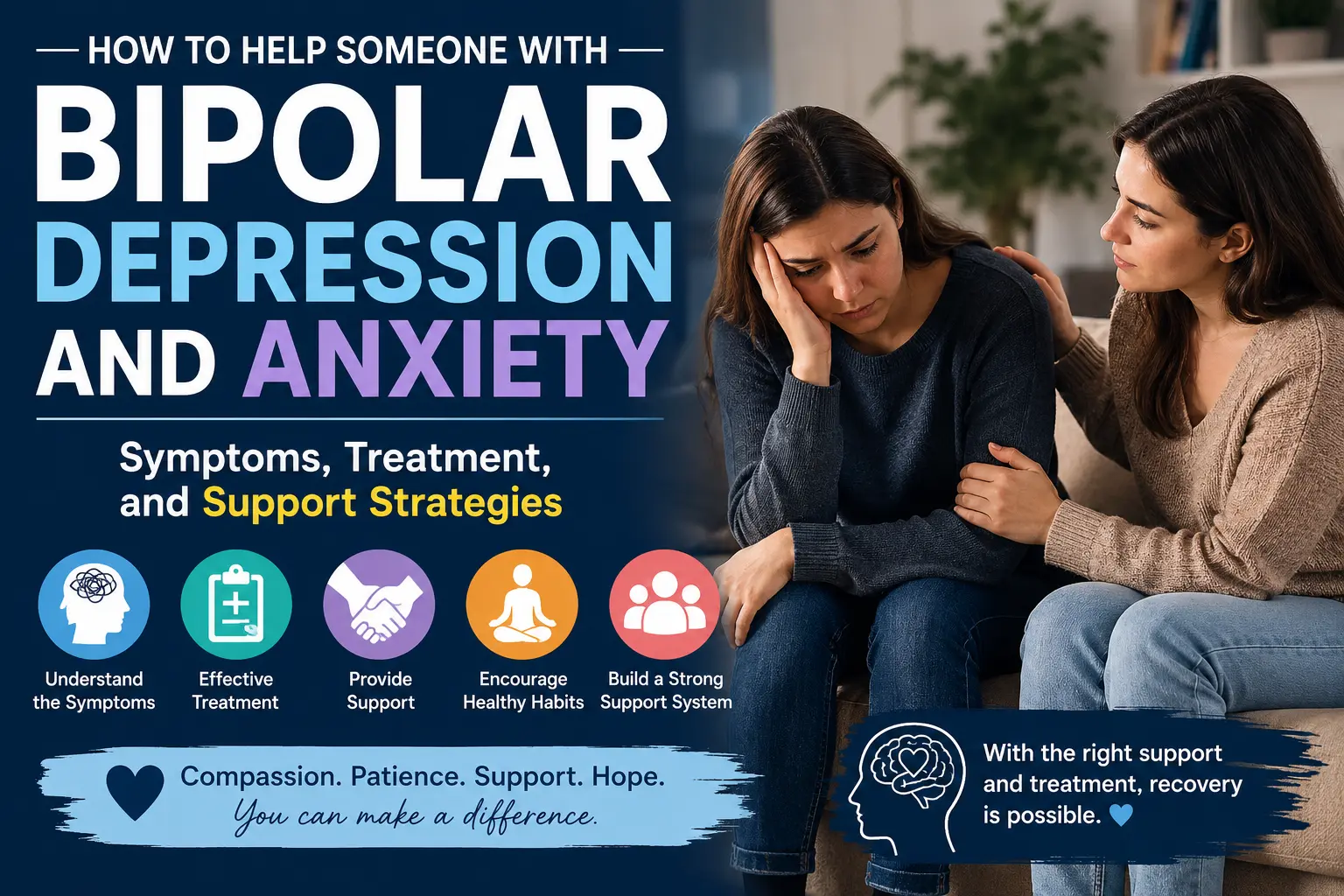 Watching someone you care about struggle with bipolar depression and anxiety can be heartbreaking. You may notice that they withdraw…
 In my practice as a clinical psychologist, I often observe that the difference between a patient who crumbles under pressure…
 We all have "up" days and "down" days. Perhaps you feel energized after a promotion or sluggish on a rainy…
 To define bipolar disorder accurately, we must look at it as a chronic mood dysregulation condition. In psychology and medicine,…
Are you looking for a Therapist?
Connect with qualified mental health professionals who understand
bipolar disorder, mood changes, and emotional challenges.
Private • Supportive • Confidential