
What Is Caplyta Used For? Approved Uses, Mental Health Benefits & What to Expect

Medically reviewed by Laura Athey Updated Date: May 5, 2026
In my practice as a clinical psychologist, I frequently sit with patients who feel they have exhausted the “standard” medicine cabinet of psychiatry.
They have tried the older mood stabilizers and the traditional antidepressants, often finding themselves stuck in the frustrating gap between partial recovery and true stability. What Is Caplyta Used For?
When we discuss Caplyta (generic name: lumateperone), the conversation is often sparked by a search for something that works differently—a medication that can lift the “leaden” weight of depression without the metabolic or emotional baggage often associated with older drugs.
Many patients are surprised to learn Caplyta is classified as an antipsychotic—yet it’s often prescribed primarily for bipolar depression rather than psychosis. In a clinical landscape where we are increasingly moving toward “precision” medicine, Caplyta stands out because of its unique chemical footprint.
It is designed to be a “surgical” intervention, targeting specific pathways in the brain to restore balance while leaving others untouched.
If you are researching what the drug Caplyta is used for, you are likely looking for more than just a list of FDA indications. You are looking for a sense of how this medication might change your daily lived experience.
This guide will explore the approved uses of Caplyta, its role in treating complex mood disorders, and the biological “why” behind its growing prominence in mental health treatment.
What Is Caplyta Used For?
At its most fundamental level, Caplyta (lumateperone) is a second-generation atypical antipsychotic.
However, unlike some of its predecessors that were designed primarily to “turn down the volume” on hallucinations and mania, Caplyta was engineered with a significant focus on the depressive side of the spectrum.
FDA-Approved Indications
Currently, Caplyta is FDA-approved for two primary conditions in adults:
- Schizophrenia: It helps manage “positive” symptoms (like hallucinations and delusions) and may have a more favorable impact on “negative” symptoms (like social withdrawal) compared to older agents.
- Bipolar Depression: This includes depressive episodes associated with both Bipolar I and Bipolar II disorder. It can be used as a monotherapy (on its own) or as an adjunct therapy (added to lithium or valproate).
It is important to note that while it is an antipsychotic by class, its most common use in many psychiatric clinics today is for the treatment of bipolar depression—a condition that has historically been notoriously difficult to treat without triggering a “flip” into mania.
What Is Caplyta Used For in Mental Health?
To understand what Caplyta is used for in mental health, we must look at the specific challenges of treating bipolar disorder. As a psychologist, I often observe that while we have many tools to “lower the ceiling” of mania, we have far fewer tools to “raise the floor” of depression.
The Bipolar Depression Breakthrough
Bipolar depression is often characterized by profound anhedonia—the inability to feel pleasure—and a deep, physical lethargy. Traditional antidepressants can sometimes be risky for those with bipolar disorder, as they may cause rapid cycling or agitation.
Caplyta is favored because it provides a “mood-lifting” effect through a mechanism that is generally safer for the bipolar brain.
Is Caplyta a Mood Stabilizer?
Technically, no. In pharmaceutical terms, it is an atypical antipsychotic. However, in practical mental health terms, it functions as a mood stabilizer by preventing the deep “troughs” of depression.
Many clinicians view it as part of a new generation of medications that bridge the gap between antipsychotic and antidepressant activity.
What Symptoms Does Caplyta Treat?
When we move beyond the diagnostic labels, we find that Caplyta is used to target specific “clusters” of symptoms that interfere with a person’s ability to function and maintain their Executive Function.
Understanding the “why” behind these symptom targets requires a look at the brain’s complex signaling environment.
Depressive Symptom Clusters
Caplyta is highly effective at targeting the core symptoms of a depressive episode.
- Anhedonia and Motivation: One of the most significant benefits I see in my practice is a reduction in “emotional blunting.” Because Caplyta modulates dopamine rather than completely blocking it, patients often report feeling “more like themselves” rather than feeling “numb.”
- Cognitive Fog: Depression often impairs the brain’s Neuroplasticity, making it hard to think clearly or make decisions. By interacting with glutamate pathways, Caplyta may help “clear the fog,” allowing patients to engage more effectively in psychotherapy.
Psychosis and Thought Disorganization
In schizophrenia, Caplyta targets the dopamine D2 receptors. However, it does so with a “lighter touch” than older medications.
This is critical because full dopamine blockade can lead to a “zombie-like” state. Caplyta’s modulation helps quiet hallucinations and paranoia while preserving the patient’s ability to remain alert and socially engaged.
The Anxiety Question
A common question in my clinic is, “Does Caplyta reduce anxiety?” While Caplyta is not FDA-approved for Generalized Anxiety Disorder (GAD) or Panic Disorder, we often see anxiety decrease as a “secondary” benefit.
- The “Why”: Anxiety is frequently a symptom of a dysregulated mood. When the baseline mood is stabilized, and the brain’s Circadian Rhythms are better supported through improved sleep (a common side effect), the “fight or flight” response often quiets down. However, for some, the initial side effect of akathisia (restlessness) can be mistaken for anxiety, which is why close monitoring is essential.
Sleep and Sedation
Many patients use Caplyta’s sedative properties to their advantage. Since many people with bipolar disorder struggle with sleep disturbances, taking Caplyta in the evening can help anchor the sleep-wake cycle.
This is not just about “knocking someone out”; it’s about using the medication’s affinity for serotonin 5-HT2A receptors to promote a more stable rest, which is the foundation of mental health.
In my practice, I worked with a patient, “Julian,” who was struggling with severe Bipolar II depression. He was highly intelligent but found that his Executive Function—his ability to plan, focus, and start tasks—had completely evaporated. He felt “stuck.”
We often think of medication as just a way to feel “less sad,” but for Julian, the introduction of Caplyta acted as a “cognitive primer.
” It didn’t do the work for him, but it lowered the physiological barrier of his depression. With that “lift,” he was finally able to use the tools we discussed in therapy, like behavioral activation.
A Nuance to Watch: I noticed that Julian’s response was highly dependent on his Sleep Hygiene. If he took his dose too late and stayed up on his phone, the morning “hangover” would negate the cognitive benefits.
We had to coordinate his medication timing with his natural sleep drive to ensure he woke up with the mental clarity needed to tackle his day.
What is Caplyta 42 mg Used For?
If you look at your prescription, you will likely see a dose of 42 mg. This is the standard, therapeutic adult dose for both schizophrenia and bipolar depression.
What makes Caplyta 42 mg unique?
- No Titration: Most antipsychotics require “starting low and going slow.” Caplyta was designed so that the 42 mg dose is both the starting and the effective dose for most adults. This is a significant advantage for patients in crisis who cannot afford to wait weeks to reach a therapeutic level.
- Metabolic Profile: At this 42 mg dose, Caplyta has shown a remarkably “clean” profile regarding weight gain and cholesterol, which are common hurdles with other medications in this class.
What Makes Caplyta Special?
If we are to understand what makes Caplyta special, we have to look at its “Triple-Action” mechanism. This is high-level science, but it explains the real-world lack of side effects.
- Dopamine Modulation: It is a “partial antagonist” at D2 receptors. It provides enough blockade to stop “noise” (psychosis) but lets enough “signal” through to allow for pleasure and movement.
- Serotonin 5-HT2A Antagonism: It hits this receptor very hard. This is likely where the potent antidepressant effect and the sleep-aiding qualities come from.
- Glutamate Modulation: This is the most cutting-edge part. By affecting the NMDA and AMPA receptors, Caplyta may support Neuroplasticity, helping the brain recover from the “damage” that long-term depression can cause.
How Long Does It Take for Caplyta to Work?
One of the most frequent questions I encounter in my practice is, “How long does it take for Caplyta to work?” In a world where we expect instant results, the biological timeline of psychiatric recovery can feel agonizingly slow.
However, Caplyta’s unique mechanism often offers a “glimmer” of relief sooner than older agents.
The Timeline of Relief
- Weeks 1–2: Many patients notice a shift in their sleep patterns or a slight reduction in “mental noise” or agitation within the first ten days. This isn’t the full effect, but rather the initial stabilization of the serotonin and dopamine pathways.
- Weeks 4–6: This is the “therapeutic window.” For bipolar depression, the full antidepressant effect—where the anhedonia begins to lift, and Executive Function improves—typically takes about a month of consistent 42 mg dosing.
- Consistency Matters: Because Caplyta works on the glutamate system to support Neuroplasticity, the real “healing” happens through steady, daily presence in the brain. Skipping doses doesn’t just risk a relapse; it interrupts the brain’s ability to rebuild those vital neural connections.
A Balanced Risk Perspective
While Caplyta is celebrated for its “favorable” side effect profile, it is not a “magic pill” without risks. My role as a psychologist is to help patients navigate these side effects so they don’t give up on a medication that could ultimately save their stability.
The Weight Question
One of the most significant barriers to treatment in bipolar disorder is the fear of weight gain.
- Caplyta side effects weight gain: In clinical trials, Caplyta was largely weight-neutral. Unlike medications like olanzapine or quetiapine, it does not typically cause the massive increase in appetite (the “munchies”) that leads to metabolic syndrome.
- Does Caplyta cause weight loss? While not a weight-loss drug, some patients find that as their depression lifts and their energy increases, they become more active, which can lead to a healthier weight profile compared to their previous medications.
Common Physical Reactions
| Side Effect | Frequency | Clinical Note |
| Somnolence (Sleepiness) | High | Usually peaks in the first 2 weeks; best managed by evening dosing. |
| Dry Mouth | Moderate | Often managed with hydration or sugar-free lozenges. |
| Nausea | Moderate | Taking the dose with a small snack can mitigate this. |
| Akathisia (Restlessness) | Low | Much less common than with other atypicals like aripiprazole. |
Will Caplyta Help You Sleep?
Given the profound impact of sleep on mood stability, many patients naturally ask, “Will Caplyta help you sleep?” The answer is nuanced. Caplyta is not classified as a sleep medication, but it can influence sleep in meaningful ways.
Because it acts as a potent 5-HT2A receptor antagonist, it tends to have a calming, sometimes sedating effect for many individuals. This pharmacological property can make patients feel drowsy, particularly when they first start the medication.
In clinical practice, this effect is often used strategically. Taking Caplyta in the evening allows patients to align that drowsiness with their natural sleep cycle, effectively turning a side effect into a therapeutic advantage.
For individuals with bipolar disorder—where disrupted sleep can quickly destabilize mood—this can be especially helpful. Anchoring consistent sleep patterns plays a critical role in regulating circadian rhythms, which in turn supports overall mood stability.
However, it’s important not to misunderstand its role. Caplyta is not designed to function as an insomnia treatment. Its primary purpose is to stabilize mood by modulating brain chemistry, particularly in depressive episodes. Any improvement in sleep is typically indirect.
As depressive symptoms ease, intrusive thoughts and nighttime rumination often decrease, making it easier for the mind to settle.
In that sense, better sleep with Caplyta is usually a byproduct rather than the main effect. It supports the broader goal of stability, where improved rest, clearer thinking, and more regulated emotions begin to reinforce each other over time.
Is Caplyta Safe for Children?
At this time, Caplyta is not FDA-approved for pediatric use (children or adolescents under the age of 18). While “off-label” prescribing does happen in complex cases, the safety and efficacy data for the developing brain are still being established.
If a child is struggling with early-onset bipolar disorder or schizophrenia, clinicians generally exhaust medications with a longer track record in pediatric populations before considering newer agents like lumateperone.
Frequently Asked Questions
What is Caplyta used for?
Caplyta is used to treat schizophrenia in adults and depressive episodes associated with Bipolar I and Bipolar II disorder.
Is Caplyta used for bipolar disorder?
Yes, it is specifically FDA-approved for bipolar depression, either as a standalone treatment or alongside lithium or valproate.
Is Caplyta an antipsychotic?
Yes, it is classified as an atypical (second-generation) antipsychotic, though its unique mechanism makes it highly effective for mood symptoms.
What symptoms does Caplyta treat?
It targets low mood, anhedonia (loss of pleasure), cognitive fog, hallucinations, and delusions.
Does Caplyta help anxiety?
While not approved for anxiety, many find that their anxiety decreases as their mood stabilizes and their sleep improves.
Does Caplyta cause weight gain?
Compared to other antipsychotics, Caplyta has a very low risk of weight gain and is often considered weight-neutral.
Conclusion
Caplyta represents a meaningful step forward in treating the depressive side of bipolar disorder, an area that has long been difficult to manage without significant trade-offs. Many traditional medications can stabilize mood but often come with burdens like weight gain, metabolic issues, or heavy sedation.
Caplyta offers a more balanced option, aiming to reduce depressive symptoms while maintaining a more favorable metabolic profile. This matters because physical health and mental health are closely linked, especially in long-term conditions like bipolar disorder.
However, medication alone is not enough to achieve lasting stability. Bipolar disorder is a complex condition shaped by biological, psychological, and environmental factors.
While Caplyta can help regulate brain chemistry and ease symptom severity, it does not address the behavioral patterns, emotional processing, or life circumstances that also influence the course of the illness.
This is where psychological support becomes essential. Therapies such as cognitive behavioral therapy (CBT) and psychoeducation help individuals understand their condition, identify triggers, and recognize early warning signs of mood changes.
These tools allow for quicker intervention before symptoms escalate. Therapy also provides a space to process the emotional weight of the disorder, which can otherwise build up and contribute to instability.
Lifestyle habits are another critical pillar. Consistent sleep is especially important, as disruptions in sleep patterns are one of the most common triggers for both depressive and manic episodes.
Regular exercise, balanced nutrition, and stress management are not just general health advice—they directly impact mood regulation and resilience. Small inconsistencies in these areas can have outsized effects in someone with bipolar disorder.
Routine and social structure also play a stabilizing role. Having a predictable daily schedule, meaningful activities, and supportive relationships can help anchor mood and reduce the risk of sudden shifts. Isolation, in contrast, tends to worsen depressive symptoms and slow recovery.
In this broader picture, Caplyta should be seen as one important component of a larger system. It can make symptoms more manageable and create the mental space needed to engage in therapy and maintain healthy routines.
True stability comes from combining medication with psychological tools and consistent lifestyle habits, forming a foundation that supports both mental and physical well-being over time.
References:
- Journal of Clinical Psychiatry – Lumateperone in Bipolar Depression
- NAMI – Caplyta Medication Guide
- American Journal of Psychiatry – Efficacy of Lumateperone in Schizophrenia
- Intra-Cellular Therapies – Clinical Trial Data

Related Posts





Subscribe to Our Newsletter
Get mental health tips, updates, and resources delivered to your inbox.
MORE from Author
Read More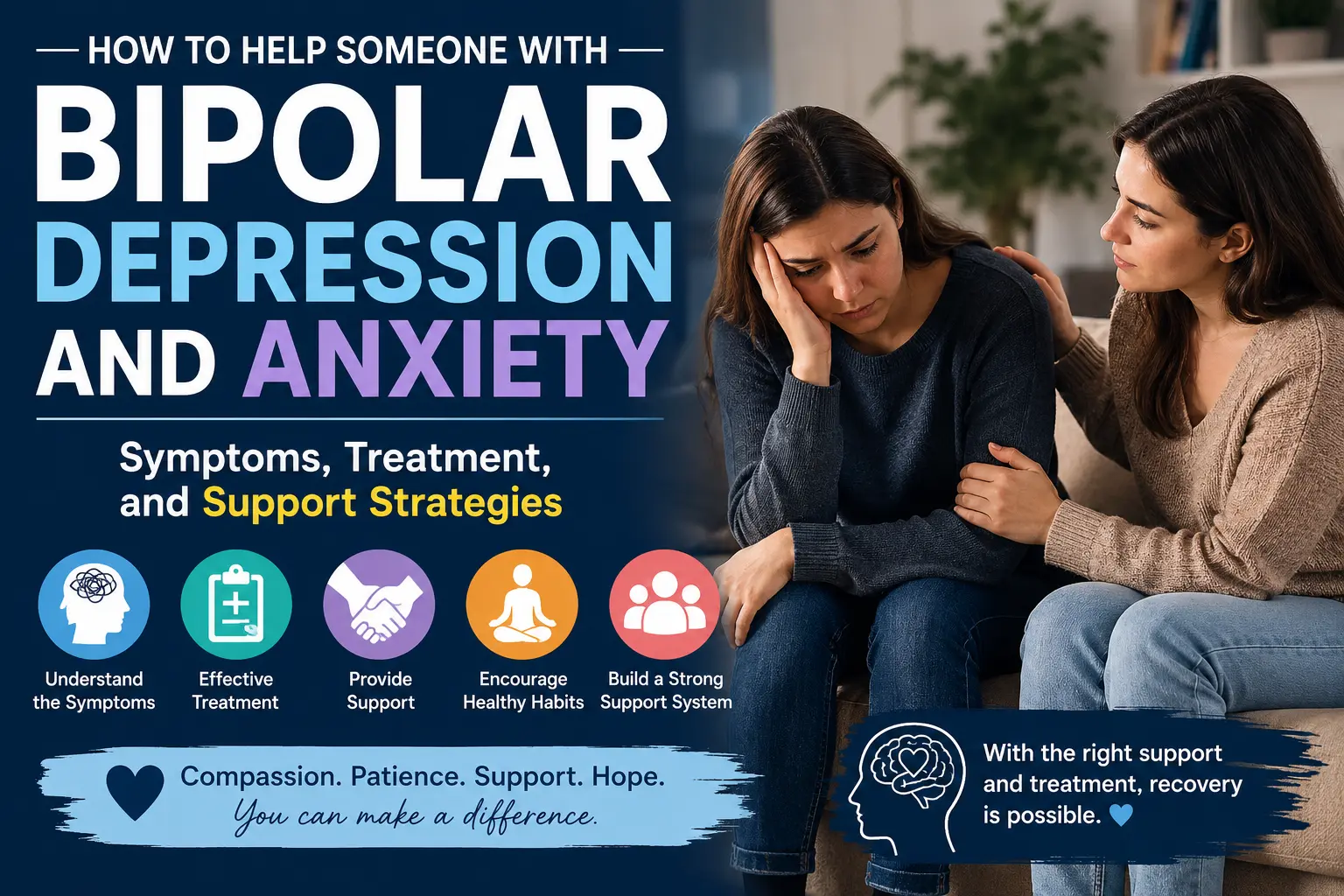 Watching someone you care about struggle with bipolar depression and anxiety can be heartbreaking. You may notice that they withdraw…
 In my practice as a clinical psychologist, I often observe that the difference between a patient who crumbles under pressure…
 We all have "up" days and "down" days. Perhaps you feel energized after a promotion or sluggish on a rainy…
 To define bipolar disorder accurately, we must look at it as a chronic mood dysregulation condition. In psychology and medicine,…
Are you looking for a Therapist?
Connect with qualified mental health professionals who understand
bipolar disorder, mood changes, and emotional challenges.
Private • Supportive • Confidential