
Autism vs Schizophrenia: Key Differences, Overlap, Genetics & When to Seek Help

Medically reviewed by Laura Athey Updated Date: April 1, 2026
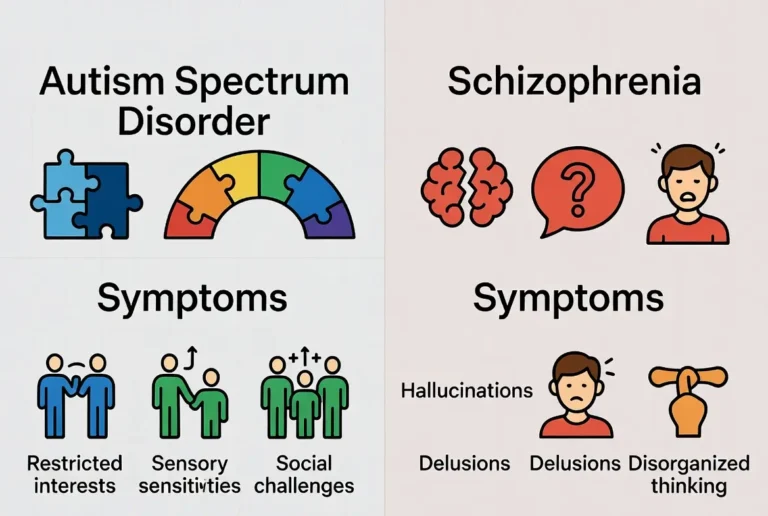
Understanding the difference between schizophrenia and autism is a challenge that has faced clinicians for over a century. While they may appear similar in a snapshot of social behavior, they represent entirely different categories of human experience.
The primary autism vs schizophrenia differences lie in the “how” and “when.” Autism is a difference in how the brain is wired from birth, affecting how a person perceives and interacts with the world. Schizophrenia is a condition characterized by a “break” from reality, typically occurring after a period of relatively typical development.
Quick Comparison Table
| Feature | Autism Spectrum Disorder (ASD) | Schizophrenia |
| Onset | Early childhood (typically by age 3) | Late teens to early 30s |
| Core Symptoms | Social-communication, repetitive behaviors | Psychosis (Hallucinations, Delusions) |
| Hallucinations | Not a core feature | Core feature of psychosis |
| Course | Lifelong, stable development | Episodic, often involves cycles of relapse |
| Cognitive Impact | Executive function/Sensory differences | Cognitive decline possible if untreated |
| Communication | Literal thinking, difficulty with cues | Disorganized speech, “word salad” |
Are Autism and Schizophrenia Related?
The question “Is schizophrenia linked to autism?” is rooted in deep psychiatric history. To understand the modern perspective, we must look back at where the terminology began.
The 1911 Connection: Eugen Bleuler
In 1911, the Swiss psychiatrist Eugen Bleuler coined the term “schizophrenia.” Interestingly, he used the word “autism” (derived from the Greek autos, meaning “self”) to describe one of the symptoms of schizophrenia: the tendency of patients to withdraw into their own inner worlds. For decades, the two were inextricably linked in the medical mind.
It wasn’t until the 1940s, through the work of Leo Kanner and Hans Asperger, that “Autism” was identified as a distinct neurodevelopmental syndrome separate from adult psychosis.
Modern Genetics and Biology
Recent advances in autism and schizophrenia genetics have revealed that the two conditions do share some biological “soil.”
- Shared Risk Variants: Researchers have found overlapping Copy Number Variants (CNVs) and rare genetic mutations that appear in both ASD and schizophrenia populations.
- Polygenic Risk Scores: Studies show a genetic correlation between the two, suggesting that certain biological pathways related to brain development and synaptic pruning are involved in both conditions.
However, shared biology does not mean they are the same disorder. Just as a cough can be a symptom of both a common cold and pneumonia, these shared genetic markers simply indicate a general vulnerability in neurodevelopmental pathways.
Does Autism Lead to Schizophrenia?
A common fear among parents and autistic adults is: Does autism lead to schizophrenia? or “Will my child develop psychosis later?”
The clear clinical answer is: No. Autism does not “cause” or “evolve” into schizophrenia. They are distinct diagnostic entities. However, data does suggest that autistic individuals may have a slightly higher statistical risk of developing a psychotic disorder compared to the general population.
This increased risk is often attributed to:
- Environmental Stress: The chronic stress of navigating a world not built for neurodivergence.
- Trauma: High rates of bullying and social isolation can act as triggers for those with a genetic predisposition to psychosis.
- Misinterpretation: Sometimes, an autistic “shutdown” or intense “special interest” is misinterpreted as a psychotic withdrawal by untrained clinicians.
In my practice, the most common source of confusion is the ‘social withdrawal’ aspect. An autistic person withdraws because social interaction is exhausting and sensorily overwhelming—it’s a form of self-preservation. A person with schizophrenia withdraws often because of paranoia or ‘negative symptoms’ like avolition (a total loss of drive).
When I evaluate someone for autism vs schizophrenia, I look at the history of their imagination. Autistic people often have vivid, structured inner worlds they control. In schizophrenia, the inner world (hallucinations/delusions) is something that happens to the person, often causing distress and a sense of powerlessness. Distinguishing ‘rich imagination’ from ‘psychosis’ is the key to a correct diagnosis.
Can You Have Schizophrenia and Autism?
Yes, autism and schizophrenia comorbidity is a recognized clinical reality. While it is not common, it is possible for a person to be born with autism and later develop schizophrenia in adulthood.
The Challenges of Dual Diagnosis
Diagnosing schizophrenia with autism in adults is notoriously difficult.
- Negative Symptom Overlap: The “negative symptoms” of schizophrenia (flat affect, lack of speech, social withdrawal) look almost identical to “autistic masking” or “autistic burnout.”
- The Diagnostic “Overshadowing”: If a person is already known to be autistic, clinicians might dismiss new signs of disorganized thinking as “just part of their autism,” missing the window for early schizophrenia intervention.
Research estimates suggest a comorbidity rate of anywhere from 3% to 10%, though these numbers are highly debated due to the complexity of the assessment process.
What Is the Difference Between Psychosis and Autism?
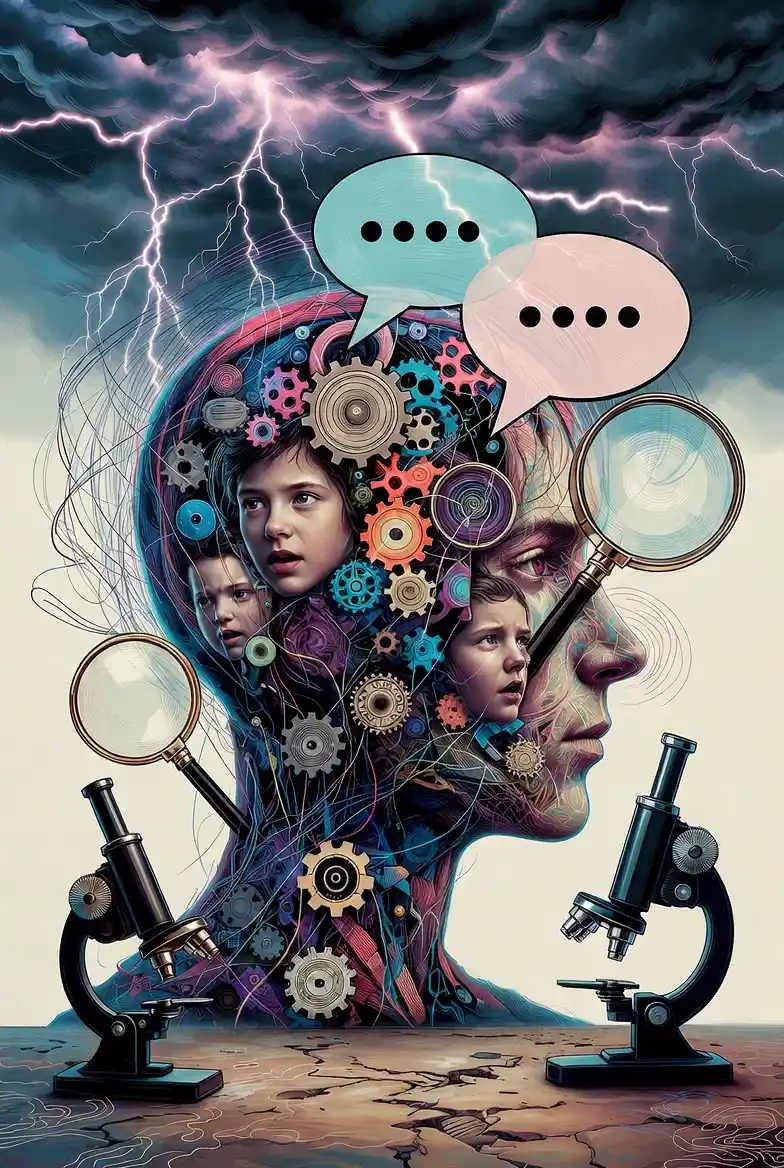
To truly understand autism vs schizophrenia, one must understand the nature of psychosis. Psychosis is a clinical state where a person loses contact with shared reality.
Psychosis vs. Autism: A Symptom Comparison
| Psychosis (Schizophrenia) | Autism (ASD) |
| Hallucinations: Hearing voices or seeing things that aren’t there. | Sensory Sensitivity: Hearing things (like a buzzing fridge) that others can hear but ignore. |
| Delusions: Fixed, false beliefs (e.g., “The FBI is tracking me”). | Literal Thinking: Misunderstanding a metaphor as a fact. |
| Paranoia: Fear that others are out to get them. | Social Anxiety: Fear of social rejection or not knowing the “rules.” |
| Disorganization: Inability to follow a coherent thought. | Cognitive Rigidity: Needing to finish a specific thought or routine. |
Psychosis involves the addition of false perceptions (positive symptoms) or the loss of typical function (negative symptoms). Autism is a difference in how information is processed from the start.
Overlapping Symptoms of Schizophrenia and Autism
Why is there so much confusion? Because the overlapping symptoms schizophrenia and autism share can be striking to an outside observer. Both conditions may involve:
- Social Withdrawal: Preferring to be alone.
- Flat Affect: A face that doesn’t show much emotion or a “monotone” voice.
- Unusual Speech: Autistic people may use “echolalia” (repeating words), while those with schizophrenia may use “neologisms” (made-up words).
- Cognitive Rigidity: Difficulty switching from one task to another or an obsession with specific topics.
The distinction is found in the internal driver. The autistic person is usually seeking predictability and sensory comfort. The person with schizophrenia is often reacting to an internal stimulus (a voice or a delusional thought).
Signs of Schizophrenia in Autism
For the autistic community, knowing the “red flags” is important for peace of mind. Signs of schizophrenia in autism usually involve a significant change from a person’s baseline.
Early Warning Signs (Prodromal Phase):
- Functional Decline: A sudden inability to perform self-care tasks that were previously easy (beyond what is seen in autistic burnout).
- New Hallucinations: Hearing distinct voices that provide a commentary on their actions.
- Fixed False Beliefs: Developing a belief that cannot be shaken by evidence (e.g., believing they have superpowers or that the TV is talking specifically to them).
- Disorganized Speech: Losing the ability to form coherent sentences, moving from one unrelated topic to another (“derailment”).
When to Seek Help: If these symptoms emerge suddenly and persist for several weeks, an urgent evaluation by a psychiatrist is necessary.
In this second section, we delve into the clinical psychopathology of schizophrenia, the nuances of high-functioning autism, and the modern treatment landscape. We will also address the historical subtypes of schizophrenia and provide a guide for those navigating these concerns in community spaces like Reddit.
High Functioning Autism and Schizophrenia
A specific area of diagnostic confusion occurs within the profile previously known as Asperger’s Syndrome (now categorized under the broad umbrella of Autism Spectrum Disorder). Individuals with high functioning autism and schizophrenia vulnerabilities often share a high IQ but struggle with the “social intuition” required for neurotypical life.
Asperger’s vs. Schizophrenia
The distinction here often comes down to “Theory of Mind.”
- Autism: The individual may struggle to understand that others have different perspectives, leading to social “clumsiness” or literalness.
- Schizophrenia: The individual may over-attribute meaning to others’ perspectives (e.g., “I know they are thinking about how to hurt me”), leading to delusions of reference or paranoia.
While “Asperger’s” is no longer a formal DSM-5 diagnosis, the clinical profile remains relevant when distinguishing late-onset social withdrawal from a lifelong pattern of neurodivergence.
Schizophrenia Disorder: A Clinical Overview
To understand the psychopathology of schizophrenia, we must look at the three “pillars” of symptoms. Unlike autism, which is defined by developmental plateaus or differences, schizophrenia is often defined by active interference in thought processes.
1. Positive Symptoms (Additions to Reality)
- Hallucinations: Sensory experiences in the absence of external stimuli. Auditory hallucinations (voices) are the most common.
- Delusions: Fixed beliefs that do not change even when presented with conflicting evidence.
2. Negative Symptoms (Subtractions from Function)
These are the symptoms most likely to be confused with the autism vs schizophrenia overlap:
- Avolition: A total lack of motivation to complete self-directed tasks.
- Alogia: Poverty of speech; speaking very little or with very little content.
- Anhedonia: A decreased ability to experience pleasure.
3. Cognitive Symptoms of Schizophrenia
- Disorganized Thinking: Difficulty connecting thoughts in a logical way.
- Executive Dysfunction: Problems with “working memory” and focus, which is also a core feature of ADHD and Autism, making differential diagnosis even more complex.
Types of Schizophrenia: Historical Subtypes Explained
If you are researching schizophrenia psychology, you may encounter terms like paranoid schizophrenia or hebephrenic schizophrenia. It is important to note that the DSM-5 removed these subtypes because they were not found to be stable over time—a patient might present as paranoid one year and undifferentiated the next.
Inside the Mind: What is Paranoid Schizophrenia?
Historically, this was the most common subtype. It is characterized by prominent delusions (often of persecution or grandeur) and auditory hallucinations. Unlike other forms, the individual’s speech and affect may remain relatively “normal,” which can make it harder for families to recognize the early stages of the disorder.
Other Historical Terms:
- Hebephrenic (Disorganized) Schizophrenia: Characterized by disorganized behavior and speech, and flat or inappropriate affect (e.g., laughing at a funeral).
- Undifferentiated Schizophrenia: A “catch-all” category for those who meet the general criteria but don’t fit into a specific subtype.
- Borderline Schizophrenia: A historical term that eventually evolved into Schizotypal Personality Disorder, which sits on the “bridge” between personality and psychosis.
- Bipolar Schizophrenia: This is not a formal diagnosis; the correct clinical term is Schizoaffective Disorder, Bipolar Type, where a person experiences both schizophrenia symptoms and major mood episodes (mania/depression).
Schizophrenia Diagnosis and Treatment
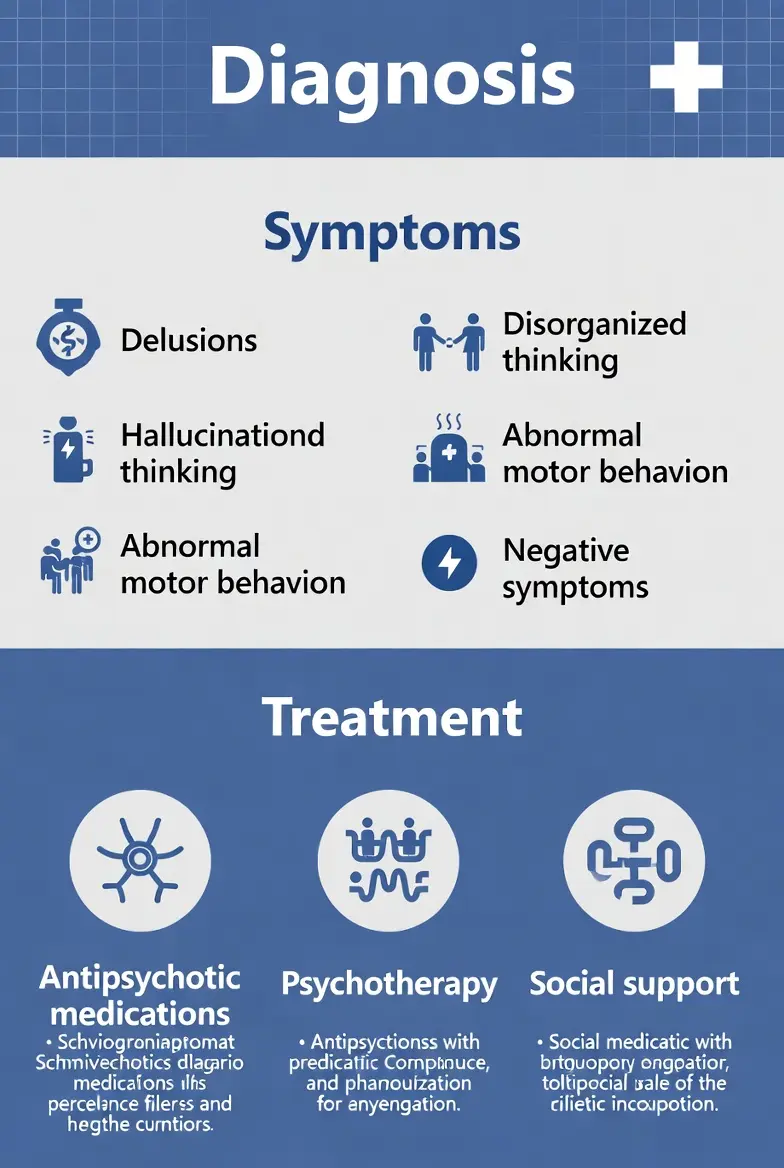
How is Schizophrenia Diagnosed?
A schizophrenia diagnosis requires a thorough clinical interview and a longitudinal history. According to the DSM-5-TR, a person must show at least two core symptoms (one of which must be delusions, hallucinations, or disorganized speech) for a significant portion of time during a one-month period, with continuous signs of the disturbance persisting for at least six months.
Clinicians must also “rule out” medical causes, such as:
- Brain tumors or neurological infections.
- Substance-induced psychosis (e.g., from heavy cannabis or stimulant use).
- Autoimmune encephalitis.
Schizophrenia Treatment: The Modern Approach
Early intervention is the “gold standard” for improving long-term outcomes.
- Schizophrenia Antipsychotics: These medications target dopamine receptors. First-generation (typical) antipsychotics focus on dopamine, while second-generation (atypical) antipsychotics also affect serotonin and generally have fewer motor side effects, though they can cause metabolic syndrome.
- Psychotherapy: CBT for Psychosis (CBTp) helps patients reality-test their thoughts. Family therapy is also crucial for reducing “expressed emotion,” which can trigger relapses.
Could Advances in Schizophrenia Psychology Lead to a Breakthrough Cure?
The question of a breakthrough cure is a major focus of current neurobiological research. While we do not currently have a “cure” that resets the brain to its pre-illness state, we are moving toward precision psychiatry.
Current “breakthrough” areas include:
- Glutamate Theory: Researching medications that target glutamate rather than just dopamine.
- Inflammation Research: Investigating whether “brain inflammation” or immune system dysfunction triggers the onset of schizophrenia in vulnerable individuals.
- Digital Phenotyping: Using smartphone data to predict a psychotic relapse before it happens, allowing for immediate medication adjustment.
Autism vs Schizophrenia – Reddit and Community Discussions
In digital spaces like Reddit, the autism vs schizophrenia debate is a frequent topic of “self-reflection.” Common themes include:
- “Am I autistic or psychotic?” Many users describe social anxiety and “odd” interests, fearing they are developing schizophrenia. Community members often point out that if you are worried you are losing your mind, it is more likely to be anxiety or OCD (which involves insight) than a psychotic break (where insight is often lost).
- The Masking Confusion: Autistic adults discuss how “masking” can feel like having a “split” personality, leading them to misidentify their experience as a dissociative or psychotic symptom.
Important Note: While community validation is helpful, anecdotal advice on Reddit cannot replace a clinical evaluation. If you are questioning your reality, please consult a licensed professional.
Which Is Worse: Autism or Schizophrenia?
This is a common but difficult question. “Worst” is subjective and depends entirely on the level of support and the severity of the individual case.
- Schizophrenia is often viewed as more “functionally impairing” in the short term because it is a disruptive force that can break a person’s ability to work or maintain relationships through active psychosis. However, with consistent treatment, many lead fulfilling lives.
- Autism is a lifelong difference. While not “curable,” it does not involve the same risk of “decline” seen in untreated schizophrenia. The “burden” of autism is often the lack of societal accommodation rather than the neurobiology itself.
FAQ: Featured Snippets
Is schizophrenia linked to autism?
Yes, they share a “neurodevelopmental” origin. While they are different disorders, research shows overlapping genetic risk factors and similar differences in brain connectivity, specifically in areas governing social cognition.
What is the difference between psychosis and autism?
Psychosis is an active state of losing touch with reality (hallucinations/delusions). Autism is a developmental difference in how reality is processed (sensory sensitivity/literal thinking). Autistic people generally remain grounded in reality, even during a meltdown.
Can autism turn into schizophrenia?
No. Autism is a stable, lifelong neurodevelopmental condition. Schizophrenia is a separate psychiatric disorder. While an autistic person can also develop schizophrenia (comorbidity), the autism does not transform into it.
How is schizophrenia diagnosed?
Diagnosis is based on clinical observation and a history of symptoms (delusions, hallucinations, disorganized speech, or negative symptoms) lasting at least six months, after ruling out substances and other medical conditions.
Conclusion: Understanding the Spectrum of the Mind
The difference between schizophrenia and autism is the difference between how a brain is built and how a brain reacts to a later biological “storm.” By recognizing the overlapping symptoms while respecting the distinct diagnostic boundaries, we can ensure that individuals receive the correct support—whether that is neuro-affirming social support for autism or life-saving clinical intervention for schizophrenia.
Authoritative Clinical & Research References
- National Institutes of Health (NIH) — “Autism Spectrum Disorder and Schizophrenia: An Updated Conceptual Review”
- Oxford Academic — “Comparative Analysis of Social Cognitive and Neurocognitive Performance” (2025)
- The British Journal of Psychiatry — “Psychosis in Autism: Comparison of Features in a Dually Affected Cohort”
- National Autistic Society (UK) — “Schizophrenia and Autism: Guidance for Professionals”
- BMC Psychiatry — “Clinical Implications of Autistic Features in the Psychosis Spectrum” (2025)

Related Posts





Subscribe to Our Newsletter
Get mental health tips, updates, and resources delivered to your inbox.
MORE from Author
Read More Watching someone you care about struggle with bipolar depression and anxiety can be heartbreaking. You may notice that they withdraw…
 In my practice as a clinical psychologist, I often observe that the difference between a patient who crumbles under pressure…
 We all have "up" days and "down" days. Perhaps you feel energized after a promotion or sluggish on a rainy…
 To define bipolar disorder accurately, we must look at it as a chronic mood dysregulation condition. In psychology and medicine,…
Are you looking for a Therapist?
Connect with qualified mental health professionals who understand
bipolar disorder, mood changes, and emotional challenges.
Private • Supportive • Confidential