
Autism and Trauma: Understanding the Overlap, Differences, and Treatment Options

Medically reviewed by Laura Athey Updated Date: April 22, 2026

Autism and trauma share significant overlapping symptoms, such as social withdrawal, emotional dysregulation, sensory sensitivity, and “shutdown” responses. However, autism is a neurodevelopmental condition present from early childhood, whereas trauma-related disorders (like PTSD) develop after distressing experiences.
Because their treatments differ—one requires acceptance and accommodation, the other requires processing and integration—accurate differential diagnosis is critical.
Is There a Connection Between Trauma and Autism?
In the mental health field, we often talk about comorbidity—the presence of two conditions at once. The autism and trauma overlap is one of the most significant comorbidities we see.
Is there a connection between trauma and autism? Absolutely. The relationship is often bidirectional:
- Increased Risk: Autistic individuals are statistically more vulnerable to trauma. Navigating a neurotypical world that often misunderstands or rejects them can be inherently traumatic (often called “micro-traumas”). Furthermore, difficulties in reading social cues can unfortunately make autistic individuals more susceptible to bullying, manipulation, and abuse.
- Amplified Symptoms: If an autistic person experiences trauma, their autistic traits—such as sensory sensitivity or rigid routines—often intensify as a coping mechanism for the chaos they feel internally.
In my practice, I often observe what we call “diagnostic overshadowing.” This happens when a clinician sees the autism diagnosis and assumes all symptoms (like a sudden increase in aggression or withdrawal) are “just part of the autism,” missing the fact that the client is actually suffering from unaddressed PTSD.
Can Trauma Cause Autism or Autism-Like Symptoms?
This is perhaps the most common question parents and adult patients ask me: “Did my difficult childhood cause my autism?”
Can trauma cause autism?
The definitive medical answer is no. Autism is a neurodevelopmental condition. It is related to how the brain is wired during fetal development and early infancy. You cannot “catch” autism from a bad experience, nor can poor parenting cause it.
However, can trauma cause autism-like symptoms? Yes.
Severe early childhood trauma (often diagnosed as Developmental Trauma Disorder or Complex PTSD) can rewire a developing brain in ways that mimic autism.
- Social Withdrawal: A traumatized child may avoid eye contact or social play because they fear others, not because they lack social intuition.
- Hypervigilance: A trauma survivor may be startled by loud noises, looking very similar to autistic sensory hypersensitivity.
- Rigidity: A person with PTSD may need strict control over their environment to feel safe, mimicking autistic routines.
This is why a thorough developmental history is the “gold standard” in my assessment process. I need to know: Did these traits exist before the scary event occurred?
Autism and Trauma Symptoms — Where They Overlap
To understand the confusion, we have to look at the autism and trauma symptoms side-by-side. I often draw a diagram for my patients to show just how much shared territory exists between these two conditions.
The “Shared Symptom” Table
| Symptom | Autism (Neurodevelopmental) | Trauma (Acquired) | The Nuance |
| Sensory Sensitivity | Yes. Biological wiring differences make lights/sounds painful. | Yes. Hypervigilance makes the brain scan for threats (loud noises). | Autism sensitivity is usually constant; Trauma sensitivity often fluctuates with stress. |
| Social Avoidance | Yes. Due to social fatigue or missing cues. | Yes. Due to fear of people or trust issues. | Autistic people often want connection but struggle with the “how”; Trauma survivors often know “how” but fear the connection. |
| Repetitive Behaviors | Yes (Stimming). Used for self-regulation and joy. | Yes. Used for self-soothing or compulsion (OCD-like). | Autistic stimming is often pleasurable; Trauma repetition is often anxiety-driven. |
| Meltdowns / Rage | Yes. Due to sensory or cognitive overload. | Yes. Due to “fight” response triggers. | Autistic meltdowns are often about overwhelm; Trauma outbursts are often about defense. |
In my office, I look for the function of the behavior. Is the client rocking back and forth because it feels good and regulating (Autism)? Or are they rocking because they are having a flashback and trying to soothe a terrifying memory (Trauma)?
Difference Between Autism and Trauma
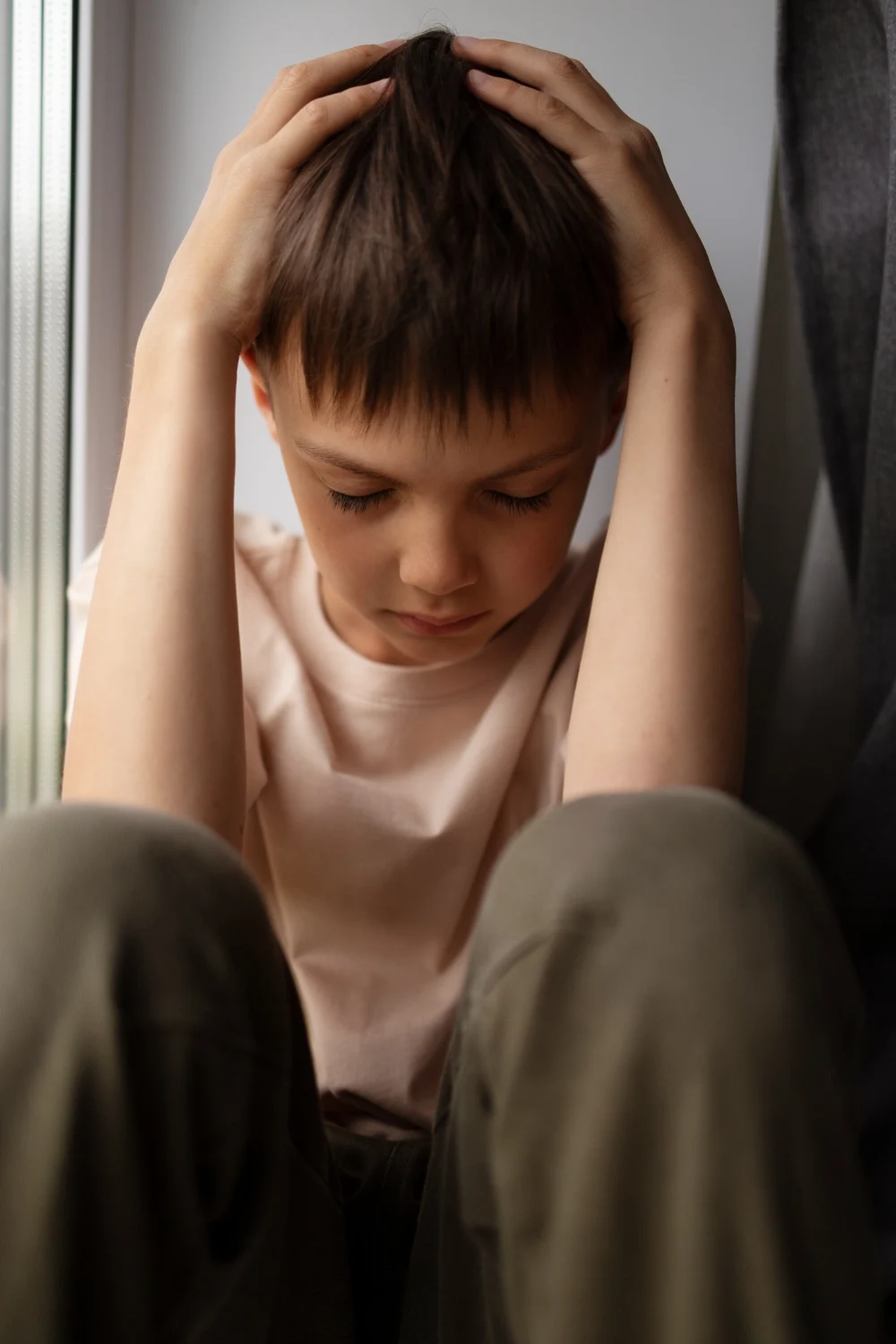
Distinguishing between autism vs trauma requires a detective’s eye. We rely on several key differentiators during differential diagnosis.
1. Timing of Onset
This is the most critical factor.
- Autism: Symptoms must be present in the early developmental period (usually before age 3), even if they weren’t fully recognized until later. Parents might report, “He never liked being held as a baby,” or “She lined up her toys instead of playing with them at age 2.”
- Trauma: Symptoms typically mark a “change.” Parents might say, “He was a happy, chatty kid until the accident/divorce, and then he stopped talking.”
2. Special Interests
- Autism: Deep, passionate interests (dinosaurs, trains, coding) are a hallmark of autism. These interests bring joy and energy.
- Trauma: Trauma does not typically create “special interests.” In fact, trauma usually causes anhedonia—a loss of interest in things that used to be fun.
3. The “Why” Behind Social Issues
- Autism: “I don’t understand the rules of the game.” (Skill/Intuition gap).
- Trauma: “I know the rules, but I’m too scared to play.” (Safety gap).
The Coventry Grid
I often utilize tools like the Coventry Grid, which is an interview guide designed to help clinicians differentiate between autism attachment problems and trauma. It breaks down subtle differences in routine, eating habits, and play that might otherwise look identical.
High-Functioning Autism and Trauma
The intersection becomes even murkier when we discuss high-functioning autism and trauma (often referred to as Low Support Needs autism).
Adults with high-functioning autism have often spent their entire lives “masking”—hiding their autistic traits to fit in. This act of masking is, in itself, a form of chronic stress that can lead to trauma responses.
The “Double Whammy” of Undiagnosed Autism
Many of the adults I diagnose were missed as children. They grew up believing they were “broken,” “lazy,” or “weird.” This internalized shame acts as a complex trauma.
- Bullying: Autistic children are often targeted by peers, leading to deep-seated social anxiety and PTSD that persists into adulthood.
- Gaslighting: When an autistic person says, “That light hurts my eyes,” and is told “Don’t be dramatic,” they learn to distrust their own senses. This is a form of sensory trauma.
Undiagnosed autism trauma often presents as:
- Burnout: A total collapse of functioning after years of masking.
- Fawning: A trauma response where the person becomes overly people-pleasing to avoid conflict, often losing their own identity in the process.
Trauma and Autism in Children
When assessing trauma and autism in children, we have to be incredibly careful. Children often cannot articulate, “I am having a flashback.” They simply act out.
Communication Barriers
An autistic child with limited verbal skills is at a horrifyingly higher risk for abuse because perpetrators know the child cannot easily report what happened.
- Behavior as Communication: If a non-speaking autistic child suddenly starts injuring themselves or regressing in toilet training, we must screen for trauma or abuse, rather than assuming it is just “autism getting worse.”
The “Freeze” Response
Autistic children are often compliant and quiet in new situations. While teachers might see a “good student,” a trauma-informed lens might see a child in a functional freeze state—terrified to move or make a mistake.
Here is the second half of the comprehensive guide on the intersection of autism and trauma.
Autism and Trauma Response
When an autistic individual with a history of trauma faces a stressor, their reaction is often intense and instantaneous. This is because their nervous system is already operating at a higher baseline of arousal due to sensory sensitivities.
We often talk about the “Four Fs” of trauma response, but in autism, they look slightly different.
1. Fight (Meltdown)
- Traditional View: Aggression or arguing.
- Autistic Lens: This is often a meltdown. When the brain is overloaded (sensory or emotional), the “fight” switch flips not to hurt others, but to make the input stop. It is a biological discharge of energy.
2. Flight (Elopement)
- Traditional View: Running away from danger.
- Autistic Lens: This is elopement. An autistic child or adult might abruptly leave a room, hide in a closet, or bolt from a building. This is a desperate attempt to regulate the nervous system by finding a low-sensory environment.
3. Freeze (Shutdown)
- Traditional View: Feeling paralyzed or unable to move.
- Autistic Lens: This is a shutdown. The person may go non-verbal, stare into space, or become unresponsive. To an outsider, it looks like “ignoring,” but internally, their processing has gone offline to preserve energy.
4. Fawn (Masking)
- Traditional View: People-pleasing to avoid conflict.
- Autistic Lens: This is extreme masking. An autistic trauma survivor might obsessively follow rules, mimic others’ behavior, or suppress their own needs to avoid being singled out or punished.
Autism and Trauma Treatment
Treating autism and trauma requires a specialized approach. Standard talk therapy often fails because it relies heavily on abstract emotional processing, which can be difficult for autistic brains.
Autism and trauma treatment must be neuro-affirming. This means we don’t try to “fix” the autism; we heal the trauma while respecting the autistic identity.
Trauma-Informed Care for Autistic Individuals
Before any therapy begins, the environment must be safe.
- Sensory Safety: Therapy rooms should have low lighting, fidget tools, and minimal noise.
- Predictability: Therapists should explain exactly what will happen in the session. Surprises are triggers.
- Communication Choice: Patients should be allowed to write, draw, or use AAC devices if speaking is too hard.
Evidence-Based Trauma Therapies
- TF-CBT (Trauma-Focused Cognitive Behavioral Therapy):
- Adaptation: We use concrete visuals (charts, drawings) rather than just talking. We focus on how thoughts (“The world is dangerous”) affect feelings, but we validate that for an autistic person, the world can be unpredictable.
- EMDR (Eye Movement Desensitization and Reprocessing):
- Adaptation: Is EMDR safe for autistic adults? Yes, but standard protocols must be modified. The bilateral stimulation (eye movements/tapping) can be overstimulating. We often use shorter sets and focus more on “resourcing” (building a safe place) before processing memories.
- Somatic Therapies:
- Since trauma lives in the body, therapies that focus on physical sensation (like Somatic Experiencing) can be powerful. However, for those with interoception issues (trouble feeling their body), we start very slowly.
Why Standard Trauma Therapy May Need Modification
- Literal Thinking: Metaphors used in therapy (“Put your worries in a box”) might be confusing. We use direct language.
- Processing Speed: I often use the “10-Second Rule” in therapy—waiting longer for a response to allow the client to process the question without pressure.
When to See a Trauma Specialist or Trauma Psychiatrist

If you suspect you or your child is dealing with both conditions, you need a provider who understands the nuance.
When to seek a specialist:
- If “standard” autism support (like social skills groups) is making anxiety worse.
- If the person is having flashbacks or nightmares.
- If there is a history of significant abuse, neglect, or medical trauma.
What to look for in a provider: Look for a trauma therapist or trauma psychiatrist who explicitly lists “neurodivergent-affirming” or “autism-informed” in their profile. A psychiatrist can help manage severe anxiety or sleep disturbances with medication, but medication alone cannot heal trauma.
Autism and Trauma — Calming Anxious Brains
Healing happens in the nervous system, not just the mind. We use “bottom-up” regulation to signal safety.
1. Sensory Regulation as Safety
For an autistic person, a weighted blanket isn’t just cozy—it is a medical device. Deep pressure stimulation releases serotonin and calms the fight-or-flight response.
- Strategy: Create a “sensory safety plan.” Know exactly what smells, textures, or sounds bring you back to baseline.
2. Grounding Exercises
- 5-4-3-2-1 Technique: Name 5 things you see, 4 you can touch, 3 you hear, 2 you smell, 1 you taste. This pulls the brain out of a flashback and into the present.
- Stimming: Allow and encourage rocking, hand-flapping, or vocalizing. This is the body’s natural way of processing adrenaline.
3. Routine as an Anchor
Trauma creates chaos; autism craves order. Restoring a predictable daily routine (eating, sleeping, and waking at the same times) is one of the most powerful ways to rebuild a sense of safety.
Why Autism Is Often Misdiagnosed as Trauma (and Vice Versa)
This happens because clinicians look at behavior instead of the cause.
- The Error: A child who screams when touched is diagnosed with PTSD (fear of abuse).
- The Reality: The child has tactile hypersensitivity (autism) and the touch physically hurts.
Conversely:
- The Error: An adult who avoids eye contact and has no friends is diagnosed with autism.
- The Reality: They have Complex PTSD from a history of domestic violence and have learned that invisibility equals safety.
Key Takeaway: A correct diagnosis is the only path to the right treatment. Treating sensory processing disorder with trauma therapy won’t work, and treating trauma with social skills training can be re-traumatizing.
Recommended Autism and Trauma Books
For those who want to read more, these are clinical resources I often recommend:
- “The Body Keeps the Score” by Bessel van der Kolk (The gold standard for trauma, though not specific to autism).
- “Unmasking Autism” by Devon Price (Excellent for understanding the trauma of living undiagnosed).
- “Trauma, Stigma, and Autism: Developing Resilience and Loosening the Grip of Shame” by Gordon Gates.
Frequently Asked Questions
Can trauma cause autism?
No. Autism is a neurodevelopmental condition present from birth. However, severe early trauma can cause symptoms (withdrawal, hypervigilance) that mimic autism.
How do you tell the difference between autism and trauma?
The key is developmental history. Autism traits (sensory issues, repetitive play) are usually present in early childhood before any trauma occurred. Trauma symptoms typically appear as a distinct change in behavior after a distressing event.
Can autistic people develop PTSD?
Yes. In fact, autistic individuals are at higher risk for developing PTSD because their nervous systems are often more sensitive to stressors, and they are statistically more vulnerable to bullying and victimization.
Is EMDR safe for autistic adults?
Yes, but it often requires adaptation. The bilateral stimulation can be intense, so a therapist experienced in neurodivergence should use shorter sets and focus heavily on stabilization before processing trauma memories.
Why are autistic individuals more vulnerable to trauma?
Social communication differences can make it harder to spot manipulative behavior (“red flags”). Additionally, the sensory environment of the modern world can be chronically traumatizing for a sensitive nervous system.
Conclusion: Healing the Whole Person
The intersection of autism and trauma is complex, but it is also a place of immense resilience. Autistic individuals have a unique capacity for deep focus, pattern recognition, and honesty—traits that can be powerful assets in the healing process.
By understanding the distinct needs of the autistic nervous system and validating the impact of trauma, we can move away from “fixing behaviors” and toward healing the human being. You are not broken; you are a survivor navigating a world that wasn’t built for your wiring, and that is a brave thing to be.
References & High-Quality Sources
- National Autistic Society (Trauma)
- Neuroclastic (Autistic-led resource)
- EMDR International Association
- Child Mind Institute (Trauma vs Autism)
- Autism Research Institute

Related Posts




Subscribe to Our Newsletter
Get mental health tips, updates, and resources delivered to your inbox.
MORE from Author
Read More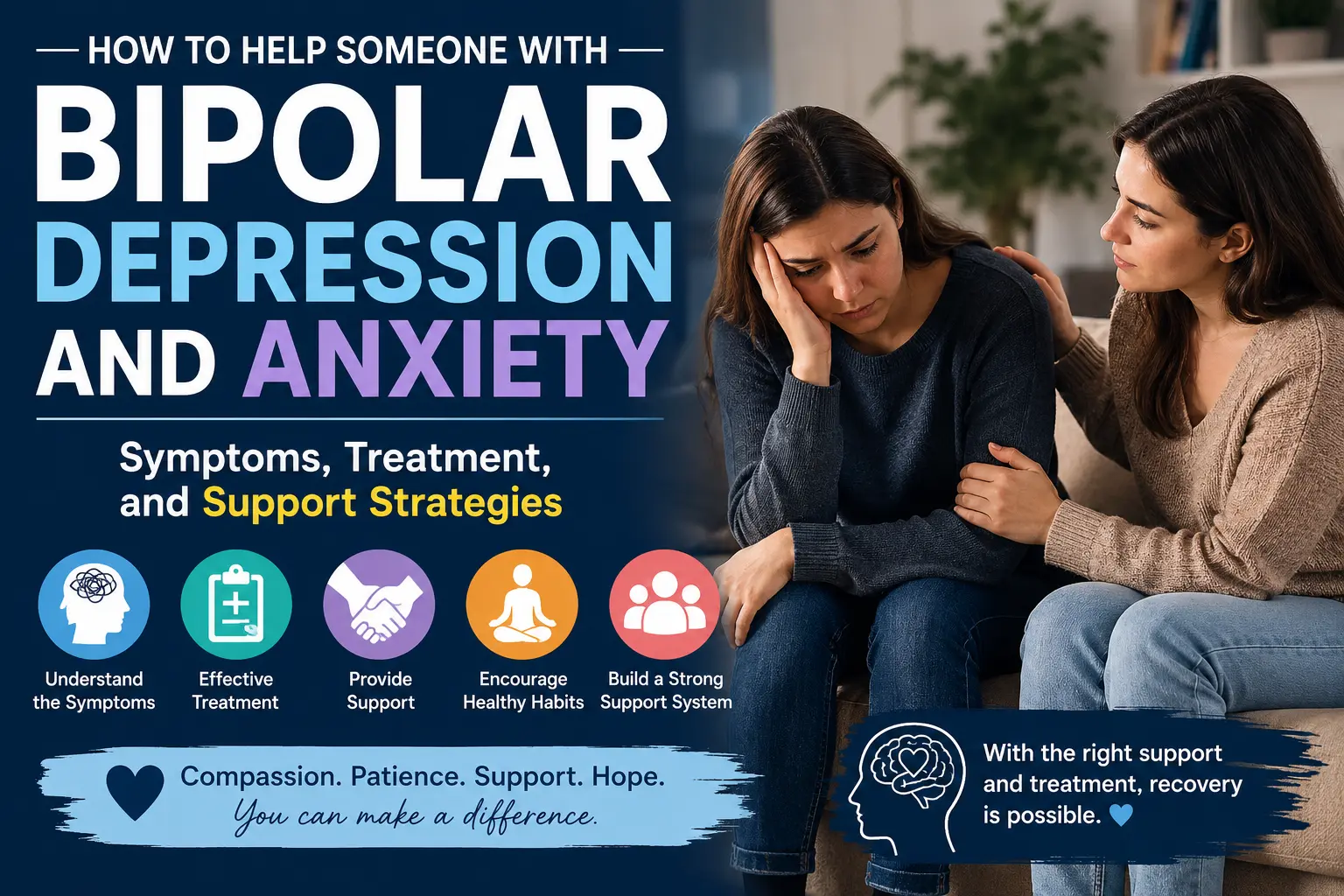 Watching someone you care about struggle with bipolar depression and anxiety can be heartbreaking. You may notice that they withdraw…
 In my practice as a clinical psychologist, I often observe that the difference between a patient who crumbles under pressure…
 We all have "up" days and "down" days. Perhaps you feel energized after a promotion or sluggish on a rainy…
 To define bipolar disorder accurately, we must look at it as a chronic mood dysregulation condition. In psychology and medicine,…
Are you looking for a Therapist?
Connect with qualified mental health professionals who understand
bipolar disorder, mood changes, and emotional challenges.
Private • Supportive • Confidential