
Borderline Personality Disorder DSM-5 (BPD) According to DSM-5 & DSM-5-TR

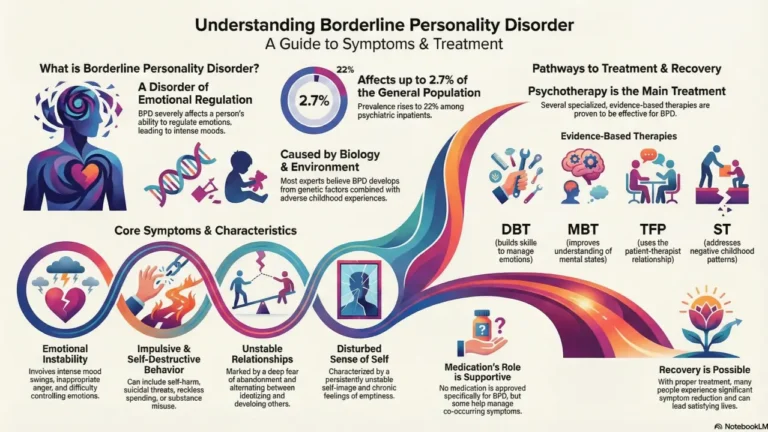
The diagnosis of mental health conditions requires a standardized language that clinicians, researchers, and insurance providers can all speak.
When discussing complex personality structures, specifically borderline personality disorder (BPD), the global gold standard is the Diagnostic and Statistical Manual of Mental Disorders (DSM-5).
Published by the American Psychiatric Association (APA), the DSM-5 provides the definitive framework for what is borderline personality disorder dsm 5. Understanding the official borderline personality disorder dsm5 definition is the first step toward moving away from social stigma and toward clinical clarity.
Whether you are a student, a mental health professional, or someone seeking self-understanding, this guide explores the nuances of the DSM-5 and its recent Text Revision (DSM-5-TR) regarding BPD.
Borderline Personality Disorder Through DSM-5
To define borderline personality disorder DSM-5 describes a pervasive pattern of instability. This instability affects four major areas of human experience: emotions, self-image, interpersonal relationships, and impulse control. Unlike occasional mood swings or temporary relationship conflicts, BPD represents a long-standing, ingrained way of interacting with the world.
The DSM-5 serves as the “bible” of psychiatry because it moves diagnosis away from subjective guesswork and toward evidence-based criteria. By utilizing the diagnostic borderline personality disorder dsm 5 framework, clinicians can ensure that a patient in New York receives the same standardized assessment as a patient in London.
Recently, the APA released the borderline personality disorder DSM-5 TR, which refined the text to include more culturally sensitive language and updated prevalence data, reinforcing BPD’s status as a critical focus of modern mental health.
Where Borderline Personality Disorder Appears in the DSM-5
Many people mistakenly believe that BPD is a mood disorder, similar to Bipolar Disorder or Major Depressive Disorder. However, the borderline personality disorder dsm 5 category is quite distinct.
The DSM-5 is organized into chapters. BPD is located within the chapter titled “Personality Disorders.” Within this chapter, disorders are grouped into three clusters:
- Cluster A: Odd or eccentric behaviors (e.g., Paranoid, Schizoid).
- Cluster B: Dramatic, emotional, or erratic behaviors.
- Cluster C: Anxious or fearful behaviors (e.g., Avoidant, Dependent).
Borderline personality disorder dsm 5 is a cornerstone of Cluster B. It is grouped alongside Antisocial, Histrionic, and Narcissistic personality disorders. This classification is vital because it highlights that the “moodiness” seen in BPD is a feature of a personality structure rather than a standalone chemical mood episode.
DSM-5 vs. DSM-5-TR: What Changed?
In March 2022, the APA released the borderline personality disorder DSM-5 TR (Text Revision). If you are looking for borderline personality disorder dsm 5 2018 data, you will find that the “TR” version is the most current and authoritative update.
Refinements in the DSM-5-TR
It is important to note that the core borderline personality disorder DSM-5TR criteria (the 9 traits) did not change. However, the descriptive text surrounding the criteria was significantly enhanced. The updates focused on:
- Prevalence Data: Updated statistics regarding how common BPD is in the general population.
- Risk and Prognostic Factors: Greater emphasis on the role of childhood neglect and neurobiological sensitivity.
- Gender Language: A shift toward more inclusive and precise language regarding how symptoms manifest across different demographics.
If you are a clinician documenting a case today, you are technically using the borderline personality disorder DSM-5 TR standard.
DSM-5 Definition of Borderline Personality Disorder
The official borderline personality disorder dsm5 definition describes it as a pervasive pattern of instability of interpersonal relationships, self-image, and affect, along with marked impulsivity.
For a clinician to define borderline personality disorder, DSM-5, in a patient, the pattern must meet three specific requirements:
- Pervasiveness: The traits must appear in many different areas of the person’s life (work, home, friendships).
- Duration: The pattern must be stable and long-standing, typically tracing back at least to adolescence or early adulthood.
- Impairment: The traits must cause significant distress or impairment in social, occupational, or other important areas of functioning.
The borderline personality disorder dsm 5 number associated with this diagnosis is 301.83. This code is used for clinical tracking and is essential for insurance reimbursement.
DSM-5 Diagnostic Criteria for Borderline Personality Disorder
This is the most critical section for anyone seeking diagnostic borderline personality disorder dsm 5 information. To be formally diagnosed, a person must meet at least five of the following nine criteria. These criteria represent a “menu” of symptoms that describe the internal and external chaos associated with the disorder.
The Diagnostic Threshold
The dsm 5 criteria for borderline are as follows:
- Frantic efforts to avoid real or imagined abandonment. (Note: This does not include suicidal or self-mutilating behavior covered in Criterion 5).
- A pattern of unstable and intense interpersonal relationships characterized by alternating between extremes of idealization and devaluation (often called “splitting”).
- Identity disturbance: Markedly and persistently unstable self-image or sense of self.
- Impulsivity in at least two areas that are potentially self-damaging (e.g., spending, sex, substance abuse, reckless driving, binge eating).
- Recurrent suicidal behavior, gestures, or threats, or self-mutilating behavior.
- Affective instability due to a marked reactivity of mood (e.g., intense episodic dysphoria, irritability, or anxiety usually lasting a few hours and only rarely more than a few days).
- Chronic feelings of emptiness.
- Inappropriate, intense anger or difficulty controlling anger (e.g., frequent displays of temper, constant anger, recurrent physical fights).
- Transient, stress-related paranoid ideation or severe dissociative symptoms.
The 9 Traits of BPD According to DSM-5
While the criteria are used for diagnosis, clinicians and patients often refer to the 9 traits of BPD. These traits provide a deeper look into the lived experience of the disorder.
Breakdown of Key Borderline Personality Traits DSM-5
- Fear of Abandonment: This is more than a simple fear of a breakup. It is a deep-seated panic that can be triggered by a partner being 15 minutes late or a friend cancelling lunch.
- Unstable Relationships: This is the “I hate you, don’t leave me” dynamic. One day, a person is an “angel,” and the next, they are a “villain.”
- Identity Disturbance: People with BPD often report feeling like a “chameleon.” They may change their career goals, religious beliefs, or even their personality to match the person they are with.
- Impulsivity: This represents a lack of an “emotional brake.” The urge to act is so strong that the consequences are ignored in the moment.
- Self-Harm / Suicidality: These behaviors are often used as a way to regulate unbearable emotional pain or to communicate the depth of suffering when words fail.
- Affective Instability: This is the “emotional third-degree burns” experience. Emotions hit harder and last longer than they do for others.
- Chronic Emptiness: Described as a “hole in the soul” or a feeling that there is no “there” there.
- Intense Anger: This anger is often “explosive” and feels uncontrollable, followed by deep shame.
- Dissociation / Paranoia: Under high stress, the mind may “check out” (dissociation) or become overly suspicious of others’ motives.
DSM-5 Symptoms of Borderline Personality Disorder
When we look at borderline personality disorder dsm 5 symptoms, we are looking at how the traits manifest in behavior. Symptoms are the outward evidence of the internal traits.
Behavioral vs. Cognitive Symptoms
The symptoms of borderline personality disorder dsm 5 outlines can be categorized for better understanding:
- Behavioral: Self-harm, explosive outbursts, frantic calling/texting, impulsive spending.
- Emotional: Sudden shifts from intense joy to crushing sadness, chronic irritability.
- Cognitive: “Black-and-white” thinking, feeling like the world is out to get you, losing touch with reality during crises.
The symptoms of borderline personality disorder, dsm 5 highlights, are significant because they lead to functional impairment. This means the symptoms make it difficult to hold down a job, graduate from school, or maintain a long-term marriage. This impairment is a requirement for the diagnosis.
Quiet Borderline Personality Disorder and DSM-5
A frequent point of confusion among patients and online communities is the concept of quiet borderline personality disorder, dsm 5. Many people identify with “acting in” rather than “acting out”—internalizing their rage, shame, and panic rather than directing it at others.
Is Quiet BPD an Official Diagnosis?
Strictly speaking, the DSM-5 does not recognize “Quiet BPD” as a separate diagnostic category. When you look at types of borderline personality disorder dsm 5, you will find only one unified set of criteria. However, clinicians recognize that the nine traits can manifest in two different directions:
- Classic BPD: High-conflict, externalized anger, and visible impulsivity.
- Quiet BPD: High-functioning “masking,” internalized self-loathing, and “silent” withdrawals.
An individual with Quiet BPD still meets the borderline personality disorder dsm 5 criteria, but their symptoms—such as “intense anger”—may be experienced as self-directed resentment or “shutting down” rather than a physical fight.
Types of Borderline Personality Disorder: DSM-5 Perspective
If you are searching for what the different types of borderline personality disorder are, you may encounter terms like “Petulant,” “Discouraged,” “Impulsive,” or “Self-Destructive.” These were popularized by psychologist Theodore Millon.
The DSM-5 Stance on Subtypes
The types of borderline personality disorder dsm 5 officially recognizes are… none. The DSM-5 focuses on a dimensional approach. Instead of pigeonholing patients into “types,” the DSM-5 allows clinicians to specify the severity and the specific combination of the 9 traits.
However, understanding clinical subtypes can be helpful for treatment planning:
- Discouraged (Quiet): Focuses on abandonment and shame.
- Petulant: Focuses on irritability and being “hard to please.”
- Impulsive: Focuses on risk-taking and thrill-seeking.
- Self-Destructive: Focuses on self-harm and internalized bitterness.
Regardless of the “type,” the borderline personality disorder dsm 5 diagnosis remains the same, ensuring that patients can access standardized care like DBT.
Risk Factors for Borderline Personality Disorder
What leads someone to meet the criteria for borderline personality disorder, dsm 5 lists? While the DSM focuses on what the disorder looks like, the text revision (DSM-5-TR) provides more detail on what are the risk factors for borderline personality disorder.
The Triple Threat of Risk
Research integrated into the DSM-5-TR points to three primary areas:
- Genetics: BPD is approximately five times more common among first-degree biological relatives of those with the disorder.
- Neurobiology: Studies show hyper-reactivity in the amygdala (the brain’s emotional center) and reduced “top-down” control from the prefrontal cortex.
- Environmental Trauma: A staggering percentage of those with BPD report childhood physical and sexual abuse, neglect, or early parental loss.
How Borderline Personality Disorder Is Diagnosed Using DSM-5
The path to a borderline personality disorder dsm 5 diagnosis is a rigorous clinical process. It is not something that can be determined in a single 15-minute appointment.
The Diagnostic Process
How is borderline personality disorder diagnosed by a professional?
- Structured Clinical Interview: Using tools like the SCID-5 to methodically go through the 9 criteria.
- Differential Diagnosis: The clinician must rule out Bipolar Disorder, PTSD, and other personality disorders (like Histrionic or Dependent).
- Comorbidity Check: Many people with BPD also have Depression or Anxiety. The clinician must determine which is the “primary” driver of the distress.
Because of the complexity, a borderline personality disorder dsm 5 test you find online is only a screening tool. A formal diagnosis requires a licensed psychiatrist or psychologist who understands the “pervasiveness” requirement of the DSM.
DSM-5 Codes, F Codes, and Classification Details
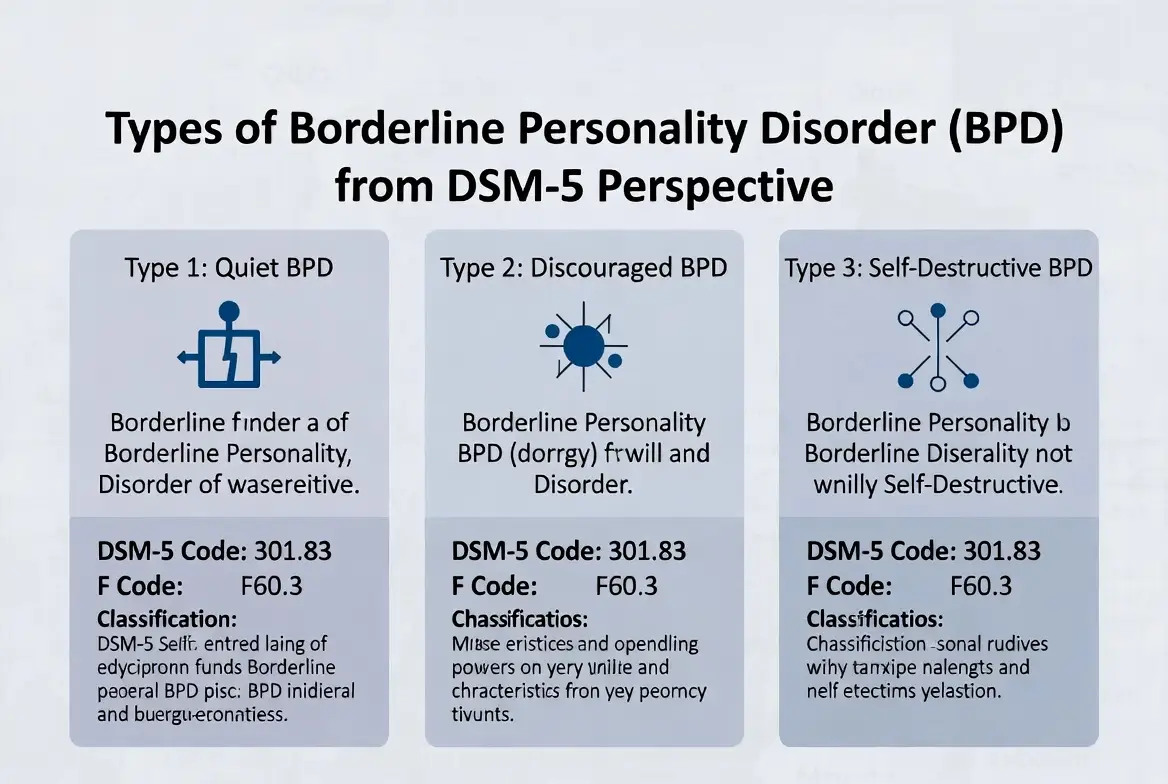
For administrative, insurance, and medical record purposes, specific codes are used to identify the disorder.
- DSM-5 Code: 301.83
- ICD-10/ICD-11 Code (F Code): F60.3
The borderline personality disorder DSM-5 F code is essential for insurance billing. When a therapist submits a claim for a borderline personality disorder dsm 5 diagnosis, they use the F60.3 code to ensure the treatment (like DBT) is recognized as medically necessary for that specific condition.
Frequently Asked Questions
What is borderline personality disorder, DSM-5?
It is a mental health diagnosis classified under Cluster B Personality Disorders. It is defined by a pervasive pattern of instability in relationships, self-image, and emotions, alongside marked impulsivity.
How many DSM-5 criteria are required for a BPD diagnosis?
A person must meet at least five of the nine diagnostic criteria outlined in the manual. These symptoms must be persistent, present in various contexts, and traceable back to at least early adulthood.
What are the symptoms of borderline personality disorder?
According to the DSM-5, symptoms include frantic efforts to avoid abandonment, unstable relationships, identity disturbance, impulsivity, suicidal or self-harming behavior, emotional reactivity, chronic emptiness, intense anger, and stress-related paranoia.
Is Quiet BPD in the DSM-5?
No, “Quiet BPD” is not an official DSM-5 subtype. It is a clinical term used to describe individuals who meet the standard borderline personality disorder dsm 5 criteria but internalize their symptoms rather than expressing them outwardly.
Is BPD a mood disorder?
No. In the DSM-5 structure, BPD is classified as a Personality Disorder. While it involves mood shifts, these shifts are reactive to environment and relationship stress, whereas mood disorders (like Bipolar) are typically more episodic and biologically driven.
What is the borderline personality disorder DSM-5 code?
The clinical code is 301.83. For billing and insurance purposes, using the ICD-10 system, it is coded as F60.3.
Conclusion
The borderline personality disorder dsm 5 framework is more than just a list of traits; it is a vital tool for ensuring that individuals receive the correct care.
Without the standardized criteria borderline personality disorder dsm 5 provides, many patients might be misdiagnosed with Bipolar Disorder or Depression, leading to treatments that do not address the root of the problem.
Accuracy in diagnosis leads to accuracy in treatment. When a clinician confirms a borderline personality disorder dsm 5 diagnosis, it opens the door to specialized, life-saving therapies like Dialectical Behavior Therapy (DBT) and Mentalization-Based Therapy (MBT).
If you recognize five or more of the traits discussed in this guide within yourself or a loved one, the next step is not to panic, but to seek a professional evaluation. BPD is no longer the “hopeless” diagnosis it was once thought to be.
With the clarity provided by the DSM-5 and the modern treatments available in 2026, a “life worth living”—full of stability, healthy relationships, and a clear sense of self—is entirely possible.
To ensure the clinical accuracy of an article regarding the DSM-5 and DSM-5-TR criteria for Borderline Personality Disorder, it is essential to cite the organizations that define these global standards.
Here are five authoritative references that provide the foundational data for BPD classification and diagnosis:
Authoritative References
1. American Psychiatric Association (APA) – DSM-5-TR
2. National Institute of Mental Health (NIMH) –BPD Research
3. Mayo Clinic –Diagnosis & Treatment of Personality Disorders
4. National Library of Medicine (PubMed) – The SCID-5 and BPD Diagnosis
5. Merck Manual (Professional Version) – Borderline Personality Disorder
Related Posts






Subscribe to Our Newsletter
Get mental health tips, updates, and resources delivered to your inbox.
MORE from Author
Read More In my practice as a clinical psychologist, I often observe that the difference between a patient who crumbles under pressure…
 We all have "up" days and "down" days. Perhaps you feel energized after a promotion or sluggish on a rainy…
 To define bipolar disorder accurately, we must look at it as a chronic mood dysregulation condition. In psychology and medicine,…
 To answer whether bipolar fits the bill, we first have to define what a neurodivergent person actually is. The term…
Are you looking for a Therapist?
Connect with qualified mental health professionals who understand
bipolar disorder, mood changes, and emotional challenges.
Private • Supportive • Confidential