
Borderline Personality Disorder Assessment: Tools, Tests, and Diagnosis Explained

Medically reviewed by Laura Athey Updated Date: February 22, 2026
Seeking a borderline personality disorder assessment is often the first step in a profound journey toward self-understanding and emotional stability. For many, the symptoms of Borderline Personality Disorder (BPD)—intense mood swings, unstable relationships, and a fragmented sense of self—have been present for years, yet remained nameless. Obtaining a formal borderline personality disorder diagnosis provides a clinical framework that transforms confusing emotional chaos into a treatable condition.
However, the path to diagnosis is frequently misunderstood. With the rise of social media “self-diagnoses” and a plethora of online quizzes, it is vital to distinguish between a casual screening and a comprehensive clinical evaluation. A professional borderline personality disorder assessment is not a single test; rather, it is a multi-layered process involving specialized borderline personality disorder assessment tools, clinical interviews, and a deep dive into an individual’s developmental history.
In this guide, we will explore how to assess for borderline personality disorder, the specific instruments clinicians use, the diagnostic criteria defined by the DSM-5, and why a professional evaluation is the only way to ensure an accurate and helpful result.
What Is a Borderline Personality Disorder Assessment?
A borderline personality disorder assessment is a comprehensive evaluation conducted by a mental health professional—typically a psychiatrist, psychologist, or specialized clinical social worker—to determine if an individual meets the criteria for BPD. Unlike a simple blood test for a physical ailment, assessing personality structures requires a nuanced look at long-term patterns of thinking, feeling, and behaving.
Clinical vs. Self-Report Assessments
Assessments generally fall into two categories:
- Self-Report Scales: These are the “checklists” or questionnaires filled out by the individual. While a borderline personality disorder assessment test of this nature is excellent for identifying symptoms, it cannot provide a final diagnosis on its own because individuals may lack insight into their own patterns or may be in the midst of an acute emotional crisis that skews results.
- Clinical/Structured Interviews: This is the gold standard. A clinician uses a borderline personality disorder assessment tool to guide a conversation, observing the patient’s emotional reactivity and relational style in real-time.
The Role of Multiple Tools
No single instrument is perfect. To provide an accurate borderline personality disorder diagnosis, clinicians often use a “battery” of tests. This might include a general personality inventory (to see if other disorders are present), a specific BPD screening tool, and a detailed review of life history. This multi-tool approach ensures that the clinician isn’t just seeing a “snapshot” of the person’s current mood, but a “video” of their lifelong personality structure.
How Borderline Personality Disorder Is Diagnosed Clinically
When a professional looks at how to assess for borderline personality disorder, they are looking for more than just a list of symptoms. They are looking for the pervasiveness and persistence of those symptoms across various life stages and environments.
Psychiatric Interviews and History
A clinician will spend significant time discussing your childhood, adolescent years, and current adult relationships. BPD symptoms usually emerge in late adolescence or early adulthood. Therefore, an assessment must track whether these patterns—such as the “push-pull” dynamic in relationships—have been consistent over time.
Functional Impairment
A key component of a borderline personality disorder diagnosis is determining how much the symptoms interfere with daily life. Does the individual struggle to keep a job? Are their romantic relationships frequently in crisis? Do they have a history of self-harm or impulsivity that leads to legal or financial trouble? Clinical significance is reached when these patterns cause “marked distress or impairment.”
The Challenge of Differential Diagnosis
One of the most complex parts of a borderline personality disorder assessment is distinguishing it from other conditions. Clinicians must rule out or identify “comorbidities” (co-occurring disorders) such as:
- Bipolar Disorder: Often confused with BPD due to mood swings, but the “cycling” in BPD is usually triggered by interpersonal events and lasts hours rather than days or weeks.
- CPTSD (Complex Post-Traumatic Stress Disorder): Shares symptoms of emotional dysregulation but has a different core focus regarding trauma.
- ADHD: Shares the trait of impulsivity but lacks the core abandonment fears seen in BPD.
DSM-5 Criteria and BPD Assessment Framework
The dsm 5 borderline personality disorder assessment is the standard framework used by professionals in North America. To receive a diagnosis, an individual must demonstrate a pervasive pattern of instability in interpersonal relationships, self-image, and affect, along with marked impulsivity, beginning by early adulthood.
The 9 Diagnostic Criteria
Clinicians look for at least five of the following nine criteria:
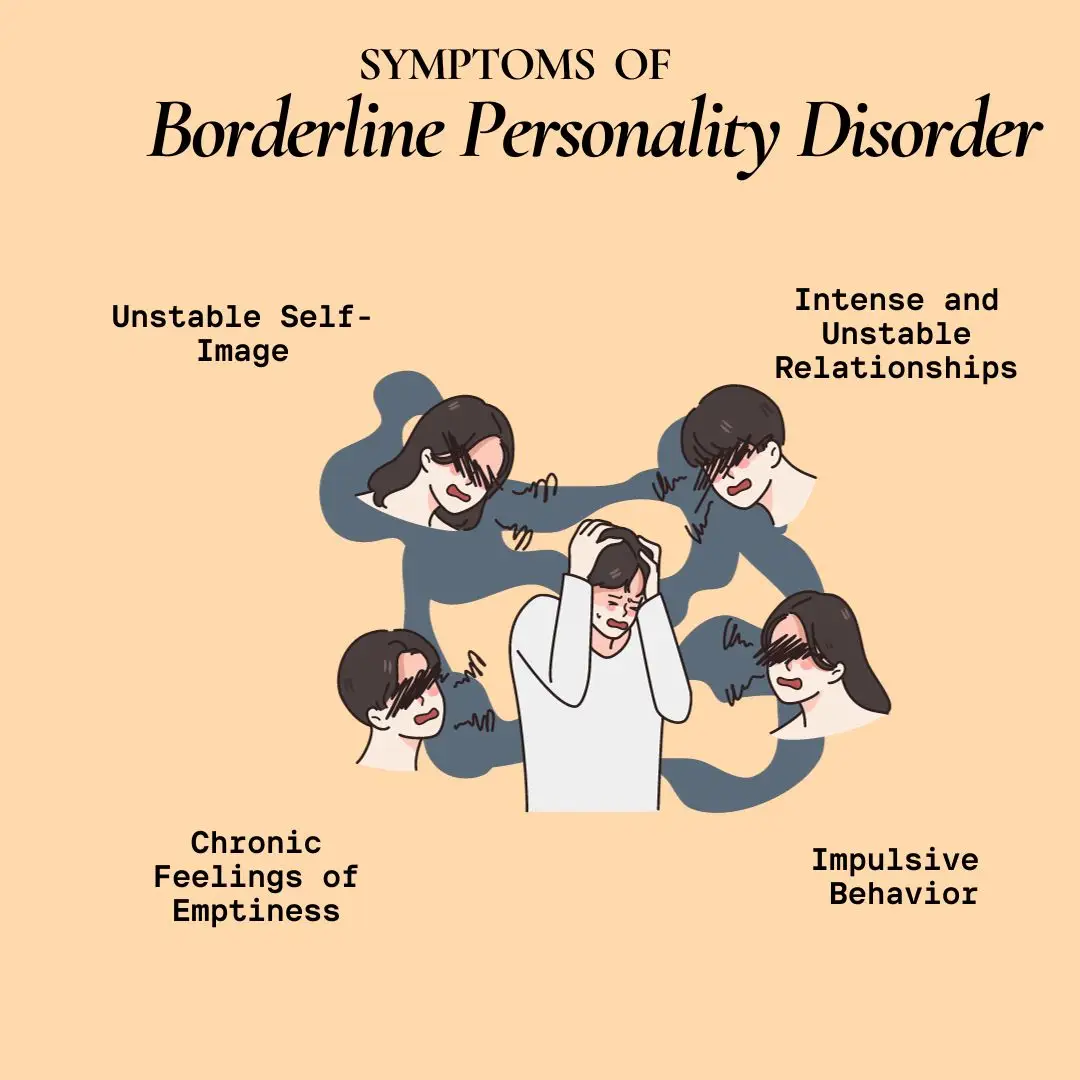
- Frantic efforts to avoid real or imagined abandonment.
- A pattern of unstable and intense interpersonal relationships (switching between idealization and devaluation).
- Identity disturbance: Markedly and persistently unstable self-image or sense of self.
- Impulsivity in at least two areas that are potentially self-damaging (e.g., spending, sex, substance abuse, reckless driving, binge eating).
- Recurrent suicidal behavior, gestures, or threats, or self-mutilating behavior.
- Affective instability due to a marked reactivity of mood (intense episodic dysphoria, irritability, or anxiety).
- Chronic feelings of emptiness.
- Inappropriate, intense anger or difficulty controlling anger.
- Transient, stress-related paranoid ideation or severe dissociative symptoms.
DSM-5 vs. Screening Tools
While a borderline personality disorder assessment scale or a BPD checklist might ask about these criteria in a “yes/no” format, a clinician uses the DSM-5 to assess the depth of these experiences. For example, many people feel “empty” occasionally, but a clinician determines if that emptiness is a “chronic” and defining characteristic of the person’s internal life.
Common Borderline Personality Disorder Assessment Tools
Professionals have developed several specialized borderline personality disorder assessment tools to help standardize the diagnostic process. These tools range from quick screenings to deep-dive clinical inventories.
| Tool Type | Examples | Purpose |
| Screening Instrument | MSI-BPD, ZAN-BPD | Quick identification of likely BPD traits; often used in ERs or intake. |
| Self-Report Questionnaire | BPQ, PAI-BPD | Comprehensive data on how the patient views their own symptoms. |
| Structured Interview | SCID-5-PD, SIDP-IV | The “Gold Standard”; clinician-led deep dive into personality. |
A borderline personality disorder questionnaire is often the first step in the process. If you score high on a self-report scale, the clinician will then move to a more formal, clinician-administered borderline personality disorder inventory (BPD-I) to confirm the findings.
Mclean Screening Instrument for BPD (MSI-BPD)

One of the most utilized tools in modern clinical settings is the McLean Screening Instrument for BPD (MSI-BPD). Developed by Dr. Mary Zanarini and colleagues at McLean Hospital—a Harvard Medical School affiliate—this instrument was designed to fill the need for a brief, reliable, and “clinically sensitive” screening tool.
What Is the McLean Screening Instrument for BPD?
The McLean screening instrument for BPD-MSI BPD consists of 10 “yes/no” items. Each item is directly mapped to the DSM-5 diagnostic criteria, but they are phrased in a way that is easily accessible to patients. Unlike longer diagnostic interviews that can take hours, the MSI-BPD can be completed in less than five minutes. It is often the first McLean borderline personality screen used when a patient presents with emotional instability in a primary care or emergency setting.
MSI-BPD Scoring and Interpretation
The scoring of the MSI-BPD test is straightforward: each “yes” answer receives one point.
- Cutoff Score: Generally, a score of 7 or higher suggests that a formal diagnosis of Borderline Personality Disorder is highly likely.
- Strengths: It has high “sensitivity,” meaning it is very good at catching people who actually have the disorder.
- Limitations: Because it is so brief, it can sometimes produce “false positives” in individuals with severe Bipolar Disorder or Complex PTSD. It is a door-opener, not a final verdict.
MSI-BPD PDF and Free Versions
Many clinicians and researchers look for a McLean Screening Instrument for BPD PDF to use as an initial intake form. While the tool is copyrighted, it is widely available for clinical use. It serves as an excellent borderline personality disorder assessment-free option for initial self-screening, provided the individual follows up with a professional to discuss the results.
Borderline Personality Questionnaire (BPQ)
For a more granular look at the specific traits that make up the disorder, clinicians often turn to the Borderline Personality Questionnaire (BPQ). Developed by Mary Christie and colleagues, this tool is designed to measure the intensity of BPD traits along a spectrum.
The BPQ is a trait-based assessment. While the DSM-5 focuses on whether you meet a diagnosis, the BPQ looks at how much of each trait you possess. It covers several critical domains:
- Impulsivity and Affective Instability
- Abandonment fears and Interpersonal fragility
- Self-image and Identity Disturbance
- Paranoid ideation and Dissociation
BPQ-80 and PDF Versions
The most common version is the Borderline Personality Questionnaire 80-question PDF. By asking 80 specific questions, the BPQ provides a profile of the individual. For example, some people with BPD struggle mostly with “identity,” while others struggle mostly with “anger.” The BPQ helps tailor a treatment plan by identifying which of these 80 areas are the most distressed. Finding a borderline personality disorder assessment PDF like the BPQ allows a clinician to see the “shape” of a person’s personality rather than just a “yes” or “no” diagnosis.
Borderline Personality Disorder Inventory (BPD-I)
The Borderline Personality Disorder Inventory (BPD-I) is a clinician-administered tool that bridges the gap between a quick screening and a heavy diagnostic interview.
As a borderline personality disorder assessment tool, the BPD-I is highly regarded for its “diagnostic depth.” It is often used in research settings to track whether a patient’s symptoms are improving over time during treatment, such as Dialectical Behavior Therapy (DBT). While a questionnaire like the MSI-BPD tells you if the symptoms are present, the BPD-I tells you how severe they are and how they fluctuate.
Other BPD Assessment Scales and Checklists
Beyond the major instruments, several other borderline personality disorder assessment scales are used depending on the clinical need.
- SCID-5-PD: This is the “gold standard” structured clinical interview. It is exhaustive and usually takes 45 to 90 minutes. It covers all personality disorders, ensuring that BPD is the correct diagnosis.
- PAI-BPD (Personality Assessment Inventory): This is a specialized subscale of a larger test that measures four key components: affective instability, identity problems, negative relationships, and self-harm.
- ZAN-BPD (Zanarini Rating Scale for Borderline Personality Disorder): This is often used by clinicians to measure the change in symptom severity over a week-long period.
If you are asked to fill out a BPD checklist at a therapist’s office, it is likely a variation of one of these validated scales. These lists help organize your thoughts so you don’t forget to mention specific symptoms during your session.
Free vs. Paid Borderline Personality Disorder
In the age of digital health, the availability of a borderline personality disorder assessment free of charge has skyrocketed. However, there is a significant difference in quality between a “BuzzFeed-style” quiz and a clinically validated PDF assessment.
Are Free BPD Tests Reliable?
Free tests found on reputable medical sites (like those offering a borderline personality disorder assessment pdf) are often just the MSI-BPD or BPQ translated into a digital format. These are reliable for screening. However, “free” tests that don’t cite their source or that claim to give you a definitive diagnosis without a doctor’s visit should be viewed with skepticism.
When Free Tests Are Helpful
A borderline personality disorder assessment test that you take for free online is helpful if:
- It gives you the language to describe your pain.
- It encourages you to book an appointment with a professional.
- It helps you realize that your struggles are part of a recognized medical condition, reducing the shame you might feel.
Online BPD Tests vs. Professional Evaluation
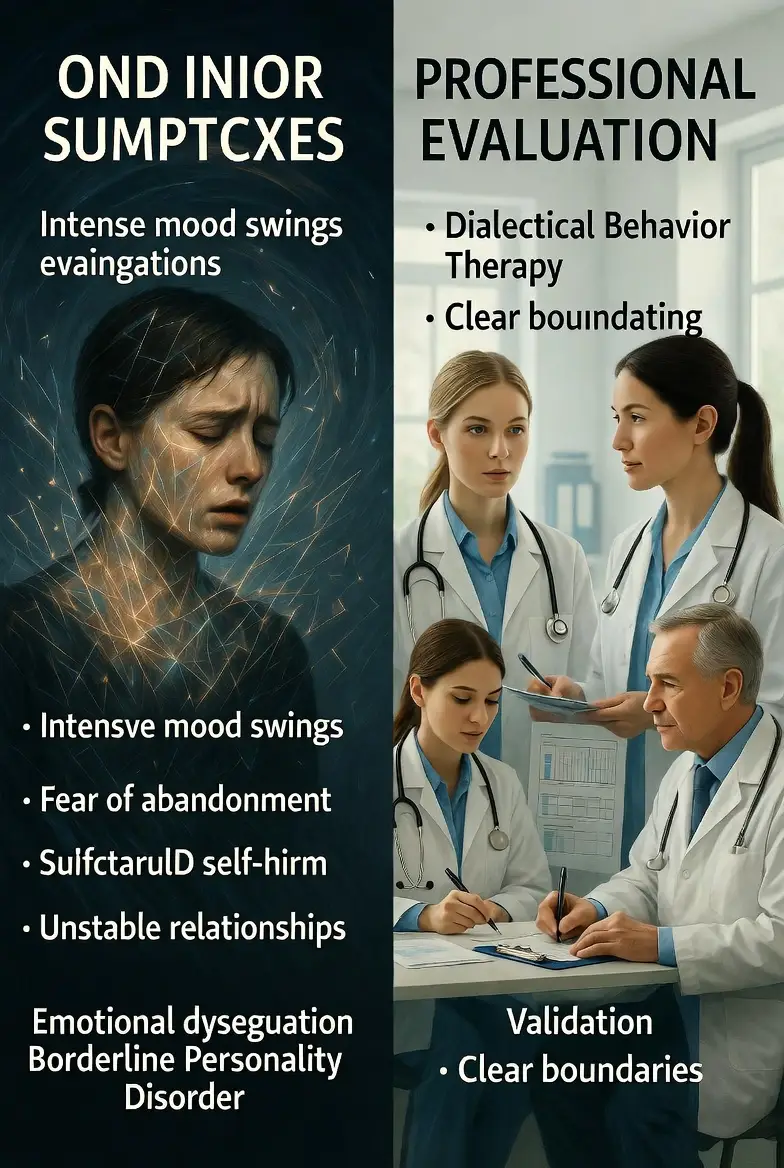
The biggest risk of relying solely on an online BPD test is the high rate of “false positives.” Because BPD symptoms overlap so heavily with other conditions, a quiz cannot perform a “differential diagnosis.”
For example, “feeling suicidal” is a criterion for BPD, but it is also a criterion for Major Depressive Disorder. “Intense anger” can be BPD, or it could be a symptom of PTSD or Bipolar mania. Only a professional evaluation can look at the “intent” and “timing” of these symptoms to determine if they are truly BPD. How to assess for borderline personality disorder is a skill that takes years of clinical training; an algorithm simply cannot account for the nuance of human attachment.
4 Types of BPD and How Assessments Identify Them
A modern borderline personality disorder assessment does not just look for a “yes” or “no” diagnosis; it often attempts to identify the specific “presentation” or subtype of the disorder. While the DSM-5 does not officially categorize BPD into types, clinicians frequently use Theodore Millon’s framework to understand how a patient’s personality is structured.
Identifying these through borderline personality disorder assessment tools helps tailor treatment. For example, a “Quiet” BPD patient needs a different intervention than an “Impulsive” one.
- Discouraged (Quiet) BPD: These individuals turn their emotions inward. They struggle with intense self-loathing, social withdrawal, and “imploding” rather than exploding. Assessments like the BPQ often show high scores in “identity disturbance” and “emptiness.”
- Petulant BPD: Characterized by irritability, defiance, and a “passive-aggressive” style of relating to others. They often feel unloved and resentful.
- Impulsive BPD: This type scores high on the “impulsivity” domain of a 4 types of BPD test. They may engage in thrill-seeking, substance use, or reckless spending to soothe their internal pain.
- Self-Destructive BPD: These individuals are often driven by a sense of unworthiness, leading to intentional self-sabotage, neglect of physical health, and high-risk behaviors.
What to Do After a Positive BPD Screening
Receiving a high score on a borderline personality disorder assessment or a preliminary borderline personality disorder diagnosis can feel overwhelming. However, this is actually the moment your recovery begins.
Next Steps
- Verify with a Specialist: If you took an online test or a brief screening like the MSI-BPD, your next step is a structured clinical interview with a personality disorder specialist.
- Talk to Your Clinician: Bring your borderline personality disorder assessment pdf results to your doctor. Use them as a conversation starter: “I took this screening, and I related strongly to these seven points. Can we discuss this?”
- Explore Treatment Options: BPD is highly treatable. Dialectical Behavior Therapy (DBT), Schema Therapy, and Mentalization-Based Treatment (MBT) are the gold standards for helping individuals move from “crisis” to “stability.”
Frequently Asked Questions
What tests are used to diagnose borderline personality disorder?
The most common tests include the McLean Screening Instrument (MSI-BPD) for initial screening, the Borderline Personality Questionnaire (BPQ) for trait measurement, and the SCID-5-PD for a definitive clinical diagnosis.
What is a BPD checklist?
A BPD checklist is typically a list of the 9 DSM-5 criteria. It is used by patients to track their symptoms and by clinicians to ensure they are covering all necessary diagnostic areas during an interview.
Can BPD be misdiagnosed?
Yes. BPD is frequently misdiagnosed as Bipolar II Disorder, CPTSD, or ADHD because they share traits like mood swings and impulsivity. This is why a professional borderline personality disorder assessment is essential—it looks for the specific “fear of abandonment” that is unique to BPD.
Is a PDF assessment valid?
A borderline personality disorder assessment pdf is valid if it is a digitized version of a peer-reviewed tool (like the BPQ or MSI-BPD). However, it is only a “valid” diagnosis if it is interpreted and confirmed by a licensed mental health professional.
Can teens be assessed for BPD?
Yes. While clinicians used to wait until age 18, the current medical consensus is that BPD can be diagnosed in adolescents if the symptoms are pervasive and have lasted for at least one year.
Conclusion
A borderline personality disorder assessment is not a label that defines your worth; it is a clinical tool that identifies your needs. Whether you are using a McLean screening instrument for BPD in a doctor’s office or exploring a borderline personality disorder assessment free online, the goal is the same: clarity.
Obtaining an accurate borderline personality disorder diagnosis removes the mystery from your suffering. It allows you to stop asking “What is wrong with me?” and start asking “What skills do I need to heal?” With the right borderline personality disorder assessment tools and the guidance of a compassionate professional, you can move toward a life where your emotions no longer control you, but serve as a guide to a deeper, more stable version of yourself.
Authoritative References
- National Institute of Mental Health (NIMH) – BPD Overview
- McLean Hospital – The MSI-BPD Tool
- The Millon Personality Group – BPD Subtypes
- American Psychiatric Association (APA) – DSM-5-TR
- National Education Alliance for Borderline Personality Disorder (NEA.BPD)

Related Posts





Subscribe to Our Newsletter
Get mental health tips, updates, and resources delivered to your inbox.
MORE from Author
Read More Watching someone you care about struggle with bipolar depression and anxiety can be heartbreaking. You may notice that they withdraw…
 In my practice as a clinical psychologist, I often observe that the difference between a patient who crumbles under pressure…
 We all have "up" days and "down" days. Perhaps you feel energized after a promotion or sluggish on a rainy…
 To define bipolar disorder accurately, we must look at it as a chronic mood dysregulation condition. In psychology and medicine,…
Are you looking for a Therapist?
Connect with qualified mental health professionals who understand
bipolar disorder, mood changes, and emotional challenges.
Private • Supportive • Confidential