
Is OCD Neurodivergent? What Are Some of the Symptoms of OCD?

Medically reviewed by Laura Athey Updated Date: March 16, 2026

Have you ever felt like your brain is stuck in a loop? Maybe you checked the stove five times before leaving the house. Or perhaps an unsettling thought popped into your head, and you couldn’t shake it. Many people ask, “What Are Some of the Symptoms of OCD?” and wonder if their brain just works differently.
In my clinical practice as a psychologist, I often hear patients describe their minds as “noisy.” They feel a deep sense of responsibility for things they cannot control. Obsessive-Compulsive Disorder is much more than just a love for tidiness or organization. It is a complex condition that involves intense, intrusive thoughts and repetitive actions.
Lately, a new question has emerged in the mental health community: is ocd neurodivergent? People want to know if their struggles are a “mental illness” or simply a “different type of brain.” This distinction matters for how we view ourselves and how we seek treatment. As we explore ocd neurodivergent symptoms, we can begin to see why this condition fits into the broader conversation about neurodiversity.
Is OCD Neurodivergent or a Mental Illness?
This is the “million-dollar question” in modern therapy. To answer whether OCD is ocd neurodivergent or a mental illness, we have to look at how we define these terms.
Historically, OCD has always been classified as a mental illness. It is listed clearly in the DSM-5. This framework focuses on impairment and the need for clinical treatment.
However, the neurodiversity movement has changed the conversation. Neurodivergent simply means that a brain processes information in a way that differs from the “neurotypical” norm. Under this umbrella, we find autism and ADHD. Many advocates argue that because OCD involves a fundamental difference in brain wiring, it should be considered neurodivergent, too.
What Disorders Fall Under Neurodivergent?

When we look at a neurodivergent disorders list, the boundaries can get blurry. Generally, the following are widely accepted:
- Autism Spectrum Disorder (ASD)
- Attention Deficit Hyperactivity Disorder (ADHD)
- Dyslexia and Dyscalculia
But what about mood or anxiety disorders? Many people ask, is bipolar neurodivergent or is BPD neurodivergent? In my work with Dr. Heylloyd, we often discuss how Bipolar Disorder involves long-term brain-based shifts in energy and mood. For this reason, many psychologists now include Bipolar and BPD in the neurodivergent category.
Conversely, questions like is depression neurodivergent or is anxiety neurodivergent are trickier. While these involve brain chemistry, they are often seen as “states” that can be resolved. However, chronic, life-long anxiety often mirrors the “wiring” of a neurodivergent brain.
Ultimately, is ocd considered neurodivergent? The answer is increasingly “yes” in a social context, even if it remains a “mental illness” in a medical one.
Common Symptoms and Behavioral Patterns
The core of OCD is a cycle of obsessions and compulsions. Intrusive thoughts are the “obsessions.” These are unwanted, distressing ideas that feel impossible to ignore. To quiet these thoughts, a person performs “compulsions.” These might include physical acts like washing hands or checking locks.
However, many symptoms are invisible. Reassurance seeking is a major one. You might constantly ask a partner, “Are you sure I didn’t offend anyone?” Mental rituals, like counting or repeating a “safe” word, are also common. Another hallmark is hyper-responsibility. This is the feeling that you must prevent a catastrophe by performing a specific task. These doubt loops can keep a person trapped for hours every day.
Examples of Obsessive Comparison Behavior
In the digital age, OCD often shows up in how we interact with information. We see this in examples of obsessive comparison behavior. Someone might spend six hours comparing two different toaster models because they fear making a “sub-optimal” choice.
This isn’t just being a “smart shopper.” It is a manifestation of the need for absolute certainty. The brain tells you that if you don’t find the perfect option, something terrible will happen. This type of “choice paralysis” is a significant part of the ocd neurodivergent experience.
Why Is OCD Considered Neurodivergent by Some?
If you look at a brain scan of someone with OCD, you will see real differences. This is how is ocd neurodivergent at a biological level. Research shows overactivity in the orbitofrontal cortex and the basal ganglia. These areas manage your “error detection” system.
In a neurotypical brain, when you finish a task, the brain sends a “done” signal. In an OCD brain, that signal never fires. This is why is ocd neurodivergent; the hardware is literally processing the world differently. We also see significant issues with serotonin regulation, which affects how signals move across the brain.
Biology, Genetics, and Disability
Is OCD genetic? Yes, there is a strong hereditary component. If a close relative has it, your chances are much higher. This points toward a biological root rather than just a reaction to stress.
Furthermore, is ocd a disability? Under the Americans with Disabilities Act (ADA), it certainly can be. If your symptoms prevent you from working or functioning normally, you are entitled to support.
One common misconception is: Is OCD on the autistic spectrum? No, it is not. However, the two share a lot of ground. Both involve a need for routine and repetitive behaviors, which is why they are often discussed together.
Decision Paralysis, Doubt & Consumer Choices In case of OCD

Living with OCD means that even small decisions feel like high-stakes gambles. In my clinical sessions, I often see how this spills over into financial life. When the brain cannot reach a state of “certainty,” even buying a pair of shoes becomes a source of agony.
Are Discount Brokers the Best Place to Buy ETFs?
When it comes to investing, the OCD brain can become obsessed with fees and risk. You might wonder, “Are Discount Brokers the Best Place to Buy ETFs?” For a neurotypical person, choosing between Vanguard Group or Fidelity Investments is a quick decision based on a few facts.
For someone with OCD, this triggers a loop of excessive comparison. They might check the expense ratio of an Exchange-traded fund (ETF) fifty times a day. They fear that a 0.01% difference in fees is a “wrong” choice that will ruin their future. This isn’t rational research; it is a compulsive attempt to eliminate all hidden risks.
Which Nike Sneakers Online Fit Your Running Style?
Even shopping for gear like Nike shoes can be a trigger. If you are searching for “Which Nike Sneakers Online Fit Your Running Style?“, you might find yourself reading 100+ reviews.
The doubt creeps in: “What if the Nike Air Zoom Pegasus causes me an injury? Should I have gotten the Nike React Infinity Run?” This perfectionism in product choice is a clear example of how intrusive doubt disrupts daily life. The fear of “buying the wrong model” becomes a paralyzing mental weight.
Are Physician Mortgages Worth It for Early-Career Doctors?
For medical professionals, the stakes are even higher. A young doctor might ask, “Are Physician Mortgages Worth It for Early-Career Doctors?” While banks like Bank of America or Wells Fargo offer specific loans, the OCD-prone doctor may spiral into catastrophic thinking.
They might spend all night comparing a physician’s mortgage loan to a traditional one, unable to commit. This decision-making fatigue is exhausting. In my practice, I work with many high-achieving professionals who are “successful” but are secretly drowning in these doubt-driven loops.
OCD vs Neurotypical Thinking Patterns
To truly understand is ocd neurodivergent or neurotypical, we must look at the “aftermath” of a decision. In a neurotypical brain, the decision-making process is a straight line. You identify a need, gather data, make a choice, and your brain moves on. The “error signal” shuts off once the task is complete.
In contrast, the OCD brain functions in a circular loop. You make a choice, but instead of relief, you feel a spike of “incomplete” energy. This leads to intense doubt. You then search for more information or seek reassurance from a friend.
This might provide a brief moment of peace, but soon, the doubt returns. This cycle is a hallmark of ocd neurodivergent symptoms.
For people with OCD, “good enough” is a foreign concept because the brain is biologically incapable of feeling that a task is truly “finished.”
Frequently Asked Questions
Is OCD neurodivergent?
Yes, in a social and neurological sense. While it is medically classified as a mental illness, it involves permanent differences in how the brain processes “error” signals. This makes it part of the neurodivergent family.
Is OCD a neurodivergent or a mental illness?
It is both. It is a clinical mental illness because it causes distress and impairment. However, it is neurodivergent because it represents a brain that is “wired” differently than the neurotypical average.
Does OCD count as neurodiversity?
Absolutely. Neurodiversity is the idea that there is no “correct” way for a brain to function. OCD is one of the many ways a human brain can process information and anxiety.
Is OCD genetic?
Yes. Research indicates that genetics plays a significant role. If you have a first-degree relative with OCD, your risk of developing the condition is significantly higher than that of the general population.
What disorders fall under neurodivergent?
The list usually includes Autism, ADHD, Dyslexia, and OCD. Many clinicians also include Bipolar Disorder and Tourette’s Syndrome because they involve lifelong neurological patterns.
Is OCD on the autistic spectrum?
No, they are separate conditions. However, many people are “twice-exceptional,” meaning they have both. They share features like a need for sameness and repetitive behaviors.
Is anxiety neurodivergent?
General anxiety is usually seen as a mental health condition that can be treated. However, if the anxiety is a lifelong, fundamental part of how your brain works, many advocates consider it a form of neurodivergence.
Is OCD a disability?
Yes. If OCD symptoms take up more than an hour a day or cause significant trouble at work or home, it is considered a disability under the ADA.
Conclusion
As we have explored, these conditions often weave together in ways that make “free” online tests insufficient. True healing happens when we look at the whole person—your history, your habits, and your biology. If you find yourself stuck in a loop of doubt or distraction, remember that your brain is simply trying to navigate a complex world. By identifying your specific triggers and using tools like the 10 3 rule, you can start to regain a sense of agency.
Do you feel like your symptoms are a lifelong companion or a recent response to stress? Taking that first step toward a professional, trauma-informed evaluation is the best way to move from confusion to clarity. You deserve a life that feels less like a survival mission and more like a journey you are actually present for.
References:
- International OCD Foundation (IOCDF)
- National Institute of Mental Health (NIMH) – OCD
- Stanford Medicine – Center for OCD and Related Disorders
- Harvard Health Publishing – Understanding OCD

Related Posts






Subscribe to Our Newsletter
Get mental health tips, updates, and resources delivered to your inbox.
MORE from Author
Read More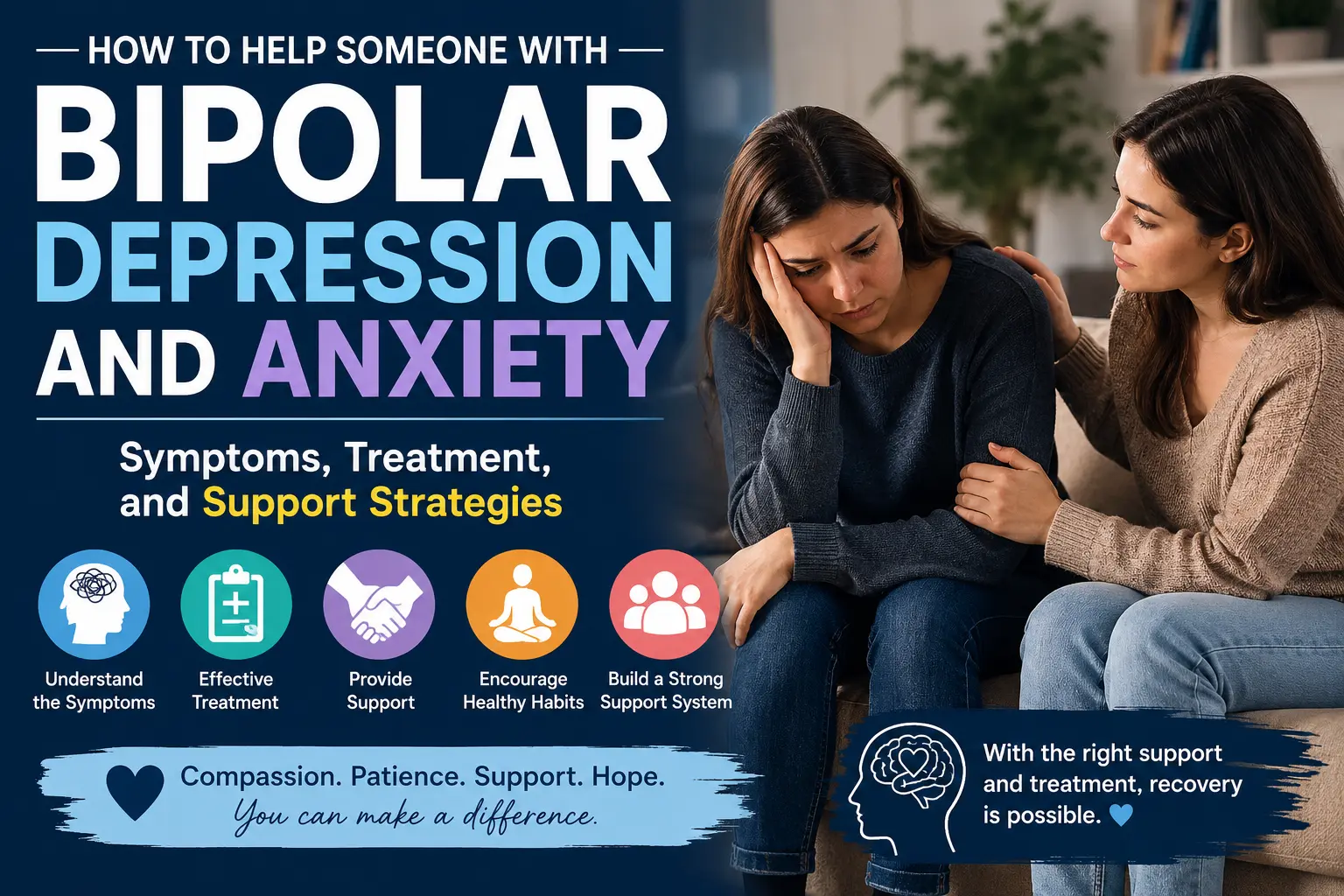 Watching someone you care about struggle with bipolar depression and anxiety can be heartbreaking. You may notice that they withdraw…
 In my practice as a clinical psychologist, I often observe that the difference between a patient who crumbles under pressure…
 We all have "up" days and "down" days. Perhaps you feel energized after a promotion or sluggish on a rainy…
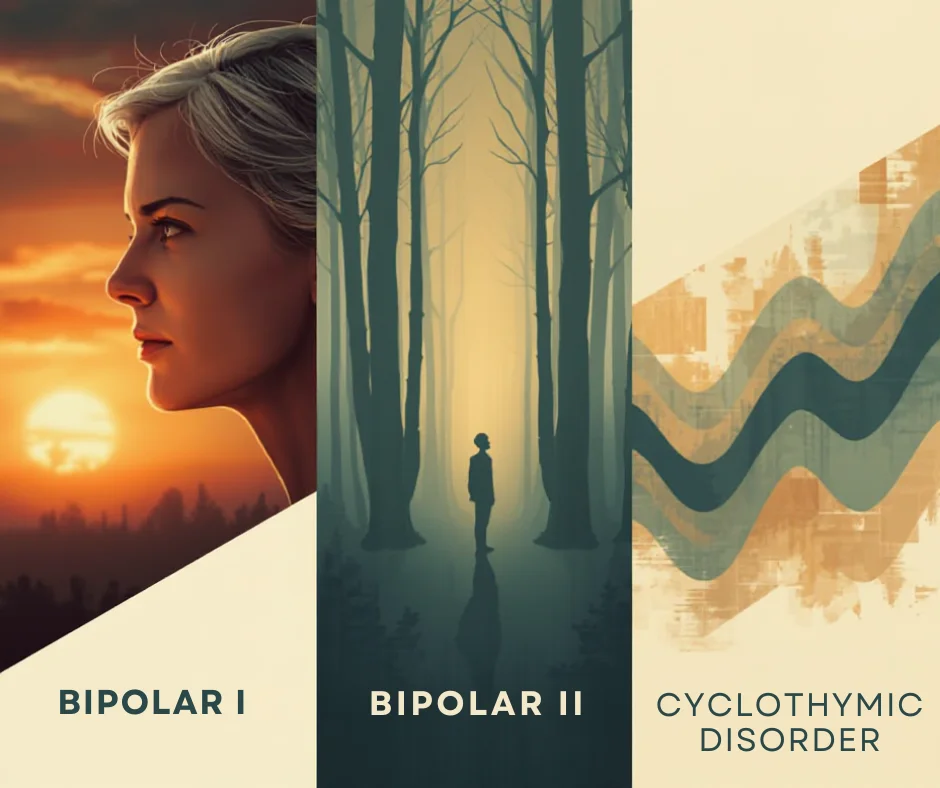 To define bipolar disorder accurately, we must look at it as a chronic mood dysregulation condition. In psychology and medicine,…
Are you looking for a Therapist?
Connect with qualified mental health professionals who understand
bipolar disorder, mood changes, and emotional challenges.
Private • Supportive • Confidential