
What Is Emotional Awareness: Definition, Levels, Examples & How to Improve Self-Awareness

Medically reviewed by Laura Athey Updated Date: February 23, 2026

In my practice, I often observe patients who describe their emotional lives as a series of sudden, inexplicable storms. They might say, “I just woke up angry,” or “Out of nowhere, I felt like I couldn’t breathe.” When we dig deeper, we usually find that the storm wasn’t sudden at all; rather, the individual lacked the internal “radar” to see it forming on the horizon.
This radar is what we call emotional awareness. It is the foundational skill of recognizing, understanding, and labeling your own feelings. Without it, you are essentially flying blind through your own life. Whether you are managing the complex mood shifts of bipolar disorder or simply trying to navigate a high-stress career, improving your emotional self-awareness is the first step toward true psychological stability.
What Is Emotional Awareness?
What is emotional awareness exactly? In the simplest terms, it is the ability to accurately recognize, understand, and label your own emotions and, in some cases, the emotions of others. While it sounds basic, the definition of emotional awareness encompasses a sophisticated neurological process. It requires you to pay attention to internal signals—like a racing heart or a sinking feeling in the stomach—and correctly identify the “data” those signals are sending.
In my work, I find that many people confuse “being emotional” with “being emotionally aware.” What does emotional awareness mean in a clinical context? It means being an observer of your emotions rather than a slave to them. If you are “being emotional,” you are simply reacting. If you are “emotionally aware,” you can say, “I notice I am feeling a surge of irritability right now, likely because I didn’t sleep well.” This distinction is the difference between an impulsive outburst and a managed response.
Emotional Awareness in Psychology: The Science of Feeling

To understand what emotional awareness is in psychology, we have to look at affective neuroscience. Our brains process emotions through a complex relay system involving the amygdala (our alarm center) and the prefrontal cortex (our logical center).
A key concept here is interoception—the sense of the internal state of the body. People with high emotional awareness have a “tuned-in” insula, a part of the brain that integrates bodily sensations into conscious feelings. When you practice emotional labeling (simply naming an emotion), you actually dampen the activity in your amygdala. This is why “naming it to tame it” works. By labeling a feeling, you move the activity from the reactive part of your brain to the Executive Function part of your brain, allowing for better regulation.
Emotional Awareness vs. Emotional Intelligence
While these terms are often used interchangeably, there is a distinct difference between emotional awareness and intelligence. Think of emotional awareness as the “raw data” and emotional intelligence as the “operating system” that uses that data.
| Emotional Awareness | Emotional Intelligence (EQ) |
| The ability to recognize feelings. | The ability to manage and use feelings. |
| An internal, foundational focus. | A broader, interpersonal skill set. |
| The “What”: Identifying the emotion. | The “How”: Knowing what to do with it. |
You cannot have high emotional intelligence without first developing emotional awareness. You can’t manage an emotion you haven’t identified yet. Therefore, awareness is the prerequisite for the more complex domains of EQ, such as social skills and relationship management.
Emotional Self-Awareness: The Internal Lens
What is emotional self-awareness? It is the capacity to recognize your own emotional states as they occur. This isn’t just about the “big” emotions like rage or grief; it’s about the subtle nuances. What is your emotional self-awareness like on a routine Tuesday? Can you feel the slight “thrum” of anxiety before a meeting, or the quiet “glow” of satisfaction after a job well done?
People with high self-awareness in emotional intelligence understand their triggers. They know that a certain tone of voice from a partner triggers a feeling of “not being heard,” which stems from childhood. They can see the patterns in their thought-feeling-action loops. In the context of bipolar disorder, emotional self-awareness is the primary tool for spotting “prodromal” symptoms—those tiny shifts in energy or mood that signal a coming manic or depressive episode.
In my clinical practice, I often observe a gap between a patient’s cognitive knowledge and their somatic (body) awareness. A patient might say, “I’m not stressed,” while their shoulders are up to their ears and their jaw is clenched. I call this the “Interoception Gap.” Because our culture prizes “thinking” over “feeling,” many of us have learned to disconnect from our bodies to keep working.
However, the body always keeps the score. I often tell my patients that their body is like a smoke detector; if you keep taking the batteries out to stop the noise, you won’t know when the house is on fire. Reconnecting with physical sensations is the fastest way to close this gap.
Social Awareness in Emotional Intelligence
While self-awareness looks inward, social awareness in emotional intelligence looks outward. It is the ability to perceive and understand the emotions of others, even when they aren’t explicitly stated. This involves reading non-verbal cues—facial expressions, body language, and tone of voice.
What is social emotional awareness in practice? It is the “room-reading” skill. It’s noticing that a coworker has become unusually quiet during a presentation and recognizing that they might be feeling overwhelmed or slighted. This allows for empathy and perspective-taking, which are essential for healthy relationships and leadership. Without social awareness, we often misinterpret others’ actions through the lens of our own insecurities, leading to unnecessary conflict.
The 5 Levels of Emotional Awareness
In psychology, we often refer to the Levels of Emotional Awareness Scale (LEAS). This model suggests that we process emotions in a hierarchy of complexity. Understanding the 5 levels of emotional awareness can help you identify where you might be getting “stuck.”
- Physical Sensations: You only notice bodily changes (e.g., “My stomach hurts,” “I feel hot”).
- Action Tendencies: You notice the urge to do something (e.g., “I feel like running away,” “I want to hit something”).
- Single Emotions: You can use a basic label (e.g., “I feel sad,” “I am angry”).
- Blended Emotions: You recognize you feel two things at once (e.g., “I am frustrated but also relieved”).
- Complex Emotional States: You recognize complexity in yourself and others (e.g., “I feel guilty about my anger because I know they are also struggling”).
Most of my work with patients involves moving them from Level 1 or 2 up to Level 4 or 5. This progression is what allows for sophisticated emotional understanding.
A Case From My Clinical Practice: “David” and the Silent Rage
I once worked with a patient named David who came to me because his wife said he was “cold and robotic.” David insisted he didn’t really “do” emotions. He lived entirely in his head. During one session, we were discussing a conflict he had at work. David insisted he was “fine,” but I noticed his hands were gripping the arms of the chair so hard his knuckles were white.
I asked David to stop talking and just notice his hands. We moved through the types of emotional awareness.
- Somatic: He noticed the tension in his hands and a “burn” in his chest.
- Cognitive: He realized he was thinking, “They think I’m incompetent.”
- Labeling: He finally admitted, “I think I’m actually terrified of failing.”
David wasn’t “robotic”; he was just stuck at Level 1 of the emotional awareness scale. He felt the physical sensations but had no bridge to the labels. By practicing being aware of your emotions in real-time, David was able to transform that “silent rage” into a productive conversation with his boss. He learned that awareness wasn’t a sign of weakness; it was his greatest source of data.
Why Is Emotional Awareness Important?

Why is emotional awareness important? Beyond just “feeling better,” it has tangible benefits for your physical and mental health.
- Better Decision Making: When you know how you feel, you can distinguish between a “gut feeling” and an “impulsive urge.”
- Stress Reduction: Labeling an emotion lowers cortisol levels.
- Stronger Relationships: Awareness prevents you from “projecting” your feelings onto others.
- Bipolar Stability: It allows for early intervention, potentially preventing a full-blown mood episode by recognizing the “micro-shifts” in mood.
What does it mean to be emotionally aware? It means you are no longer a passenger in your own life. You are the navigator.
You may be interested to read about emotional Regulation for feeling good.
Types of Emotional Awareness
In my clinical work, I often categorize awareness into specific “lenses” to help patients pinpoint where their perception might be failing. We generally look at four distinct types of emotional awareness:
- Internal (Self-Focused) Awareness: This is your ability to monitor the “weather” inside your own mind and body. It is the foundation of emotional self-awareness.
- External (Other-Focused) Awareness: This is the “social radar” mentioned earlier. It involves picking up on the micro-expressions and energy shifts of those around you.
- Cognitive Awareness: This is the intellectual side—identifying the thoughts and “stories” that trigger your feelings.
- Somatic (Body) Awareness: This is the ability to feel the physical manifestations of emotion, such as a “lump in the throat” or a “tight chest.”
By understanding these types of emotional awareness, you can see where you are naturally strong and where you might need more “training.” For example, some people are incredibly sensitive to others’ feelings (External) but are completely disconnected from their own needs (Internal).
Examples of Emotional Awareness
To see how this looks in the real world, let’s compare a low-awareness response to a high-awareness response across different scenarios. These emotional awareness examples illustrate the power of the “pause” that awareness provides.
| Scenario | Low Emotional Awareness | High Emotional Awareness |
| Workplace Criticism | Becomes defensive, snaps at the boss, and feels “targeted” all day. | Thinks: “I feel a sting of shame right now. That’s why I want to lash out. I’ll take a breath before responding.” |
| Relationship Conflict | Storms out of the room because they feel “annoyed” but don’t know why. | Says: “I’m noticing I feel overwhelmed and unheard. I need ten minutes to calm down so we can talk fairly.” |
| Bipolar “High” | Starts three new projects and spends $500, thinking they are just “finally happy.” | Observes: “My thoughts are racing and I feel a ‘buzz’ in my chest. This might be hypomania. I should call my doctor.” |
These examples of being emotionally aware show that awareness isn’t about not having feelings; it’s about having the “meta-awareness” to see the feeling while it’s happening.
Frequently Asked Questions
What is the difference between emotional awareness and emotional understanding?
Emotional awareness is the recognition that a feeling is present (e.g., “I feel bad”). Emotional understanding is the deeper interpretation of why it is there and what it means (e.g., “I feel bad because my boundaries were crossed, and that reminds me of a past trauma”).
What is the meaning of being emotional vs. emotionally aware?
The meaning of being emotional usually refers to high reactivity—being “tossed about” by your feelings. Being emotionally aware means you see the waves coming,
and you know how to navigate the boat. Awareness provides a “buffer” between the feeling and the reaction.
Can emotional awareness be too high?
In clinical terms, we sometimes see “hyper-vigilance,” where a person is so focused on internal sensations that it causes anxiety. The goal is “Wise Mind”—a balance of awareness and the ability to let go.
Is emotional awareness a part of social awareness?
Yes. Social awareness is essentially emotional awareness applied to other people. It is the “Social Awareness” quadrant of Goleman’s self-awareness in emotional intelligence model.
Conclusion
While improving emotional self-awareness is a powerful tool for wellness, it can sometimes be overwhelming for those with a history of trauma or severe Bipolar I episodes. If “tuning in” to your body causes panic or flashbacks, it is essential to do this work under the guidance of a licensed therapist.
Developing emotional awareness is a journey, not a destination. It is the process of becoming an expert on yourself. By learning to label your “internal weather,” you gain the power to choose your response to life’s storms. Whether you are using a definition of emotional awareness to better understand your diagnosis or practicing body scans to improve your relationships, you are building a more resilient, stable future.
References:
- American Psychological Association (APA) – Emotional Intelligence
- PubMed – The Levels of Emotional Awareness Scale (LEAS) Study
- NIMH – Bipolar Disorder and Emotional Regulation
- Greater Good Science Center – What is Emotional Intelligence?

Related Posts






Subscribe to Our Newsletter
Get mental health tips, updates, and resources delivered to your inbox.
MORE from Author
Read More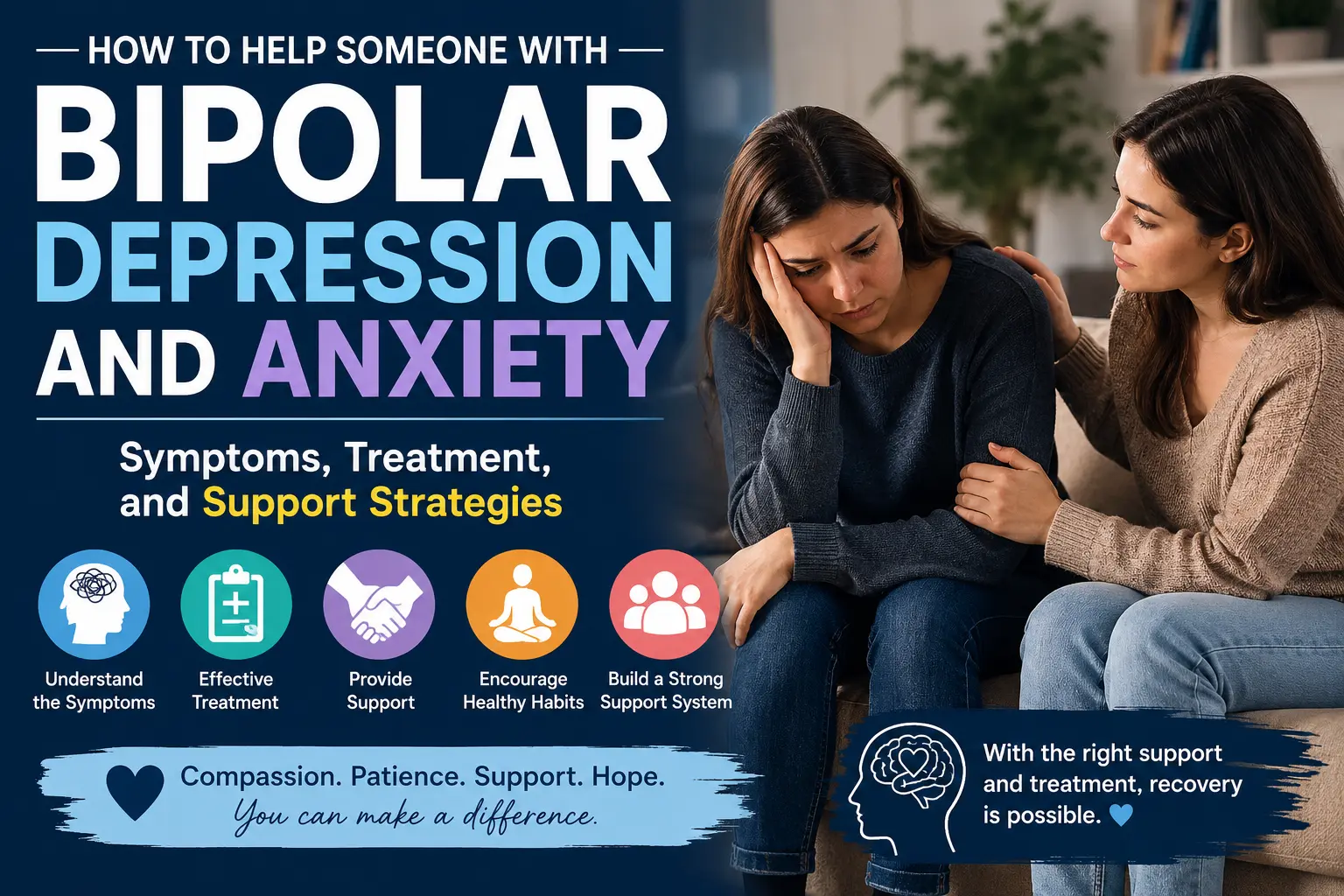 Watching someone you care about struggle with bipolar depression and anxiety can be heartbreaking. You may notice that they withdraw…
 In my practice as a clinical psychologist, I often observe that the difference between a patient who crumbles under pressure…
 We all have "up" days and "down" days. Perhaps you feel energized after a promotion or sluggish on a rainy…
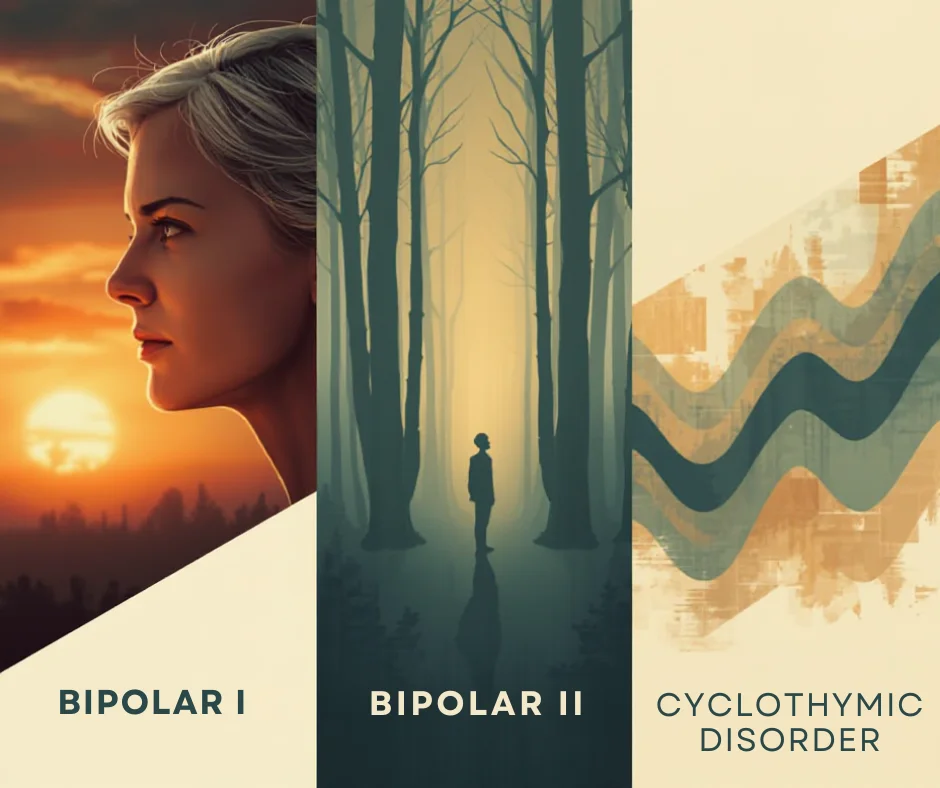 To define bipolar disorder accurately, we must look at it as a chronic mood dysregulation condition. In psychology and medicine,…
Are you looking for a Therapist?
Connect with qualified mental health professionals who understand
bipolar disorder, mood changes, and emotional challenges.
Private • Supportive • Confidential