
Bipolar Mania Treatment: What Happens in an Acute Manic Episode

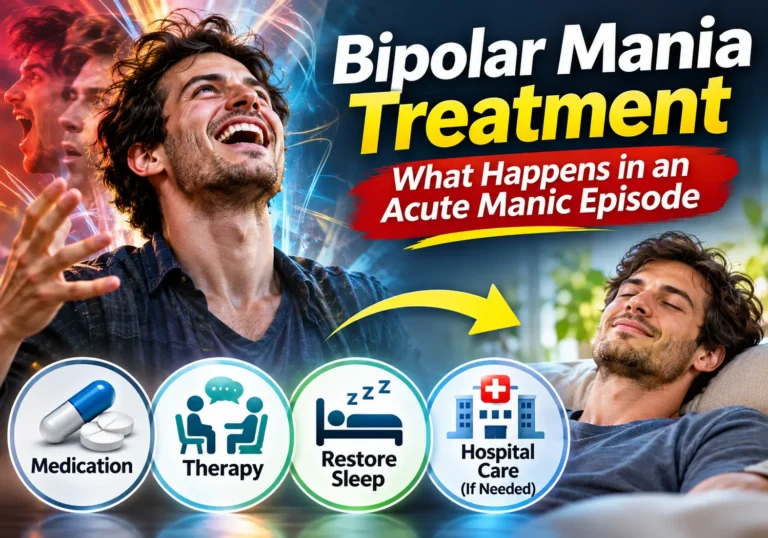
Bipolar mania treatment aims to bring a manic episode under control quickly and safely, then prevent the next one. For an acute manic episode, treatment usually means:
- fast-acting medication — most often an atypical antipsychotic (such as quetiapine, risperidone, aripiprazole or olanzapine), lithium or valproate, sometimes combined
- stopping anything that may be fueling the mania, such as antidepressants, stimulants or alcohol
- a calm, safe, low-stimulation environment
- restoring sleep
Many people with severe mania, psychosis or safety risks need a short hospital stay. With treatment, symptoms usually start to settle within days, with major improvement over two to three weeks. Recovery then continues for weeks to months.
This guide explains what a manic episode is, how doctors assess it, which medications work best and how they compare, what current guidelines recommend, what happens in the hospital, how families can help, and how to prevent mania from coming back.
Key takeaways
- Acute mania is a medical emergency in many cases, and it rarely resolves safely without treatment.
- First-line medications include lithium, quetiapine, divalproex (valproate), aripiprazole, risperidone, asenapine, paliperidone and cariprazine. Severe mania often needs a mood stabilizer plus an antipsychotic.
- A major 2011 Lancet analysis of 68 trials found that antipsychotics generally work faster and more strongly than mood stabilizers for acute mania.
- Antidepressants should be stopped during mania.
- Hospitalization is needed when there’s psychosis, danger to self or others, severe agitation, or an inability to function safely.
- After the episode, maintenance treatment — often with lithium — is recommended to prevent relapse.
Medication safety: This article is for education only. Treatment decisions, doses and monitoring must come from the prescriber who knows the person’s history.
See our full guide to bipolar disorder treatment and our overview of bipolar disorder medications.
What Is Bipolar Mania?
A manic episode is a distinct period of abnormally and persistently elevated, expansive or irritable mood, with increased energy or activity. It lasts at least 7 days, or any length of time if hospitalization is needed. Mania defines bipolar I disorder — see what is bipolar 1?
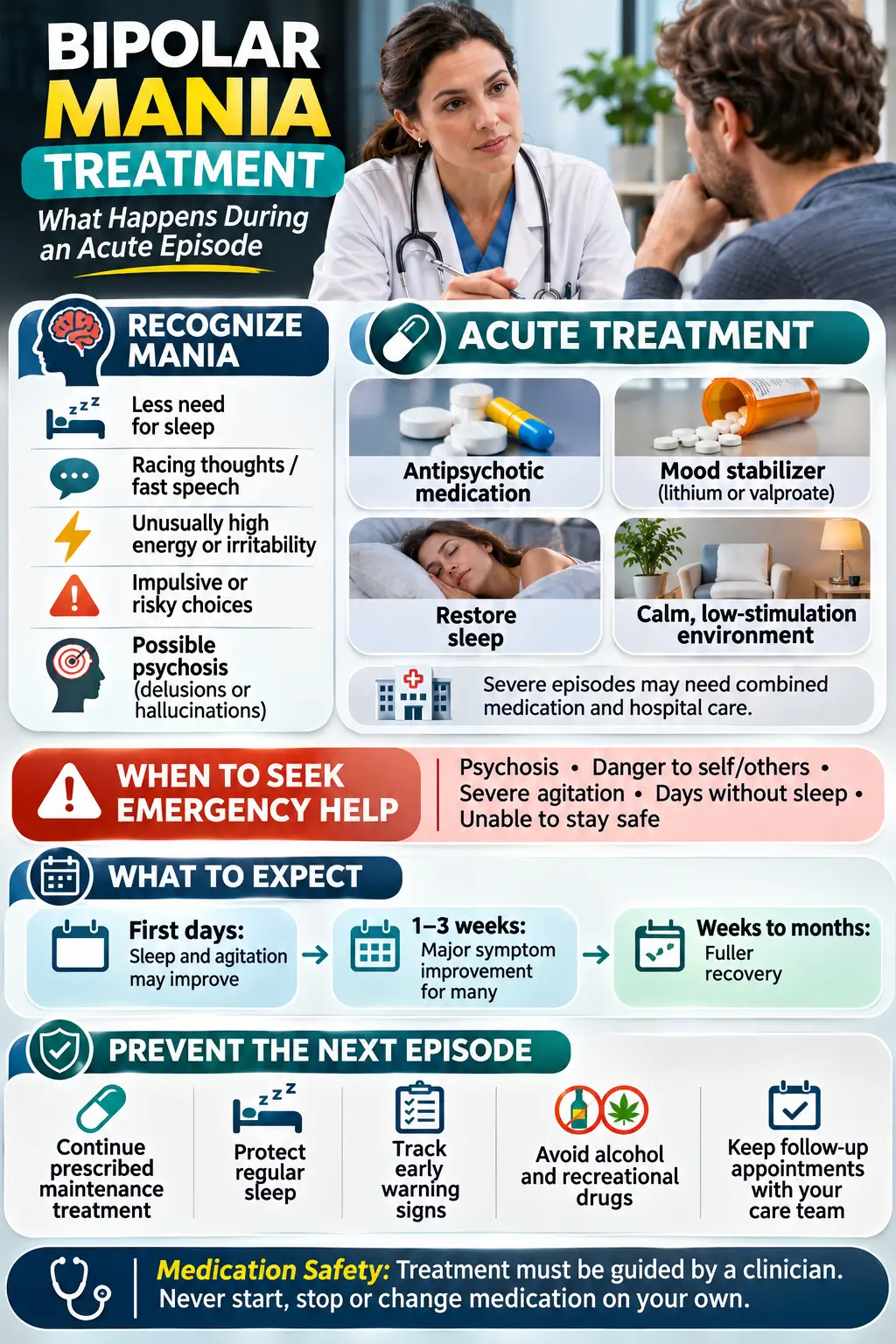
During mania, a person typically has at least three of these symptoms (four if the mood is only irritable):
- Decreased need for sleep — feeling rested after three hours or less
- Grandiosity or inflated self-esteem
- Rapid, pressured speech
- Racing thoughts or flight of ideas
- Distractibility
- Increased goal-directed activity or restless agitation
- Risky behavior — spending sprees, sexual risk-taking, reckless driving, impulsive business decisions
Severe mania can include psychosis (delusions or hallucinations) and can make a person unable to recognize they’re ill. See bipolar psychosis, hallucinations vs delusions and disorganized thinking.
Mania vs hypomania
Hypomania has similar symptoms but is milder. It lasts at least 4 days, doesn’t cause severe impairment or psychosis, and doesn’t require hospitalization. It’s the defining “high” of bipolar type 2. Hypomania still needs attention because it can escalate or be followed by depression — see signs of hypomania vs normal happiness.
Mania with mixed features
Some people have manic symptoms at the same time as depressive ones, such as despair, guilt or suicidal thoughts. This state carries a higher risk and influences medication choice. See bipolar mixed episode.
Bipolar Mania Treatment Goals
Acute mania treatment has clear goals:
- Ensure safety — of the person and others
- Calm agitation and restore sleep quickly
- Resolve manic and psychotic symptoms
- Prevent harm from impulsive decisions (financial, legal, relationships, health)
- Avoid a swing into depression afterwards
- Set up long-term maintenance treatment to prevent future episodes
How Is Bipolar Mania Treated? The First Steps
1. A full assessment
Before or alongside treatment, the clinical team will:
- Confirm it’s mania — not a reaction to drugs, steroids or a medical condition. Thyroid disease, brain injury, infections, dementia and some medications can cause manic-like symptoms. See substance-induced mood disorder and thyroid and bipolar.
- Check safety — suicide risk, aggression, psychosis, ability to eat, drink and sleep
- Review medications — including antidepressants, stimulants, steroids and supplements
- Screen for alcohol and drug use
- Order tests — blood count, kidney, liver and thyroid function, pregnancy test where relevant, drug screen, and lithium or valproate levels if the person already takes them
- Talk to family or friends, with permission, because people in mania often underestimate their symptoms
2. Stop what may be fueling the mania
- Antidepressants are usually stopped or tapered, because they can trigger or worsen mania. See manic switch.
- Stimulants, high doses of caffeine, alcohol and recreational drugs should be stopped.
- Steroids and other triggering medicines are reviewed with the prescribing doctor.
3. Start or adjust antimanic medication
- Already taking a mood stabilizer? The dose and blood level are checked and optimized, and an antipsychotic is often added.
- Not taking one? A first-line medication is started.
4. Protect sleep and reduce stimulation
Sleep is both a symptom and a driver of mania. Restoring sleep — sometimes with short-term sedatives — is one of the fastest ways to calm an episode. A quiet environment with few demands, limited screens and minimal conflict also helps. See bipolar sleep and bipolar insomnia.
Medications Used to Treat Bipolar Mania
Atypical antipsychotics
Atypical (second-generation) antipsychotics are now the most commonly used treatment for acute mania. They tend to work faster than lithium, often within days, and they help with agitation, sleep and psychosis. Options include:
- Quetiapine
- Risperidone (and paliperidone)
- Aripiprazole
- Olanzapine
- Asenapine
- Cariprazine
- Ziprasidone
- Milsaperidone (Bysanti), approved by the FDA in February 2026 for acute manic or mixed episodes of bipolar I
Haloperidol, an older antipsychotic, is also highly effective for acute mania. It’s used especially in emergencies, though it carries a higher risk of movement side effects.
Common side effects include sedation, weight gain, raised blood sugar and cholesterol, restlessness (akathisia), stiffness and dizziness. See bipolar medications and weight gain, does quetiapine cause weight gain?, does Abilify cause weight gain? and tardive dyskinesia and bipolar disorder.
Lithium
Lithium is effective for acute mania, particularly “classic” euphoric mania. It’s also the gold standard for preventing future episodes and reducing suicide risk. It works more slowly than antipsychotics, usually over 1–3 weeks, so it’s often combined with an antipsychotic in severe mania. Lithium needs blood-level monitoring and checks of kidney and thyroid function. See lithium side effects and lithium toxicity symptoms.
Valproate (divalproex)
Valproate is effective for acute mania, including mixed features and rapid cycling. It can be started with a higher “loading” dose for faster effect. It requires blood tests (levels, liver function, platelets). It’s generally avoided in women who could become pregnant because of serious risks to a developing baby.
Carbamazepine
Carbamazepine (extended-release) is approved for mania. It’s usually a second-line option because it interacts with many medications, including hormonal contraceptives, and needs blood monitoring.
Benzodiazepines
Short-term benzodiazepines such as lorazepam or clonazepam are often used for agitation, anxiety and insomnia in the first days of treatment. They aren’t antimanic on their own and are usually tapered once the episode settles.
What doesn’t work for mania
Lamotrigine, gabapentin and topiramate have not been shown to treat acute mania better than placebo. Lamotrigine is useful for preventing bipolar depression, but it isn’t an antimanic drug — see lamotrigine.
Which Medication Works Best for Bipolar Mania?
The largest comparison of antimanic drugs, published in The Lancet in 2011 by Andrea Cipriani and colleagues, analyzed 68 randomized trials involving 16,073 adults with acute mania. It found:
- Antipsychotics were, overall, significantly more effective than mood stabilizers for acute mania.
- Haloperidol, risperidone and olanzapine had the largest effects.
- Olanzapine, risperidone and quetiapine were among the best tolerated, with fewer people stopping treatment.
- Lamotrigine, gabapentin and topiramate were no better than placebo.
These are averages from short-term trials. The best treatment for bipolar mania for a particular person depends on:
- past response
- side effects
- physical health
- whether there’s psychosis or mixed features
- pregnancy plans
- what will work best for long-term prevention
Lithium, for example, may act more slowly in acute mania, but it’s often the best long-term choice.
Bipolar Mania Treatment Guidelines
CANMAT/ISBD guidelines (international)
The Canadian Network for Mood and Anxiety Treatments and International Society for Bipolar Disorders (CANMAT/ISBD) guideline is the most widely used. Its recommendations for acute mania are:
| Line | Options |
|---|---|
| First-line, single medication | Lithium, quetiapine, divalproex, asenapine, aripiprazole, paliperidone, risperidone, cariprazine |
| First-line, combination | Quetiapine, aripiprazole, risperidone or asenapine added to lithium or divalproex |
| Second-line | Olanzapine, carbamazepine, olanzapine with lithium or divalproex, lithium with divalproex, ziprasidone, haloperidol, ECT |
| Third-line | Options such as clozapine, chlorpromazine, clonazepam and some combinations, for difficult cases |
| Not recommended | Monotherapy with gabapentin, topiramate, lamotrigine, verapamil or tiagabine |
Olanzapine is very effective, but it’s listed as second-line mainly because of its metabolic side effects.
NICE guidelines (UK)
The UK’s NICE guideline (CG185) recommends that, for someone not already on an antimanic medication, doctors first offer an antipsychotic — haloperidol, olanzapine, quetiapine or risperidone. If the first doesn’t work, they should try another of these. If that fails, they should consider adding lithium or valproate. People already taking lithium should have their level checked and dose optimized.
U.S. guidance
The U.S. VA/DoD guideline (2023) and the FDA’s approved indications broadly match these recommendations, supporting lithium, valproate and several atypical antipsychotics for acute mania.
Bipolar Mania Treatment Algorithm
The bipolar mania treatment algorithm below is a simplified version of how clinicians typically approach mania:
- Assess — confirm mania, rule out medical and substance causes, assess safety and decide on the level of care.
- Stop antidepressants and any triggering substances.
- Optimize the current mood stabilizer, if there is one (check the blood level).
- Start first-line treatment:
- Moderate mania: one first-line medication
- Severe mania or psychosis: a mood stabilizer (lithium or divalproex) plus an atypical antipsychotic
- Manage agitation and sleep with short-term benzodiazepines or sedating medication if needed.
- Review in 1–2 weeks. If there’s no meaningful improvement at an adequate dose, switch to or add another first-line option.
- If two or more options fail, consider second-line treatments, ECT or clozapine, and re-check the diagnosis, adherence and any substance use.
- Once the episode resolves, continue the effective treatment and plan maintenance therapy and psychotherapy.
Severe Mania, Emergencies and Psychiatric Hospitalization
When does bipolar mania require hospitalization?
Hospital treatment is usually needed when someone:
- Is at risk of suicide or of harming others
- Has psychosis — delusions or hallucinations
- Is severely agitated, aggressive or out of control
- Hasn’t slept for days or isn’t eating or drinking
- Is making dangerous decisions — for example, with money, driving or sexual safety
- Can’t take medication reliably or be kept safe at home
In some cases, if a person lacks insight and is at serious risk, they may be admitted involuntarily, under laws that vary by state and country.
What happens during hospitalization for bipolar mania?
- Assessment — physical exam, blood tests and a review of medications and substance use
- Rapid medication treatment — often combining an antipsychotic with lithium or valproate
- Agitation management — calm verbal de-escalation first; then oral medication, or rapid-acting injectable medication if necessary
- Safety and structure — a low-stimulation ward, regular meals and sleep, and protection from risky behavior
- Monitoring — symptoms, sleep, side effects and blood levels
- Family involvement and discharge planning — follow-up appointments, a relapse-prevention plan and support
Most inpatient stays for mania last one to a few weeks. The weeks after discharge are high-risk, so a prompt follow-up appointment matters.
Emergency treatment for severe agitation
In emergencies, clinicians try verbal de-escalation first. If medication is needed, options include oral or injectable antipsychotics (such as olanzapine, aripiprazole or haloperidol), sometimes with a benzodiazepine. Inhaled loxapine is another option in supervised settings. The goal is to calm the person enough to be safe and to start proper treatment, not to sedate them heavily.
Treatment-resistant mania
If mania doesn’t respond to two or more adequate treatments, options include:
- Combination therapy (mood stabilizer plus antipsychotic, if not already used)
- Electroconvulsive therapy (ECT) — highly effective for severe, psychotic or treatment-resistant mania, and for mania during pregnancy
- Clozapine — effective in refractory cases, with required blood monitoring
Clinicians will also re-check the diagnosis and look for hidden factors such as substance use, thyroid disease or medication non-adherence.
How Is Psychotic Mania Treated?
Mania with psychotic features — such as grandiose delusions, paranoia or hallucinations — is treated with an antipsychotic, usually combined with lithium or valproate, and often in the hospital. Psychotic symptoms usually improve as the mania settles. Psychosis in bipolar disorder is mood-related, and it doesn’t mean someone has schizophrenia. See bipolar psychosis and schizoaffective disorder.
Bipolar Mania Treatment in Adolescents and Special Situations
Teens
Mania in adolescents is treated with similar principles. Several medications are FDA-approved for young people with bipolar I mania, including:
- lithium
- risperidone
- aripiprazole
- quetiapine
- olanzapine
- asenapine
Young people are more prone to weight gain and metabolic side effects, so close monitoring and family involvement are essential. Diagnosis can be complicated by ADHD, trauma and normal mood changes — see emotional dysregulation in children.
Pregnancy and postpartum
Mania during pregnancy or after birth — including postpartum psychosis — is an emergency. Treatment balances risks to mother and baby. Valproate is avoided. Antipsychotics, lithium (with careful monitoring) and ECT are among the options. Specialist perinatal psychiatry input is ideal. See bipolar disorder symptoms in females.
Older adults
New-onset mania after age 50 should prompt a search for medical or neurological causes. Older adults often need lower doses, and they’re more sensitive to side effects and lithium toxicity. See does bipolar get worse with age?
Psychotherapy and Supportive Treatment During Mania
During acute mania, the priority is medication and safety; intensive talk therapy usually isn’t possible. Supportive care still matters:
- Simple, calm communication and clear routines
- Psychoeducation for the person and family once symptoms begin to settle
- Sleep and routine support
Once the episode resolves, structured psychotherapy — psychoeducation, family-focused therapy, interpersonal and social rhythm therapy (IPSRT) and CBT — helps prevent future episodes. It also helps the person understand their warning signs and rebuild after the episode. See what is the best therapy for bipolar disorder? and bipolar counseling.
Managing Bipolar Mania at Home: What Families Can Do
Milder mania or hypomania is sometimes managed as an outpatient, with close psychiatric follow-up. If you’re supporting someone at home:
- Stay calm and speak simply; avoid arguing with grandiose ideas
- Reduce stimulation — noise, screens, late nights and crowds
- Encourage sleep and regular meals
- Limit access to money, credit cards and car keys if the person has agreed to this in advance
- Remove alcohol and drugs
- Make sure medication is taken as prescribed
- Contact the care team early — don’t wait for a crisis
- Know when to get emergency help — any risk of harm, psychosis, or days without sleep
See how to deal with a bipolar person not on medication, walking on eggshells, what does bipolar anger feel like? and why bipolar relationships fail.
If you are in crisis: call or text 988 (Suicide & Crisis Lifeline, US) or go to the nearest emergency department. Outside the US, contact your local emergency number. If someone is in immediate danger, call 911 or your local emergency number.
How Long Does Bipolar Mania Treatment Take?
- First days: agitation and sleep often improve with antipsychotics or sedatives.
- 1–3 weeks: most people see major improvement in manic symptoms with effective medication. Lithium may take a little longer than antipsychotics.
- Weeks to months: full recovery, including the return of energy, judgment and normal functioning, takes longer. Many people feel exhausted afterwards, and some swing into depression.
- Without treatment, manic episodes historically lasted months and caused far more harm.
See how long do bipolar episodes last?
What Happens After a Manic Episode Ends?
The period after mania can be difficult:
- Post-manic depression is common; watch for low mood and hopelessness. See what is bipolar depression?
- Consequences of manic behavior — debts, damaged relationships, legal or work problems — may need practical support and repair.
- Shame or regret are common. Compassion and therapy help. See radical acceptance and feelings are not facts.
- Insight often returns, making this a good time to build a relapse-prevention plan.
Preventing Future Manic Episodes
Is long-term medication necessary after mania?
For most people with bipolar I, yes. Guidelines recommend maintenance treatment after a manic episode, often with the medication that worked during the episode. Lithium is the preferred long-term option for many people. Alternatives include quetiapine, valproate, aripiprazole and asenapine. Stopping medication — especially suddenly — is one of the strongest predictors of relapse. See why do people with bipolar stop taking medication? and mood stabilizers vs antipsychotics.
Relapse prevention strategies
- Know your early warning signs — such as sleeping less without feeling tired, talking faster, new big plans or irritability. See early warning signs of a bipolar episode.
- Protect sleep with regular bed and wake times — see bipolar daylight saving time for planning around clock changes.
- Avoid alcohol, drugs and unsupervised antidepressants.
- Track mood daily — see our bipolar mood chart and mood tracking apps for bipolar.
- Know your triggers — see the bipolar episode triggers list and can stress cause bipolar symptoms?
- Write a wellness and crisis plan, including advance agreements about money and decisions during mania. See bipolar wellness plan.
Frequently Asked Questions About Bipolar Mania Treatment
What is the best treatment for bipolar mania?
There’s no single best treatment for everyone. Atypical antipsychotics such as risperidone, olanzapine and quetiapine, along with lithium and valproate, are the main options. A major analysis found antipsychotics generally work faster than mood stabilizers, and severe mania often needs a combination. The right choice depends on symptoms, side effects, history and long-term prevention needs.
What is the first-line treatment for acute mania?
International CANMAT/ISBD guidelines list lithium, quetiapine, divalproex, asenapine, aripiprazole, paliperidone, risperidone and cariprazine as first-line single treatments. Adding quetiapine, aripiprazole, risperidone or asenapine to lithium or divalproex is first-line combination treatment. The UK’s NICE guideline recommends starting with an antipsychotic such as haloperidol, olanzapine, quetiapine or risperidone. Severe cases often need a combination.
How long does it take to treat a manic episode?
Agitation and sleep often improve within days of starting treatment. Most people see major improvement in manic symptoms within one to three weeks, though lithium may work more slowly than antipsychotics. Full recovery of energy, judgment and daily functioning can take weeks to months, and some people experience depression afterwards, so follow-up care is important.
Can bipolar mania go away without treatment?
Manic episodes can eventually end without treatment, but untreated mania historically lasted months and often caused serious harm, including financial ruin, damaged relationships, legal problems, injuries and psychosis. Treatment shortens episodes, reduces risk and helps prevent future ones. Anyone showing signs of mania should be evaluated by a mental health professional as soon as possible.
When should someone with bipolar mania be hospitalized?
Hospitalization is usually needed when someone with mania has psychosis, is at risk of harming themselves or others, is severely agitated, hasn’t slept for days, isn’t eating or drinking, or is making dangerous decisions. It’s also needed if they can’t be kept safe or take medication reliably at home. Call 988 or emergency services in a crisis.
Is lithium used to treat acute manic episodes?
Yes. Lithium is a first-line treatment for acute mania, especially classic euphoric mania, and it’s the gold standard for preventing future episodes and reducing suicide risk. It works more slowly than antipsychotics, usually over one to three weeks, so it’s often combined with an antipsychotic in severe mania. Lithium requires regular blood-level and kidney monitoring.
Can bipolar mania be treated with one medication?
Often, yes. Moderate mania frequently responds to a single first-line medication, such as lithium, valproate or an atypical antipsychotic. Severe mania, psychotic mania or mania that doesn’t respond to one drug is commonly treated with a combination — usually a mood stabilizer plus an antipsychotic. Your psychiatrist will adjust treatment based on response and side effects.
Can mania come back after treatment?
Yes. Bipolar disorder is recurrent, so mania can return, especially if medication is stopped, sleep is disrupted, or alcohol, drugs or antidepressants trigger a relapse. Maintenance treatment, often with lithium, regular sleep, mood tracking, avoiding triggers and a written relapse-prevention plan greatly reduce the risk of future manic episodes and help catch early warning signs sooner.
The Bottom Line on Bipolar Mania Treatment
Bipolar mania treatment works best when it starts early. Acute mania is usually treated with:
- an atypical antipsychotic, lithium or valproate — often in combination for severe episodes
- stopping antidepressants and substances
- restoring sleep
- a safe, calm environment, which sometimes means a short hospital stay
Most people improve substantially within one to three weeks. The real goal, though, is preventing the next episode through maintenance medication, psychotherapy, protected sleep and early action on warning signs. If you think you or someone you love is experiencing mania, contact a mental health professional now, and use emergency services if there’s any risk of harm. Learn more in our guides to bipolar disorder, bipolar symptoms and bipolar disorder treatment.
References
- Cipriani A, Barbui C, Salanti G, et al. Comparative efficacy and acceptability of antimanic drugs in acute mania: a multiple-treatments meta-analysis. The Lancet. 2011;378(9799):1306–1315 (summary: The Mental Elf).
- Yatham LN, Kennedy SH, Parikh SV, et al. CANMAT and ISBD 2018 guidelines for the management of patients with bipolar disorder. Bipolar Disorders. 2018;20(2):97–170.
- National Institute for Health and Care Excellence. Bipolar disorder: assessment and management (CG185).
- American Academy of Family Physicians. Management of Bipolar Disorder: Guidelines From the VA/DoD. American Family Physician. 2024.
- Psychiatric Times. FDA approves Bysanti for treatment of bipolar 1 disorder and schizophrenia. February 20, 2026.
- National Institute of Mental Health. Bipolar Disorder.
- American Psychiatric Association. Diagnostic and Statistical Manual of Mental Disorders, 5th ed., Text Revision (DSM-5-TR). 2022.
- NHS. Bipolar disorder – Treatment.
Related Posts
Subscribe to Our Newsletter
Get mental health tips, updates, and resources delivered to your inbox.
MORE from Author
Read More Bipolar mania treatment aims to bring a manic episode under control quickly and safely, then prevent the next one. For…
 The history of bipolar disorder stretches back about 2,000 years. Ancient Greek physicians described mania and melancholia. Aretaeus of Cappadocia,…
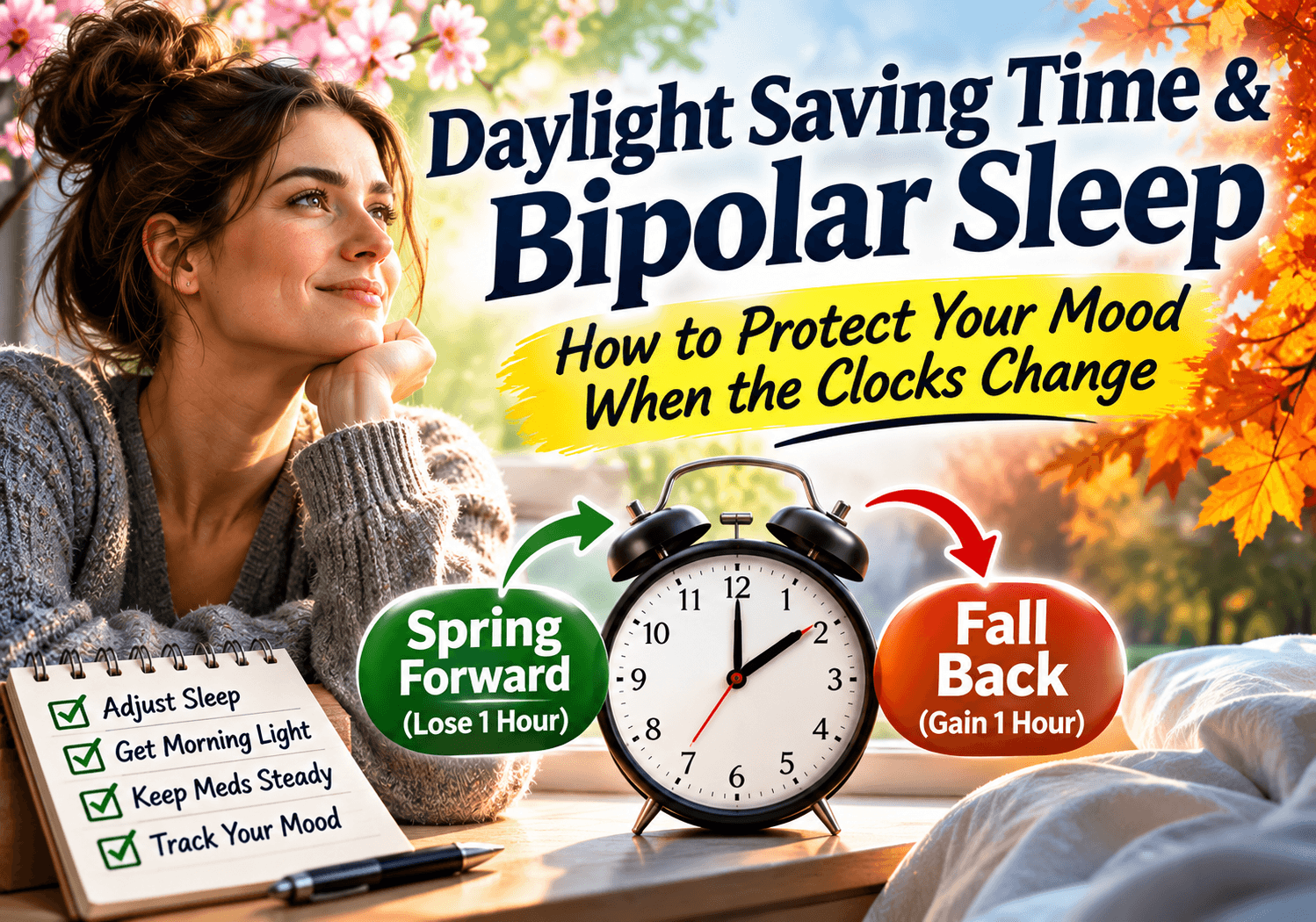 Bipolar daylight saving time questions come up twice a year for good reason. When the clocks change, your sleep, body…
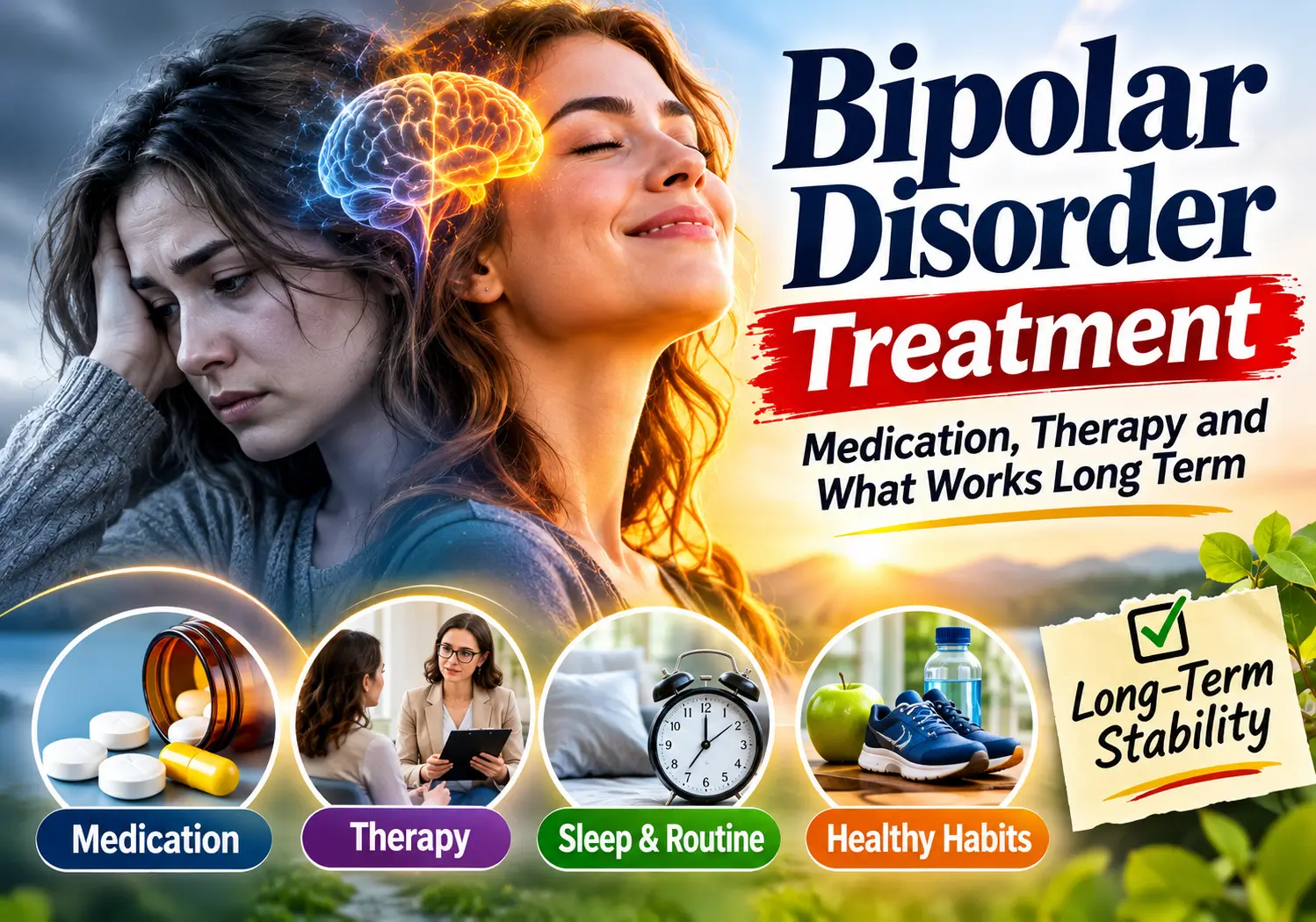 Bipolar disorder treatment works best as a combination of medication (usually a mood stabilizer such as lithium, or an atypical…
Are you looking for a Therapist?
Connect with qualified mental health professionals who understand
bipolar disorder, mood changes, and emotional challenges.
Private • Supportive • Confidential