
What Is Sertraline? A Complete Medical Guide to This Common Antidepressant

What is sertraline? Sertraline is a prescription antidepressant in the selective serotonin reuptake inhibitor (SSRI) class, best known by the brand name Zoloft. It is approved in the US to treat depression, obsessive-compulsive disorder (OCD), panic disorder, post-traumatic stress disorder (PTSD), social anxiety disorder and premenstrual dysphoric disorder (PMDD). It is one of the most prescribed psychiatric medications in the world, valued for working well with a relatively manageable side-effect profile.
This guide explains:
- what sertraline is used for
- how it works
- what sertraline HCl means
- typical doses (25 mg, 50 mg, 100 mg and up)
- how long sertraline takes to work
- side effects, warnings and interactions
- what people with bipolar disorder need to know before taking it
Key takeaways
- Sertraline (Zoloft) is an SSRI antidepressant, not a mood stabilizer.
- It treats depression, OCD, panic disorder, PTSD, social anxiety and PMDD, and is used off-label for generalized anxiety.
- Typical doses range from 25 mg to 200 mg once daily; 200 mg is the maximum.
- Some benefits can start in 1–2 weeks, but full effect usually takes 6–8 weeks, and longer for OCD.
- Common early side effects (nausea, loose stools, sleep changes) usually fade within weeks.
- Don’t stop sertraline suddenly, and tell your prescriber if you have, or might have, bipolar disorder.
What Is Sertraline?
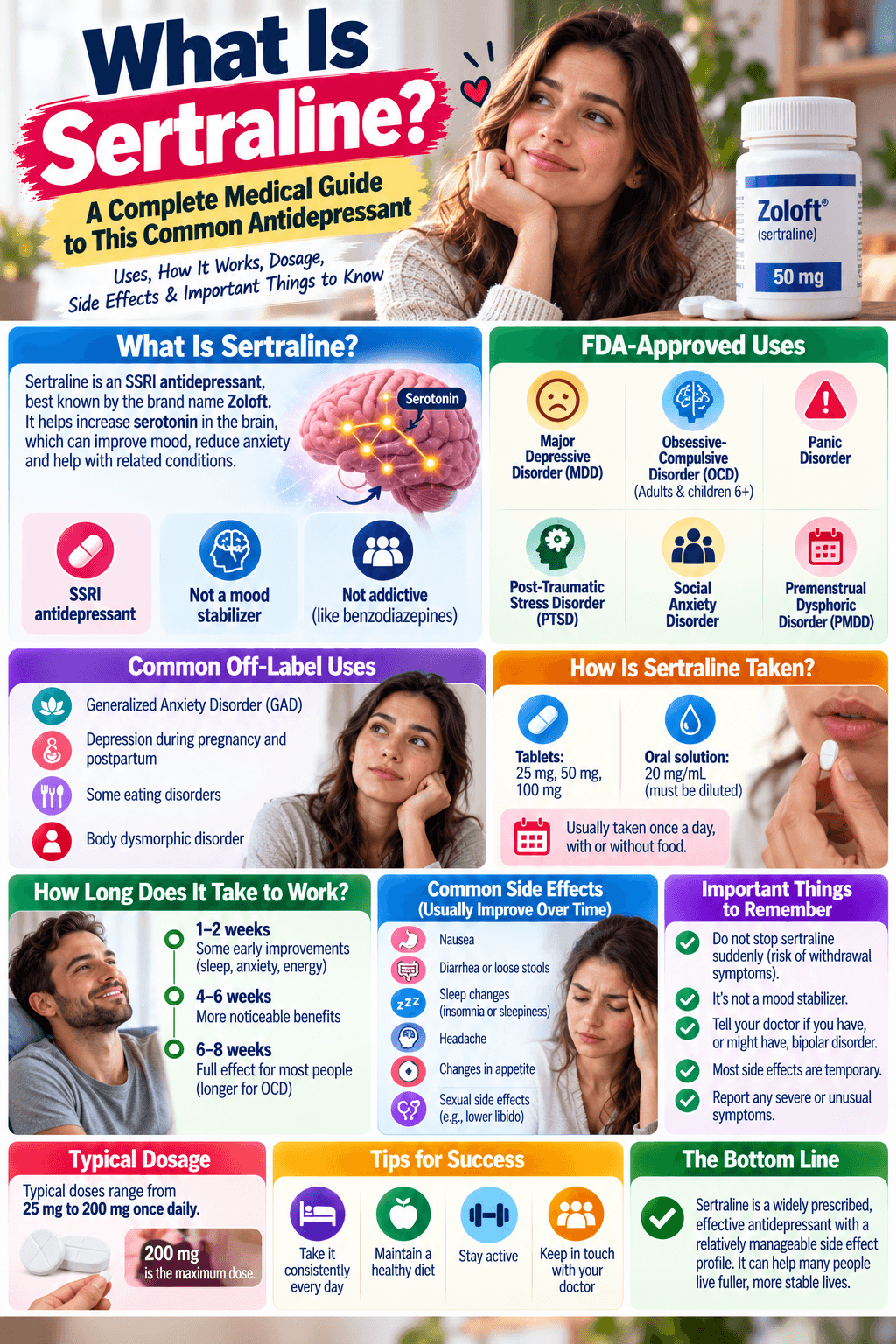
Sertraline is an oral antidepressant first approved by the FDA in 1991 under the brand name Zoloft (Pfizer). It belongs to the selective serotonin reuptake inhibitors (SSRIs), the same class as fluoxetine (Prozac), escitalopram (Lexapro), citalopram (Celexa) and paroxetine (Paxil).
It comes as:
- Tablets: 25 mg, 50 mg and 100 mg
- Oral solution (liquid): 20 mg/mL. It must be diluted before use and contains alcohol, so it must not be taken with disulfiram (Antabuse).
Sertraline is taken once a day, morning or evening, with or without food. Its half-life is about 26 hours, which is why once-daily dosing works.
It is not a controlled substance and is not addictive in the way that drugs like benzodiazepines are. Stopping suddenly can still cause discontinuation symptoms (see below).
Is sertraline the same as Zoloft?
Yes. Sertraline is the generic name of the medicine and Zoloft is the original brand name. FDA-approved generic sertraline contains the same active ingredient at the same strength, and must be shown to work the same way in the body (bioequivalence). Inactive ingredients such as fillers and coatings can differ between manufacturers. A very small number of people notice a difference when their pharmacy switches brands; tell your prescriber if that happens.
What is sertraline HCl (sertraline hydrochloride)?
Sertraline HCl is the form of sertraline used in tablets: the drug combined with hydrochloride to form a stable salt. Many medicines are made as salts because it makes them more stable and easier to dissolve and absorb. Sertraline HCl and sertraline are the same medicine, used for the same conditions. The “HCl” on your label does not mean a different drug or a stronger dose.
What Is Sertraline Used For?
FDA-approved uses of sertraline
| Condition | Who it’s approved for |
|---|---|
| Major depressive disorder (MDD) | Adults |
| Obsessive-compulsive disorder (OCD) | Adults and children age 6+ |
| Panic disorder | Adults |
| Post-traumatic stress disorder (PTSD) | Adults |
| Social anxiety disorder | Adults |
| Premenstrual dysphoric disorder (PMDD) | Adults |
Common off-label uses
Doctors also prescribe sertraline “off-label” when evidence supports it, most commonly for:
- generalized anxiety disorder (GAD), where it is widely used and recommended in guidelines, although GAD is not on its US label
- depression during pregnancy and after giving birth
- some eating disorders and body dysmorphic disorder
For other anxiety treatment options, see generalized anxiety disorder medication and anxiety medication.
Is sertraline a mood stabilizer?
No. This is a common mix-up. Sertraline is an antidepressant. Mood stabilizers, such as lithium, lamotrigine and valproate, are used to prevent the highs and lows of bipolar disorder. Sertraline does not prevent mania and, on its own, can trigger it in people with bipolar disorder. See mood stabilizers vs antipsychotics.
How Does Sertraline Work?
Nerve cells in the brain communicate using chemical messengers called neurotransmitters. Serotonin is one of them. It helps regulate mood, anxiety, sleep, appetite and digestion.
After serotonin sends its signal, it is normally pulled back into the nerve cell by a “reuptake” pump (the serotonin transporter). Sertraline blocks this pump, so more serotonin stays available between nerve cells.
The pump is blocked within hours, yet symptoms take weeks to improve. That delay suggests the real benefit comes from slower changes that follow: receptor adjustments, changes in how brain circuits for fear and mood process information, and possibly improved neuroplasticity. The old idea that depression is simply a “serotonin deficiency” is now considered too simple. Scientists agree that SSRIs work for many people, but the full explanation is still being studied.
How does sertraline make you feel?
When sertraline works, people usually don’t feel “high” or artificially happy. They describe:
- worry and panic losing their grip
- intrusive thoughts becoming easier to ignore
- getting out of bed taking less effort
- reacting to stress more calmly
Some people describe feeling a bit emotionally “flat”; if that happens, tell your prescriber, because a dose change can help. In the first weeks, some people feel more jittery or anxious before they feel better.
Sertraline Dosage Guide
Doses are always set by your prescriber. These are the usual adult ranges from the FDA label.
| Condition | Usual starting dose | Usual dose range |
|---|---|---|
| Depression (MDD) | 50 mg once daily | 50–200 mg |
| OCD | 50 mg once daily | 50–200 mg (often higher doses) |
| Panic disorder | 25 mg for 1 week, then 50 mg | 50–200 mg |
| PTSD | 25 mg for 1 week, then 50 mg | 50–200 mg |
| Social anxiety disorder | 25 mg for 1 week, then 50 mg | 50–200 mg |
| PMDD | 50 mg daily, or only in the 2 weeks before a period | 50–150 mg |
Dose increases are usually made gradually, no faster than once a week, and often every few weeks.
What is sertraline 25 mg used for?
25 mg is mainly a starting dose. It is used for the first week in panic disorder, PTSD and social anxiety, where people are more sensitive to early jitteriness. It is also used for children age 6–12 with OCD, and sometimes for older adults or people sensitive to side effects. Some people stay on a low dose if it works for them.
What is sertraline 50 mg used for?
50 mg is the standard starting and maintenance dose for depression and OCD, and the usual target after the first week for anxiety disorders. Many people do well long-term on 50 mg.
What is sertraline 100 mg used for?
100 mg is a common dose when symptoms improve only partly on 50 mg. It is used for depression, panic disorder, PTSD and especially OCD.
What are the lowest and highest doses of sertraline?
The lowest tablet strength is 25 mg; lower doses are possible with the liquid. The maximum recommended dose is 200 mg per day. OCD often needs doses toward the higher end.
What if I miss a dose?
Take it when you remember, unless it is almost time for your next dose; in that case, skip it. Never double up.
How Long Does Sertraline Take to Work?
| Time | What you might notice |
|---|---|
| Week 1–2 | Side effects may appear first. Some people notice better sleep, appetite or energy early. |
| Weeks 2–4 | Gradual improvement in anxiety or mood begins for many people. |
| Weeks 6–8 | Close to full benefit for depression and anxiety disorders. |
| Up to 10–12 weeks | OCD often needs longer, and a higher dose, to respond fully. |
If you’ve had little improvement after 6–8 weeks at an adequate dose, your prescriber may raise the dose, add therapy, or switch medicines. After you feel better, guidelines usually recommend continuing for at least 6–12 months to lower the risk of relapse.
How long does sertraline take to work for anxiety? Usually 4–6 weeks for meaningful improvement. Anxiety can rise slightly in the first week or two, which is why anxiety disorders often start at 25 mg.
Medication works best alongside therapy. CBT, and exposure and response prevention (ERP) for OCD, are proven partners to sertraline. See the best therapy for bipolar disorder and PTSD treatment.
Sertraline Side Effects
Common side effects
According to the Zoloft label, the most common side effects in adults include:
- Nausea, the most common
- Diarrhea or loose stools, and indigestion
- Decreased appetite
- Insomnia or sleepiness
- Increased sweating
- Tremor
- Fatigue, dizziness and headache
- Sexual side effects: lower sex drive, delayed orgasm or ejaculation
Stomach side effects are common because most of the body’s serotonin is made in the gut. Most of these side effects ease within the first 2–4 weeks. Taking sertraline with food can reduce nausea. If it disturbs sleep, take it in the morning; see how to fall asleep fast. Sexual side effects can persist, so discuss them with your prescriber rather than stopping the medicine.
Does sertraline cause weight gain? Usually only a little, and it is one of the lower-risk antidepressants. Read our full guide: does sertraline cause weight gain?
Serious side effects: get medical help
- Serotonin syndrome: agitation, confusion, fast heartbeat, high temperature, muscle twitching or stiffness, heavy sweating, diarrhea. The risk is highest when sertraline is combined with other serotonin drugs.
- Unusual bleeding or bruising, especially with aspirin, NSAIDs or blood thinners.
- Low sodium (hyponatremia): headache, confusion, weakness, unsteadiness. This is more common in older adults.
- Mania or hypomania: racing thoughts, little need for sleep, unusual energy or risk-taking.
- Eye pain or vision changes (angle-closure glaucoma, rare).
- Seizures (rare), or an allergic reaction.
Sertraline Warnings and Safety
Boxed warning: suicidal thoughts in young people
All antidepressants carry an FDA boxed warning. They may increase suicidal thoughts and behaviors in children, teenagers and young adults under 25, especially in the first few months or after dose changes. Patients, families and doctors should watch for new or worsening depression, agitation or suicidal thoughts.
If you are in crisis: call or text 988 (Suicide & Crisis Lifeline, US) or go to the nearest emergency department. Outside the US, contact your local emergency number.
Sertraline and bipolar disorder
Before starting sertraline, you should be screened for bipolar disorder. In people with bipolar disorder, an antidepressant taken without a mood stabilizer can trigger:
- mania or hypomania
- mixed episodes
- rapid cycling
If an antidepressant is used in bipolar depression, it is usually combined with a mood stabilizer or antipsychotic and monitored closely. Learn the signs of hypomania vs normal happiness, and see bipolar disorder medications and the best medication for bipolar depression and anxiety.
Drug interactions
- Do not combine with MAO inhibitors (including linezolid and IV methylene blue), and allow 14 days between them.
- Do not combine with pimozide. The liquid form must not be taken with disulfiram.
- Serotonin syndrome risk with other serotonin drugs: triptans, tramadol, fentanyl, lithium, St. John’s wort, tryptophan, other antidepressants.
- Bleeding risk with aspirin, ibuprofen, naproxen, warfarin and other blood thinners.
- Tell your doctor about every medicine and supplement you take.
Sertraline and alcohol
Avoid alcohol, or keep it minimal. Alcohol can worsen depression and anxiety, and can increase drowsiness and dizziness on sertraline.
Pregnancy and breastfeeding
Sertraline is one of the most studied antidepressants in pregnancy, and is often preferred during breastfeeding because only small amounts pass into breast milk. No medicine is risk-free, and untreated depression also carries risks. Make a plan with your doctor; don’t stop suddenly if you find out you’re pregnant.
Stopping sertraline
Don’t stop suddenly. Abruptly stopping can cause discontinuation symptoms:
- dizziness
- “brain zaps”
- irritability
- flu-like feelings
- vivid dreams
- low mood
Your prescriber can taper the dose gradually.
Is Sertraline a Strong Antidepressant?
Sertraline isn’t “stronger” or “weaker” in a simple sense; different people respond to different medicines. In the largest comparison of antidepressants so far, a 2018 Lancet analysis of 522 trials covering 21 drugs, all antidepressants worked better than placebo for adult depression. Sertraline was among those with a good balance of effectiveness and tolerability. That balance, plus its long safety record and its use in pregnancy and in children with OCD, is why it is often a first-line choice.
Compared with older antidepressants such as tricyclics, sertraline is generally easier to tolerate and much safer in overdose.
Learn more about major depressive disorder medications.
Frequently Asked Questions About Sertraline
What is sertraline used for?
Sertraline treats depression, OCD, panic disorder, PTSD, social anxiety disorder and PMDD. It is also commonly prescribed off-label for generalized anxiety.
Is sertraline the same as Zoloft?
Yes. Sertraline is the generic name; Zoloft is the brand. They contain the same active ingredient and work the same way.
What is sertraline HCl?
Sertraline hydrochloride, the stable salt form of sertraline used in tablets. It is the same medicine.
How long does sertraline take to work?
Some people notice early changes in 1–2 weeks, but full benefit usually takes 6–8 weeks, and up to 12 weeks for OCD.
Is sertraline addictive?
No. It isn’t habit-forming or a controlled substance, but stopping suddenly can cause discontinuation symptoms, so it should be tapered.
Can sertraline be used for bipolar disorder?
Not on its own. Sertraline doesn’t treat or prevent mania and can trigger it. If used in bipolar depression, it is combined with a mood stabilizer under close monitoring.
Is sertraline good for anxiety?
Yes. It is approved for panic disorder, PTSD and social anxiety, and is widely used for generalized anxiety.
What is the maximum dose of sertraline?
200 mg per day.
Should I take sertraline in the morning or at night?
Either is fine. Take it in the morning if it keeps you awake, or at night if it makes you drowsy, and keep the time consistent.
The Bottom Line: What Is Sertraline?
Sertraline (Zoloft) is a widely used, well-studied SSRI antidepressant for depression, OCD, panic disorder, PTSD, social anxiety and PMDD. It usually starts at 25–50 mg, takes several weeks to reach full effect, and causes side effects that are often temporary. It is not a mood stabilizer. Anyone with possible bipolar disorder should be screened before starting it. With the right dose, therapy and follow-up, sertraline helps many people feel like themselves again.
References
- U.S. Food and Drug Administration. Zoloft (sertraline hydrochloride) Prescribing Information. Pfizer; 2023.
- Singh HK, Saadabadi A. Sertraline. StatPearls. NCBI Bookshelf.
- MedlinePlus. Sertraline. U.S. National Library of Medicine.
- NHS. Sertraline.
- Cipriani A, et al. Comparative efficacy and acceptability of 21 antidepressant drugs for the acute treatment of adults with major depressive disorder: a systematic review and network meta-analysis. Lancet. 2018;391(10128):1357–1366.
- National Institute of Mental Health. Mental Health Medications.
Related Posts

Subscribe to Our Newsletter
Get mental health tips, updates, and resources delivered to your inbox.
MORE from Author
Read More ADHD and depression often occur together, and each makes the other harder to live with. Adults with ADHD are almost…
 We all have "up" days and "down" days. Perhaps you feel energized after a promotion or sluggish on a rainy…
 To define bipolar disorder accurately, we must look at it as a chronic mood dysregulation condition. In psychology and medicine,…
Are you looking for a Therapist?
Connect with qualified mental health professionals who understand
bipolar disorder, mood changes, and emotional challenges.
Private • Supportive • Confidential