
Bipolar Disorder Treatment: Medication, Therapy and What Works Long Term

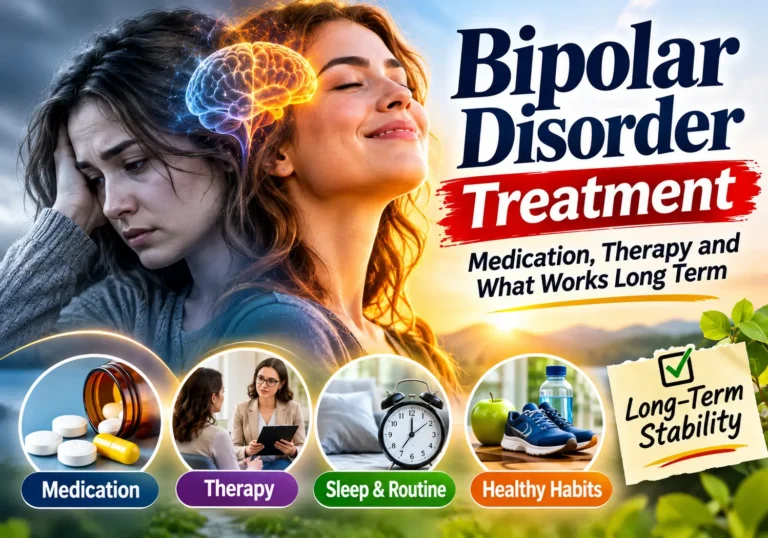
Bipolar disorder treatment works best as a combination of medication (usually a mood stabilizer such as lithium, or an atypical antipsychotic), psychotherapy, steady sleep and daily routines, and support from family or friends, continued long term — not just during episodes. There’s no single “best” treatment for everyone. The right plan depends on whether you have bipolar I or bipolar II, what phase you’re in (mania, depression or stability), your medical history, side effects, and what has worked before. The good news: bipolar disorder is one of the most treatable serious mental illnesses, and most people who stay on a well-matched treatment plan achieve long periods of stability.
This guide explains every major treatment for bipolar disorder in plain language: the medications doctors use and why, what current guidelines recommend, which therapies have the strongest evidence, how treatment differs for mania, bipolar depression, bipolar 1 and bipolar 2, when inpatient care is needed, what’s new in 2026, and how to tell whether your treatment is working.
Key takeaways
- The most common treatment for bipolar disorder is a mood stabilizer (lithium, valproate or lamotrigine) and/or an atypical antipsychotic, plus psychotherapy.
- Lithium remains the gold-standard long-term treatment, and it’s the medication with the best evidence for reducing suicide risk.
- Bipolar depression has its own medications — such as quetiapine, lurasidone, cariprazine, lumateperone and lamotrigine. Antidepressants alone are generally avoided in bipolar I.
- Adding structured psychotherapy to medication reduces relapse and speeds recovery.
- Regular sleep, avoiding alcohol and drugs, and tracking moods are part of treatment, not extras.
- Treatment is usually long term. Stopping medication suddenly is one of the biggest causes of relapse.
Medication safety: This article is for education only. Never start, stop or change a bipolar medication without your prescriber. Doses, blood tests and interactions are specific to you.
New to the condition? Start with our complete guide to bipolar disorder and our overview of bipolar disorder medications.
What Is Bipolar Disorder Treatment Trying to Achieve?
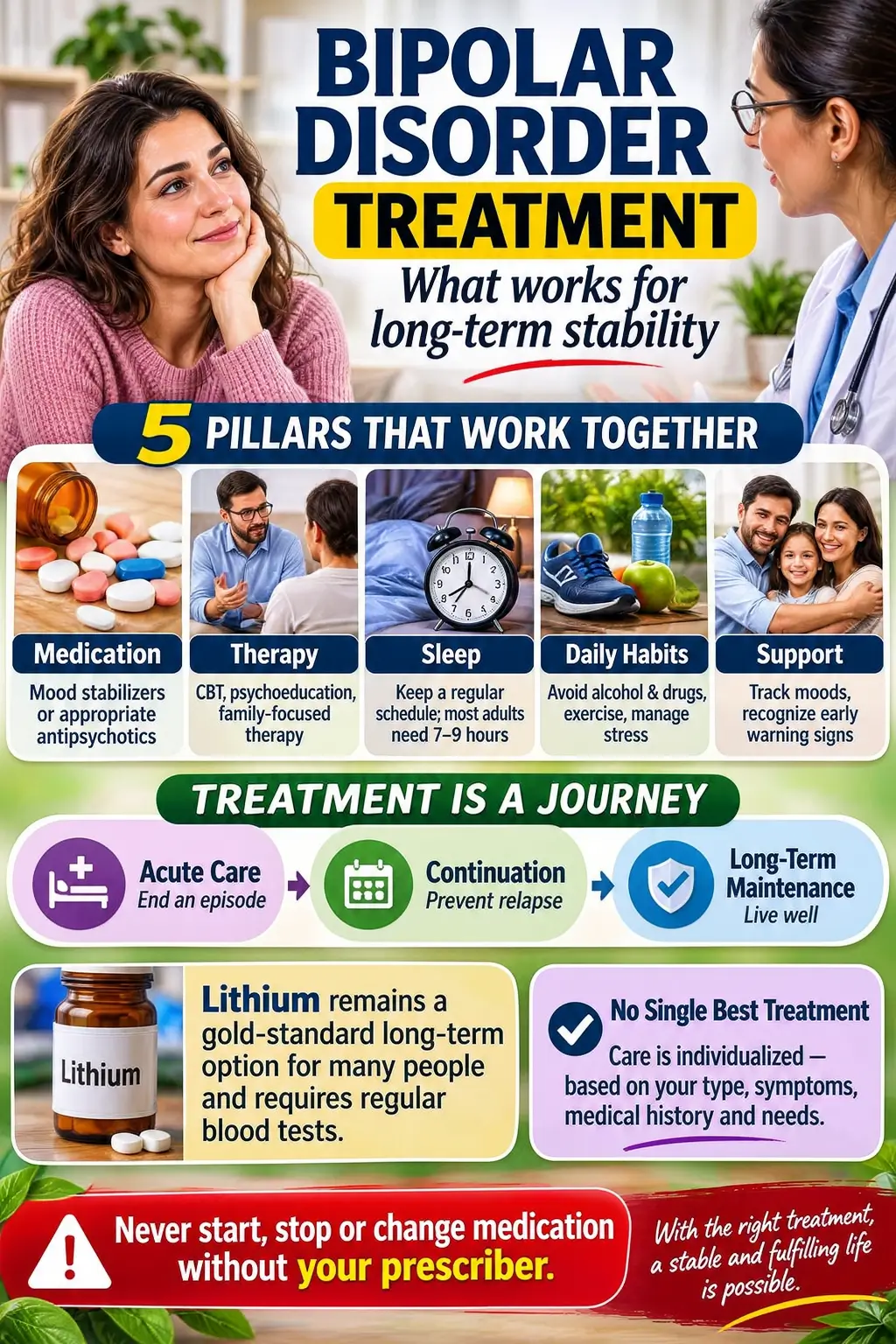
Bipolar disorder treatment has three phases, each with its own goals:
| Phase | Goal | Typical timeframe |
|---|---|---|
| Acute treatment | End a manic, hypomanic, mixed or depressive episode safely | Days to months |
| Continuation | Prevent the same episode from coming back as you recover | Months after the episode |
| Maintenance | Prevent future episodes, reduce suicide risk and help you live your life | Years — often lifelong |
Beyond controlling symptoms, good treatment aims for full recovery of function — returning to work, study, relationships and the things that matter to you. It also aims to protect physical health, because people with bipolar disorder have higher rates of heart disease, diabetes and other conditions.
Main Bipolar Disorder Treatment Options at a Glance
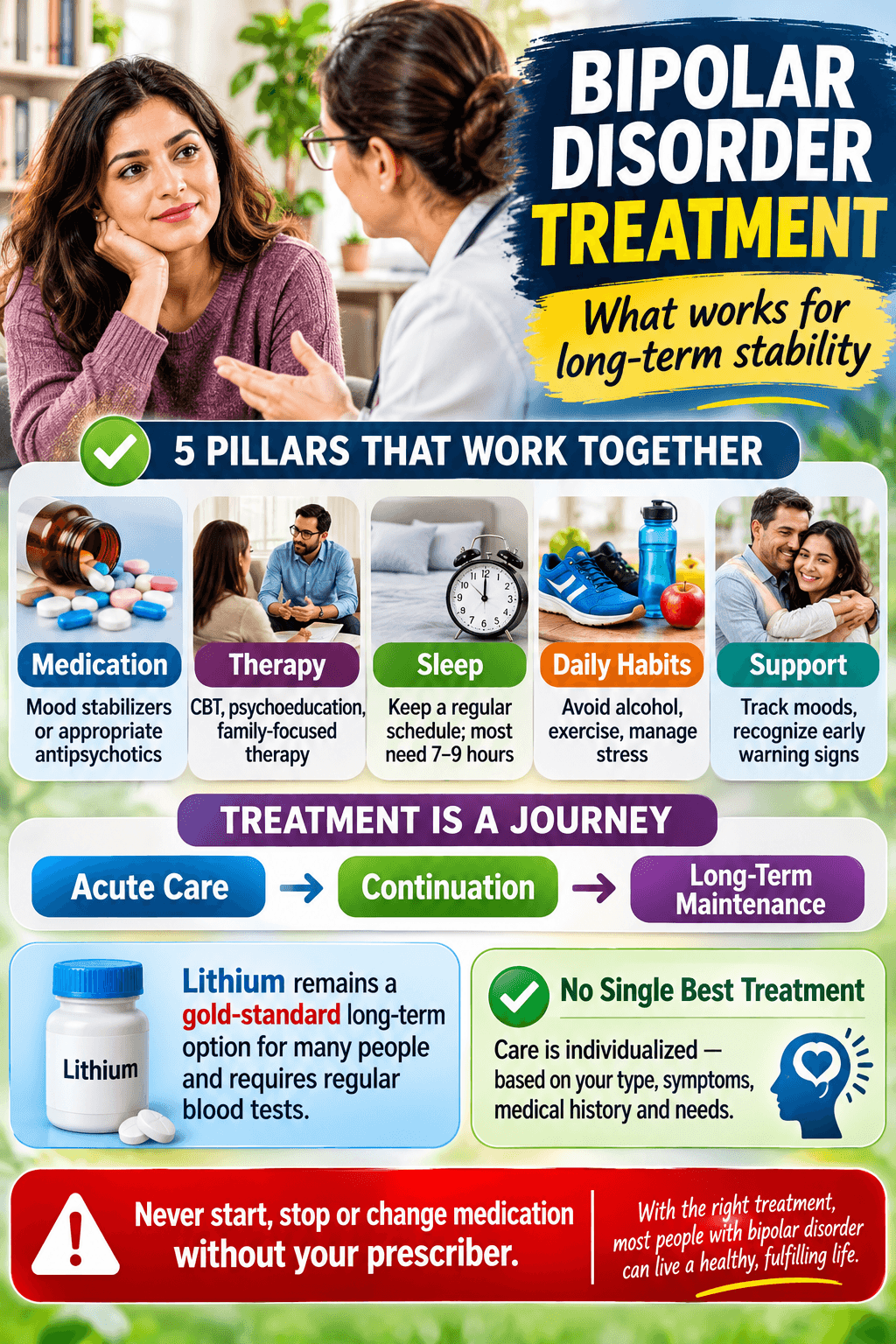
The main bipolar disorder treatment options fall into five groups:
- Medications — mood stabilizers, atypical antipsychotics, and sometimes carefully chosen antidepressants or other medicines
- Psychotherapy — psychoeducation, CBT, family-focused therapy, interpersonal and social rhythm therapy (IPSRT), and DBT skills
- Brain stimulation — electroconvulsive therapy (ECT) for severe or treatment-resistant episodes, and experimental options
- Lifestyle and self-management — sleep regulation, routines, mood tracking, sobriety, exercise and stress management
- Support and care coordination — family involvement, peer support, crisis plans and, when needed, hospital or intensive outpatient care
Most people need a combination. Medication tends to stabilize mood; therapy and self-management help keep it stable and rebuild your life.
Bipolar Disorder Medications: What Each Type Does
Medication is the foundation of treatment for most people with bipolar disorder, especially bipolar I. Here are the main classes. (For more depth, see bipolar disorder medications and mood stabilizers vs antipsychotics.)
Lithium: still the gold standard
Lithium has been used for over 70 years and remains the first-line maintenance treatment in major guidelines, including CANMAT/ISBD and the UK’s NICE. It:
- Treats and prevents mania
- Helps prevent depressive episodes
- Reduces suicide risk — a 2013 meta-analysis in the BMJ found that lithium significantly lowered suicide compared with placebo
Lithium requires regular blood tests to keep levels in a safe and effective range (NICE suggests 0.6–0.8 mmol/L for most people on maintenance), plus checks of kidney and thyroid function. Dehydration, some painkillers (NSAIDs), certain blood pressure medicines and illness can raise levels. Learn more in our guides to lithium, lithium side effects and lithium toxicity symptoms.
Valproate (divalproex)
Valproate is effective for acute mania, including mixed episodes, and is used for maintenance. It needs blood monitoring of liver function and blood counts. It has a high risk of birth defects and developmental problems if taken during pregnancy, so it’s generally avoided in anyone who could become pregnant unless there’s no alternative and strict pregnancy prevention is in place.
Lamotrigine
Lamotrigine is best at preventing bipolar depression. It doesn’t treat mania. It must be increased slowly over several weeks to lower the risk of a rare but serious rash (Stevens-Johnson syndrome), and any new rash needs urgent medical review. It’s generally well tolerated and weight-neutral. See side effects of lamotrigine, the maximum dose of lamotrigine for bipolar, lamotrigine and alcohol and foods to avoid while taking lamotrigine.
Carbamazepine and oxcarbazepine
Carbamazepine is approved for mania and is sometimes used when other options fail. It interacts with many medicines, including hormonal contraceptives, and needs blood monitoring. Oxcarbazepine is sometimes used off-label, but has weaker evidence.
Atypical antipsychotics
Atypical (second-generation) antipsychotics are now among the most widely used bipolar medications. They work faster than lithium for acute mania, and several treat bipolar depression too.
| Medication | Mania | Bipolar depression | Maintenance |
|---|---|---|---|
| Quetiapine | ✓ | ✓ (bipolar I and II) | ✓ |
| Olanzapine | ✓ | ✓ (with fluoxetine) | ✓ |
| Aripiprazole | ✓ | — | ✓ (prevents mania) |
| Risperidone | ✓ | — | ✓ (long-acting injection) |
| Cariprazine | ✓ | ✓ (bipolar I) | — |
| Lurasidone | — | ✓ (bipolar I) | — |
| Lumateperone (Caplyta) | — | ✓ (bipolar I and II) | — |
| Asenapine, ziprasidone | ✓ | — | ✓ (adjunct) |
| Clozapine | Treatment-resistant cases | — | Treatment-resistant cases |
Table reflects common U.S. FDA indications; prescribers may use medications off-label based on evidence and guidelines.
Common side effects include weight gain, sedation, raised blood sugar and cholesterol, restlessness (akathisia) and, rarely, movement disorders such as tardive dyskinesia. People taking antipsychotics should have regular checks of weight, waist size, blood sugar and lipids. See bipolar medications and weight gain, does quetiapine cause weight gain?, does Abilify cause weight gain?, is Caplyta a mood stabilizer? and tardive dyskinesia and bipolar disorder.
Antidepressants: use with caution
Antidepressants such as SSRIs are controversial in bipolar disorder. They can trigger mania or hypomania (a “manic switch”) or speed up cycling, especially in bipolar I. Guidelines generally:
- Advise against antidepressants on their own in bipolar I
- Allow them with a mood stabilizer or antipsychotic in selected cases
- Consider them more cautiously in bipolar II without mixed features
See manic switch, selective serotonin reuptake inhibitors, what is sertraline?, fluoxetine and how escitalopram works.
Other medicines used alongside treatment
- Benzodiazepines (short-term) for agitation or severe insomnia during acute mania
- Sleep medicines, used carefully — see sleeping pills and how long does quetiapine take to work for sleep?
- Thyroid hormone in some treatment-resistant cases — see thyroid and bipolar
- Anxiety treatment for co-occurring anxiety — see best medication for bipolar depression and anxiety and anxiety medication
Bipolar Disorder Treatment Guidelines: What Experts Recommend
Several major bipolar disorder treatment guidelines shape care worldwide:
- CANMAT/ISBD (Canadian Network for Mood and Anxiety Treatments and the International Society for Bipolar Disorders) — the most widely used international guideline, published in 2018, with an evidence update in 2023
- NICE (UK National Institute for Health and Care Excellence) — guideline CG185
- VA/DoD (U.S. Department of Veterans Affairs and Department of Defense) — updated in 2023
- BAP (British Association for Psychopharmacology)
They differ in the details, but agree on the core points summarized below.
First-line treatment for bipolar disorder (CANMAT/ISBD summary)
| Situation | First-line options (examples) |
|---|---|
| Acute mania | Lithium, quetiapine, divalproex, asenapine, aripiprazole, paliperidone, risperidone, cariprazine; or a mood stabilizer plus an antipsychotic |
| Bipolar I depression | Quetiapine, lurasidone (alone or with lithium/divalproex), lithium, lamotrigine; newer evidence supports cariprazine and lumateperone |
| Bipolar II depression | Quetiapine (first-line); lithium, lamotrigine, lumateperone and others as alternatives |
| Maintenance | Lithium (preferred), quetiapine, divalproex, lamotrigine (mainly prevents depression), aripiprazole, asenapine, and certain combinations |
Antidepressant monotherapy is not recommended for bipolar I depression. Guidelines also stress that the choice should reflect past response, side effects, physical health, pregnancy plans and personal preference.
What is the bipolar disorder treatment algorithm?
A treatment algorithm is a step-by-step decision chart. In simplified form, it looks like this:
- Confirm the diagnosis and the current phase (mania, hypomania, mixed, depression).
- Check safety — suicide risk, psychosis, dangerous behavior and the need for hospital care.
- Review current medications — stop antidepressants during mania; check adherence and blood levels.
- Start or optimize a first-line option, at an adequate dose for an adequate time.
- If there’s no response, switch to or add another first-line option, then consider second-line choices.
- For treatment-resistant episodes, consider combinations, clozapine or ECT.
- Plan maintenance with the medication that worked, plus psychotherapy and self-management.
Bipolar Disorder Therapy: Which Psychotherapy Works Best?
Medication alone is rarely enough. Psychotherapy for bipolar disorder helps you understand the illness, spot early warning signs, stick with treatment, manage stress and repair relationships.
The evidence is strong:
- In the NIMH-funded STEP-BD study of 293 people with bipolar depression, 64% of those who received intensive psychotherapy alongside medication recovered within a year, compared with 52% of those who received brief psychoeducation. The intensive therapy group also recovered 110 days faster.
- A 2021 JAMA Psychiatry review of 39 randomized trials (3,863 participants) found that structured psychotherapy combined with medication was linked to lower recurrence rates than usual care. Psychoeducation delivered in family or group formats looked especially effective at preventing relapse, and CBT reduced depressive symptoms.
Types of therapy for bipolar disorder
| Therapy | What it focuses on | Best evidence for |
|---|---|---|
| Psychoeducation (individual, group or family) | Understanding bipolar disorder, warning signs, medication, relapse plans | Preventing relapse |
| Family-focused therapy (FFT) | Communication, problem-solving and education for the whole family | Bipolar depression, teens, relapse prevention |
| Interpersonal and social rhythm therapy (IPSRT) | Stabilizing sleep, meals and daily rhythms; managing relationship stress | Bipolar depression, preventing episodes |
| Cognitive behavioral therapy (CBT) | Thoughts, behaviors and coping during mood changes | Depressive symptoms |
| Dialectical behavior therapy (DBT) skills | Emotion regulation, distress tolerance, impulsivity | Emotional intensity, suicidal urges |
| Group therapy and peer support | Shared experience, accountability and hope | Engagement and wellbeing |
See what is the best therapy for bipolar disorder?, do I need therapy for bipolar disorder? and bipolar counseling. Practical skills from these therapies include DBT crisis survival skills, radical acceptance, self-soothing skills, decatastrophizing, cognitive reappraisal and what is distress tolerance?
Does CBT work for bipolar disorder?
Yes, as an add-on to medication. CBT helps reduce depressive symptoms and teaches practical skills for spotting and managing mood changes. It’s less effective for preventing manic episodes on its own, and it isn’t a substitute for medication in bipolar I.
Treatment for Bipolar Depression
Bipolar depression is the most common and most disabling phase for many people, and it’s treated differently from ordinary depression. See what is bipolar depression? and is bipolar depression the same as bipolar disorder?
What is the most effective treatment for bipolar depression?
The medications with the strongest evidence and FDA approval for bipolar depression are:
- Quetiapine (bipolar I and II depression)
- Lurasidone (bipolar I depression)
- Cariprazine (bipolar I depression)
- Lumateperone (bipolar I and II depression)
- Olanzapine–fluoxetine combination (bipolar I depression)
Lithium and lamotrigine are key options, especially to prevent future depression. ECT is highly effective for severe, psychotic or treatment-resistant bipolar depression, or when there’s high suicide risk. Psychotherapy — particularly FFT, IPSRT and CBT — speeds recovery. Bright light therapy may help some people, but it should be timed carefully under medical supervision because it can trigger hypomania. (In one 2018 trial, midday bright light led to remission in 68% of people with bipolar depression, compared with 22% with dim light.)
See how to deal with bipolar depression, how long does bipolar depression last? and what does bipolar depression feel like?
What are the signs of a bipolar depressive episode?
A bipolar depressive episode lasts at least two weeks and can include:
- Low mood or loss of interest (anhedonia)
- Sleeping too much or too little
- Low energy and feeling physically heavy
- Changes in appetite
- Guilt or worthlessness
- Poor concentration
- Slowed movement
- Thoughts of death or suicide
Bipolar depression often comes with oversleeping, heavy fatigue, psychotic features or mixed features (agitation, racing thoughts). Test your symptoms with our bipolar depression test, or read do I have bipolar depression?
Treatment for Manic and Hypomanic Episodes
How is a manic episode treated?
Acute mania is a medical emergency in many cases. Treatment usually involves:
- Fast-acting medication — an atypical antipsychotic, lithium or valproate, often combined in severe cases
- Stopping antidepressants and stimulants that may be fueling the episode
- Short-term sedatives for agitation and sleep
- A safe, low-stimulation environment — often a hospital stay if the person is at risk, psychotic or unable to care for themselves
- ECT for severe or treatment-resistant mania
Most medications begin to calm mania within days to two weeks, though full recovery takes longer. See bipolar psychosis and hallucinations vs delusions.
How is hypomania treated?
Hypomania is milder, but it still needs attention because it can escalate or be followed by depression. Treatment may include:
- adjusting medication
- stopping antidepressants
- protecting sleep
- cutting back on stimulation and caffeine
- postponing big decisions
Learn the difference in signs of hypomania vs normal happiness.
Mixed episodes and rapid cycling
- Mixed features (depression and mania symptoms together) carry a higher suicide risk. They usually respond better to antipsychotics or valproate than to antidepressants, which should be avoided. See bipolar mixed episode.
- Rapid cycling (four or more episodes a year) often improves when antidepressants are stopped, thyroid problems are corrected, and substances are avoided. Combination treatment is common. See rapid cycling bipolar.
Bipolar 1 vs Bipolar 2 Disorder Treatment
Bipolar 1 disorder treatment
Because bipolar I involves full mania, treatment centers on preventing and controlling mania while also treating depression. Lithium, valproate and atypical antipsychotics are the backbone. Antidepressants are avoided alone. Long-term maintenance medication is recommended for nearly everyone after a manic episode. See what is bipolar 1?
Bipolar 2 disorder treatment
In bipolar II, depression is the dominant problem. Quetiapine and lumateperone are FDA-approved for bipolar II depression. Lamotrigine and lithium are widely used for prevention. Antidepressants may be considered more readily than in bipolar I — usually with a mood stabilizer and close monitoring — but not when mixed features are present. See bipolar type 2 and bipolar 2 criteria.
Is bipolar 1 harder to treat than bipolar 2?
Not necessarily. Bipolar I mania can be severe but often responds quickly to medication. Bipolar II depression can be long-lasting and harder to shift. Read is bipolar 1 or bipolar 2 worse? and, for milder chronic symptoms, cyclothymic disorder.
Bipolar Disorder Treatment Plan: What It Should Include
A good bipolar disorder treatment plan is written down and shared with the people who support you. It should include:
- Diagnosis and goals — your type, typical episode pattern, and personal goals (work, study, family)
- Medications — names, doses, timing, what each is for, side effects to watch, and blood-test schedule
- Therapy — type, frequency and who provides it
- Daily routine — sleep and wake times, meals, activity and social contact
- Early warning signs — your personal “relapse signature” for mania and depression
- Action plan — what you and your supporters do when warning signs appear
- Crisis plan — who to call, where to go, and your preferences if you’re too unwell to decide
- Physical health — weight, blood pressure, blood sugar, lipids, thyroid and kidney checks
- Review dates — regular check-ins to adjust the plan
Build yours with our bipolar wellness plan, track symptoms with our bipolar mood chart or mood tracking apps for bipolar, and learn the early warning signs of a bipolar episode.
Bipolar disorder treatment goals
Common bipolar disorder treatment goals include:
- No hospital admissions
- Fewer and shorter episodes
- Stable sleep
- Return to work or study
- Healthy relationships
- Managing side effects
- Lower suicide risk
- Feeling like yourself again
Inpatient vs Outpatient Bipolar Disorder Treatment
Most people with bipolar disorder are treated as outpatients, seeing a psychiatrist, therapist or primary care provider. More intensive care is needed at times.
| Level of care | When it’s used |
|---|---|
| Outpatient | Stable or mild-to-moderate symptoms; regular appointments |
| Intensive outpatient (IOP) | Several sessions a week while living at home; stepping up or down from hospital |
| Partial hospitalization (PHP) | Full-day treatment on weekdays; returning home at night |
| Inpatient hospital | Severe mania, psychosis, suicide risk, danger to others, or inability to care for oneself |
| Residential treatment | Longer-term structured care, often with co-occurring substance use |
When is inpatient bipolar disorder treatment necessary?
Inpatient treatment is usually needed when someone is:
- at immediate risk of suicide or harming others
- experiencing severe mania or psychosis
- going without sleep for days
- making dangerous decisions
- unable to eat, drink or take medication safely
During a hospital stay, the team stabilizes medication, ensures safety and plans follow-up care. The period right after discharge is high-risk, so a prompt outpatient appointment matters.
Bipolar disorder treatment centers and online treatment
When choosing a bipolar disorder treatment center, look for:
- psychiatrists on staff
- evidence-based therapies (psychoeducation, FFT, IPSRT, CBT, DBT)
- treatment for co-occurring substance use
- family involvement
- clear discharge planning
Online bipolar disorder treatment (telepsychiatry and teletherapy) can work well for ongoing care. Be cautious with services that prescribe without a thorough evaluation, and make sure blood-test monitoring can be arranged locally.
How to get bipolar disorder treatment (including without insurance)
- Start with a primary care doctor, who can rule out medical causes, begin treatment and refer you to a psychiatrist.
- Contact community mental health centers, which often charge on a sliding scale.
- Check university training clinics, Federally Qualified Health Centers and NAMI’s helpline for local options.
- Ask about generic medications and manufacturer assistance programs.
See bipolar medication cost without insurance and bipolar disability.
Treatment for Teens and Children With Bipolar Disorder
Bipolar disorder in young people needs specialist assessment, because symptoms overlap with ADHD, anxiety, trauma and normal mood changes. Treatment usually combines medication with family-focused therapy and psychoeducation.
Several medications are FDA-approved for adolescents, including:
- lithium
- aripiprazole
- quetiapine
- risperidone
- olanzapine
- asenapine
- lurasidone (for depression)
Young people may be more prone to weight gain and metabolic side effects, so monitoring is important. School support and a stable routine are essential. See emotional dysregulation in children and ADHD and depression.
Treatment-Resistant Bipolar Disorder
When two or more adequate treatments haven’t worked, specialists may:
- Re-check the diagnosis and look for co-occurring conditions (thyroid disease, substance use, ADHD, anxiety, trauma)
- Check adherence and blood levels
- Try combinations — for example, lithium plus an atypical antipsychotic
- Consider clozapine for treatment-resistant mania
- Use ECT, one of the most effective treatments for severe mania and depression
- Consider newer or experimental options in specialist settings
What’s new in bipolar disorder treatment in 2026?
- Milsaperidone (Bysanti) was approved by the FDA in February 2026 for acute manic or mixed episodes of bipolar I disorder (and schizophrenia). It’s an active metabolite of iloperidone.
- Lumateperone and cariprazine have broadened options for bipolar depression since their approvals in 2021 and 2019.
- Ketamine, esketamine and transcranial magnetic stimulation (TMS) are being studied for bipolar depression. They are not FDA-approved for bipolar disorder, and should only be used in specialist settings with mood-stabilizer protection.
- Research continues into digital mood monitoring, chronotherapy (sleep and light-based treatments) and personalized prediction of lithium response.
Always ask your psychiatrist whether a new option suits you. Approval for one condition doesn’t mean it’s right for every person with bipolar disorder.
Bipolar Disorder Treatment Without Medication: Is It Possible?
Can bipolar disorder be treated without medication? For most people with bipolar I, medication is essential. Psychotherapy and lifestyle changes are powerful additions, but research doesn’t show that they reliably prevent mania on their own.
Some people with milder bipolar II or cyclothymia, a long period of stability and close specialist supervision may manage on fewer medications. Any reduction must be gradual and planned with a psychiatrist. Stopping lithium suddenly, for example, increases the risk of relapse.
Alternative and complementary treatments
These may support standard treatment, but they don’t replace it:
- Omega-3 fatty acids — mixed evidence; may modestly help depression
- Exercise — benefits mood, sleep and physical health
- Mindfulness-based approaches — may help anxiety and depressive symptoms
- Light therapy — for bipolar depression, under supervision
Be cautious with St John’s wort (it can trigger mania and interacts with many drugs), high-dose supplements, and anything marketed as a “cure.” See how to calm bipolar mood swings naturally, vitamins and minerals, natural serotonin reuptake inhibitors and can bipolar disorder be cured?
Lifestyle Changes That Support Bipolar Disorder Treatment
Self-management is one of the most powerful parts of bipolar disorder treatment and management.
How many hours should someone with bipolar disorder sleep?
Most adults need about 7 to 9 hours a night. For people with bipolar disorder, regularity matters as much as quantity: go to bed and wake up at the same times every day, including weekends.
- Sleeping much less than usual can be both a warning sign and a trigger for mania.
- Sleeping much more can signal depression.
Ask your care team what range is right for you. See bipolar sleep, bipolar insomnia, bipolar disorder symptoms at night and how to fall asleep fast.
Other daily habits that help
- Keep regular routines for meals, activity and social contact (the “social rhythms” targeted by IPSRT)
- Avoid alcohol and recreational drugs, which trigger episodes and interfere with medication — see substance-induced mood disorder
- Limit caffeine, especially later in the day
- Exercise regularly — see our exercise plan for bipolar disorder
- Eat well to counter medication-related weight gain — see our bipolar diet guide
- Manage stress — see stress management techniques, can stress cause bipolar symptoms? and nervous system regulation
- Know your triggers — see the bipolar episode triggers list
- Pace your energy — see spoon theory
Medication Adherence: Why Treatment Stops Working
Up to half of people with bipolar disorder stop or skip medication at some point. Common reasons include:
- side effects
- feeling well and assuming medication is no longer needed
- missing the highs of hypomania
- stigma
- cost
- not fully accepting the diagnosis
Stopping suddenly — especially lithium — sharply increases relapse risk.
If you’re struggling with side effects or doubts, talk to your prescriber rather than stopping on your own. Options often exist: changing timing, lowering the dose, switching medication, or adding support for a side effect. See why do people with bipolar stop taking medication? and, for families, how to deal with a bipolar person not on medication.
Bipolar Disorder Treatment During Pregnancy
Planning pregnancy with bipolar disorder needs specialist input, ideally before conception. The postpartum period carries a high risk of relapse, including postpartum psychosis.
- Valproate carries the highest risk to the baby and is generally avoided.
- Lithium and lamotrigine are often considered, with careful dosing and monitoring.
- Some antipsychotics may also be options.
Never stop medication abruptly on learning you’re pregnant; contact your prescriber promptly. See bipolar disorder symptoms in females and premenstrual exacerbation.
How Long Does Bipolar Disorder Treatment Take?
- Acute mania: medications often start working within days, with major improvement over 1–3 weeks
- Bipolar depression: usually several weeks; lamotrigine takes longer because of its slow dose increase
- Continuation: typically several months after an episode
- Maintenance: often years or lifelong, especially after mania or several episodes
How do you know if treatment is working? You’ll typically notice:
- fewer and milder episodes
- steadier sleep and energy
- earlier recognition of warning signs
- tolerable side effects
- getting back to the things that matter to you
Tracking your mood daily makes this much easier to judge. See how long do bipolar episodes last? and does bipolar get worse with age?
What Happens if Bipolar Disorder Is Left Untreated?
Without treatment, bipolar disorder tends to bring:
- more frequent and severe episodes
- damaged relationships
- job loss
- financial and legal problems
- substance use
- a much higher risk of suicide
People with bipolar disorder also have a shorter life expectancy, largely because of preventable physical illness. Consistent treatment substantially reduces these risks.
How Family and Friends Can Support Bipolar Treatment
- Learn about the illness and the person’s warning signs
- Encourage treatment without blame, and offer practical help with appointments or prescriptions
- Agree on a plan for what to do when symptoms appear — ideally written into the treatment plan
- Join family therapy or psychoeducation, which improves outcomes
- Set boundaries and look after yourself — see walking on eggshells
See also why bipolar relationships fail and can you trust a bipolar person?
Can a Bipolar Person Live a Normal Life?
Yes. With an accurate diagnosis and a treatment plan that fits, most people with bipolar disorder:
- work and study
- build relationships and raise families
- pursue their goals
Episodes may still happen, but with good treatment they’re usually shorter, milder and caught earlier. Many well-known people live successfully with the condition — see famous people with bipolar disorder.
If you are in crisis: call or text 988 (Suicide & Crisis Lifeline, US) or go to the nearest emergency department. Outside the US, contact your local emergency number.
Frequently Asked Questions About Bipolar Disorder Treatment
What is the best treatment for bipolar disorder?
There’s no single best treatment for everyone. The most effective approach usually combines a mood stabilizer such as lithium or an atypical antipsychotic with psychotherapy, regular sleep and routines, and support from others. Lithium has the strongest long-term evidence and reduces suicide risk, but the right choice depends on your type, symptoms, side effects and history.
What is the first-line treatment for bipolar disorder?
For acute mania, first-line options include lithium, divalproex and several atypical antipsychotics such as quetiapine, aripiprazole and risperidone. For bipolar depression, quetiapine, lurasidone, lithium and lamotrigine are first-line, with cariprazine and lumateperone supported by newer evidence. For long-term maintenance, lithium is generally preferred. A psychiatrist tailors the choice to each person.
What is the most effective treatment for bipolar depression?
Quetiapine, lurasidone, cariprazine, lumateperone and the olanzapine–fluoxetine combination have the strongest evidence for bipolar depression, while lithium and lamotrigine help prevent future episodes. Antidepressants alone are generally not recommended in bipolar I. Psychotherapy speeds recovery, and ECT is highly effective for severe or treatment-resistant depression, especially when suicide risk is high.
How many hours should bipolar sleep?
Most adults need about 7 to 9 hours of sleep, and people with bipolar disorder benefit most from a consistent schedule — the same bedtime and wake time every day. Sleeping far less than usual can trigger or signal mania, while oversleeping can signal depression. Talk with your care team about your ideal range and any sleep changes.
What are the signs of a bipolar depressive episode?
Signs include persistent low mood or emptiness, loss of interest, oversleeping or insomnia, fatigue, changes in appetite, guilt or worthlessness, poor concentration, slowed movement and thoughts of death or suicide, lasting at least two weeks. Bipolar depression may also include agitation or racing thoughts (mixed features). Seek help promptly, and call 988 in a crisis.
Can a bipolar person live a normal life?
Yes. With the right diagnosis, consistent medication, therapy and healthy routines, most people with bipolar disorder can work, study, maintain relationships and pursue their goals. Living well involves protecting sleep, avoiding alcohol and drugs, tracking early warning signs and having a relapse plan. Episodes may still occur but are usually shorter and milder.
Can bipolar disorder be treated without medication?
For most people with bipolar I, medication is essential, because therapy and lifestyle changes alone don’t reliably prevent mania. Some people with milder bipolar II or cyclothymia may manage on less medication under close psychiatric supervision. Any reduction should be gradual and planned with a prescriber, because stopping suddenly greatly increases the risk of relapse.
How long do you need to take bipolar medication?
Most people need maintenance medication for years, and many for life, especially after a manic episode or several episodes. Long-term treatment prevents relapse and, with lithium, lowers suicide risk. Your psychiatrist will review your medication regularly. Never stop on your own; if side effects or doubts arise, discuss alternatives with your prescriber first.
Is lithium still the best treatment for bipolar disorder?
Lithium remains the gold-standard maintenance treatment in major guidelines because it prevents both mania and depression and reduces suicide risk. However, it needs regular blood tests, and it isn’t right for everyone because of side effects or kidney and thyroid concerns. Alternatives include valproate, lamotrigine and several atypical antipsychotics, depending on individual needs.
What happens if bipolar disorder is left untreated?
Untreated bipolar disorder tends to cause more frequent and severe episodes, problems at work and in relationships, financial and legal consequences, substance use and a much higher suicide risk. It’s also linked to poorer physical health and shorter life expectancy. Consistent treatment substantially reduces these risks and helps people regain stability.
The Bottom Line on Bipolar Disorder Treatment
Bipolar disorder treatment works — but it works best as a long-term partnership rather than a quick fix. For most people, that means:
- a well-chosen mood stabilizer or atypical antipsychotic, with lithium still the gold standard for prevention
- evidence-based psychotherapy
- regular sleep and routines
- avoiding alcohol and drugs
- tracking moods
- a written plan shared with people who support you
Bipolar depression, mania, bipolar I and bipolar II each call for different choices, so work closely with a psychiatrist and speak up about side effects. If you think you may have bipolar disorder, start with our bipolar test or am I bipolar? guide, and reach out to a professional — effective help is available.
References
- National Institute of Mental Health. Bipolar Disorder.
- Yatham LN, Kennedy SH, Parikh SV, et al. CANMAT and ISBD 2018 guidelines for the management of patients with bipolar disorder. Bipolar Disorders. 2018;20(2):97–170.
- National Institute for Health and Care Excellence. Bipolar disorder: assessment and management (CG185).
- American Academy of Family Physicians. Management of Bipolar Disorder: Guidelines From the VA/DoD. American Family Physician. 2024.
- Cipriani A, Hawton K, Stockton S, Geddes JR. Lithium in the prevention of suicide in mood disorders: updated systematic review and meta-analysis. BMJ. 2013;346:f3646.
- Miklowitz DJ, Efthimiou O, Furukawa TA, et al. Adjunctive psychotherapy for bipolar disorder: a systematic review and component network meta-analysis. JAMA Psychiatry. 2021;78(2):141–150.
- National Institute of Mental Health. Intensive psychotherapy more effective than brief therapy for treating bipolar depression (STEP-BD). 2007.
- Sit DK, McGowan J, Wiltrout C, et al. Adjunctive bright light therapy for bipolar depression: a randomized double-blind placebo-controlled trial. American Journal of Psychiatry. 2018;175(2):131–139.
- Psychiatric Times. FDA approves Bysanti for treatment of bipolar 1 disorder and schizophrenia. February 2026.
- Mayo Clinic. Bipolar disorder – Diagnosis and treatment.
- NHS. Bipolar disorder – Treatment.
- Watson NF, Badr MS, Belenky G, et al. Recommended amount of sleep for a healthy adult: a joint consensus statement of the AASM and SRS. Journal of Clinical Sleep Medicine. 2015;11(6):591–592.
Related Posts
Subscribe to Our Newsletter
Get mental health tips, updates, and resources delivered to your inbox.
MORE from Author
Read More Bipolar mania treatment aims to bring a manic episode under control quickly and safely, then prevent the next one. For…
 The history of bipolar disorder stretches back about 2,000 years. Ancient Greek physicians described mania and melancholia. Aretaeus of Cappadocia,…
 Bipolar daylight saving time questions come up twice a year for good reason. When the clocks change, your sleep, body…
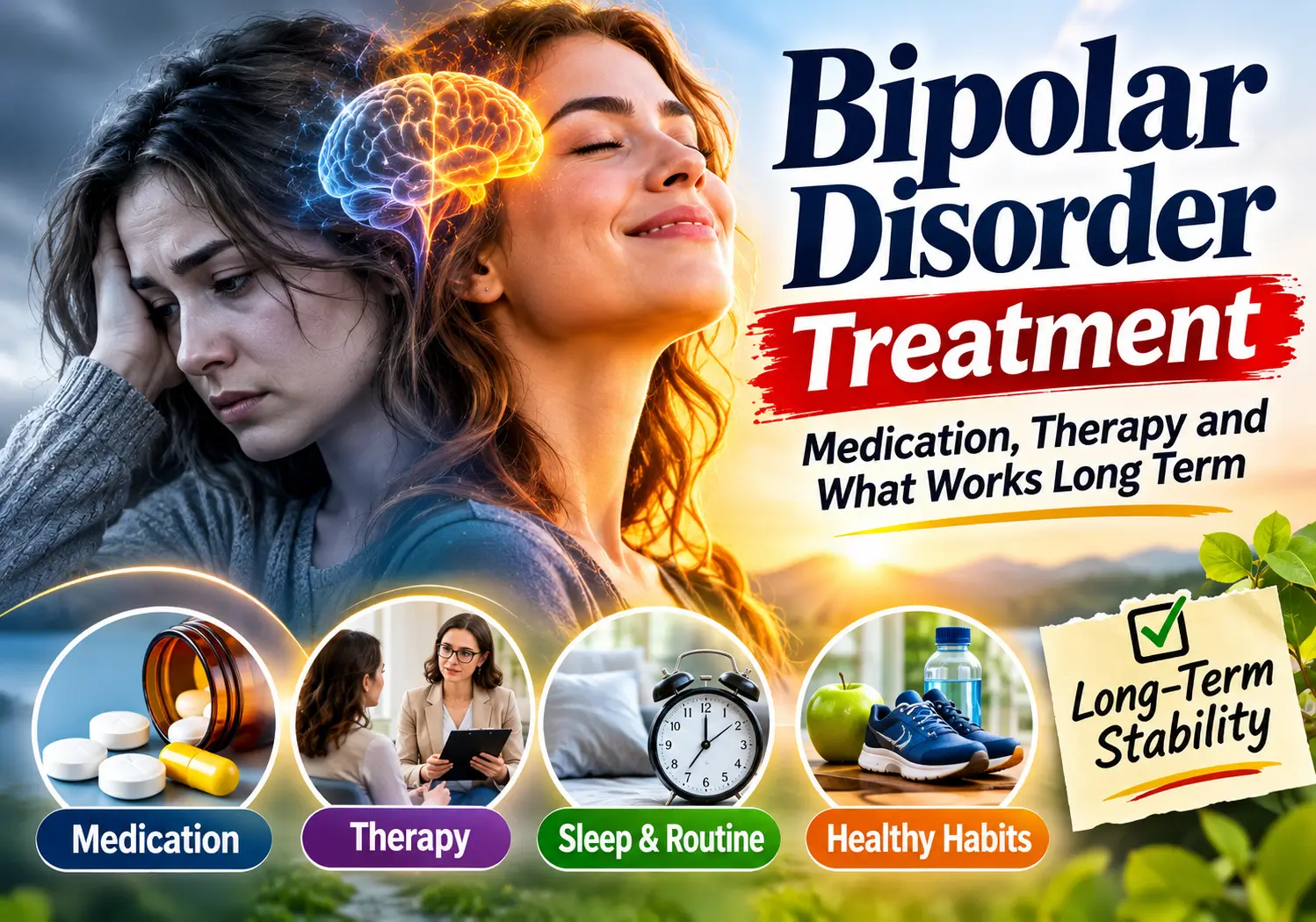 Bipolar disorder treatment works best as a combination of medication (usually a mood stabilizer such as lithium, or an atypical…
Are you looking for a Therapist?
Connect with qualified mental health professionals who understand
bipolar disorder, mood changes, and emotional challenges.
Private • Supportive • Confidential