
Bipolar Disorder: Symptoms, Types, Causes, Diagnosis & Treatment

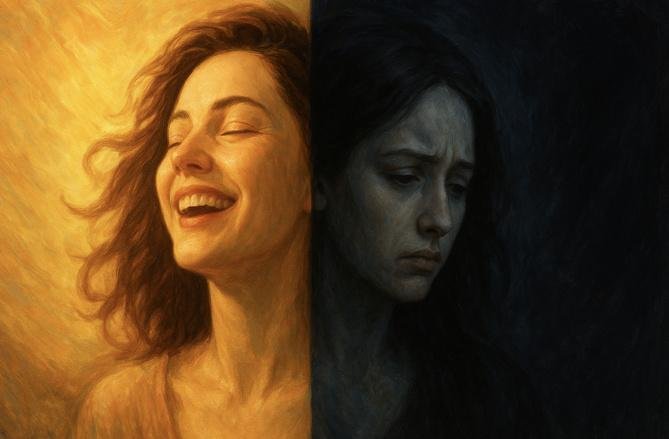
Bipolar disorder is a lifelong mental health condition that causes distinct episodes of mania or hypomania (unusually high or irritable mood and energy) and, for most people, episodes of depression. These are not ordinary ups and downs. Mood episodes last days to weeks, change how a person thinks, sleeps, acts and functions, and are usually a clear change from their usual self. Bipolar disorder was formerly called manic depression or manic-depressive illness.
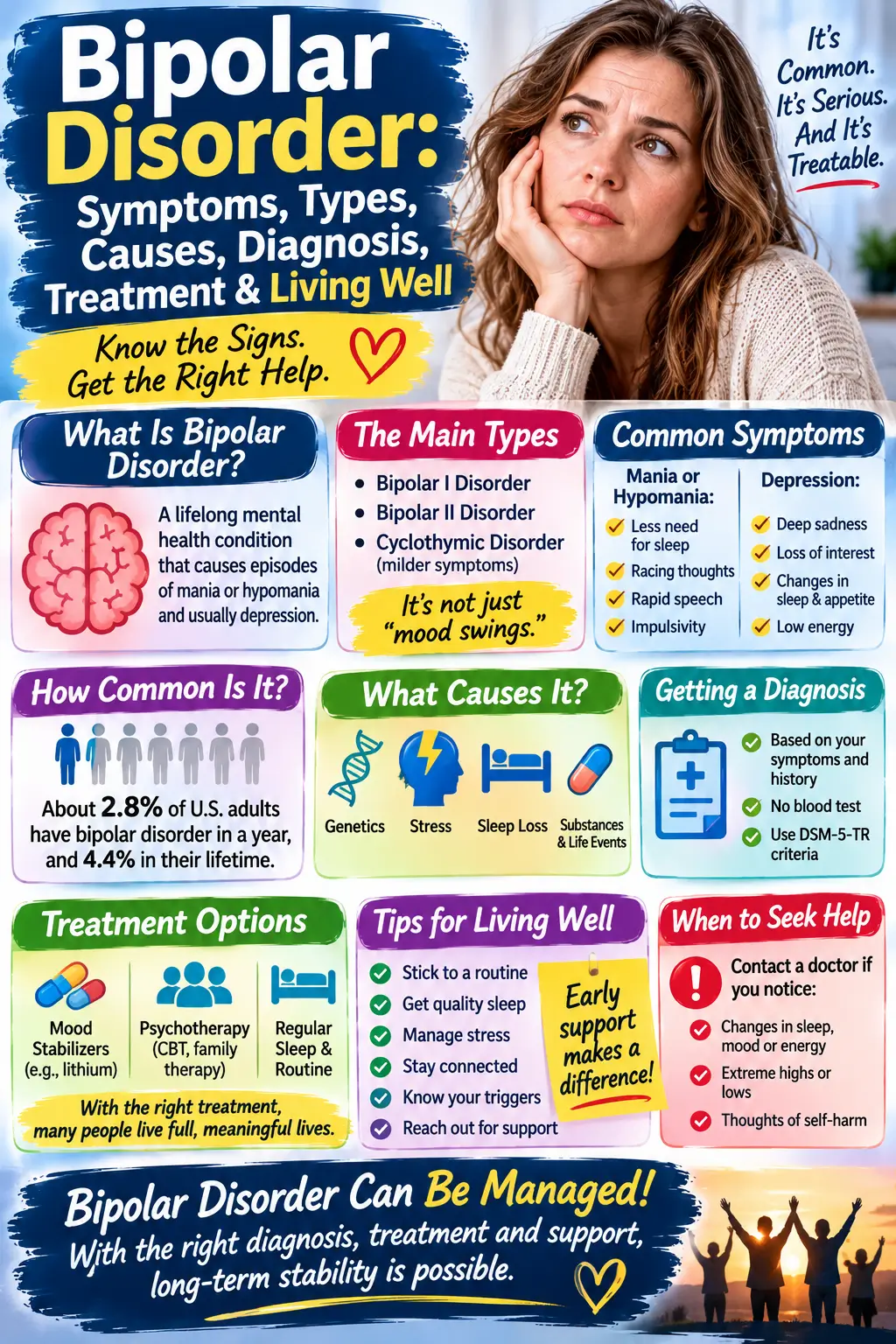
It is common, serious — and very treatable. The U.S. National Institute of Mental Health (NIMH) estimates that about 2.8% of U.S. adults have bipolar disorder in a given year and about 4.4% at some point in their lives; worldwide, the World Health Organization reported around 40 million people living with it. With an accurate diagnosis, the right medication, psychotherapy and steady daily routines, most people with bipolar disorder can manage their symptoms and live full, meaningful lives.
This pillar guide covers everything you need to know: what bipolar disorder means, the symptoms (including symptoms in females, males and teens), the types of bipolar disorder, causes and genetics, how it’s diagnosed, the most effective treatments and medications, how it compares with depression, BPD and ADHD, and how to live well with — or support someone who has — bipolar disorder.
Key takeaways
- Bipolar disorder is a mood disorder with episodes of mania or hypomania and usually depression, separated by periods of more stable mood.
- The main types are bipolar I, bipolar II and cyclothymic disorder.
- Core warning signs include less need for sleep, racing thoughts, rapid speech, impulsivity, and periods of deep depression.
- It’s strongly genetic but influenced by stress, sleep loss, substances and life events.
- There’s no blood test; diagnosis is based on a careful history and DSM-5-TR criteria.
- Effective treatment combines mood stabilizers or certain antipsychotics, psychotherapy, regular sleep and routine, and support.
- Bipolar disorder can’t be cured, but long-term stability is achievable for most people.
What Is Bipolar Disorder? (Meaning and Definition)
Bipolar disorder meaning: a mental illness in which a person experiences episodes of extreme mood and energy changes — highs called mania or hypomania, and lows called depression — that affect daily life.
The word “bipolar” refers to the two “poles” of mood: elevated and depressed. Some people also have mixed episodes, with features of both at the same time.
Is bipolar disorder a mental illness?
Yes. Bipolar disorder is a serious mental illness and a mood disorder. In the DSM-5-TR, it appears in the chapter “Bipolar and Related Disorders.” In the ICD-10 it’s coded under F31 (see bipolar disorder and ICD-10), and in ICD-11 under codes 6A60–6A62.
Is bipolar disorder a personality disorder?
No. Bipolar disorder is a mood disorder with distinct episodes; personality disorders such as borderline personality disorder involve long-standing patterns of thinking, feeling and relating. They can look alike and can co-occur. See is bipolar disorder a personality disorder? and is manic depression the same as bipolar?
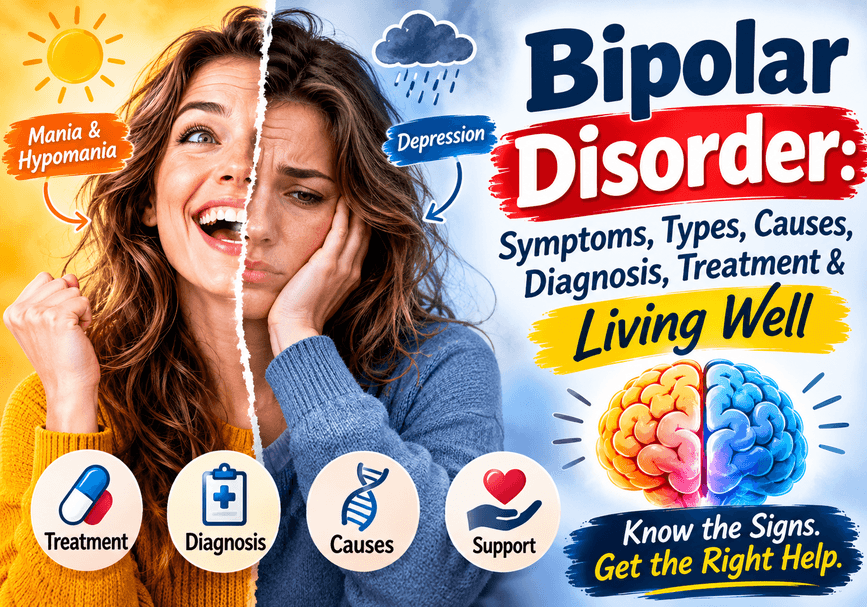
How common is bipolar disorder?
| Statistic | Estimate |
|---|---|
| U.S. adults with bipolar disorder in the past year | ~2.8% (NIMH) |
| U.S. adults affected at some point in life | ~4.4% (NIMH) |
| People affected worldwide | ~40 million (WHO) |
| Typical age of onset | Late teens to mid-20s |
| Men vs women | Similar rates overall |
See bipolar disorder statistics.
Bipolar Disorder Symptoms
Bipolar disorder symptoms depend on the type of episode a person is having.
Symptoms of mania and hypomania
Mania lasts at least 7 days (or any length if hospitalization is needed) and causes severe problems. Hypomania lasts at least 4 days, is milder, and doesn’t cause severe impairment or psychosis. Both involve abnormally elevated, expansive or irritable mood and increased energy or activity, plus symptoms such as:
- Decreased need for sleep — feeling rested after only a few hours
- Racing thoughts and jumping between ideas (flight of ideas)
- Rapid, pressured speech — talking more and faster than usual
- Inflated self-esteem or grandiosity
- Distractibility
- Increased goal-directed activity — starting many projects, restlessness
- Impulsive or risky behavior — spending sprees, risky sex, reckless driving, unwise business decisions
Severe mania can include psychosis — hallucinations or delusions. See signs of hypomania vs normal happiness, bipolar psychosis, disorganized thinking and what does bipolar anger feel like?
Symptoms of bipolar depression
A major depressive episode lasts at least 2 weeks and includes low mood or loss of interest, plus symptoms such as:
- Persistent sadness, emptiness or hopelessness
- Loss of interest or pleasure (anhedonia)
- Sleeping too much or too little
- Fatigue and low energy; feeling physically heavy
- Changes in appetite or weight
- Feelings of worthlessness or excessive guilt
- Difficulty concentrating or making decisions — see cognitive function
- Slowed movement or restlessness
- Thoughts of death or suicide
For many people, depression is the longest and most disabling part of bipolar disorder. See what is bipolar depression?, what does bipolar depression feel like? and how long does bipolar depression last?
Mixed features and rapid cycling
- Mixed features: depression and mania/hypomania symptoms at the same time — such as low mood with racing thoughts and agitation. This is a high-risk state. See bipolar mixed episode.
- Rapid cycling: four or more mood episodes in a year. See rapid cycling bipolar.
What are 5 signs of bipolar disorder?
- Distinct periods of unusually high, euphoric or irritable mood
- Decreased need for sleep without feeling tired
- Racing thoughts and rapid speech
- Impulsive or risky behavior during highs
- Episodes of depression lasting two weeks or more
See the full guide to bipolar symptoms and early warning signs of a bipolar episode.
What is a person with bipolar disorder like?
There’s no single “bipolar personality.” Between episodes, many people with bipolar disorder are much like anyone else. During episodes, their thinking, energy and behavior change. Some people describe periods of creativity and drive, and periods of deep exhaustion and despair. See how a person with bipolar thinks, bipolar and hypersensitivity and bipolar eyes.
Do people with bipolar disorder have mood swings every day?
Not usually in the way people imagine. Bipolar mood episodes typically last days to weeks. Frequent mood swings within a single day are more often linked to emotional dysregulation, BPD, ADHD, anxiety or other factors — though people with bipolar disorder can also experience daily mood fluctuations. See sudden mood swings in adults, bipolar mood swings daily pattern and bipolar vs emotional dysregulation.
Bipolar disorder and sleep
Sleep changes are among the earliest and most important signs. Mania brings a decreased need for sleep; depression often brings oversleeping or insomnia; and sleep loss can trigger episodes. See bipolar sleep, bipolar insomnia and bipolar disorder symptoms at night.
Bipolar Disorder Symptoms in Females, Males and Teens
Bipolar disorder symptoms in females
Bipolar disorder affects women and men at similar rates, but women more often experience:
- More depressive episodes and bipolar II
- Rapid cycling and mixed features
- Mood changes around the menstrual cycle, pregnancy, the postpartum period and perimenopause
- Higher rates of co-occurring thyroid disease, anxiety and eating disorders
- Misdiagnosis as depression or anxiety
The postpartum period carries a high risk of relapse, including postpartum psychosis — a psychiatric emergency. See bipolar disorder symptoms in females, premenstrual exacerbation, PMDD and bipolar vs autism in females.
Bipolar 2 symptoms in females
Women with bipolar II often seek help for depression, while short hypomanic periods — feeling unusually productive, social, confident or irritable — go unrecognized. Track mood and sleep across the month to spot patterns. See bipolar type 2 and bipolar 2 criteria.
Bipolar disorder symptoms in males
Men are somewhat more likely to have earlier-onset mania, and more likely to have co-occurring alcohol and substance use. Depression in men may show up as irritability, anger or risk-taking rather than sadness, which can delay diagnosis.
Bipolar disorder in teenagers and children
Bipolar disorder often begins in the late teens. In young people, it can be hard to distinguish from normal mood changes, ADHD, anxiety or trauma. Warning signs include distinct periods of unusually elevated or irritable mood, much less sleep without tiredness, racing speech, grandiosity and risky behavior, alternating with depression. Chronic, severe irritability without distinct episodes may be a different condition. See emotional dysregulation in children.
Types of Bipolar Disorder
Bipolar I disorder
At least one manic episode. Depressive and hypomanic episodes are common but not required. Mania can be severe, with hospitalization or psychosis. See what is bipolar 1?
Bipolar II disorder
At least one hypomanic episode and one major depressive episode, but never a full manic episode. Bipolar II is not “mild bipolar” — its depressions are often long and disabling. See bipolar type 2.
Cyclothymic disorder
At least two years (one in children and teens) of frequent hypomanic and depressive symptoms that don’t meet full episode criteria. See cyclothymic disorder.
Other types
- Substance/medication-induced bipolar disorder — see substance-induced mood disorder
- Bipolar disorder due to another medical condition — such as thyroid disease
- Other specified and unspecified bipolar and related disorders
What are the 7 types of bipolar disorder?
Together, these make up the seven DSM-5-TR categories: bipolar I, bipolar II, cyclothymic disorder, substance/medication-induced, due to another medical condition, other specified and unspecified. See what are the 7 types of bipolar disorder?
Bipolar 1 vs bipolar 2
| Bipolar I | Bipolar II | |
|---|---|---|
| Highs | Full mania (7+ days or hospitalization) | Hypomania (4+ days) |
| Psychosis | Can occur in mania | Not during hypomania |
| Depression | Common, not required | Required |
| Typical pattern | Dramatic manic episodes | Recurrent, long depressions |
See is bipolar 1 or bipolar 2 worse?
What Causes Bipolar Disorder?
There’s no single cause. Bipolar disorder results from a combination of genetic, biological and environmental factors.
Is bipolar disorder genetic?
Yes — bipolar disorder is one of the most heritable mental health conditions. Twin studies estimate heritability at roughly 60–85%, and having a parent or sibling with bipolar disorder substantially increases risk. But it isn’t caused by a single gene: many genes each contribute a small effect, and most children of a parent with bipolar disorder do not develop it.
What happens in the brain?
Research points to differences in:
- Brain circuits that regulate emotion and reward, such as connections between the prefrontal cortex and amygdala
- Neurotransmitter signaling (dopamine, serotonin, glutamate and others) and cell signaling pathways
- Circadian rhythms — the body clock that regulates sleep and energy
- Brain energy metabolism and inflammation
The old idea of a simple “chemical imbalance” is an oversimplification. See what causes bipolar disorder in the brain and is bipolar disorder neurodivergent?
Triggers and risk factors
- Sleep loss and disrupted routines (shift work, jet lag)
- Major stress and life changes — see can stress cause bipolar symptoms?
- Childhood adversity and trauma
- Alcohol and drug use
- Antidepressants without a mood stabilizer in vulnerable people — see manic switch
- Childbirth and hormonal changes
- Thyroid problems — see thyroid and bipolar
- Seasonal changes
See the full bipolar episode triggers list.
At what age does bipolar disorder develop?
Most people develop symptoms in their late teens or early-to-mid 20s, though it can begin in childhood or later adulthood. New-onset mania after age 50 should prompt a search for medical causes. See does bipolar get worse with age?
How Is Bipolar Disorder Diagnosed?
Is there a test for bipolar disorder?
There’s no blood test, brain scan or genetic test that can diagnose bipolar disorder. Diagnosis is based on a clinical evaluation. Screening questionnaires — such as the Mood Disorder Questionnaire — can show whether an evaluation is worthwhile. Take our bipolar test, bipolar depression test, or read am I bipolar? and do I have bipolar depression?
The diagnostic process
A psychiatrist or other qualified clinician will usually:
- Take a detailed history of mood episodes, sleep, energy, behavior and functioning across your life
- Apply DSM-5-TR criteria for manic, hypomanic and depressive episodes
- Ask about family history of bipolar disorder and other mental illness
- Talk with a family member or partner, if you agree, since hypomania is often noticed by others first
- Use mood charts or a life chart — see our bipolar mood chart and mood tracking apps
- Order blood tests to rule out other causes, such as thyroid problems
- Assess for co-occurring conditions such as anxiety, ADHD, BPD and substance use
Why diagnosis is often delayed
Many people with bipolar disorder are first diagnosed with ordinary depression, because they seek help when they’re low and don’t recognize hypomania. In one large survey, 69% of people with bipolar disorder had initially been misdiagnosed. Telling your clinician about any periods of unusually high energy and reduced sleep is key.
Can a regular doctor diagnose bipolar disorder?
A primary care doctor can screen for bipolar disorder, rule out medical causes and start some treatments, but diagnosis and management are often best done with a psychiatrist, especially when symptoms are complex.
Bipolar Disorder vs Other Conditions
| Condition | Key difference from bipolar disorder |
|---|---|
| Major depressive disorder | No history of mania or hypomania. See major depressive disorder and recurrent major depressive disorder |
| Borderline personality disorder | Rapid shifts within hours, often triggered by relationships; long-standing instability in self-image and relationships. See is BPD the same as bipolar? and borderline personality disorder |
| ADHD | Lifelong, constant inattention/impulsivity rather than episodes. See ADHD and depression and BPD vs ADHD |
| Anxiety disorders | Worry and fear without manic episodes; often co-occur. See bipolar anxiety and generalized anxiety disorder |
| Schizoaffective disorder | Psychosis also occurs without mood episodes. See schizoaffective disorder |
| PTSD and complex PTSD | Trauma-related symptoms. See PTSD and complex PTSD |
| Autism | Lifelong neurodevelopmental traits, not episodes. See autism and bipolar |
| Emotional dysregulation | Intense, quick emotional reactions rather than sustained episodes. See emotional dysregulation |
Bipolar Disorder Treatment
Bipolar disorder is a long-term condition that usually needs long-term treatment, even when you feel well. The most effective approach combines medication, psychotherapy and lifestyle strategies.
Bipolar disorder medications
| Medication class | Examples | Main uses |
|---|---|---|
| Lithium | Lithium carbonate | Mania, maintenance, suicide-risk reduction — see lithium, lithium side effects and lithium toxicity symptoms |
| Anticonvulsant mood stabilizers | Valproate, lamotrigine, carbamazepine | Mania (valproate, carbamazepine); preventing depression (lamotrigine) |
| Atypical antipsychotics | Quetiapine, olanzapine, aripiprazole, lurasidone, cariprazine, lumateperone (Caplyta), clozapine | Mania, bipolar depression, maintenance |
| Antidepressants | SSRIs such as sertraline and fluoxetine | Sometimes added to a mood stabilizer; generally avoided alone in bipolar I |
See bipolar disorder medications, mood stabilizers vs antipsychotics, is Caplyta a mood stabilizer? and bipolar medication cost without insurance.
What is the most effective treatment for bipolar depression?
Medications with good evidence for bipolar depression include quetiapine, lurasidone, cariprazine, lumateperone and olanzapine–fluoxetine, with lamotrigine and lithium important for prevention. Antidepressants alone aren’t usually recommended in bipolar I. Psychotherapy, regular routines and, for severe or treatment-resistant cases, electroconvulsive therapy (ECT) can also help. See best medication for bipolar depression and anxiety and how to deal with bipolar depression.
Managing medication side effects
Common concerns include weight gain, sedation, tremor and movement side effects. Regular monitoring and open conversations with your prescriber help. See bipolar medications and weight gain, does Abilify cause weight gain?, does quetiapine cause weight gain?, side effects of lamotrigine and tardive dyskinesia and bipolar disorder.
Never stop bipolar medication suddenly — this greatly increases relapse risk. See why do people with bipolar stop taking medication?
Psychotherapy for bipolar disorder
- Psychoeducation — understanding the illness, warning signs and treatment
- Cognitive behavioral therapy (CBT)
- Interpersonal and social rhythm therapy (IPSRT) — stabilizes daily routines and sleep
- Family-focused therapy
- Dialectical behavior therapy (DBT) skills for emotion regulation
See the best therapy for bipolar disorder, do I need therapy for bipolar disorder? and bipolar counseling.
Can bipolar disorder be treated without medication?
For most people with bipolar I, medication is the foundation of effective treatment. Therapy and lifestyle changes are powerful additions but rarely enough on their own to prevent episodes. Some people with milder forms may manage with fewer medications under close supervision. Decisions should always be made with a psychiatrist. See how to calm bipolar mood swings naturally.
Can bipolar disorder be cured?
There’s currently no cure, but bipolar disorder is highly treatable. Many people have long periods of stability and remission with consistent treatment. See can bipolar disorder be cured?
Living With Bipolar Disorder
Can bipolar patients live a normal life?
Yes. Many people with bipolar disorder work, study, raise families, build relationships and thrive. Stability usually comes from a combination of consistent treatment, self-awareness and support. Living with bipolar disorder does involve extra planning — protecting sleep, watching for early warning signs and managing stress — but a meaningful, fulfilling life is very achievable.
Everyday strategies for stability
- Protect your sleep with consistent bed and wake times — see bipolar sleep and how to fall asleep fast
- Keep a daily routine for meals, activity and social contact
- Track your mood and early warning signs
- Exercise regularly — see our exercise plan for bipolar disorder
- Eat well — see our bipolar diet guide and vitamins and minerals
- Avoid alcohol and drugs — see lamotrigine and alcohol
- Manage stress — see stress management techniques and nervous system regulation
- Pace your energy — see spoon theory
- Make a wellness and relapse prevention plan — see bipolar wellness plan
Coping skills
Practical skills can help during difficult moments:
- Grounding techniques
- Self-soothing skills
- DBT crisis survival skills
- Radical acceptance
- Feelings are not facts
- Window of tolerance
Work, disability and daily life
Many people with bipolar disorder work successfully, sometimes with reasonable accommodations. When symptoms severely limit work despite treatment, disability benefits may be available. See bipolar disability.
Bipolar disorder and relationships
Bipolar disorder can strain relationships, especially during untreated episodes — through irritability, impulsive decisions, withdrawal or broken trust. Open communication, shared early-warning plans and couples or family therapy can help. See why bipolar relationships fail, can you trust a bipolar person?, bipolar and lying and attachment and adult relationships.
How to Help Someone With Bipolar Disorder
If someone you love has bipolar disorder:
- Learn about the illness and their personal warning signs
- Encourage treatment without nagging or blaming
- Communicate calmly; avoid arguing during episodes
- Agree on a plan for what to do when warning signs appear
- Set healthy boundaries and look after yourself — avoid walking on eggshells
- Know when to seek urgent help
What should you not say to someone with bipolar disorder?
Avoid phrases that dismiss or blame, such as “You’re just being dramatic,” “Everyone has mood swings,” “Just snap out of it” or “Are you off your meds?” during an argument. Instead, try “I’m here for you,” “What would help right now?” and “I’ve noticed you’re sleeping less — how are you feeling?”
How do you calm someone experiencing mania?
Stay calm, speak simply, reduce stimulation, avoid arguing with grand ideas, protect them from risky decisions where possible, encourage rest, and contact their care team. If there’s danger or psychosis, seek emergency help.
See how to deal with a bipolar person not on medication.
Bipolar Disorder Prognosis, Risks and When to Get Help
What happens if bipolar disorder isn’t treated?
Untreated bipolar disorder tends to cause more frequent and severe episodes, relationship and work problems, financial and legal consequences, substance use, and a higher risk of suicide. Research also shows that people with bipolar disorder have, on average, a shorter life expectancy — largely due to preventable physical health problems such as heart disease, as well as suicide. Good mental and physical health care can reduce these risks significantly.
Does bipolar disorder get worse with age?
It varies. Without treatment, episodes may become more frequent for some people. With consistent treatment, many people become more stable over time. See does bipolar get worse with age? and how long do bipolar episodes last?
When to seek urgent help
Seek immediate help if you or someone else:
- Has thoughts of suicide or self-harm
- Is experiencing psychosis (hallucinations, delusions)
- Is behaving in a dangerous or out-of-control way, or hasn’t slept for days
If you are in crisis: call or text 988 (Suicide & Crisis Lifeline, US) or go to the nearest emergency department. Outside the US, contact your local emergency number.
Bipolar Disorder in Other Languages: Bipolar Disorder in Hindi
For Hindi-speaking readers: bipolar disorder is called द्विध्रुवी विकार (dvidhruvi vikar), and mania is often called उन्माद (unmaad). The symptoms, diagnosis and treatments described in this guide apply in every country and language.
Frequently Asked Questions About Bipolar Disorder
What is bipolar disorder?
Bipolar disorder is a lifelong mood disorder that causes episodes of mania or hypomania — unusually high or irritable mood, energy and activity — and, for most people, episodes of depression. These episodes last days to weeks and affect sleep, thinking, behavior and daily functioning. It was previously called manic depression and is very treatable with medication, therapy and steady routines.
What are 5 signs of bipolar disorder?
Five key signs are distinct periods of unusually high or irritable mood; a decreased need for sleep without feeling tired; racing thoughts and rapid speech; impulsive or risky behavior such as spending sprees; and episodes of depression lasting two weeks or more. Having several of these, especially in clear episodes, is a reason to see a mental health professional for an evaluation.
What is a person like with bipolar disorder?
There’s no single bipolar personality. Between episodes, many people with bipolar disorder think and behave much like anyone else. During mania or hypomania, they may be energetic, talkative, confident or irritable and sleep little. During depression, they may withdraw, feel hopeless and struggle with energy and concentration. With treatment, many people are stable most of the time.
Can bipolar patients live a normal life?
Yes. With consistent treatment — usually medication plus therapy — and healthy routines, many people with bipolar disorder work, study, maintain relationships and raise families. Living well often involves protecting sleep, tracking early warning signs, managing stress and having a support network. Episodes may still happen, but they’re often shorter and less severe with good care.
What is the most effective treatment for bipolar depression?
Medications with strong evidence for bipolar depression include quetiapine, lurasidone, cariprazine, lumateperone and the olanzapine–fluoxetine combination, while lithium and lamotrigine help prevent future episodes. Antidepressants alone are generally not recommended in bipolar I because they can trigger mania. Psychotherapy, regular routines and, in severe cases, ECT can also be very effective.
Is bipolar disorder genetic?
Bipolar disorder is strongly genetic. Twin studies estimate heritability at around 60–85%, and having a parent or sibling with bipolar disorder raises your risk. However, many genes each contribute a small effect, and environmental factors such as stress, sleep loss and substance use also play a role. Most children of a parent with bipolar disorder don’t develop it.
How is bipolar disorder diagnosed?
Bipolar disorder is diagnosed through a detailed clinical evaluation, usually by a psychiatrist, using DSM-5-TR criteria. The clinician reviews your history of mood episodes, sleep and behavior, asks about family history, may talk with someone who knows you well, and orders blood tests to rule out medical causes. There’s no blood test or brain scan for bipolar disorder.
Can bipolar disorder be cured?
There’s no cure yet, but bipolar disorder is highly treatable. Most people need long-term treatment to prevent relapse, often combining mood stabilizers or antipsychotics with therapy and lifestyle strategies. Many people achieve long periods of stability or remission. Stopping treatment suddenly, even when feeling well, greatly increases the risk of a new episode.
What triggers bipolar episodes?
Common triggers include sleep loss, major stress, changes in routine, alcohol and drug use, antidepressants taken without a mood stabilizer, seasonal changes, childbirth and stopping medication suddenly. Triggers differ from person to person, so tracking your mood, sleep and life events can help you and your care team identify and manage your personal warning signs.
Is bipolar disorder a disability?
Bipolar disorder can be considered a disability. In the U.S., it’s generally covered by the Americans with Disabilities Act, entitling workers to reasonable accommodations. When symptoms severely limit the ability to work despite treatment, people may qualify for Social Security disability benefits, which require strong medical documentation of symptoms and functional limitations.
The Bottom Line on Bipolar Disorder
Bipolar disorder is a common, serious and highly treatable mood disorder marked by episodes of mania or hypomania and depression. Recognizing the signs — especially reduced need for sleep, racing thoughts, impulsivity and recurring depression — is the first step toward an accurate diagnosis. Effective treatment combines medication, psychotherapy, steady routines and support. With the right care, people with bipolar disorder can achieve long-term stability and live full, meaningful lives. If you think you or someone you love may have bipolar disorder, reach out to a mental health professional — help is available.
References
- National Institute of Mental Health. Bipolar Disorder.
- National Institute of Mental Health. Bipolar Disorder Statistics.
- World Health Organization. Bipolar disorder fact sheet.
- McIntyre RS, Berk M, Brietzke E, et al. Bipolar disorders. Lancet. 2020;396(10265):1841–1856.
- Yatham LN, Kennedy SH, Parikh SV, et al. Canadian Network for Mood and Anxiety Treatments (CANMAT) and International Society for Bipolar Disorders (ISBD) 2018 guidelines for the management of patients with bipolar disorder. Bipolar Disorders. 2018;20(2):97–170.
- Hirschfeld RMA, Lewis L, Vornik LA. Perceptions and impact of bipolar disorder: how far have we really come? Journal of Clinical Psychiatry. 2003;64(2):161–174.
- Cipriani A, Hawton K, Stockton S, Geddes JR. Lithium in the prevention of suicide in mood disorders: updated systematic review and meta-analysis. BMJ. 2013;346:f3646.
- Kessing LV, Vradi E, McIntyre RS, Andersen PK. Causes of decreased life expectancy over the life span in bipolar disorder. Journal of Affective Disorders. 2015;180:142–147.
- American Psychiatric Association. Diagnostic and Statistical Manual of Mental Disorders, 5th ed., Text Revision (DSM-5-TR). 2022.
Related Posts




Subscribe to Our Newsletter
Get mental health tips, updates, and resources delivered to your inbox.
MORE from Author
Read More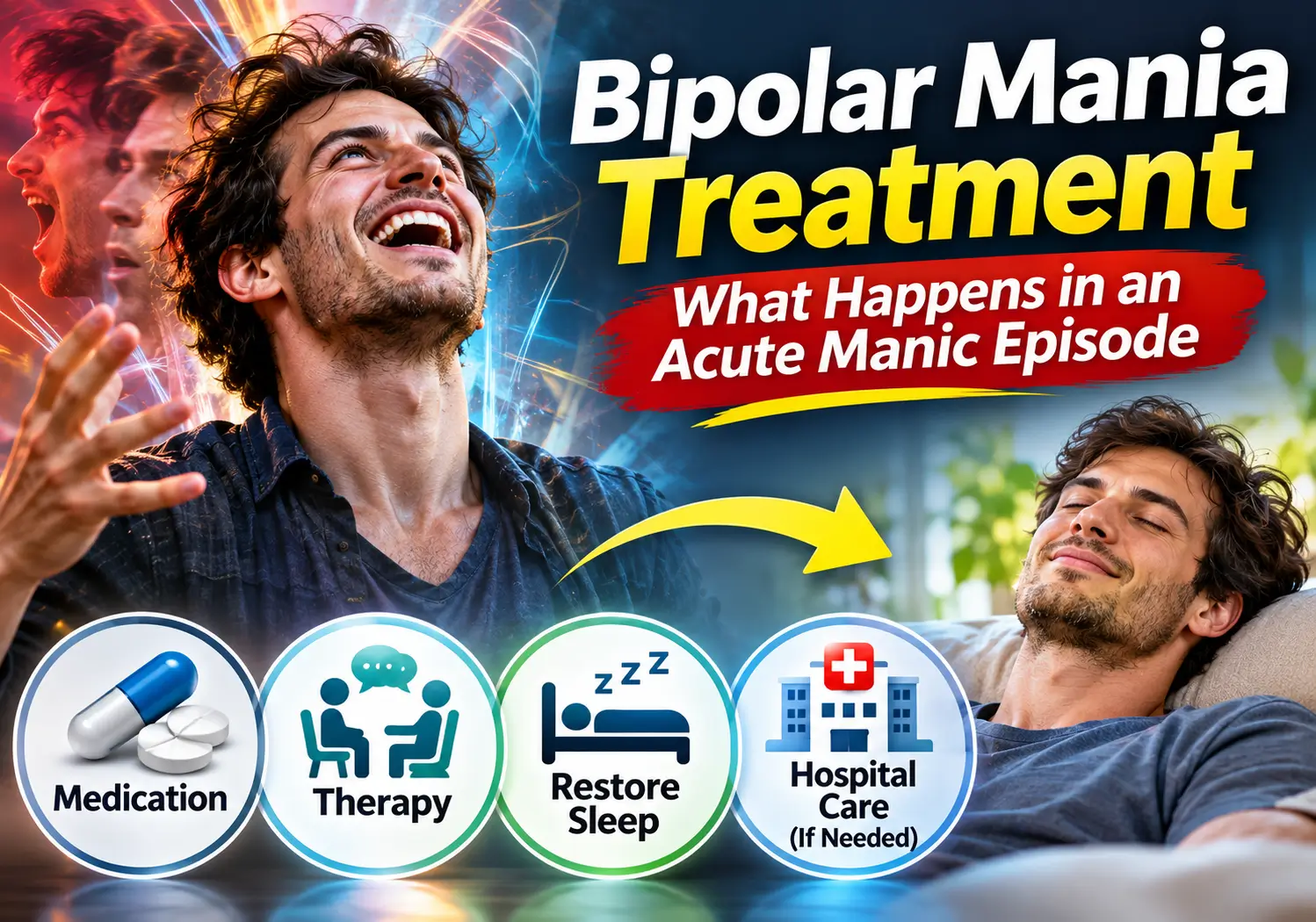 Bipolar mania treatment aims to bring a manic episode under control quickly and safely, then prevent the next one. For…
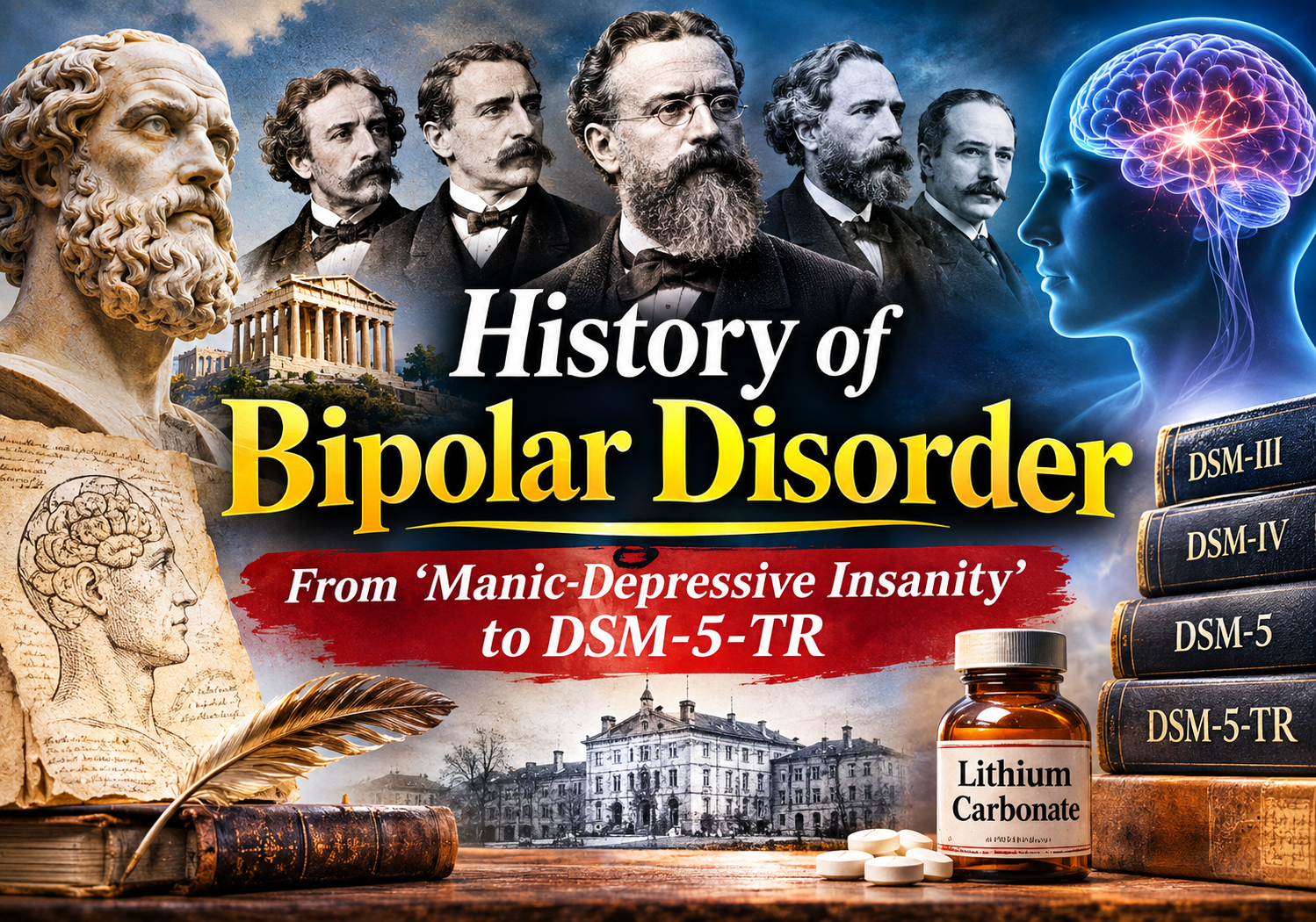 The history of bipolar disorder stretches back about 2,000 years. Ancient Greek physicians described mania and melancholia. Aretaeus of Cappadocia,…
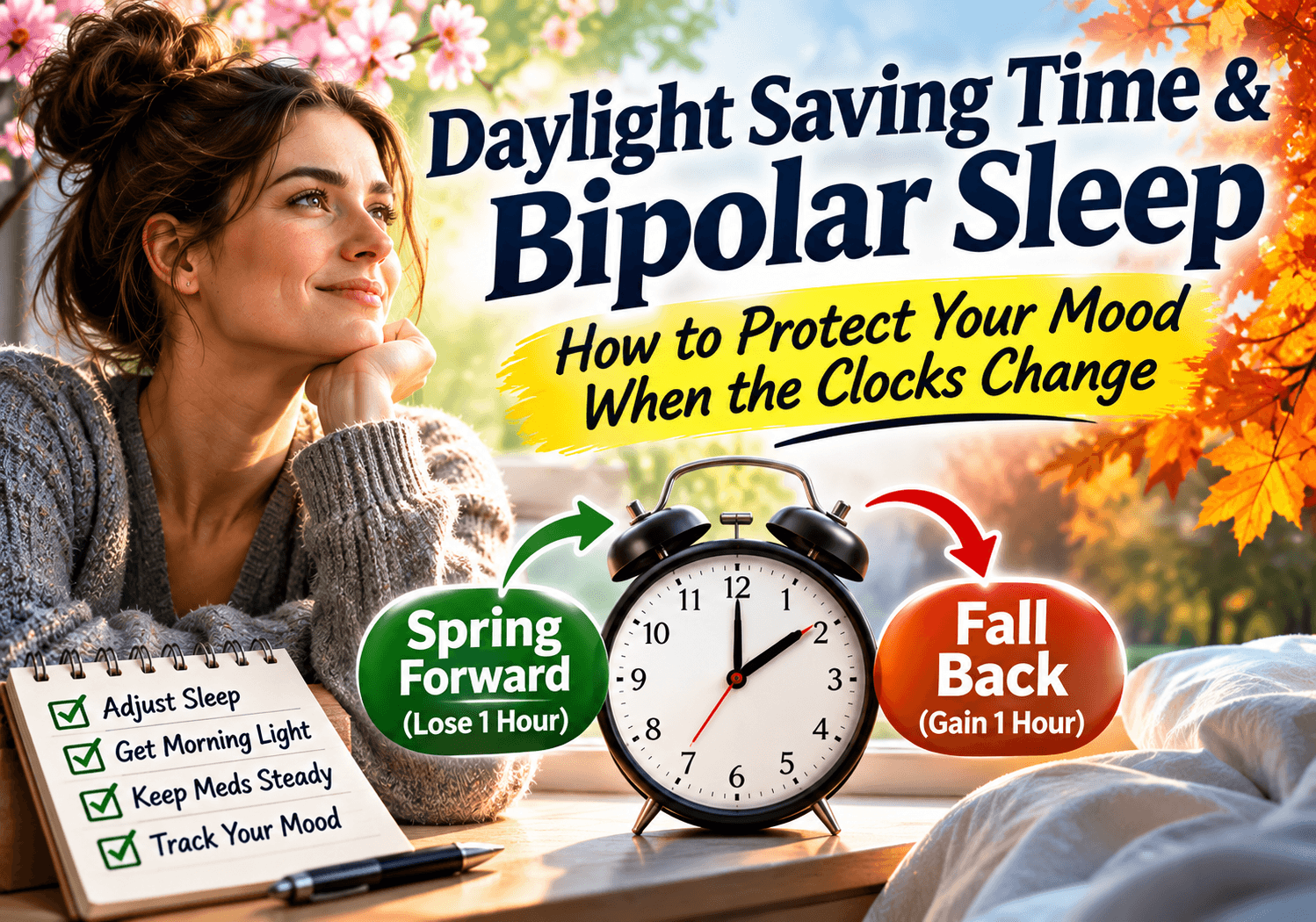 Bipolar daylight saving time questions come up twice a year for good reason. When the clocks change, your sleep, body…
 Bipolar disorder treatment works best as a combination of medication (usually a mood stabilizer such as lithium, or an atypical…
Are you looking for a Therapist?
Connect with qualified mental health professionals who understand
bipolar disorder, mood changes, and emotional challenges.
Private • Supportive • Confidential